







Question: In this module, you will learn how to estimate and report the effects of uncollectible accounts. Under Generally Accepted Accounting Principles, or GAAP companies must
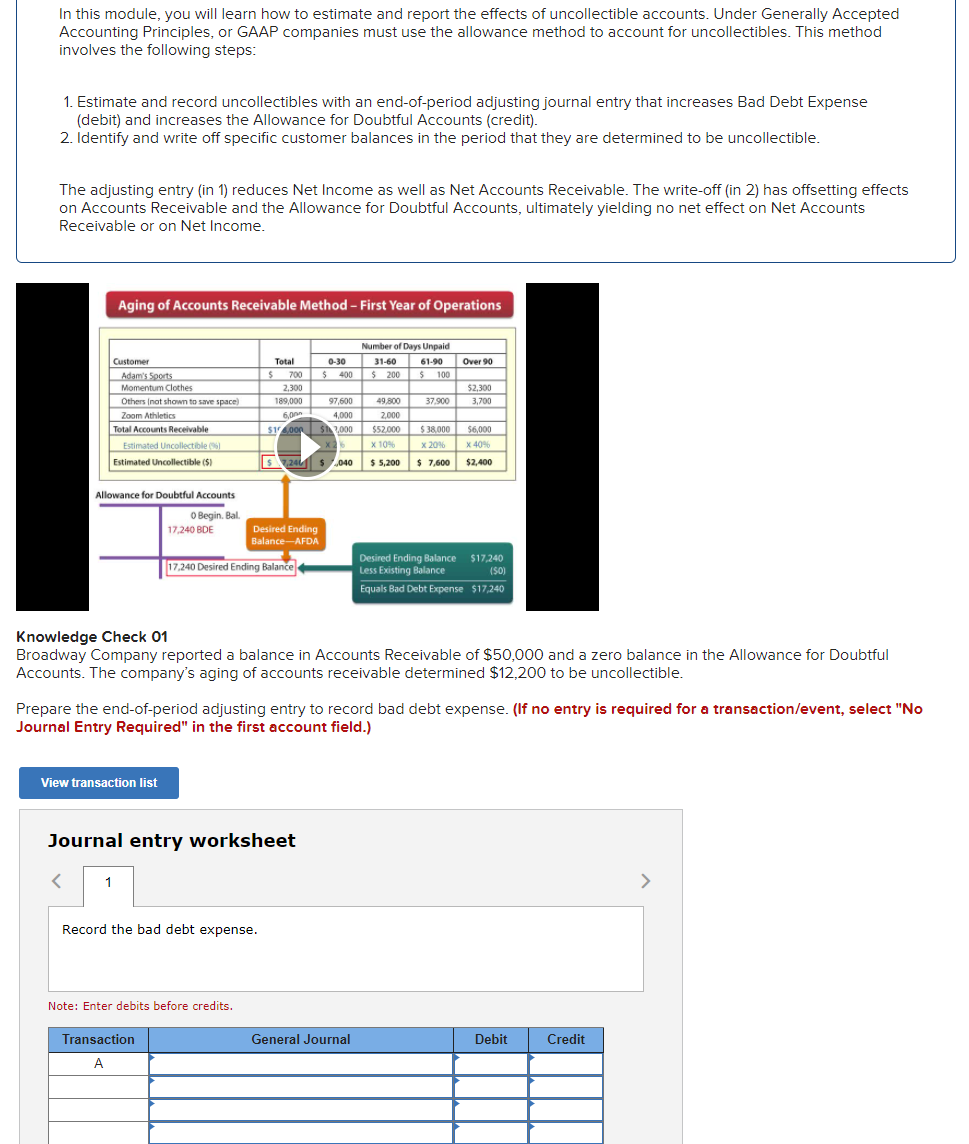
In this module, you will learn how to estimate and report the effects of uncollectible accounts. Under Generally Accepted Accounting Principles, or GAAP companies must use the allowance method to account for uncollectibles. This method involves the following steps: 1. Estimate and record uncollectibles with an end-of-period adjusting journal entry that increases Bad Debt Expense (debit) and increases the Allowance for Doubtful Accounts (credit). 2. Identify and write off specific customer balances in the period that they are determined to be uncollectible. The adjusting entry in 1) reduces Net Income as well as Net Accounts Receivable. The write-off (in 2) has offsetting effects on Accounts Receivable and the Allowance for Doubtful Accounts, ultimately yielding no net effect on Net Accounts Receivable or on Net Income. Aging of Accounts Receivable Method - First Year of Operations Number of Days Unpaid 31-60 $200 $ 100 61-90 Over 90 $2,300 3,700 37.900 Customer Adam's Sports Momentum Clothes Others not shown to save space) Zoom Athletics Total Accounts Receivable Estimated Uncollectibles Estimated Uncollectible (5) Total 0-30 $ 700 $400 2.300 189,000 97,600 6,00 4,000 51/20on $12000 X26 5 2,2441 $ 040 49.800 2,000 $52.000 X 10% $ 38,000 x 2016 $6,000 x 40% $2,400 $ 5,200 $ 7,600 Allowance for Doubtful Accounts Begin. Bal. 17,240 BDE Desired Ending Balance-AFDA 17,240 Desired Ending Balance Desired Ending Balance $17,240 Less Existing Balance (50) Equals Bad Debt Expense $17,240 Knowledge Check 01 Broadway Company reported a balance in Accounts Receivable of $50,000 and a zero balance in the Allowance for Doubtful Accounts. The company's aging of accounts receivable determined $12,200 to be uncollectible. Prepare the end-of-period adjusting entry to record bad debt expense. (If no entry is required for a transaction/event, select "No Journal Entry Required" in the first account field.) View transaction list Journal entry worksheet 1 > Record the bad debt expense. Note: Enter debits before credits. Transaction General Journal Debit Credit
Step by Step Solution
There are 3 Steps involved in it

Get step-by-step solutions from verified subject matter experts
 Study Help