







Question: in Visual C++. The distance formula between two points, again, is: To make it simpler, we can store our x, y, and z coordinates as
in Visual C++.
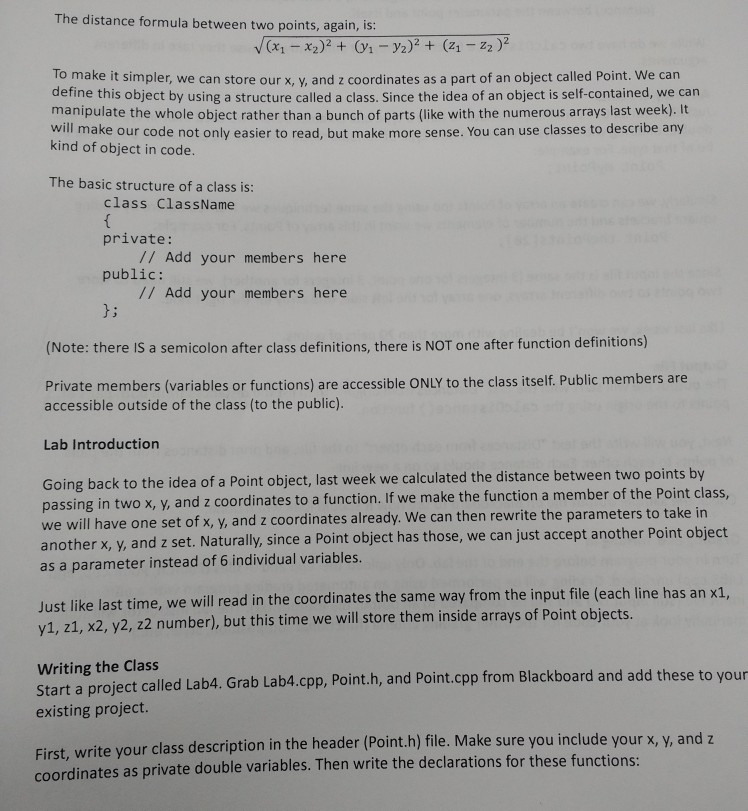
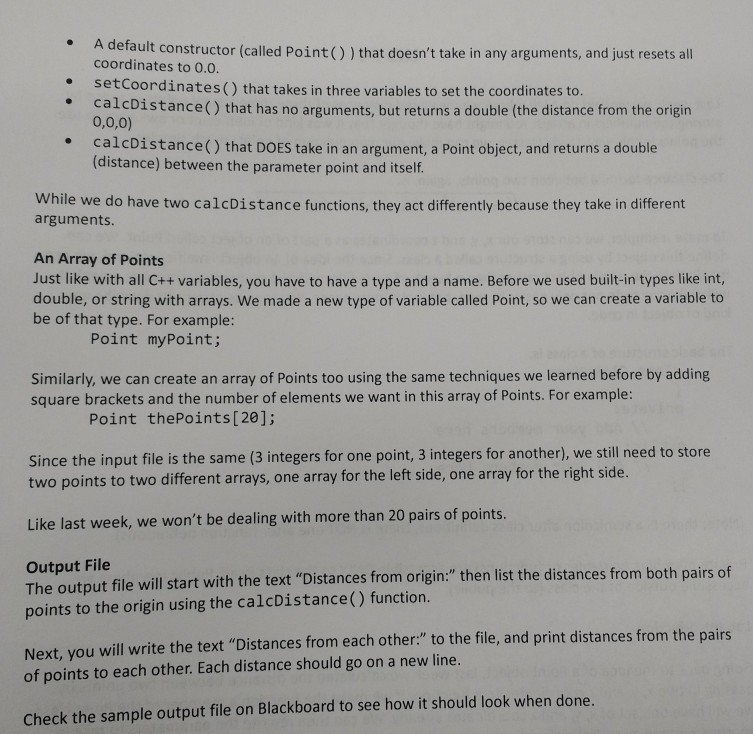
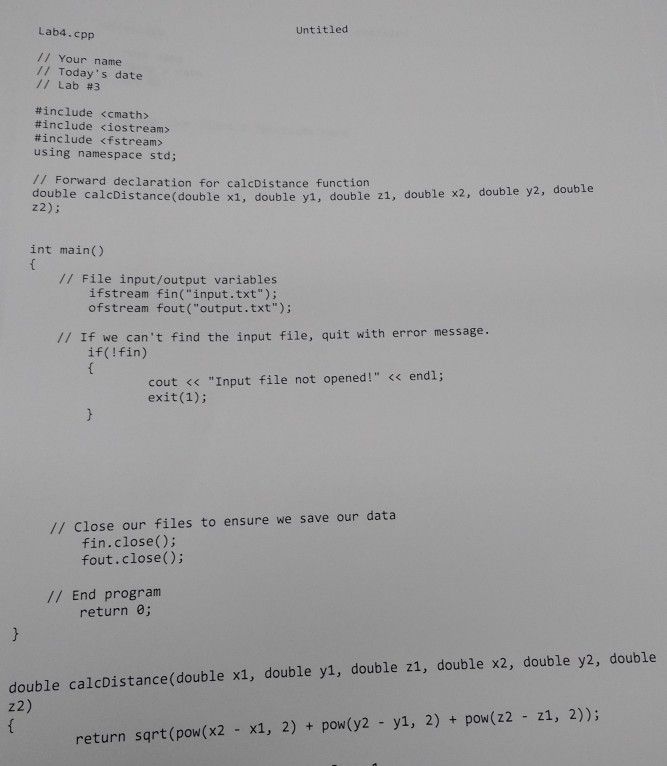
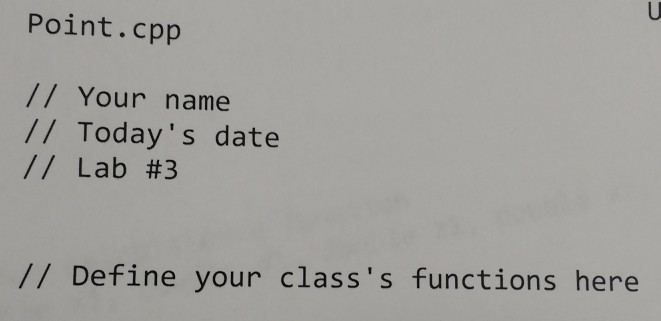
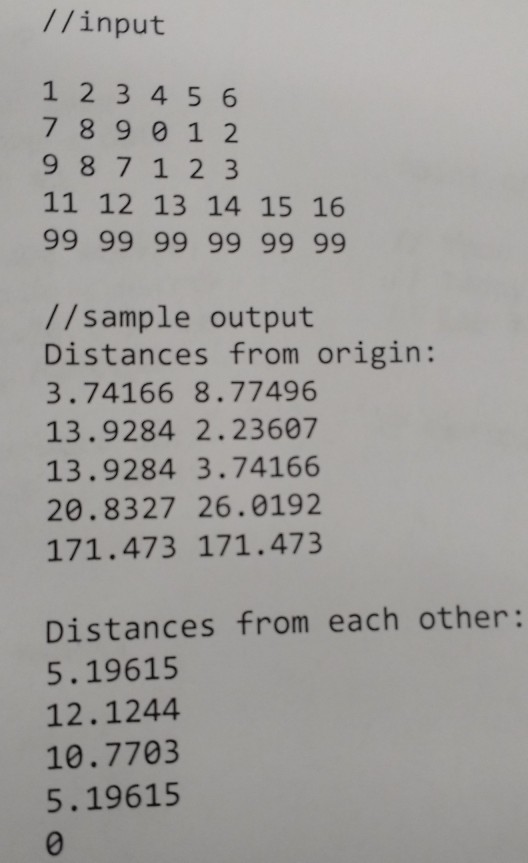
The distance formula between two points, again, is: To make it simpler, we can store our x, y, and z coordinates as a part of an object called Point. We can define this object by using a structure called a class. Since the idea of an object is self-contained, we can manipulate the whole object rather than a bunch of parts (like with the numerous arrays last week).it will make our code not only easier to read, but make more sense. You can use classes to describe any kind of object in code. The basic structure of a class is class ClassName private: public: d: /I Add your members here // Add your members here (Note: there IS a semicolon after class definitions, there is NOT one after function definitions) Private members (variables or functions) are accessible ONLY to the class itself. Public members are accessible outside of the class (to the public) Lab Introduction Going back to the idea of a Point object, last week we calculated the distance between two points by g in two x, y, and z coordinates to a function. If we make the function a member of the Point class, we will have one set of x, y, and z coordinates already. We can then rewrite the parameters to take in another x, y, and z set. Naturally, since a Point object has those, we can just accept another Point object as a parameter instead of 6 individual variables. Just like last time, we will read in the coordinates the same way from the input file (each lin y1, z1, x2, y2, z2 number), but this time we will store them inside arrays of Point objects. Writing the Class Start a project called Lab4. Grab Lab4.cpp, Point.h, and Point.cpp from Blackboard and add th existing project. First, write your class description in the header (Point.h) file. Make sure you include coordinates as private double variables. your x, y, and z Then write the declarations for these functions
Step by Step Solution
There are 3 Steps involved in it

Get step-by-step solutions from verified subject matter experts
 Study Help