







Question: In which circumstances should a researcher avoid using the range and use the interquartile range (IOFO instead? 0 when the sample has no extreme values
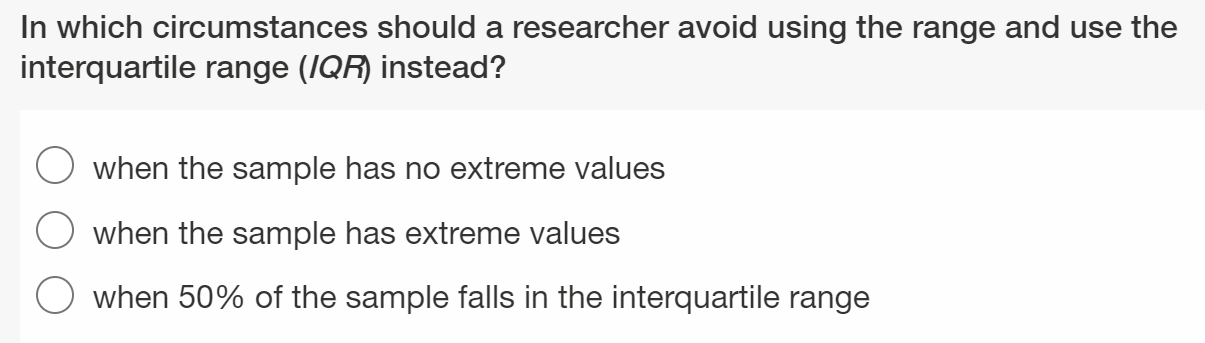
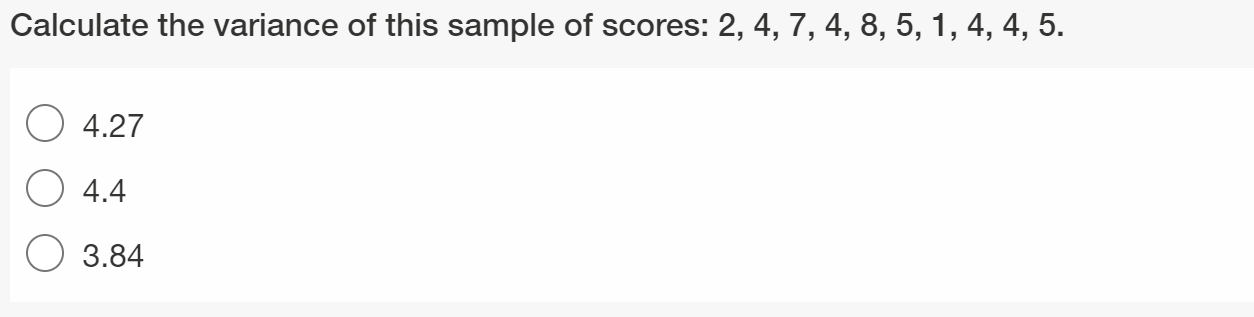
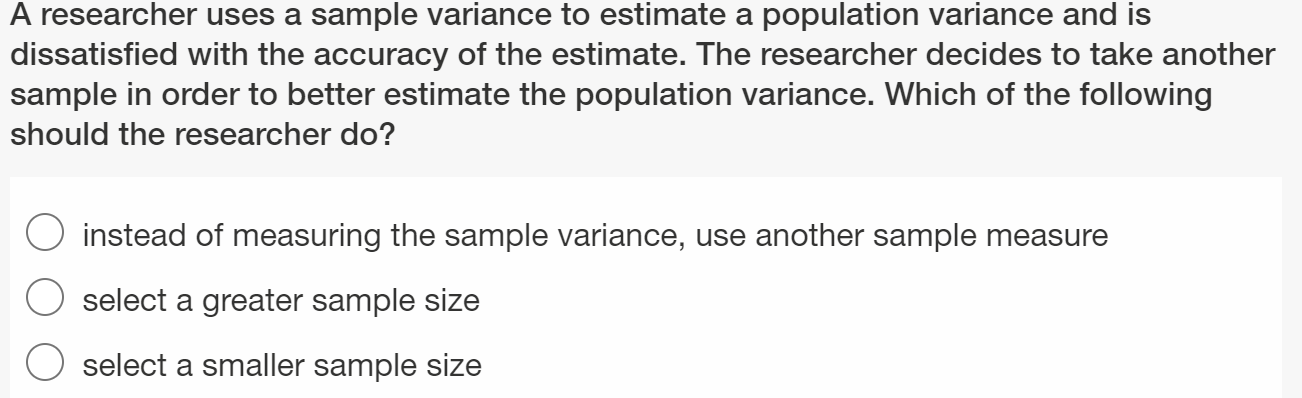
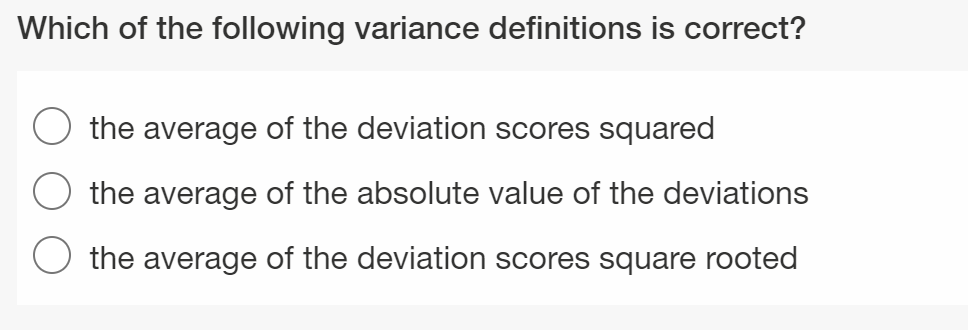
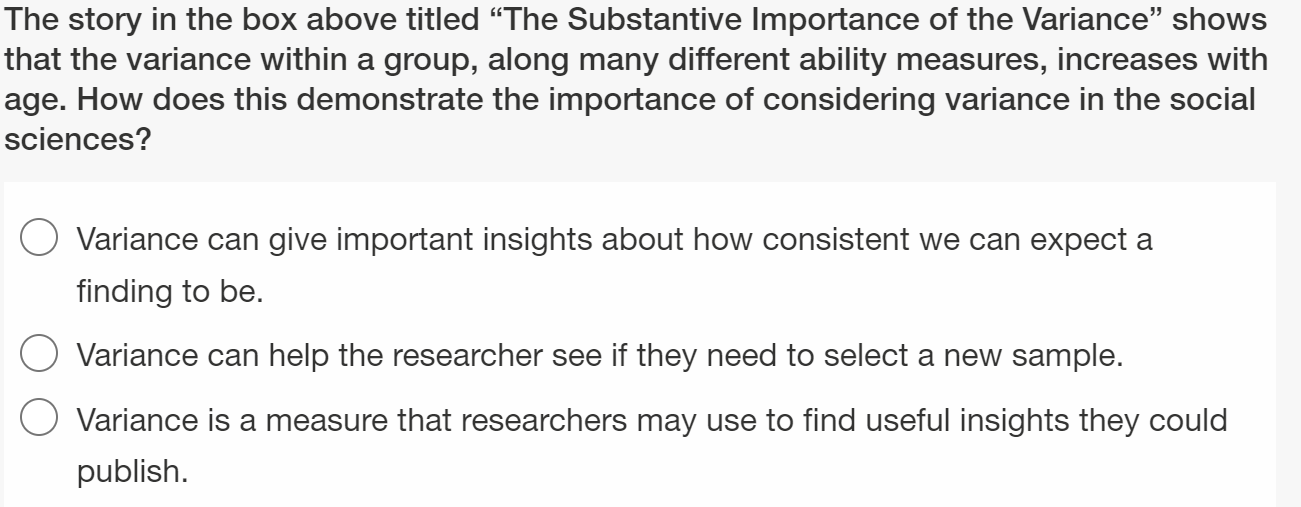
In which circumstances should a researcher avoid using the range and use the interquartile range (IOFO instead? 0 when the sample has no extreme values 0 when the sample has extreme values 0 when 50% of the sample falls in the interquartile range \fA researcher uses a sample variance to estimate a population variance and is dissatisfied with the accuracy of the estimate. The researcher decides to take another sample in order to better estimate the population variance. Which of the following should the researcher do? O instead of measuring the sample variance, use another sample measure 0 select a greater sample size 0 select a smaller sample size Which of the following variance definitions is correct? 0 the average of the deviation scores squared O the average of the absolute value of the deviations O the average of the deviation scores square rooted The story in the box above titled \"The Substantive Importance of the Variance\" shows that the variance within a group, along many different ability measures, increases with age. How does this demonstrate the importance of considering variance in the social sciences? O Variance can give important insights about how consistent we can expect a finding to be. 0 Variance can help the researcher see if they need to select a new sample. 0 Variance is a measure that researchers may use to find useful insights they could publish
Step by Step Solution
There are 3 Steps involved in it

Get step-by-step solutions from verified subject matter experts
 Study Help