Question: In your case study paper, you will address the following questions. 1. Identify the major benefits from TransCelerate utilizing the transformative approach to secure comparator
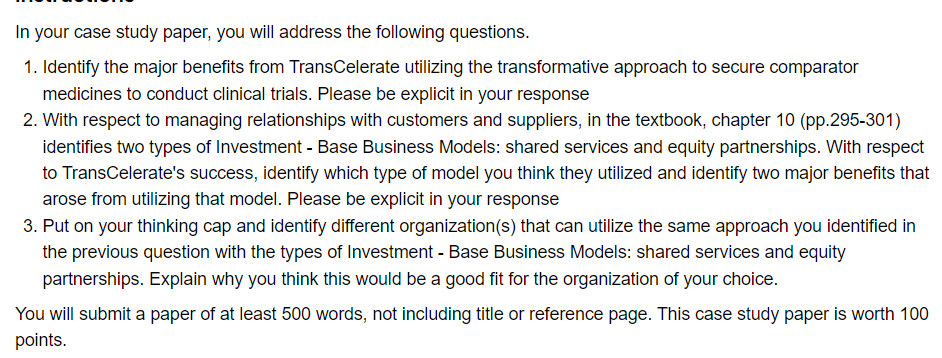
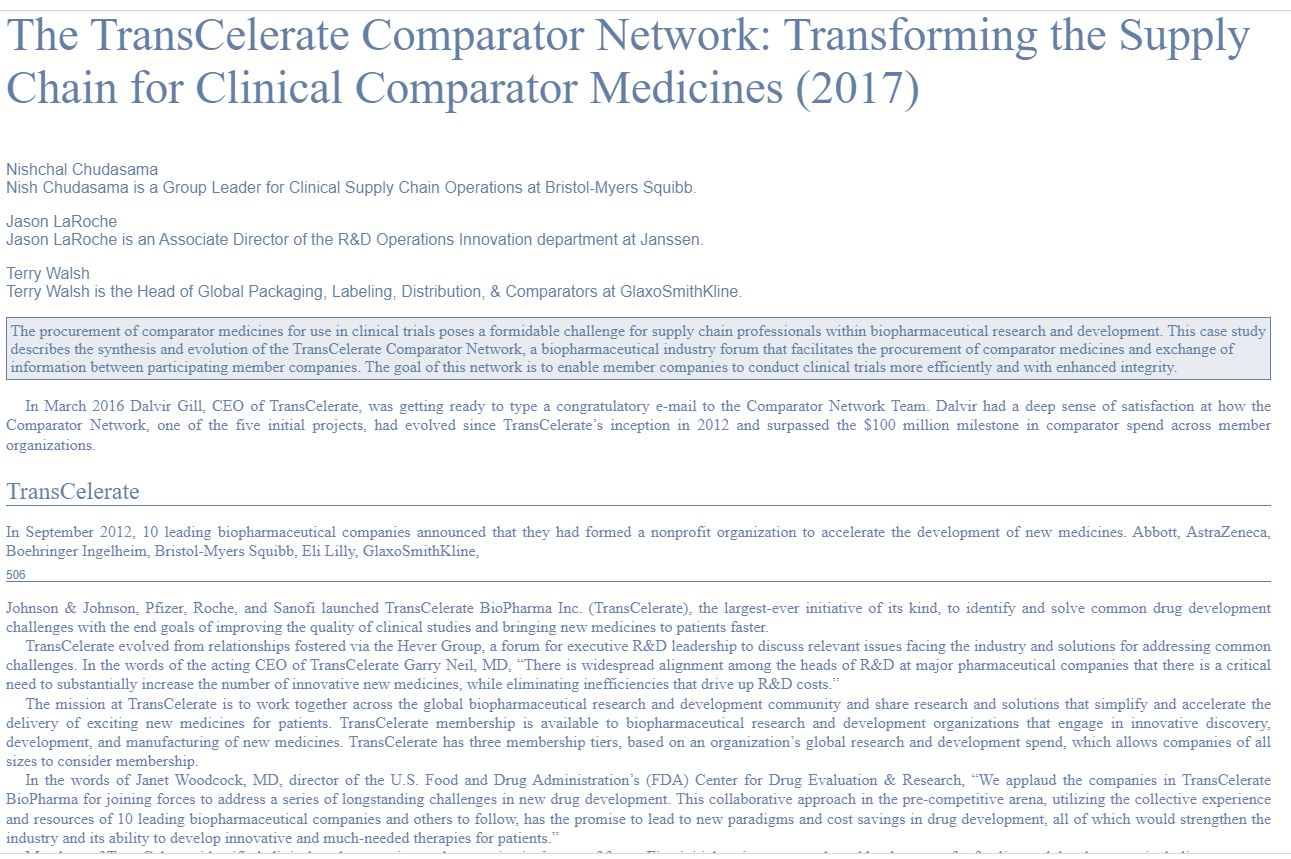
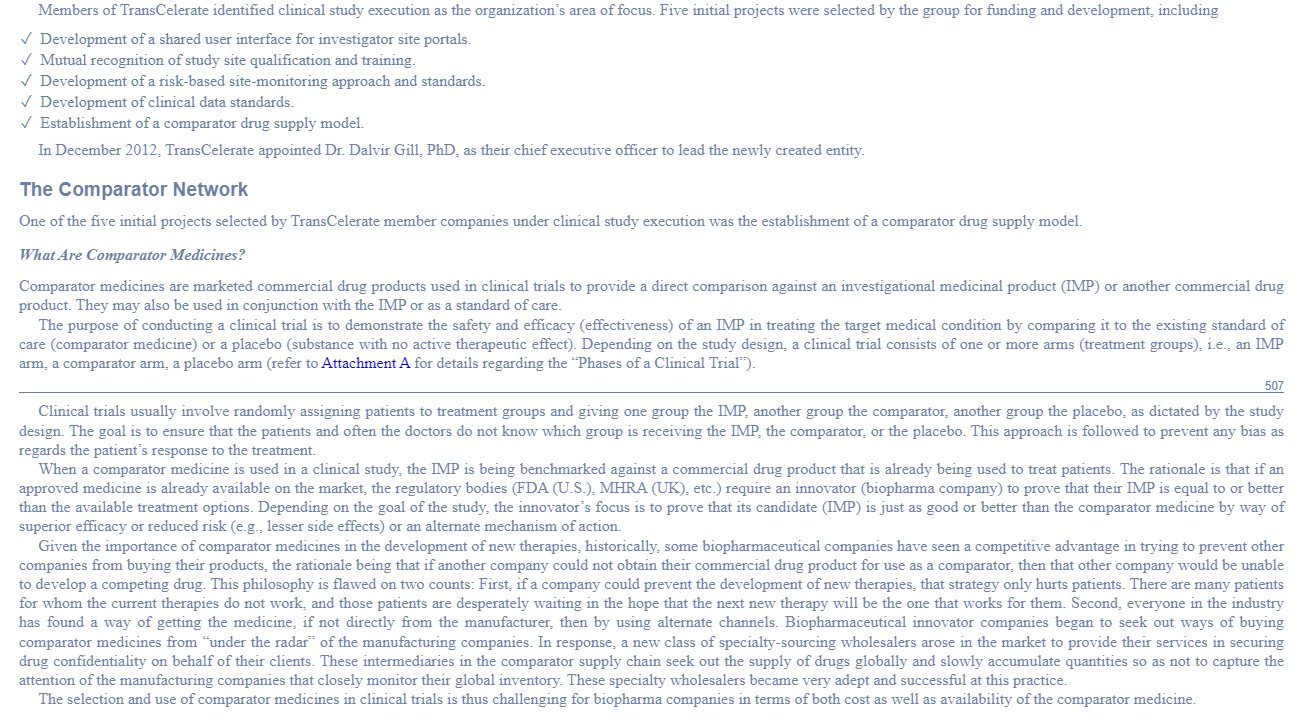
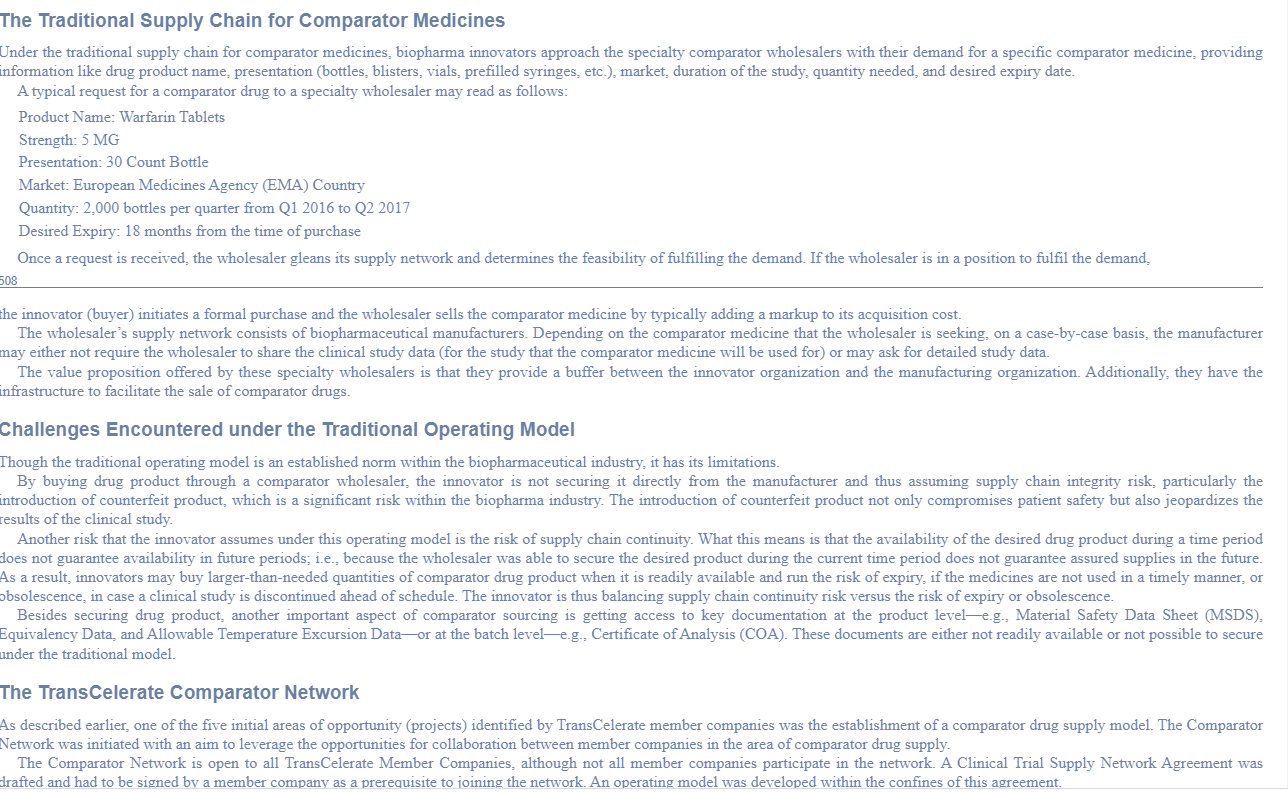
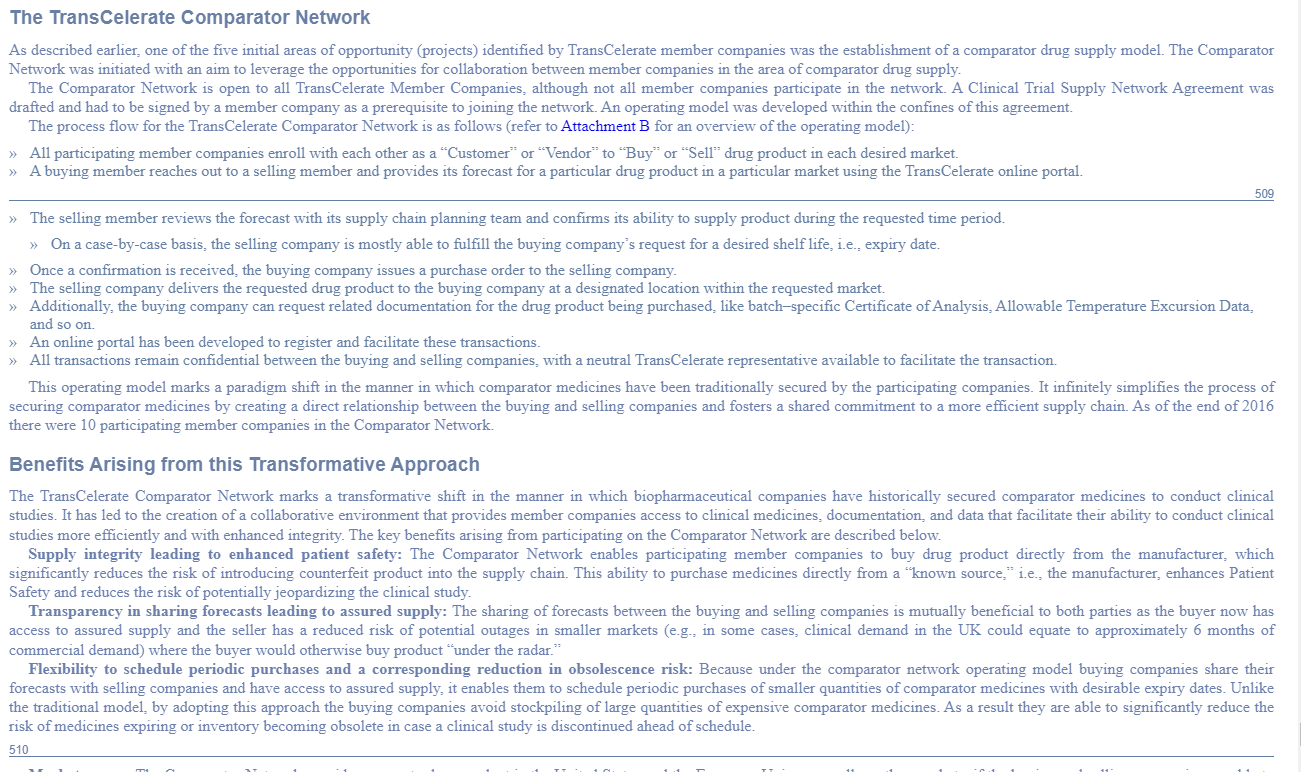
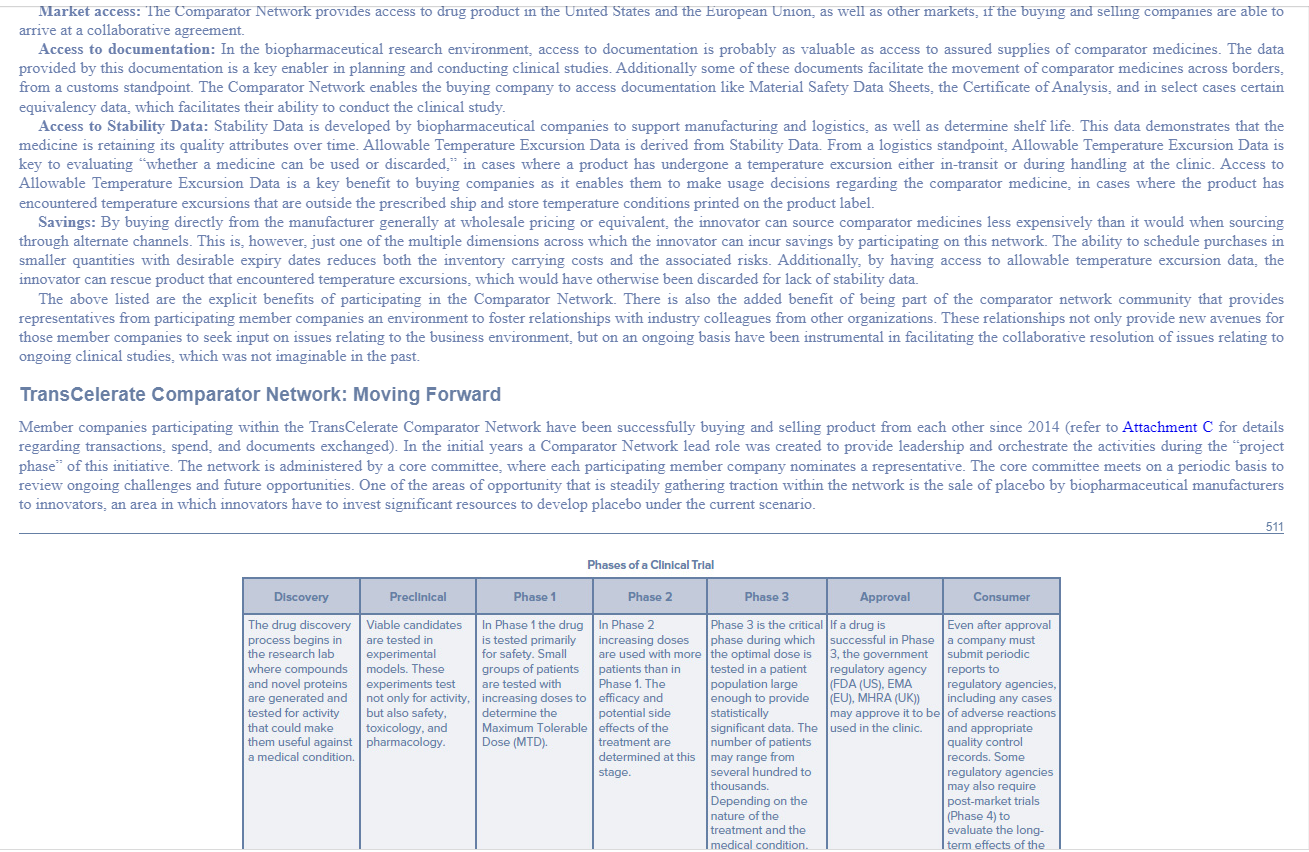
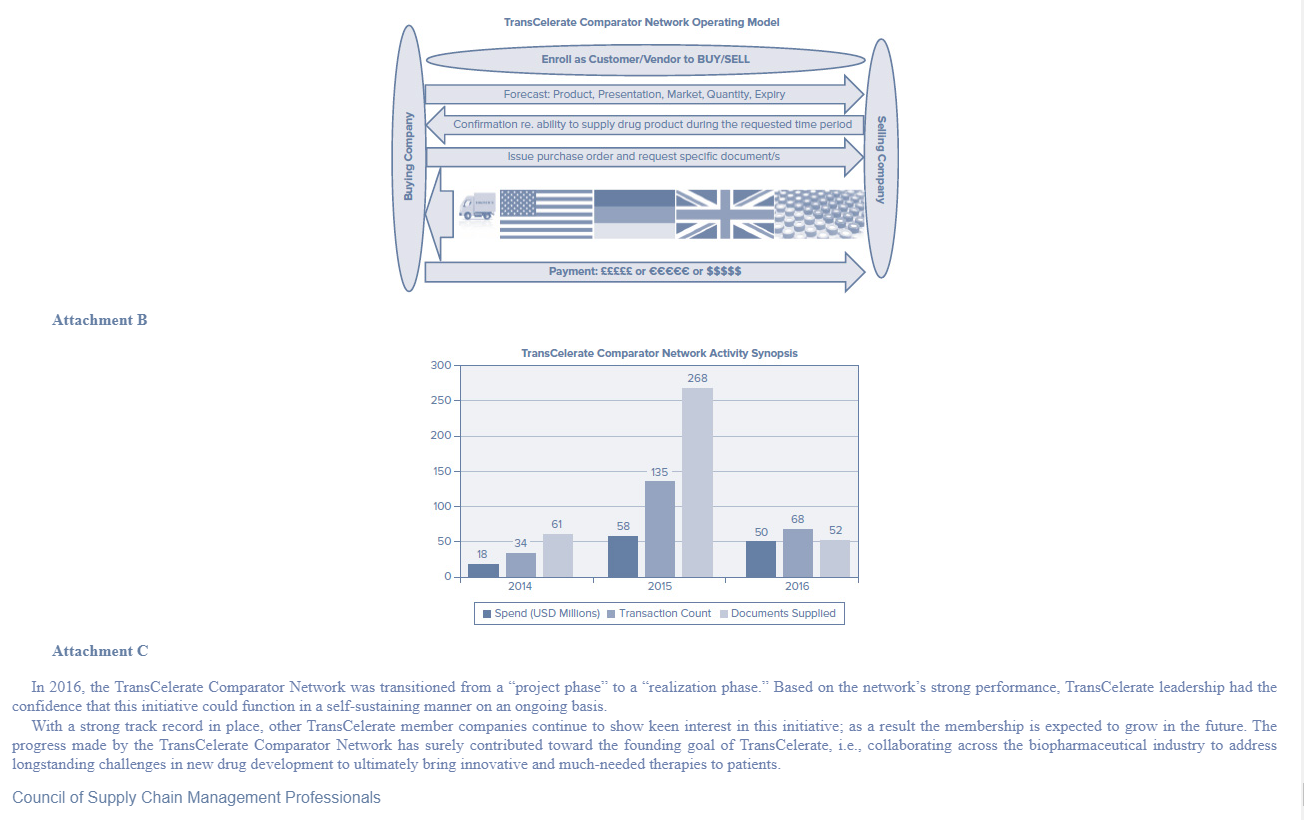
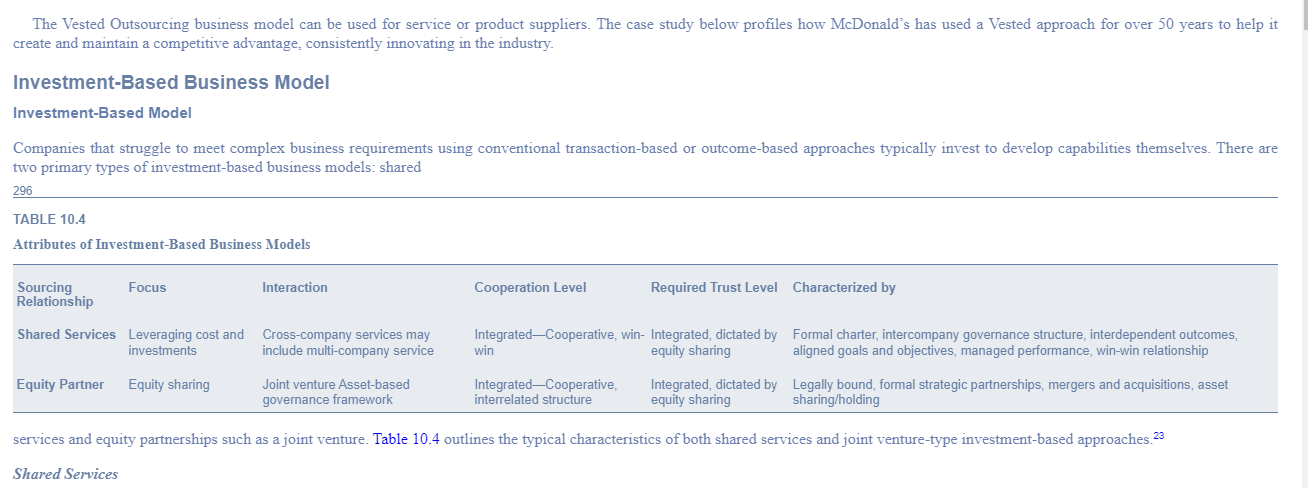
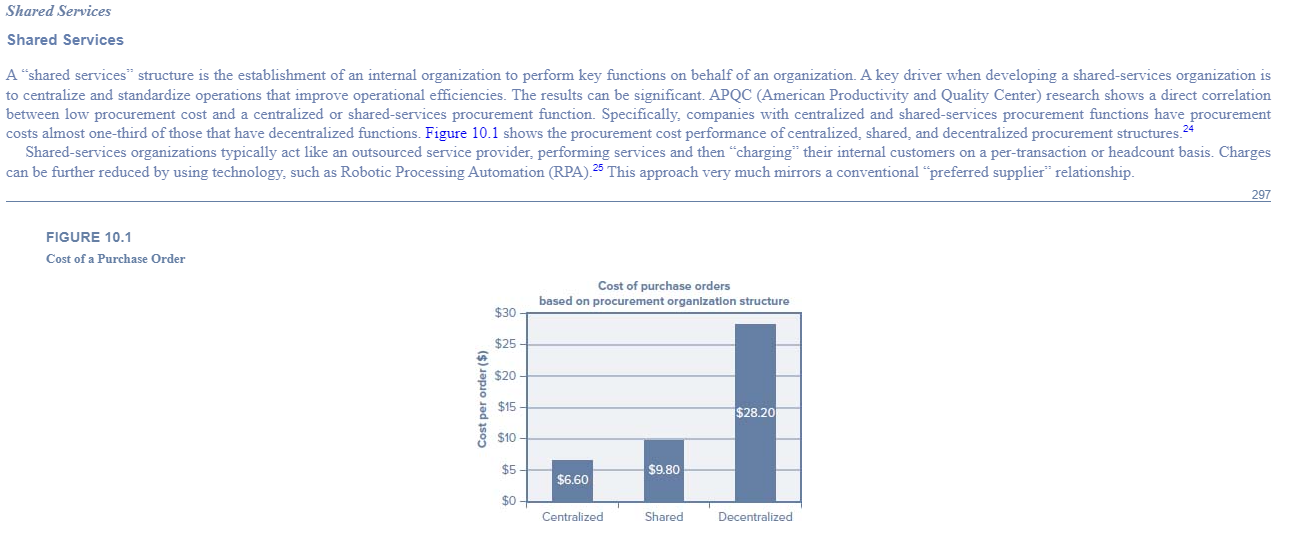
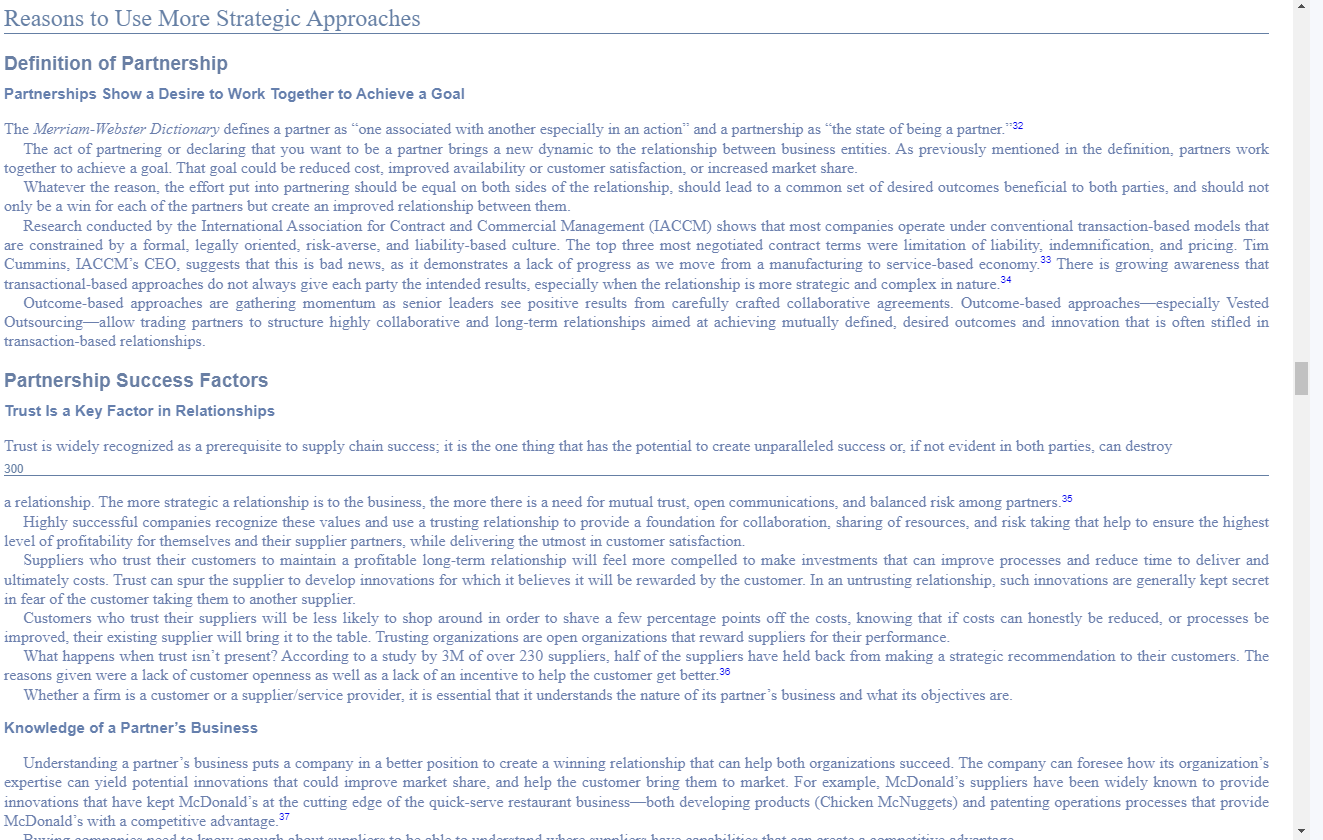
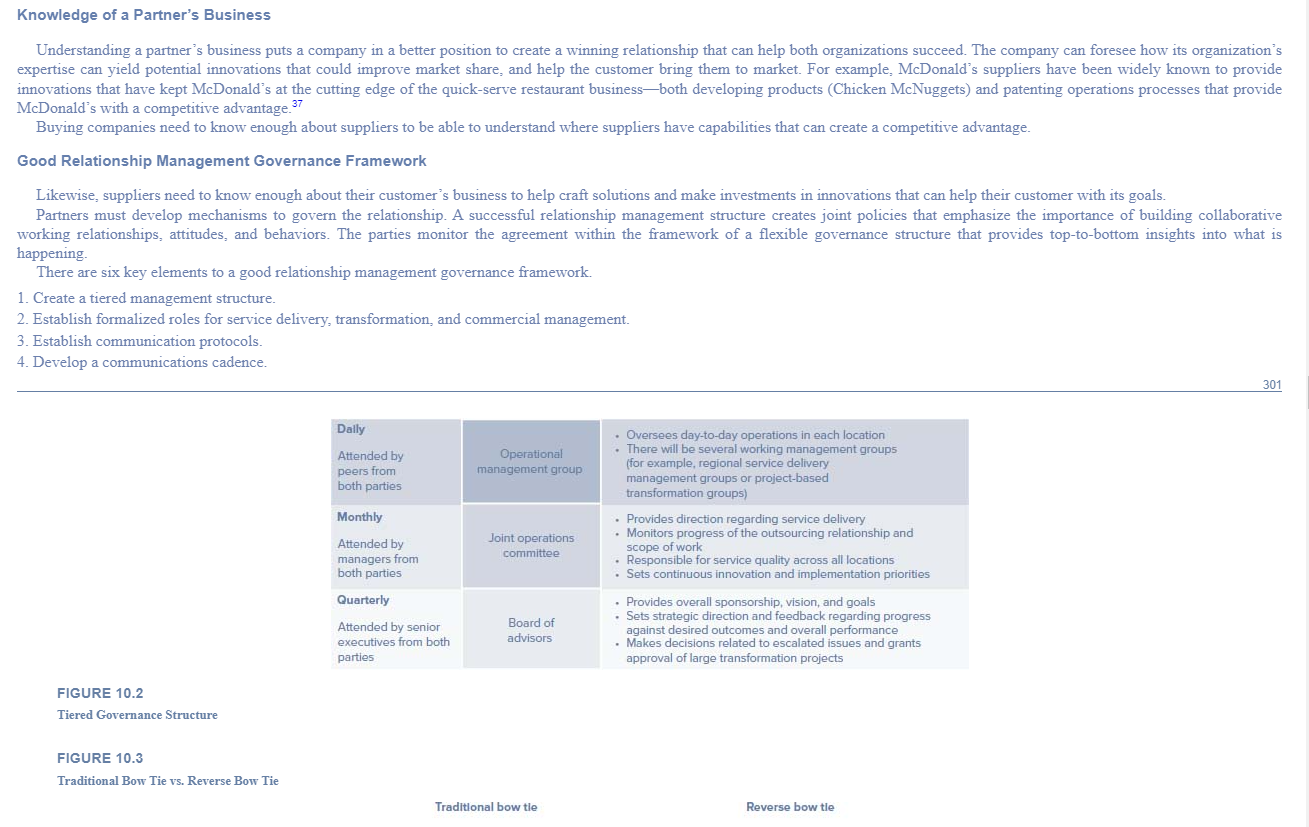
In your case study paper, you will address the following questions. 1. Identify the major benefits from TransCelerate utilizing the transformative approach to secure comparator medicines to conduct clinical trials. Please be explicit in your response 2. With respect to managing relationships with customers and suppliers, in the textbook, chapter 10 (pp.295-301) identifies two types of Investment - Base Business Models: shared services and equity partnerships. With respect to TransCelerate's success, identify which type of model you think they utilized and identify two major benefits that arose from utilizing that model. Please be explicit in your response 3. Put on your thinking cap and identify different organization(s) that can utilize the same approach you identified in the previous question with the types of Investment - Base Business Models: shared services and equity partnerships. Explain why you think this would be a good fit for the organization of your choice. You will submit a paper of at least 500 words, not including title or reference page. This case study paper is worth 100 points.The TransCelerate Comparator Network: Transforming the Supply Chain for Clinical Comparator Medicines (2017) Nishchal Chudasama Nish Chudasama is a Group Leader for Clinical Supply Chain Operations at Bristol-Myers Squibb. Jason LaRoche Jason LaRoche is an Associate Director of the R&D Operations Innovation department at Janssen. Terry Walsh Terry Walsh is the Head of Global Packaging, Labeling, Distribution, & Comparators at GlaxoSmithKline. The procurement of comparator medicines for use in clinical trials poses a formidable challenge for supply chain professionals within biopharmaceutical research and development. This case study describes the synthesis and evolution of the TransCelerate Comparator Network, a biopharmaceutical industry forum that facilitates the procurement of comparator medicines and exchange of information between participating member companies. The goal of this network is to enable member companies to conduct clinical trials more efficiently and with enhanced integrity. In March 2016 Dalvir Gill, CEO of TransCelerate, was getting ready to type a congratulatory e-mail to the Comparator Network Team. Dalvir had a deep sense of satisfaction at how the Comparator Network, one of the five initial projects, had evolved since TransCelerate's inception in 2012 and surpassed the $100 million milestone in comparator spend across member organizations. TransCelerate In September 2012, 10 leading biopharmaceutical companies announced that they had formed a nonprofit organization to accelerate the development of new medicines. Abbott, AstraZeneca, Boehringer Ingelheim, Bristol-Myers Squibb, Eli Lilly, GlaxoSmithKline, 506 Johnson & Johnson, Pfizer, Roche, and Sanofi launched TransCelerate BioPharma Inc. (TransCelerate), the largest-ever initiative of its kind, to identify and solve common drug development challenges with the end goals of improving the quality of clinical studies and bringing new medicines to patients faster. TransCelerate evolved from relationships fostered via the Hever Group, a forum for executive R&D leadership to discuss relevant issues facing the industry and solutions for addressing common challenges. In the words of the acting CEO of TransCelerate Garry Neil, MD. "There is widespread alignment among the heads of R&D at major pharmaceutical companies that there is a critical need to substantially increase the number of innovative new medicines, while eliminating inefficiencies that drive up R&D costs." The mission at TransCelerate is to work together across the global biopharmaceutical research and development community and share research and solutions that simplify and accelerate the delivery of exciting new medicines for patients. TransCelerate membership is available to biopharmaceutical research and development organizations that engage in innovative discovery, development, and manufacturing of new medicines. TransCelerate has three membership tiers, based on an organization's global research and development spend, which allows companies of all sizes to consider membership In the words of Janet Woodcock, MD, director of the U.S. Food and Drug Administration's (FDA) Center for Drug Evaluation & Research, "We applaud the companies in TransCelerate BioPharma for joining forces to address a series of longstanding challenges in new drug development. This collaborative approach in the pre-competitive arena, utilizing the collective experience and resources of 10 leading biopharmaceutical companies and others to follow, has the promise to lead to new paradigms and cost savings in drug development, all of which would strengthen the industry and its ability to develop innovative and much-needed therapies for patients."Members of TransCelerate identified clinical study execution as the organization's area of focus. Five initial projects were selected by the group for funding and development, including Development of a shared user interface for investigator site portals. Mutual recognition of study site qualification and training. Development of a risk-based site-monitoring approach and standards. Development of clinical data standards. Establishment of a comparator drug supply model. In December 2012, TransCelerate appointed Dr. Dalvir Gill, PhD, as their chief executive officer to lead the newly created entity. The Comparator Network One of the five initial projects selected by TransCelerate member companies under clinical study execution was the establishment of a comparator drug supply model. What Are Comparator Medicines? Comparator medicines are marketed commercial drug products used in clinical trials to provide a direct comparison against an investigational medicinal product (IMP) or another commercial drug product. They may also be used in conjunction with the IMP or as a standard of care. The purpose of conducting a clinical trial is to demonstrate the safety and efficacy (effectiveness) of an IMP in treating the target medical condition by comparing it to the existing standard of care (comparator medicine) or a placebo (substance with no active therapeutic effect). Depending on the study design, a clinical trial consists of one or more arms (treatment groups), i.e., an IMP arm, a comparator arm, a placebo arm (refer to Attachment A for details regarding the "Phases of a Clinical Trial"). 507 Clinical trials usually involve randomly assigning patients to treatment groups and giving one group the IMP, another group the comparator, another group the placebo, as dictated by the study design. The goal is to ensure that the patients and often the doctors do not know which group is receiving the IMP, the comparator, or the placebo. This approach is followed to prevent any bias as regards the patient's response to the treatment. When a comparator medicine is used in a clinical study, the IMP is being benchmarked against a commercial drug product that is already being used to treat patients. The rationale is that if an approved medicine is already available on the market, the regulatory bodies (FDA (U.S.), MHRA (UK), etc.) require an innovator (biopharma company) to prove that their IMP is equal to or better than the available treatment options. Depending on the goal of the study, the innovator's focus is to prove that its candidate (IMP) is just as good or better than the comparator medicine by way of superior efficacy or reduced risk (e.g., lesser side effects) or an alternate mechanism of action. Given the importance of comparator medicines in the development of new therapies, historically, some biopharmaceutical companies have seen a competitive advantage in trying to prevent other companies from buying their products, the rationale being that if another company could not obtain their commercial drug product for use as a comparator, then that other company would be unable to develop a competing drug. This philosophy is flawed on two counts: First, if a company could prevent the development of new therapies, that strategy only hurts patients. There are many patients for whom the current therapies do not work, and those patients are desperately waiting in the hope that the next new therapy will be the one that works for them. Second, everyone in the industry has found a way of getting the medicine, if not directly from the manufacturer, then by using alternate channels. Biopharmaceutical innovator companies began to seek out ways of buying comparator medicines from "under the radar" of the manufacturing companies. In response, a new class of specialty-sourcing wholesalers arose in the market to provide their services in securing drug confidentiality on behalf of their clients. These intermediaries in the comparator supply chain seek out the supply of drugs globally and slowly accumulate quantities so as not to capture the attention of the manufacturing companies that closely monitor their global inventory. These specialty wholesalers became very adept and successful at this practice. The selection and use of comparator medicines in clinical trials is thus challenging for biopharma companies in terms of both cost as well as availability of the comparator medicine.The Traditional Supply Chain for Comparator Medicines Under the traditional supply chain for comparator medicines, biopharma innovators approach the specialty comparator wholesalers with their demand for a specific comparator medicine, providing nformation like drug product name, presentation (bottles, blisters, vials, prefilled syringes, etc.), market, duration of the study, quantity needed, and desired expiry date. A typical request for a comparator drug to a specialty wholesaler may read as follows: Product Name: Warfarin Tablets Strength: 5 MG Presentation: 30 Count Bottle Market: European Medicines Agency (EMA) Country Quantity: 2,000 bottles per quarter from Q1 2016 to Q2 2017 Desired Expiry: 18 months from the time of purchase Once a request is received, the wholesaler gleans its supply network and determines the feasibility of fulfilling the demand. If the wholesaler is in a position to fulfil the demand, 08 he innovator (buyer) initiates a formal purchase and the wholesaler sells the comparator medicine by typically adding a markup to its acquisition cost. The wholesaler's supply network consists of biopharmaceutical manufacturers. Depending on the comparator medicine that the wholesaler is seeking, on a case-by-case basis, the manufacturer may either not require the wholesaler to share the clinical study data (for the study that the comparator medicine will be used for) or may ask for detailed study data. The value proposition offered by these specialty wholesalers is that they provide a buffer between the innovator organization and the manufacturing organization. Additionally, they have the nfrastructure to facilitate the sale of comparator drugs. Challenges Encountered under the Traditional Operating Model Though the traditional operating model is an established norm within the biopharmaceutical industry, it has its limitations. By buying drug product through a comparator wholesaler, the innovator is not securing it directly from the manufacturer and thus assuming supply chain integrity risk, particularly the ntroduction of counterfeit product, which is a significant risk within the biopharma industry. The introduction of counterfeit product not only compromises patient safety but also jeopardizes the results of the clinical study. Another risk that the innovator assumes under this operating model is the risk of supply chain continuity. What this means is that the availability of the desired drug product during a time period does not guarantee availability in future periods; i.e., because the wholesaler was able to secure the desired product during the current time period does not guarantee assured supplies in the future. As a result, innovators may buy larger-than-needed quantities of comparator drug product when it is readily available and run the risk of expiry, if the medicines are not used in a timely manner, or obsolescence, in case a clinical study is discontinued ahead of schedule. The innovator is thus balancing supply chain continuity risk versus the risk of expiry or obsolescence. Besides securing drug product, another important aspect of comparator sourcing is getting access to key documentation at the product level-e.g., Material Safety Data Sheet (MSDS), Equivalency Data, and Allowable Temperature Excursion Data-or at the batch level-e.g., Certificate of Analysis (COA). These documents are either not readily available or not possible to secure under the traditional model. The TransCelerate Comparator Network As described earlier, one of the five initial areas of opportunity (projects) identified by TransCelerate member companies was the establishment of a comparator drug supply model. The Comparator Network was initiated with an aim to leverage the opportunities for collaboration between member companies in the area of comparator drug supply. The Comparator Network is open to all TransCelerate Member Companies, although not all member companies participate in the network. A Clinical Trial Supply Network Agreement was rafted and had to be signed by a member company as a prerequisite to joining the network. An operating model was developed within the confines of this agreement.The TransCelerate Comparator Network As described earlier, one of the five initial areas of opportunity (projects) identified by TransCelerate member companies was the establishment of a comparator drug supply model. The Comparator Network was initiated with an aim to leverage the opportunities for collaboration between member companies in the area of comparator drug supply. The Comparator Network is open to all TransCelerate Member Companies, although not all member companies participate in the network. A Clinical Trial Supply Network Agreement was drafted and had to be signed by a member company as a prerequisite to joining the network. An operating model was developed within the confines of this agreement. The process flow for the TransCelerate Comparator Network is as follows (refer to Attachment B for an overview of the operating model): All participating member companies enroll with each other as a "Customer" or "Vendor" to "Buy" or "Sell" drug product in each desired market. A buying member reaches out to a selling member and provides its forecast for a particular drug product in a particular market using the TransCelerate online portal. 509 The selling member reviews the forecast with its supply chain planning team and confirms its ability to supply product during the requested time period. > On a case-by-case basis, the selling company is mostly able to fulfill the buying company's request for a desired shelf life, i.e., expiry date. Once a confirmation is received, the buying company issues a purchase order to the selling company. The selling company delivers the requested drug product to the buying company at a designated location within the requested market. Additionally, the buying company can request related documentation for the drug product being purchased, like batch-specific Certificate of Analysis, Allowable Temperature Excursion Data, and so on. An online portal has been developed to register and facilitate these transactions. All transactions remain confidential between the buying and selling companies, with a neutral TransCelerate representative available to facilitate the transaction. This operating model marks a paradigm shift in the manner in which comparator medicines have been traditionally secured by the participating companies. It infinitely simplifies the process of securing comparator medicines by creating a direct relationship between the buying and selling companies and fosters a shared commitment to a more efficient supply chain. As of the end of 2016 there were 10 participating member companies in the Comparator Network. Benefits Arising from this Transformative Approach The TransCelerate Comparator Network marks a transformative shift in the manner in which biopharmaceutical companies have historically secured comparator medicines to conduct clinical studies. It has led to the creation of a collaborative environment that provides member companies access to clinical medicines, documentation, and data that facilitate their ability to conduct clinical studies more efficiently and with enhanced integrity. The key benefits arising from participating on the Comparator Network are described below. Supply integrity leading to enhanced patient safety: The Comparator Network enables participating member companies to buy drug product directly from the manufacturer, which significantly reduces the risk of introducing counterfeit product into the supply chain. This ability to purchase medicines directly from a "known source," i.e., the manufacturer, enhances Patient Safety and reduces the risk of potentially jeopardizing the clinical study. Transparency in sharing forecasts leading to assured supply: The sharing of forecasts between the buying and selling companies is mutually beneficial to both parties as the buyer now has access to assured supply and the seller has a reduced risk of potential outages in smaller markets (e.g., in some cases, clinical demand in the UK could equate to approximately 6 months of commercial demand) where the buyer would otherwise buy product "under the radar." Flexibility to schedule periodic purchases and a corresponding reduction in obsolescence risk: Because under the comparator network operating model buying companies share their forecasts with selling companies and have access to assured supply, it enables them to schedule periodic purchases of smaller quantities of comparator medicines with desirable expiry dates. Unlike the traditional model, by adopting this approach the buying companies avoid stockpiling of large quantities of expensive comparator medicines. As a result they are able to significantly reduce the risk of medicines expiring or inventory becoming obsolete in case a clinical study is discontinued ahead of schedule. 510Market access: The Comparator Network provides access to drug product in the United States and the European Union, as well as other markets, if the buying and selling companies are able to arrive at a collaborative agreement. Access to documentation: In the biopharmaceutical research environment, access to documentation is probably as valuable as access to assured supplies of comparator medicines. The data provided by this documentation is a key enabler in planning and conducting clinical studies. Additionally some of these documents facilitate the movement of comparator medicines across borders, from a customs standpoint. The Comparator Network enables the buying company to access documentation like Material Safety Data Sheets, the Certificate of Analysis, and in select cases certain equivalency data, which facilitates their ability to conduct the clinical study. Access to Stability Data: Stability Data is developed by biopharmaceutical companies to support manufacturing and logistics, as well as determine shelf life. This data demonstrates that the medicine is retaining its quality attributes over time. Allowable Temperature Excursion Data is derived from Stability Data. From a logistics standpoint, Allowable Temperature Excursion Data is key to evaluating "whether a medicine can be used or discarded,"in cases where a product has undergone a temperature excursion either in-transit or during handling at the clinic. Access to Allowable Temperature Excursion Data is a key benefit to buying companies as it enables them to make usage decisions regarding the comparator medicine, in cases where the product has encountered temperature excursions that are outside the prescribed ship and store temperature conditions printed on the product label. Savings: By buying directly from the manufacturer generally at wholesale pricing or equivalent, the innovator can source comparator medicines less expensively than it would when sourcing through alternate channels. This is, however, just one of the multiple dimensions across which the innovator can incur savings by participating on this network. The ability to schedule purchases in smaller quantities with desirable expiry dates reduces both the inventory carrying costs and the associated risks. Additionally, by having access to allowable temperature excursion data, the innovator can rescue product that encountered temperature excursions, which would have otherwise been discarded for lack of stability data. The above listed are the explicit benefits of participating in the Comparator Network. There is also the added benefit of being part of the comparator network community that provides representatives from participating member companies an environment to foster relationships with industry colleagues from other organizations. These relationships not only provide new avenues for those member companies to seek input on issues relating to the business environment, but on an ongoing basis have been instrumental in facilitating the collaborative resolution of issues relating to ongoing clinical studies, which was not imaginable in the past. TransCelerate Comparator Network: Moving Forward Member companies participating within the TransCelerate Comparator Network have been successfully buying and selling product from each other since 2014 (refer to Attachment C for details regarding transactions, spend, and documents exchanged). In the initial years a Comparator Network lead role was created to provide leadership and orchestrate the activities during the "project phase" of this initiative. The network is administered by a core committee, where each participating member company nominates a representative. The core committee meets on a periodic basis to review ongoing challenges and future opportunities. One of the areas of opportunity that is steadily gathering traction within the network is the sale of placebo by biopharmaceutical manufacturers to innovators, an area in which innovators have to invest significant resources to develop placebo under the current scenario. 511 Phases of a Clinical Trial Discovery Preclinical Phase 1 Phase 2 Phase 3 Approval Consumer The drug discovery Viable candidates In Phase 1 the drug In Phase 2 Phase 3 is the critical If a drug is Even after approval process begins in are tested in is tested primarily increasing doses phase during which successful in Phase a company must the research lab experimental for safety. Small are used with more | the optimal dose is 3, the government submit periodic where compounds models. These groups of patients patients than in tested in a patient regulatory agency reports to and novel proteins experiments test are tested with Phase 1. The population large (FDA (US), EMA regulatory agencies, are generated and not only for activity, increasing doses to efficacy and enough to provide (EU), MHRA (UK)) including any cases tested for activity but also safety, determine the potential side statistically may approve it to be of adverse reactions that could make toxicology, and Maximum Tolerable effects of the significant data. The used in the clinic. and appropriate them useful against | pharmacology. Dose (MTD). treatment are number of patients quality control a medical condition. determined at this may range from records. Some stage. several hundred to regulatory agencies thousands. may also require Depending on the post-market trials nature of the (Phase 4) to treatment and the evaluate the long- medical condition term effects of theTransCelerate Comparator Network Operating Model Enroll as Customer/Vendor to BUY/SELL Forecast: Product, Presentation, Market, Quantity, Expiry Confirmation re. ability to supply drug product during the requested time period Buying Company Issue purchase order and request specific document/s Selling Company Payment: EEEEE or CECEE or $$$$$ Attachment B TransCelerate Comparator Network Activity Synopsis 300 - 268 250 200 150- 135 100 68 61 58 50 52 50 24 2014 2015 2016 Spend (USD Millions) _ Transaction Count . Documents Supplied Attachment C In 2016, the TransCelerate Comparator Network was transitioned from a "project phase" to a "realization phase." Based on the network's strong performance, TransCelerate leadership had the confidence that this initiative could function in a self-sustaining manner on an ongoing basis. With a strong track record in place, other TransCelerate member companies continue to show keen interest in this initiative; as a result the membership is expected to grow in the future. The progress made by the TransCelerate Comparator Network has surely contributed toward the founding goal of TransCelerate, i.e., collaborating across the biopharmaceutical industry to address longstanding challenges in new drug development to ultimately bring innovative and much-needed therapies to patients. Council of Supply Chain Management ProfessionalsThe Vested Outsourcing business model can be used for service or product suppliers. The case study below profiles how Mcdonald's has used a Vested approach for over 50 years to help it create and maintain a competitive advantage, consistently innovating in the industry. Investment-Based Business Model Investment-Based Model Companies that struggle to meet complex business requirements using conventional transaction-based or outcome-based approaches typically invest to develop capabilities themselves. There are two primary types of investment-based business models: shared 296 TABLE 10.4 Attributes of Investment-Based Business Models Sourcing Focus Interaction Cooperation Level Required Trust Level Characterized by Relationship Shared Services Leveraging cost and Cross-company services may Integrated-Cooperative, win- Integrated, dictated by Formal charter, intercompany governance structure, interdependent outcomes, investments include multi-company service win equity sharing aligned goals and objectives, managed performance, win-win relationship Equity Partner Equity sharing Joint venture Asset-based Integrated-Cooperative, Integrated, dictated by Legally bound, formal strategic partnerships, mergers and acquisitions, asset governance framework interrelated structure equity sharing sharing/holding services and equity partnerships such as a joint venture. Table 10.4 outlines the typical characteristics of both shared services and joint venture-type investment-based approaches. Shared ServicesShared Services Shared Services A "shared services" structure is the establishment of an internal organization to perform key functions on behalf of an organization. A key driver when developing a shared-services organization is to centralize and standardize operations that improve operational efficiencies. The results can be significant. APQC (American Productivity and Quality Center) research shows a direct correlation between low procurement cost and a centralized or shared-services procurement function. Specifically, companies with centralized and shared-services procurement functions have procurement costs almost one-third of those that have decentralized functions. Figure 10.1 shows the procurement cost performance of centralized, shared, and decentralized procurement structures.24 Shared-services organizations typically act like an outsourced service provider, performing services and then "charging" their internal customers on a per-transaction or headcount basis. Charges can be further reduced by using technology, such as Robotic Processing Automation (RPA)." This approach very much mirrors a conventional "preferred supplier" relationship. 297 FIGURE 10.1 Cost of a Purchase Order Cost of purchase orders based on procurement organization structure $30 $25 $20 Cost per order ($) $15 $28.20 $10 $5 $9.80 $6.60 $0 - Centralized Shared Decentralized298 Equity Partnership Equity Partnership Some companies decide they do not have the internal capabilities, yet they do not want to outsource for a variety of reasons. In these cases, companies may opt to develop a joint venture or other legal form in an effort to acquire mission-critical goods and services. For instance, Sony formed a joint venture in China to more effectively make and market PlayStation consoles and games.2 Renault-Nissan Alliance is working to produce electric vehicles in the same China market.27 These equity partnerships can take different legal forms, from buying a service provider, to becoming a subsidiary, to equity-sharing joint ventures. These partnerships often require the strategic interweaving of infrastructure and heavy co-investment. Equity partnerships, by default, bring costs "in house" and create a fixed cost burden. As a result, equity partnerships often conflict with the desires of many organizations to create more variable and flexible cost structures on their balance sheets.Reasons to Use More Strategic Approaches Definition of Partnership Partnerships Show a Desire to Work Together to Achieve a Goal The Merriam-Webster Dictionary defines a partner as "one associated with another especially in an action" and a partnership as "the state of being a partner."32 The act of partnering or declaring that you want to be a partner brings a new dynamic to the relationship between business entities. As previously mentioned in the definition, partners work together to achieve a goal. That goal could be reduced cost, improved availability or customer satisfaction, or increased market share. Whatever the reason, the effort put into partnering should be equal on both sides of the relationship, should lead to a common set of desired outcomes beneficial to both parties, and should not only be a win for each of the partners but create an improved relationship between them. Research conducted by the International Association for Contract and Commercial Management (IACCM) shows that most companies operate under conventional transaction-based models that are constrained by a formal, legally oriented, risk-averse, and liability-based culture. The top three most negotiated contract terms were limitation of liability, indemnification, and pricing. Tim Cummins, IACCM's CEO, suggests that this is bad news, as it demonstrates a lack of progress as we move from a manufacturing to service-based economy. There is growing awareness that transactional-based approaches do not always give each party the intended results, especially when the relationship is more strategic and complex in nature. Outcome-based approaches are gathering momentum as senior leaders see positive results from carefully crafted collaborative agreements. Outcome-based approaches-especially Vested Outsourcing-allow trading partners to structure highly collaborative and long-term relationships aimed at achieving mutually defined, desired outcomes and innovation that is often stifled in transaction-based relationships. Partnership Success Factors Trust Is a Key Factor in Relationships Trust is widely recognized as a prerequisite to supply chain success; it is the one thing that has the potential to create unparalleled success or, if not evident in both parties, can destroy 300 a relationship. The more strategic a relationship is to the business, the more there is a need for mutual trust, open communications, and balanced risk among partners. Highly successful companies recognize these values and use a trusting relationship to provide a foundation for collaboration, sharing of resources, and risk taking that help to ensure the highest level of profitability for themselves and their supplier partners, while delivering the utmost in customer satisfaction. Suppliers who trust their customers to maintain a profitable long-term relationship will feel more compelled to make investments that can improve processes and reduce time to deliver and ultimately costs. Trust can spur the supplier to develop innovations for which it believes it will be rewarded by the customer. In an untrusting relationship, such innovations are generally kept secret in fear of the customer taking them to another supplier. Customers who trust their suppliers will be less likely to shop around in order to shave a few percentage points off the costs, knowing that if costs can honestly be reduced, or processes be improved, their existing supplier will bring it to the table. Trusting organizations are open organizations that reward suppliers for their performance. What happens when trust isn't present? According to a study by 3M of over 230 suppliers, half of the suppliers have held back from making a strategic recommendation to their customers. The reasons given were a lack of customer openness as well as a lack of an incentive to help the customer get better. Whether a firm is a customer or a supplier/service provider, it is essential that it understands the nature of its partner's business and what its objectives are. Knowledge of a Partner's Business Understanding a partner's business puts a company in a better position to create a winning relationship that can help both organizations succeed. The company can foresee how its organization's expertise can yield potential innovations that could improve market share, and help the customer bring them to market. For example, Mcdonald's suppliers have been widely known to provide innovations that have kept Mcdonald's at the cutting edge of the quick-serve restaurant business-both developing products (Chicken McNuggets) and patenting operations processes that provide Mcdonald's with a competitive advantage.7Knowledge of a Partner's Business Understanding a partner's business puts a company in a better position to create a winning relationship that can help both organizations succeed. The company can foresee how its organization's expertise can yield potential innovations that could improve market share, and help the customer bring them to market. For example, Mcdonald's suppliers have been widely known to provide innovations that have kept Mcdonald's at the cutting edge of the quick-serve restaurant business-both developing products (Chicken Mcnuggets) and patenting operations processes that provide Mcdonald's with a competitive advantage. Buying companies need to know enough about suppliers to be able to understand where suppliers have capabilities that can create a competitive advantage. Good Relationship Management Governance Framework Likewise, suppliers need to know enough about their customer's business to help craft solutions and make investments in innovations that can help their customer with its goals. Partners must develop mechanisms to govern the relationship. A successful relationship management structure creates joint policies that emphasize the importance of building collaborative working relationships, attitudes, and behaviors. The parties monitor the agreement within the framework of a flexible governance structure that provides top-to-bottom insights into what is happening. There are six key elements to a good relationship management governance framework. 1. Create a tiered management structure. 2. Establish formalized roles for service delivery, transformation, and commercial management. 3. Establish communication protocols. 4. Develop a communications cadence. 301 Dally . Oversees day-to-day operations in each location Attended by Operational . There will be several working management groups peers from management group (for example, regional service delivery both parties management groups or project-based transformation groups) Monthly . Provides direction regarding service delivery Attended by Joint operations . Monitors progress of the outsourcing relationship and scope of work managers from committee . Responsible for service quality across all locations both parties Sets continuous innovation and implementation priorities Quarterly Provides overall sponsorship, vision, and goals Sets strategic direction and feedback regarding progress Attended by senior Board of executives from both advisors against desired outcomes and overall performance . Makes decisions related to escalated issues and grants parties approval of large transformation projects FIGURE 10.2 Tiered Governance Structure FIGURE 10.3 Traditional Bow Tie vs. Reverse Bow Tie Traditional bow tie Reverse bow tie
Step by Step Solution
There are 3 Steps involved in it
1 Expert Approved Answer
Step: 1 Unlock
Question Has Been Solved by an Expert!
Get step-by-step solutions from verified subject matter experts
Step: 2 Unlock
Step: 3 Unlock
Students Have Also Explored These Related General Management Questions!