







Question: #include Assignment - 2 . h using namespace SVF; using namespace SVFUtil; void ICFGTraversal::dfs ( const ICFGEdge * src , const ICFGNode * dst
#include "Assignmenth
using namespace SVF;
using namespace SVFUtil;
void ICFGTraversal::dfsconst ICFGEdge src const ICFGNode dst
auto curItem std::makepairsrc callstack;
visited.insertcurItem;
path.pushbacksrc;
if srcgetDstNode dst
printICFGPath;
for const ICFGEdge edge : srcgetDstNodegetOutEdges
auto newItem std::makepairedge callstack;
if visitedfindnewItem visited.end
if edgeisIntraCFGEdge
dfsedge dst;
else if edgeisCallCFGEdge
callstack.pushbackedgegetSrcNode;
dfsedge dst;
callstack.popback;
else if edgeisRetCFGEdge
if callstack.empty && callstack.back edgegetCallSite
callstack.popback;
dfsedge dst;
else if callstackempty
dfsedge dst;
visited.erasecurItem;
path.popback;
void ICFGTraversal::printICFGPath
std::string pathStr "START: ;
for const auto& edge : path
pathStr std::tostringedgegetSrcNodegetId;
pathStr std::tostringpathbackgetDstNodegetId END";
paths.insertpathStr;
std::cout pathStr std::endl;
void ICFGTraversal::analyse
std::set sources;
std::set sinks;
for const ICFGNode src : identifySourcesources
for const ICFGNode sink: identifySinksinks
const IntraCFGEdge startEdge new IntraCFGEdgenullptrconstcastsrc;
handleIntrastartEdge;
dfsstartEdge sink;
resetSolver;
#ifndef SVFICFGTRAVERSALH
#define SVFICFGTRAVERSALH
#include SVFLLVMSVFIRBuilderh
namespace SVF
class ICFGTraversal
public:
typedef std::vector CallStack;
ICFGTraversalSVFIR s ICFG i : svfirs icfgi
std::set &identifySourcestd::set &container
container.inserticfggetGlobalICFGNode;
return container;
std::set &identifySinkstd::set &container
for const CallICFGNode cs : svfirgetCallSiteSet
const SVFFunction fun SVFUtil::getCalleecsgetCallSite;
if isAssertFunfun
container.insertcs;
return container;
inline bool isAssertFunconst SVFFunction fun const
return fun NULL && fungetName "assert" fungetNamesvfassert" fungetName "sink" ;
virtual void resetSolver
visited.clear;
virtual void printICFGPath;
void dfsconst ICFGEdge src const ICFGNode dst;
void analyse;
virtual bool handleCallconst CallCFGEdge call return true;
virtual bool handleRetconst RetCFGEdge ret return true;
virtual bool handleIntraconst IntraCFGEdge edge return true;
Set getPaths
return paths;
private:
ICFG icfg;
Set paths;
protected:
SVFIR svfir;
Set visited;
CallStack callstack;
std::vector path;
;
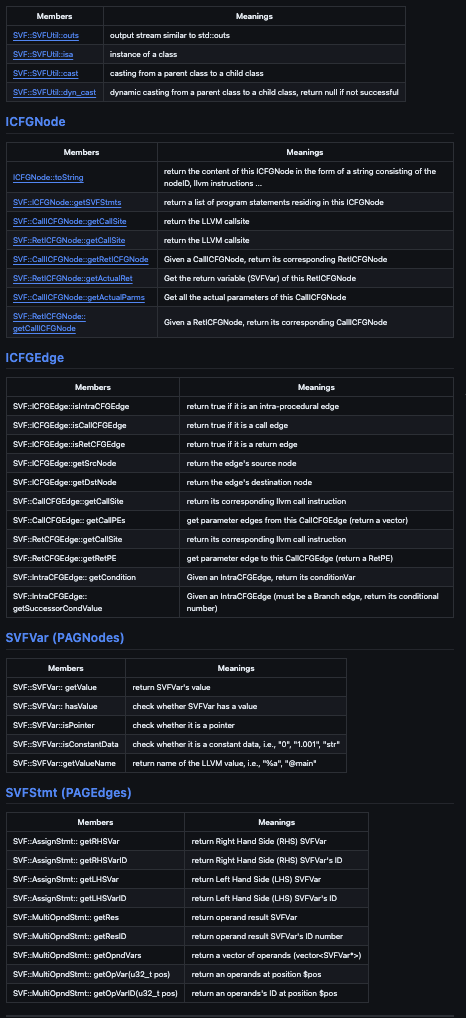
#endif SVFEXSSEH I have two problems with my code. Type Mismatch in pushback: The first error is due to a type mismatch in the pushback method call. Your callstack vector is defined to hold pointers of type const SVF::SVFInstruction but you're trying to push a pointer of type SVF::GenericEdge::NodeTypewhich is equivalent to SVF::ICFGNode Since SVF::ICFGNode is not implicitly convertible to const SVF::SVFInstruction the compiler raises an error. You need to ensure that the types are compatible or find another way to track the call stack that doesn't involve pushing incompatible types.
Missing getCallSite Method: The second error indicates that the ICFGEdge class doesn't have a member function named getCallSite. This could be due to a few reasons: maybe the method doesn't exist in the version of the SVF framework you're using, or it might be a method of a subclass of ICFGEdge, and you're trying to call it on an ICFGEdge object. Please fix it for me
Step by Step Solution
There are 3 Steps involved in it
1 Expert Approved Answer
Step: 1 Unlock

Question Has Been Solved by an Expert!
Get step-by-step solutions from verified subject matter experts
Step: 2 Unlock
Step: 3 Unlock
 Study Help