





Question: #include #include #include #include void *helper (void *arg) { int *number (int *) arg; (*number) ++; return NULL; } int main(int argc, char *argv[]) {
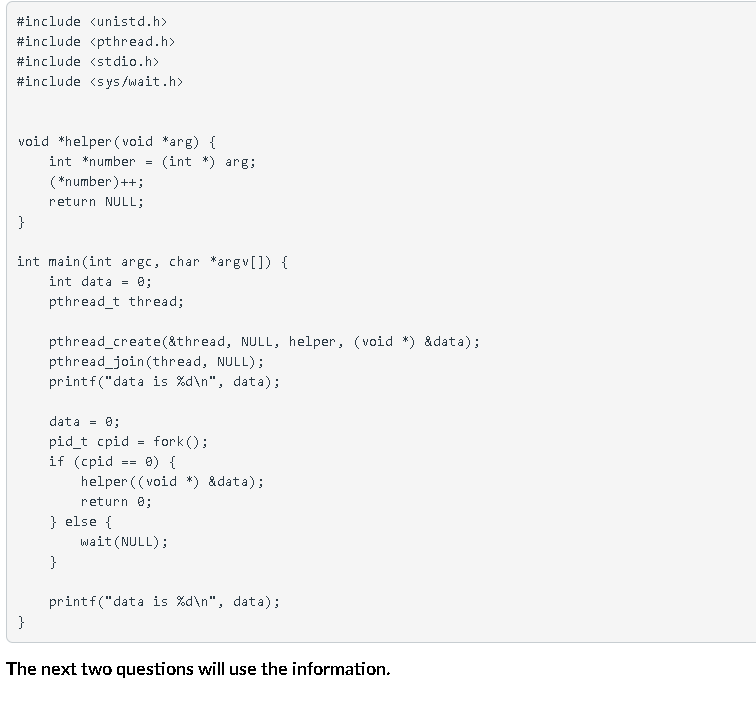

 #include #include #include #include void *helper (void *arg) { int *number(int *) arg; (*number) ++; return NULL; } int main(int argc, char*argv[]) { int data pthread_t thread; : 0; pthread_create(&thread, NULL, helper, (void

#include #include #include #include void *helper (void *arg) { int *number (int *) arg; (*number) ++; return NULL; } int main(int argc, char *argv[]) { int data pthread_t thread; : 0; pthread_create(&thread, NULL, helper, (void *) &data); pthread_join(thread, NULL); printf("data is %d ", data); data pid_t cpid fork; if (cpid a) { helper((void *) &data); return 0; } else { wait(NULL); } printf("data is %d ", data); } The next two questions will use the information. What does this program output? (There should be 2 lines of output.) Explain why the two lines of output are either different or the same

Step by Step Solution

There are 3 Steps involved in it

1 Expert Approved Answer
Step: 1 Unlock blur-text-image

Question Has Been Solved by an Expert!

Get step-by-step solutions from verified subject matter experts

Step: 2 Unlock
Step: 3 Unlock

Students Have Also Explored These Related Databases Questions!