







Question: #include #include #include stackAsArray.h # IMPORTANT NOTICE # This file needs stackAsArray.h and stackADT.h files to run. # You can find those files in
#include
#include
#include "stackAsArray.h
# IMPORTANT NOTICE
# This file needs stackAsArray.h and stackADT.h files to run.
# You can find those files in "resourcesLABSlab folder.
using namespace std;
#define SIZE
bool testSymmetrystackType s
Write your solution here for Question
int main
stackType myStackSIZE;
myStack.push;
myStack.push;
myStack.push;
myStack.push;
myStack.push;
myStack.push;
bool c testSymmetrymyStack;
The stack given above is symmetric, so you should see "Symmetric!" at the screen.
Try with different stacks and check your results.
if c
cout "Symmetric ;
else
cout "NOT Symmetric ;
return ;
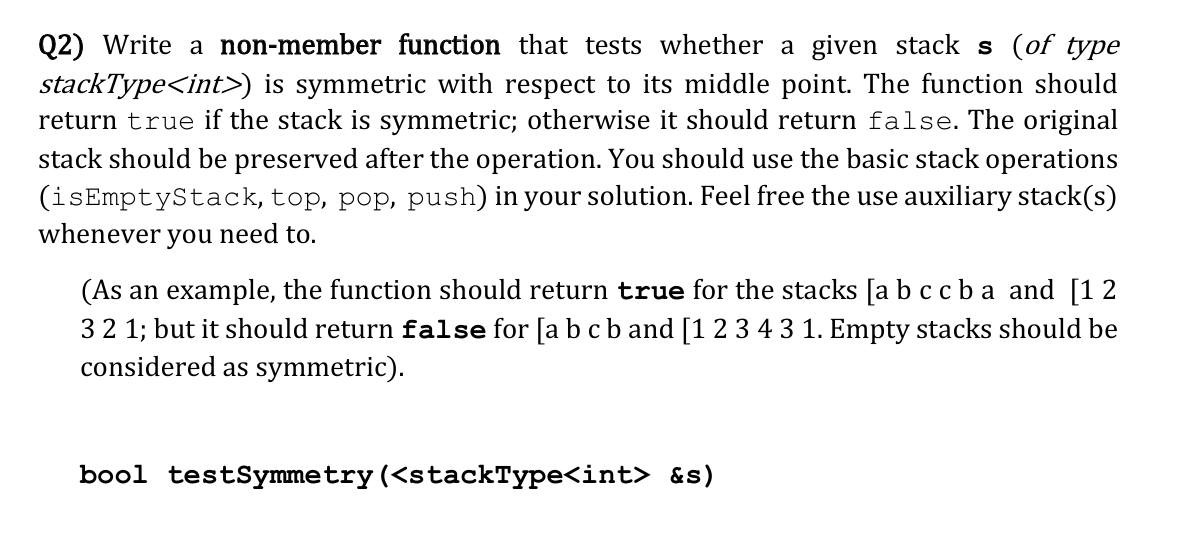
Q Write a nonmember function that tests whether a given stack s of type
stackType int is symmetric with respect to its middle point. The function should
return true if the stack is symmetric; otherwise it should return false. The original
stack should be preserved after the operation. You should use the basic stack operations
isEmptyStack top, pop, push in your solution. Feel free the use auxiliary stacks
whenever you need to
As an example, the function should return true for the stacks a and
; but it should return fal se for a b c b and Empty stacks should be
considered as symmetric
bool testSymmetry
Step by Step Solution
There are 3 Steps involved in it
1 Expert Approved Answer
Step: 1 Unlock

Question Has Been Solved by an Expert!
Get step-by-step solutions from verified subject matter experts
Step: 2 Unlock
Step: 3 Unlock
 Study Help