







Question: #include #include struct person { char *name; int age; struct person * next; // We've added a next pointer. }; struct person *front=NULL, *rear=NULL; //

#include
struct person { char *name; int age; struct person * next; // We've added a "next" pointer. };
struct person *front=NULL, *rear=NULL; // The usual front,rear pointers.
void print (struct person *p) { printf ("Name=%s age=%d ", p->name, p->age); }
struct person* makeNode (char* name, int age) { struct person *p; p = (struct person*) malloc (sizeof(struct person)); p->name = name; p->age = age; p->next = NULL; return p; }
void addToList (char* name, int age) { if (front == NULL) { front = makeNode (name, age); rear = front; } else { rear->next = makeNode (name, age); rear = rear->next; } }
void printList () { struct person *p;
// WRITE YOUR CODE HERE: use the pointer p // to walk down the list.
}
int main () { addToList ("R2-D2", 609); addToList ("Optimus Prime", 2700); addToList ("Wall-E", 210); printList (); }
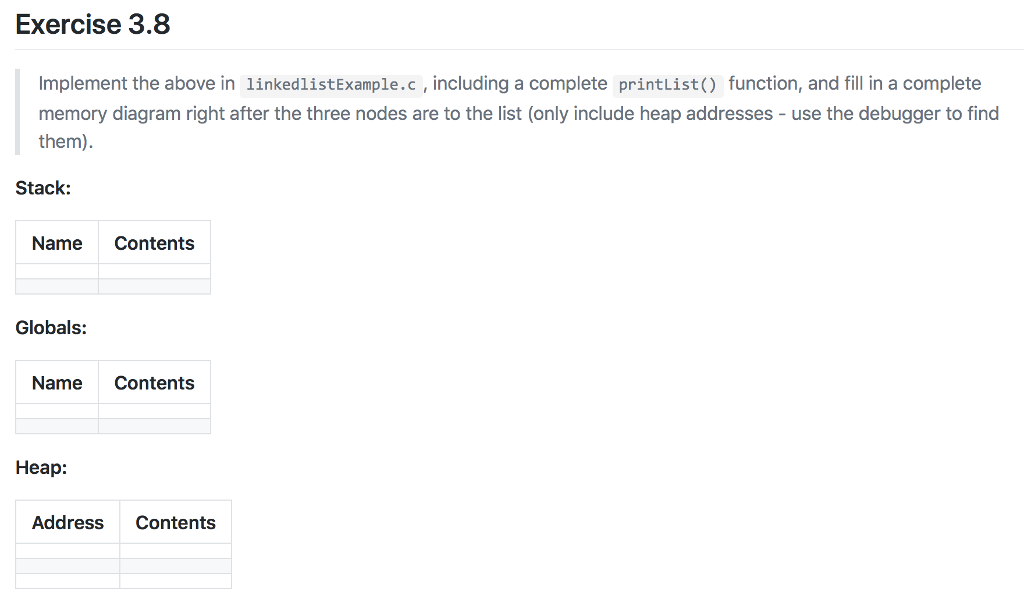
Exercise 3.8: Copy/paste the above in linkedlistExample.c, including a complete printList) function, and fill in a complete memory diagram right after the three nodes are added to the list (only include heap addresses - use the debugger to find them)
Step by Step Solution
There are 3 Steps involved in it

Get step-by-step solutions from verified subject matter experts
 Study Help