





Question: #include #include typedef struct int num; int count; bundle_t; static void update (bundle_t *bundle, int val) { val += 5; bundle->count = val; bundle =
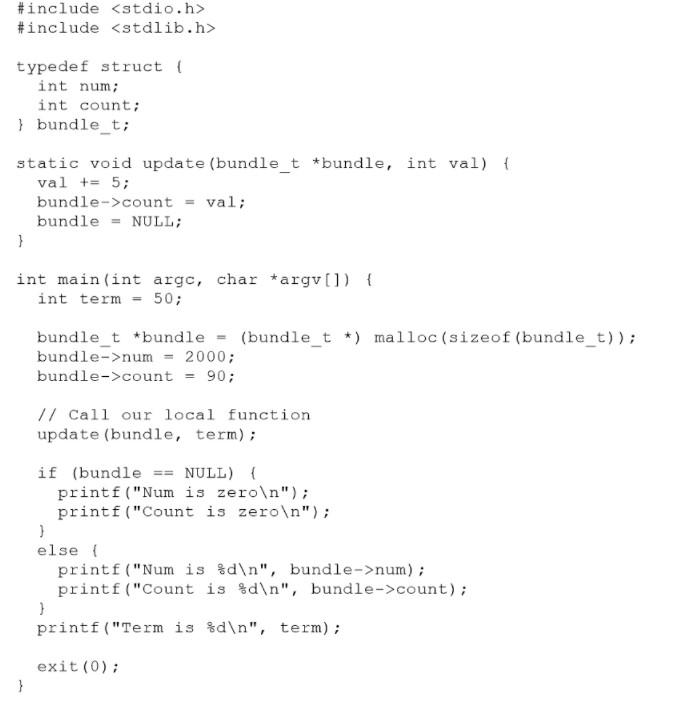

 #include #include typedef struct int num; int count; bundle_t; static void

update (bundle_t *bundle, int val) { val += 5; bundle->count = val;

bundle = NULL; } int main(int argc, char *argv[]) { int term= 50; bundle_t *bundle = (bundle_t *) malloc(sizeof (bundle_t)); bundle->num = 2000;

#include #include typedef struct int num; int count; bundle_t; static void update (bundle_t *bundle, int val) { val += 5; bundle->count = val; bundle = NULL; } int main(int argc, char *argv[]) { int term = 50; bundle_t *bundle = (bundle_t *) malloc(sizeof (bundle_t)); bundle->num = 2000; bundle->count = 90; // Call our local function update (bundle, term); if (bundle == NULL) printf ("Num is zero "); printf ("Count is zero "); } else { printf ("Num is %d ", bundle->num); printf ("Count is %d ", bundle->count); } printf("Term is %d ", term); exit(0); } In fake C with call-by-reference, the first line printed by callby.c is: Num is In fake C with call-by-reference, the second line printed by callby.cis: Count is In fake C with call-by-reference, the third line printed by callby.c is: Term is

Step by Step Solution

There are 3 Steps involved in it

1 Expert Approved Answer
Step: 1 Unlock blur-text-image
Question Has Been Solved by an Expert!

Get step-by-step solutions from verified subject matter experts

Step: 2 Unlock
Step: 3 Unlock

Students Have Also Explored These Related Databases Questions!
