







Question: #include void main() { int n1 = 4, n2 = 8; int *pn1 = &n1, *pn2 = &n2; char c1 = 65, c2 = 66;
#include
void main() {
int n1 = 4, n2 = 8;
int *pn1 = &n1, *pn2 = &n2;
char c1 = 65, c2 = 66;
char *pc1 = &c1, *pc2 = &c2;
printf("n1 address = %d, n1 value = %d ", pn1, *pn1);
pn1 = pn1 + 1;
printf("n1 address = %d, n1 value = %d ", pn1, *pn1);
printf("n2 address = %d, n2 value = %d ", pn2, *pn2);
printf("c1 address = %d, c1 value = %c ", pc1, *pc1);
pc1 = pc1 + 1;
printf("c1 address = %d, c1 value = %c ", pc1, *pc1);
printf("c2 address = %d, c2 value = %c ", pc2, *pc2);
}
The output of executing this piece of source was: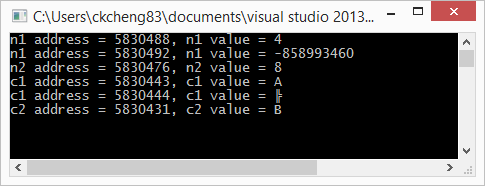
so, can you tell the architecture( how many bits) of computer used to run this program? explain
C\Users\ckcheng83] documents visual studio 2013.. - nl address 5830488, nl value = 4 nl address = 5830492, nl value -858993460 n2 address = 5830476, n2 value = 8 Cl address = 5830443, cl value = A cl address = 5830444, cl value = e2 address = 5830431, c2 value = B
Step by Step Solution
There are 3 Steps involved in it

Get step-by-step solutions from verified subject matter experts
 Study Help