







Question: INDICATE WHETHER THE RATIO INCREASES/DECREASES/ OR STAYS THE SAME 11. The effect of transactions on ratios You've been asked to tutor Alyssa, a finance student
 INDICATE WHETHER THE RATIO INCREASES/DECREASES/ OR STAYS THE SAME
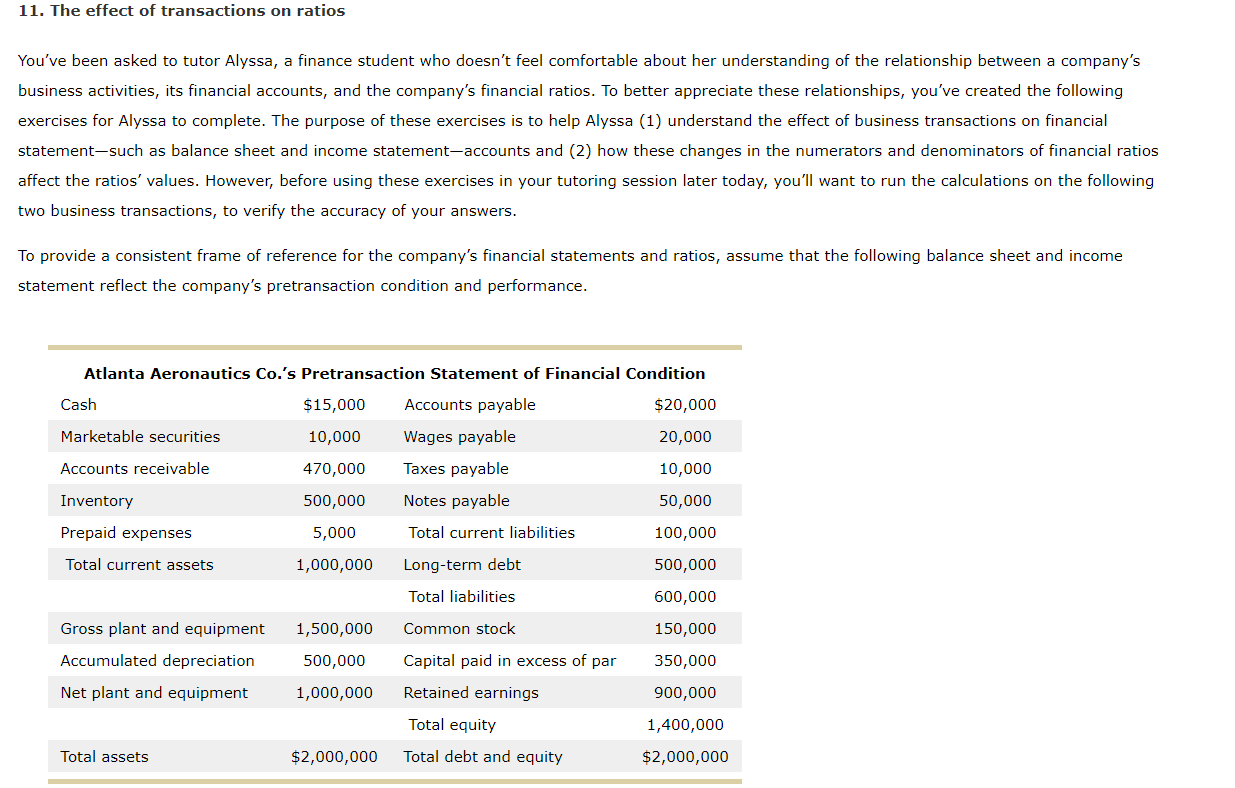
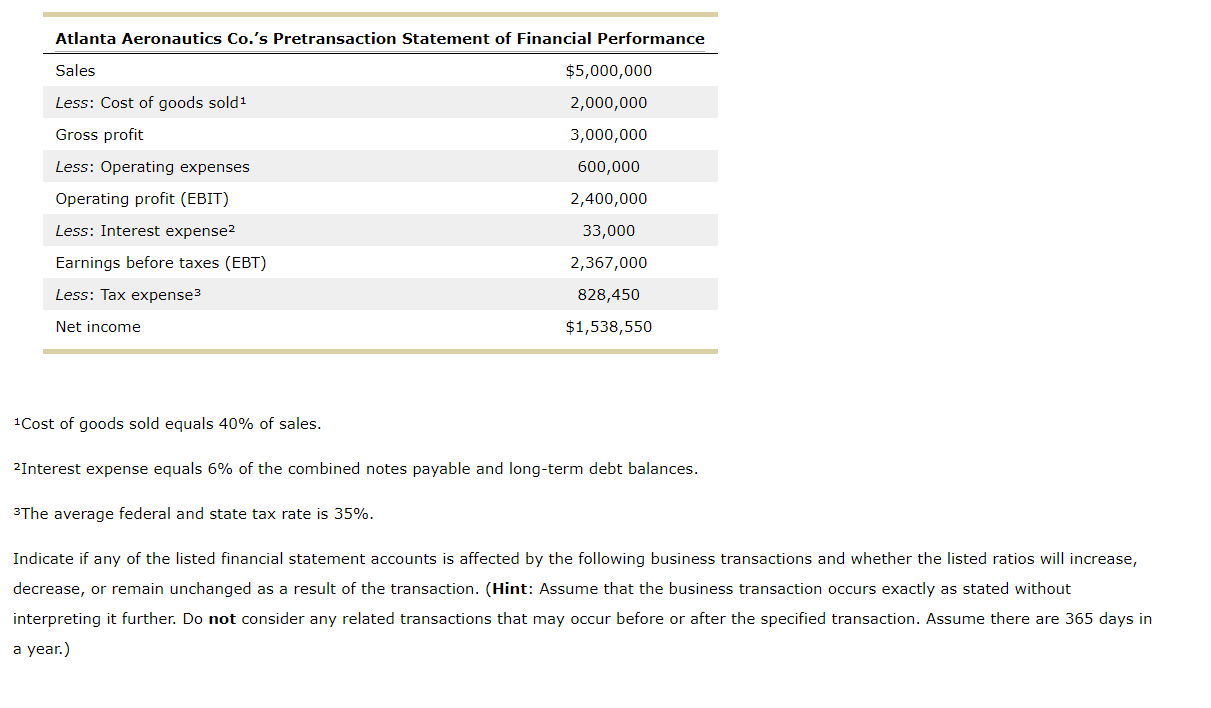
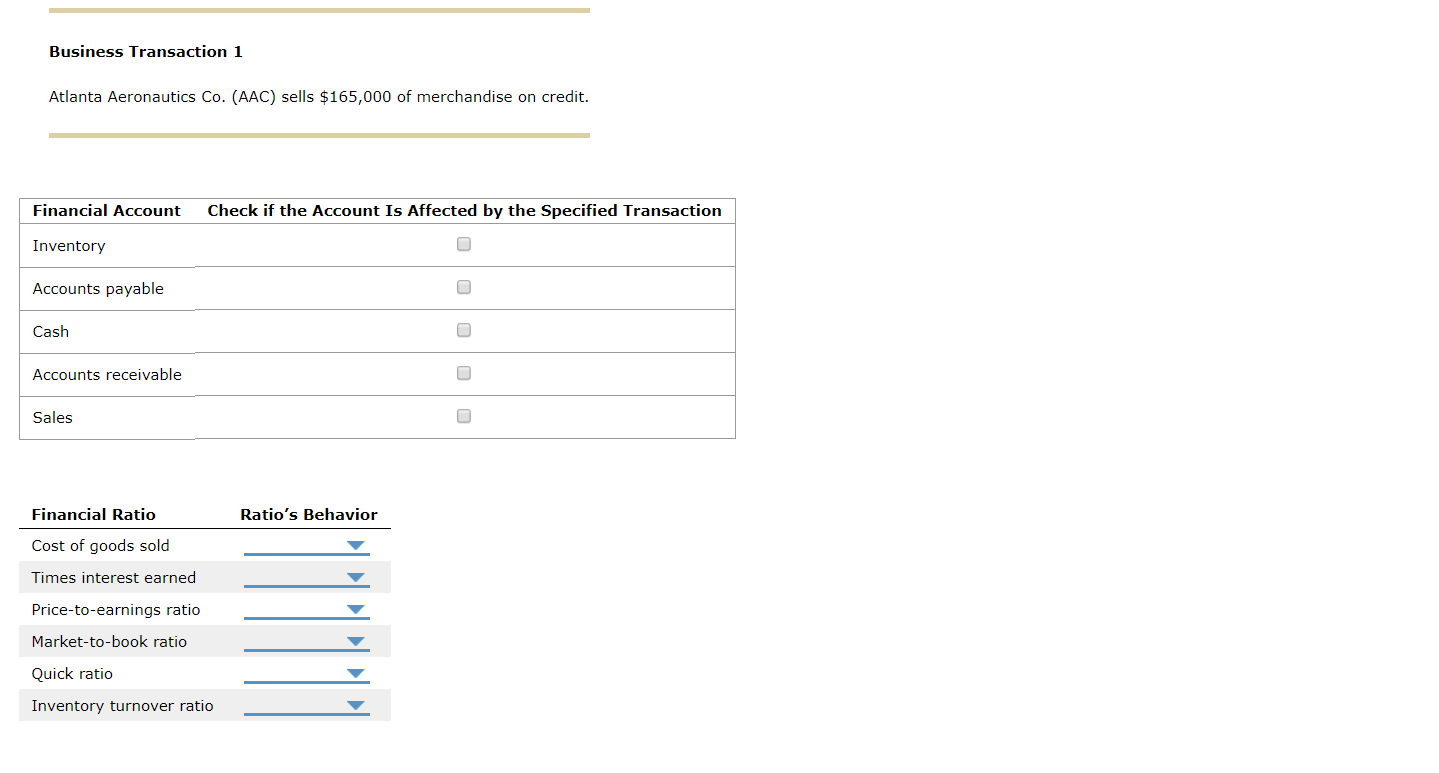
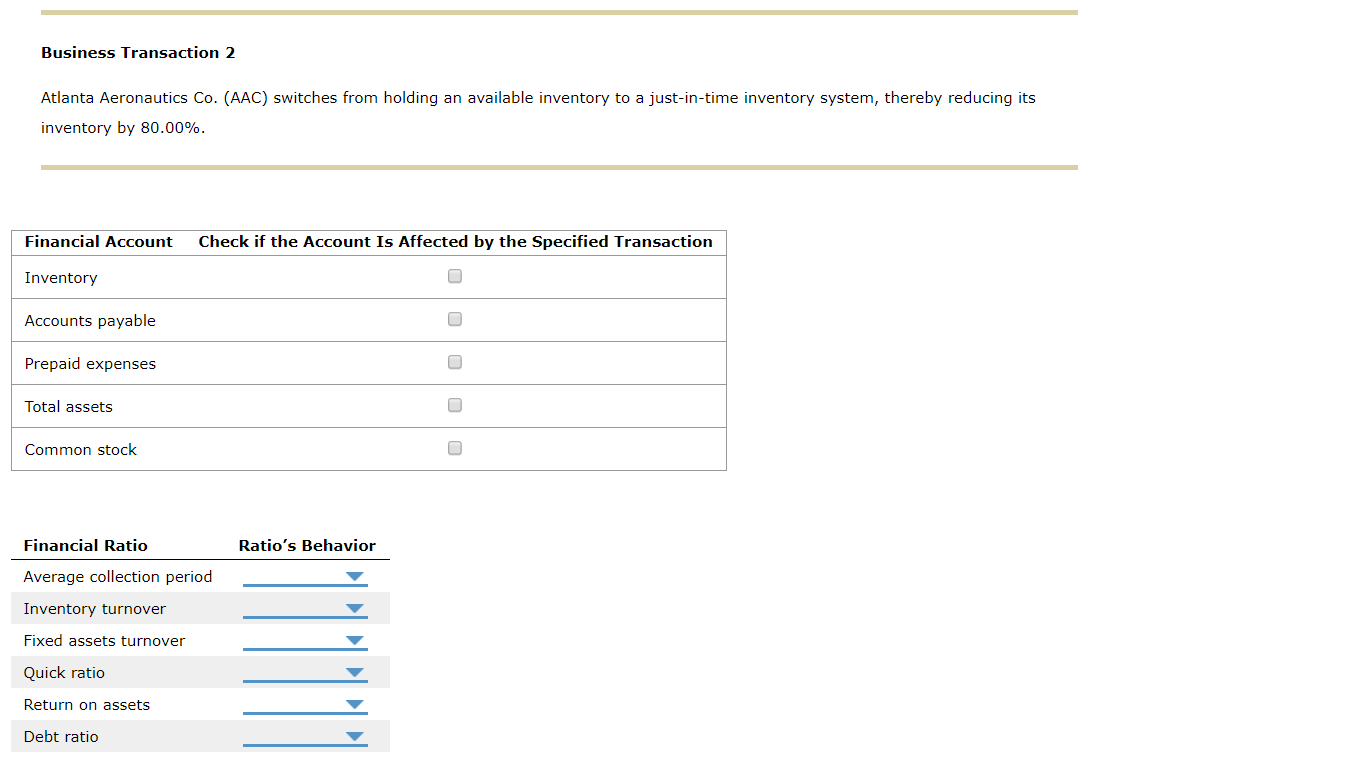
11. The effect of transactions on ratios You've been asked to tutor Alyssa, a finance student who doesn't feel comfortable about her understanding of the relationship between a company's business activities, its financial accounts, and the company's financial ratios. To better appreciate these relationships, you've created the following exercises for Alyssa to complete. The purpose of these exercises is to help Alyssa (1) understand the effect of business transactions on financial statement-such as balance sheet and income statement-accounts and (2) how these changes in the numerators and denominators of financial ratios affect the ratios' values. However, before using these exercises in your tutoring session later today, you'll want to run the calculations on the following two business transactions, to verify the accuracy of your answers. To provide a consistent frame of reference for the company's financial statements and ratios, assume that the following balance sheet and income statement reflect the company's pretransaction condition and performance. Atlanta Aeronautics Co.'s Pretransaction Statement of Financial Condition Cash $15,000 Accounts payable $20,000 Marketable securities 10,000 Wages payable 20,000 Accounts receivable 470,000 Taxes payable 10,000 Inventory 500,000 Notes payable 50,000 Prepaid expenses 5,000 Total current liabilities 100,000 Total current assets 1,000,000 Long-term debt 500,000 Total liabilities 600,000 Gross plant and equipment 1,500,000 Common stock 150,000 Accumulated depreciation 500,000 Capital paid in excess of par 350,000 Net plant and equipment 1,000,000 Retained earnings 900,000 Total equity 1,400,000 Total assets $2,000,000 Total debt and equity $2,000,000 Atlanta Aeronautics Co.'s Pretransaction Statement of Financial Performance Sales $5,000,000 Less: Cost of goods sold1 2,000,000 Gross profit 3,000,000 Less: Operating expenses 600,000 Operating profit (EBIT) 2,400,000 Less: Interest expense2 33,000 Earnings before taxes (EBT) 2,367,000 Less: Tax expenses 828,450 Net income $1,538,550 1 Cost of goods sold equals 40% of sales. 2 Interest expense equals 6% of the combined notes payable and long-term debt balances. 3 The average federal and state tax rate is 35%. Indicate if any of the listed financial statement accounts is affected by the following business transactions and whether the listed ratios will increase, decrease, or remain unchanged as a result of the transaction. (Hint: Assume that the business transaction occurs exactly as stated without interpreting it further. Do not consider any related transactions that may occur before or after the specified transaction. Assume there are 365 days in a year.) Business Transaction 1 Atlanta Aeronautics Co. (AAC) sells $165,000 of merchandise on credit. Financial Account Check if the Account Is Affected by the Specified Transaction Inventory Accounts payable Cash Accounts receivable Sales Ratio's Behavior Financial Ratio Cost of goods sold Times interest earned Price-to-earnings ratio Market-to-book ratio Quick ratio Inventory turnover ratio Business Transaction 2 Atlanta Aeronautics Co. (AAC) switches from holding an available inventory to a just-in-time inventory system, thereby reducing its inventory by 80.00%. Financial Account Check if the Account Is Affected by the Specified Transaction Inventory Accounts payable Prepaid expenses Total assets Common stock Financial Ratio Ratio's Behavior Average collection period Inventory turnover Fixed assets turnover Quick ratio Return on assets Debt ratio
Step by Step Solution
There are 3 Steps involved in it

Get step-by-step solutions from verified subject matter experts
 Study Help