







Question: information on M6LE1 commitment to offering a superior coffee experience will fixed by my skill, perseverance, and dedication. Step 2: Products and/or Services For any
information on M6LE1
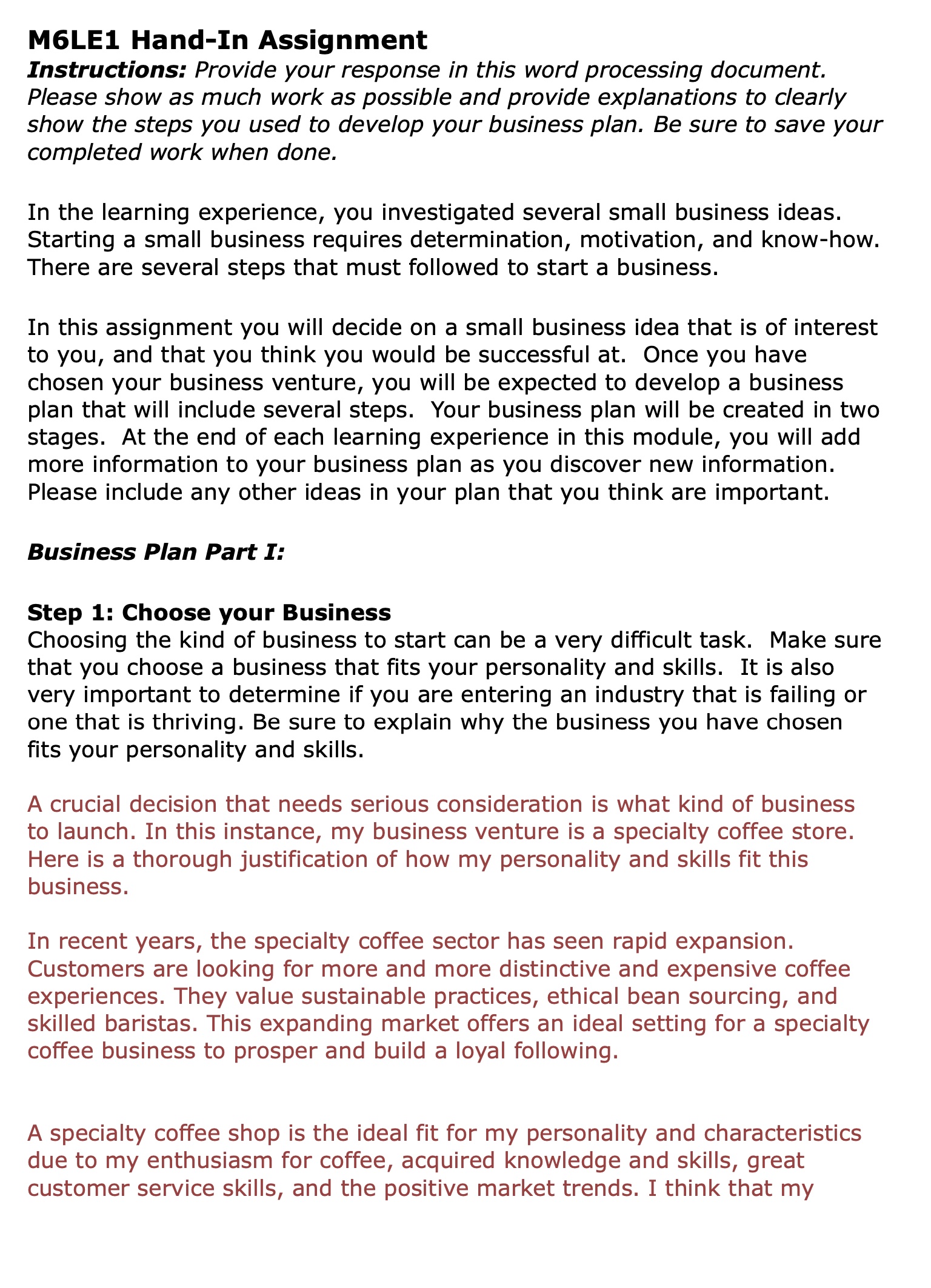
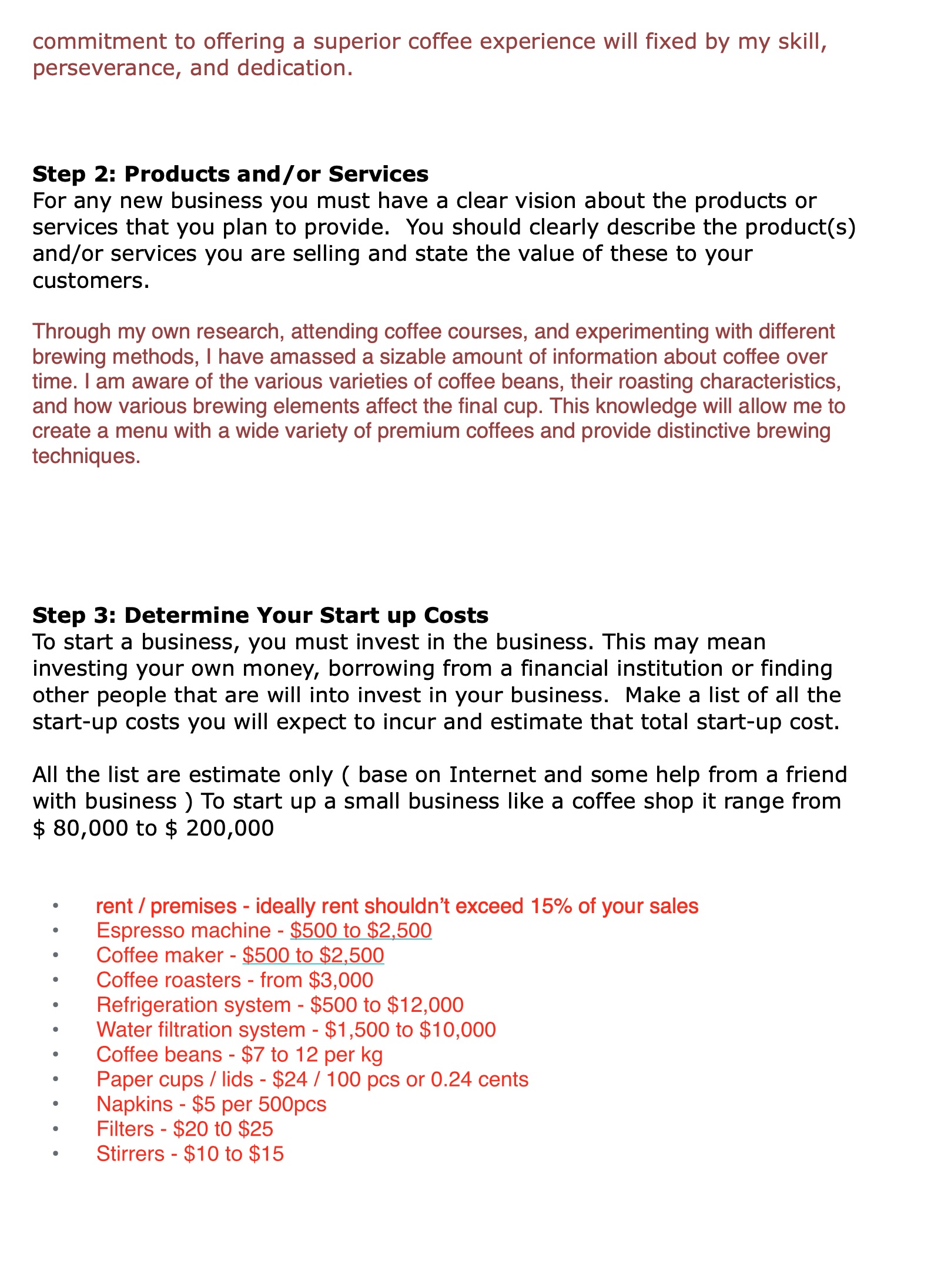
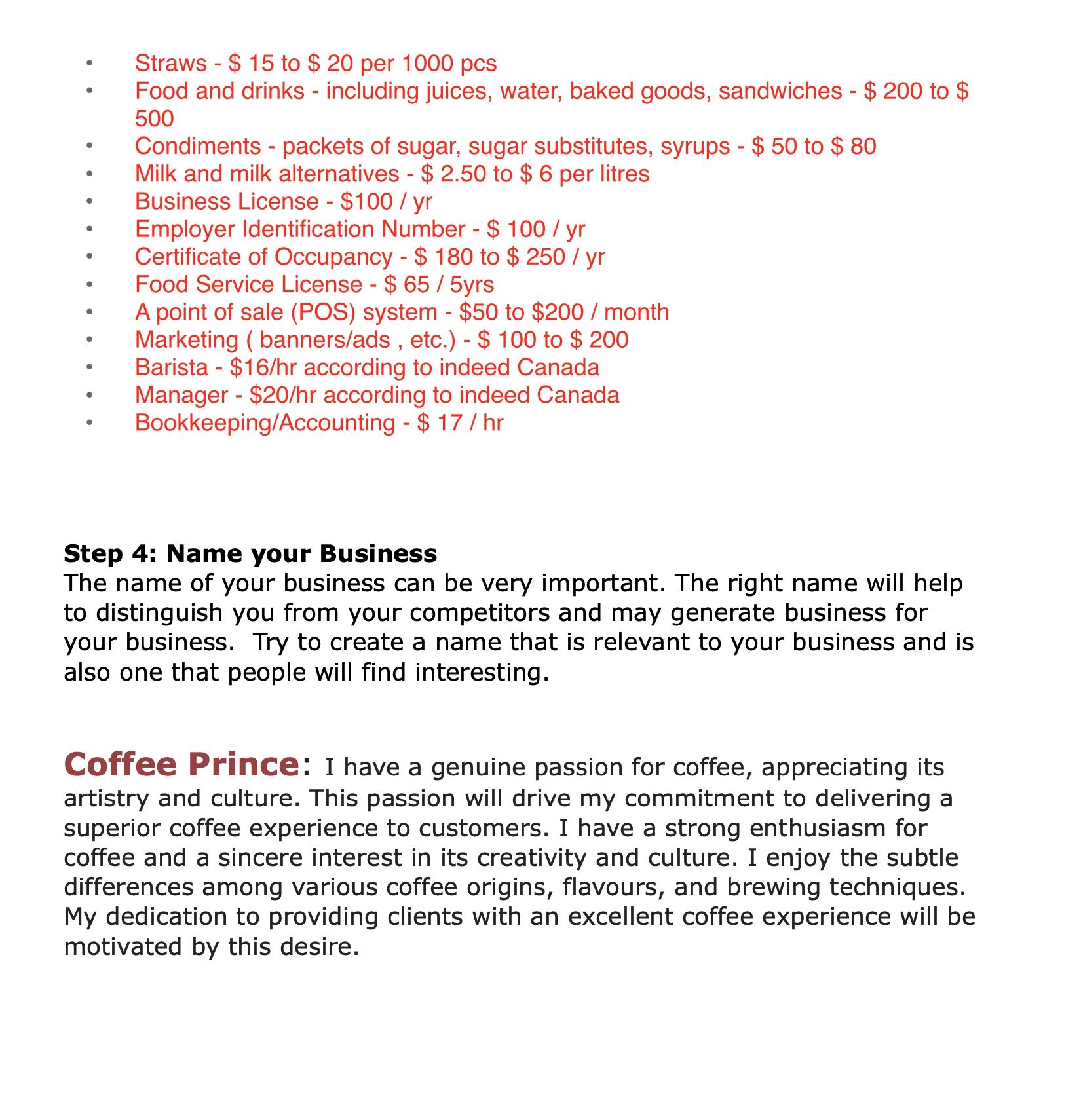
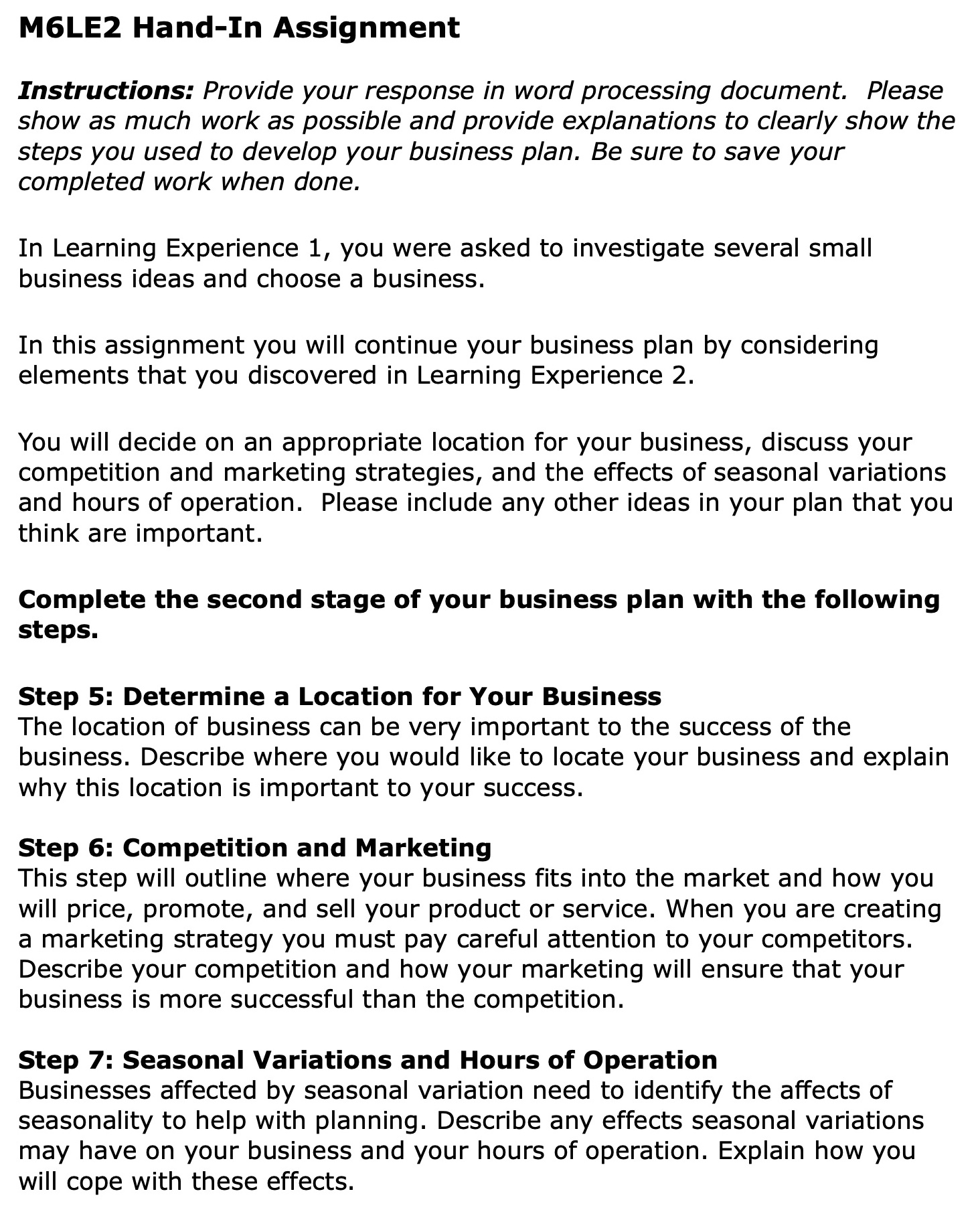
commitment to offering a superior coffee experience will fixed by my skill, perseverance, and dedication. Step 2: Products and/or Services For any new business you must have a clear vision about the products or services that you plan to provide. You should clearly describe the product(s) and/or services you are selling and state the value of these to your customers. Through my own research, attending coffee courses, and experimenting with different brewing methods, I have amassed a sizable amount of information about coffee over time. I am aware of the various varieties of coffee beans, their roasting characteristics, and how various brewing elements affect the final cup. This knowledge will allow me to create a menu with a wide variety of premium coffees and provide distinctive brewing techniques. Step 3: Determine Your Start up Costs To start a business, you must invest in the business. This may mean investing your own money, borrowing from a financial institution or finding other people that are will into invest in your business. Make a list of all the start-up costs you will expect to incur and estimate that total start-up cost. All the list are estimate only ( base on Internet and some help from a friend with business ) To start up a small business like a coffee shop it range from $80,000 to $200,000 ---------Est/premises-ideallyrentshouldntexceed15%ofyoursalesCoffeemaker-$500to$2,500Coffeeroasters-from$3,000Refrigerationsystem-$500to$12,000Coterfiltrationsystem-$1,500to$10,000Paperbeans-$7to12perkgNapkins-$5per$24/100pcsor0.24centsFilters-$20t0$25Stirrers-$10to$15 - rent / premises - ideally rent shouldn't exceed 15% of your sales - Espresso machine - $500 to $2,500 - Coffee maker - $500 to $2,500 - Coffee roasters - from $3,000 - Refrigeration system - $500 to $12,000 - Water filtration system - $1,500 to $10,000 - Coffee beans - $7 to 12 per kg - Paper cups / lids - \$24 / 100 pcs or 0.24 cents - Napkins - \$5 per 500pcs - Filters - $20 t0 $25 - Stirrers - $10 to $15 M6LE1 Hand-In Assignment Instructions: Provide your response in this word processing document. Please show as much work as possible and provide explanations to clearly show the steps you used to develop your business plan. Be sure to save your completed work when done. In the learning experience, you investigated several small business ideas. Starting a small business requires determination, motivation, and know-how. There are several steps that must followed to start a business. In this assignment you will decide on a small business idea that is of interest to you, and that you think you would be successful at. Once you have chosen your business venture, you will be expected to develop a business plan that will include several steps. Your business plan will be created in two stages. At the end of each learning experience in this module, you will add more information to your business plan as you discover new information. Please include any other ideas in your plan that you think are important. Business Plan Part I; Step 1: Choose your Business Choosing the kind of business to start can be a very difficult task. Make sure that you choose a business that fits your personality and skills. It is also very important to determine if you are entering an industry that is failing or one that is thriving. Be sure to explain why the business you have chosen fits your personality and skills. A crucial decision that needs serious consideration is what kind of business to launch. In this instance, my business venture is a specialty coffee store. Here is a thorough justification of how my personality and skills fit this business. In recent years, the specialty coffee sector has seen rapid expansion. Customers are looking for more and more distinctive and expensive coffee experiences. They value sustainable practices, ethical bean sourcing, and skilled baristas. This expanding market offers an ideal setting for a specialty coffee business to prosper and build a loyal following. A specialty coffee shop is the ideal fit for my personality and characteristics due to my enthusiasm for coffee, acquired knowledge and skills, great customer service skills, and the positive market trends. I think that my - Straws - $15 to $20 per 1000 pcs - Food and drinks - including juices, water, baked goods, sandwiches - \$200 to \$ 500 - Condiments - packets of sugar, sugar substitutes, syrups - $50 to $80 - Milk and milk alternatives - \$2.50 to $6 per litres - Business License - $100 / yr - Employer Identification Number - \$100/yr - Certificate of Occupancy - \$180 to $250/yr - Food Service License - \$ 65 / 5yrs - A point of sale (POS) system - $50 to $200/ month - Marketing ( banners/ads, etc.) - \$100 to $200 - Barista - $16/hr according to indeed Canada - Manager - $20/hr according to indeed Canada - Bookkeeping/Accounting - \$17/hr Step 4: Name your Business The name of your business can be very important. The right name will help to distinguish you from your competitors and may generate business for your business. Try to create a name that is relevant to your business and is also one that people will find interesting. Coffee Prince: I have a genuine passion for coffee, appreciating its artistry and culture. This passion will drive my commitment to delivering a superior coffee experience to customers. I have a strong enthusiasm for coffee and a sincere interest in its creativity and culture. I enjoy the subtle differences among various coffee origins, flavours, and brewing techniques. My dedication to providing clients with an excellent coffee experience will be motivated by this desire. M6LE2 Hand-In Assignment Instructions: Provide your response in word processing document. Please show as much work as possible and provide explanations to clearly show the steps you used to develop your business plan. Be sure to save your completed work when done. In Learning Experience 1, you were asked to investigate several small business ideas and choose a business. In this assignment you will continue your business plan by considering elements that you discovered in Learning Experience 2. You will decide on an appropriate location for your business, discuss your competition and marketing strategies, and the effects of seasonal variations and hours of operation. Please include any other ideas in your plan that you think are important. Complete the second stage of your business plan with the following steps. Step 5: Determine a Location for Your Business The location of business can be very important to the success of the business. Describe where you would like to locate your business and explain why this location is important to your success. Step 6: Competition and Marketing This step will outline where your business fits into the market and how you will price, promote, and sell your product or service. When you are creating a marketing strategy you must pay careful attention to your competitors. Describe your competition and how your marketing will ensure that your business is more successful than the competition. Step 7: Seasonal Variations and Hours of Operation Businesses affected by seasonal variation need to identify the affects of seasonality to help with planning. Describe any effects seasonal variations may have on your business and your hours of operation. Explain how you will cope with these effects
Step by Step Solution
There are 3 Steps involved in it

Get step-by-step solutions from verified subject matter experts
 Study Help