







Question: Instruction: Reading Comprehension Demonstrates comprehension of all sources, ability to evaluate sources, and ability to advance knowledge through a sophisticated reading of the material Details
Instruction:
Reading Comprehension Demonstrates comprehension of all sources, ability to evaluate sources, and ability to advance knowledge through a sophisticated reading of the material
Details Answers are mostly complete, extensive, And include many details.
Use of Information Answers mostly Includes supporting evidence From the text/lesson when necessary. Quotations Or paraphrases are often included in answers.
Concluding Sentences: Concluding sentences summarize the entire summary properly. It is impactful. It caters to all the points mentioned in the summary brilliantly.
Question:
Our love relationships tend to present us with the biggest challenges in our lives, causing the most mental clutter and distress. In order to avoid mental clutter which one of these is a better strategy to save yourself from a toxic relationship?
a. Mindfulness in a relationship
b. Letting go of certain relationships
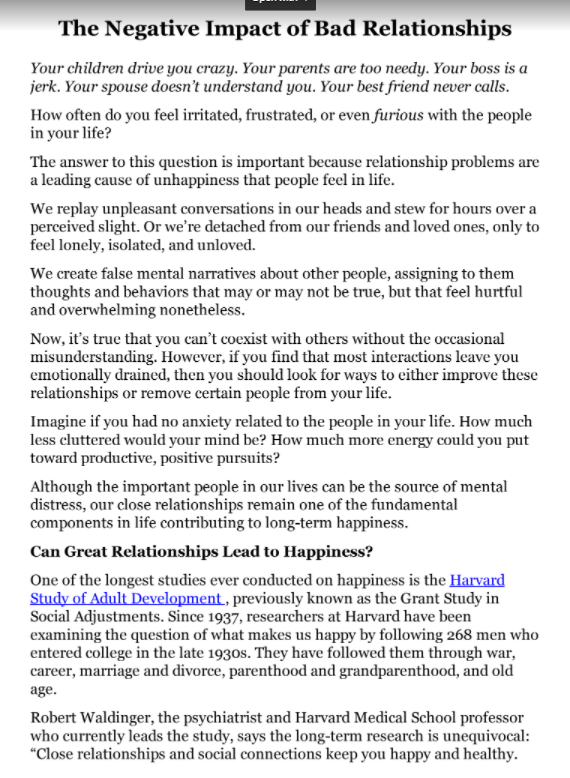
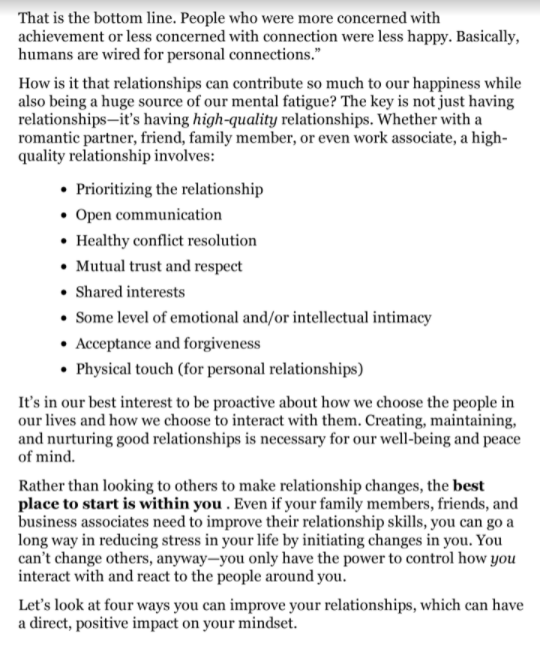
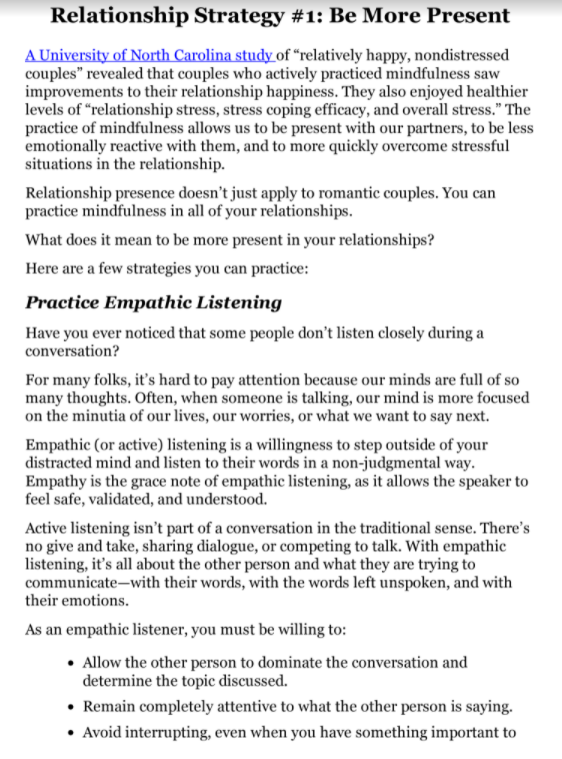
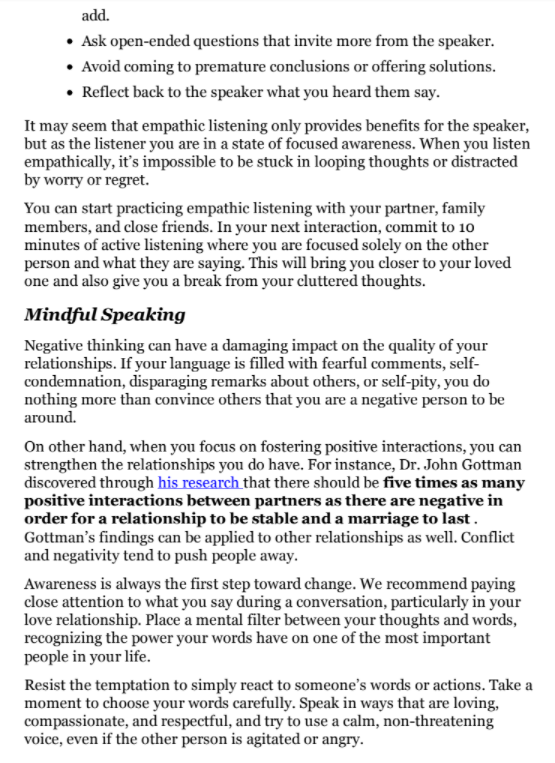
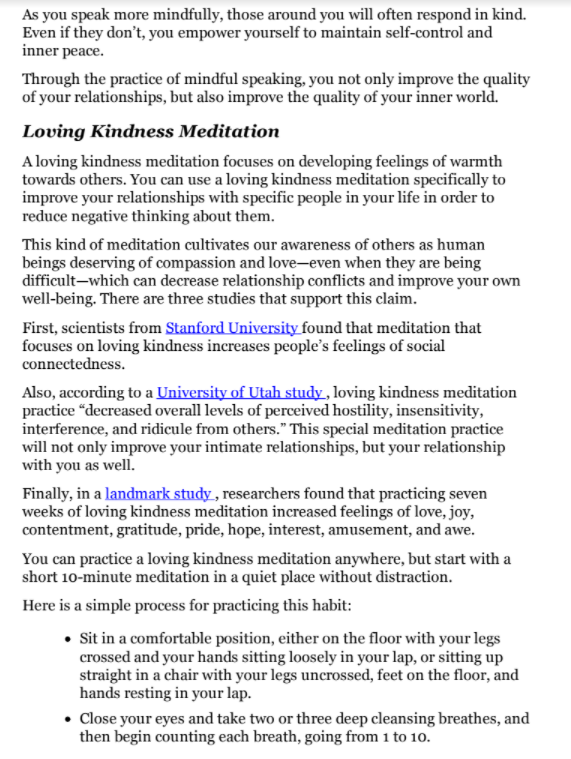
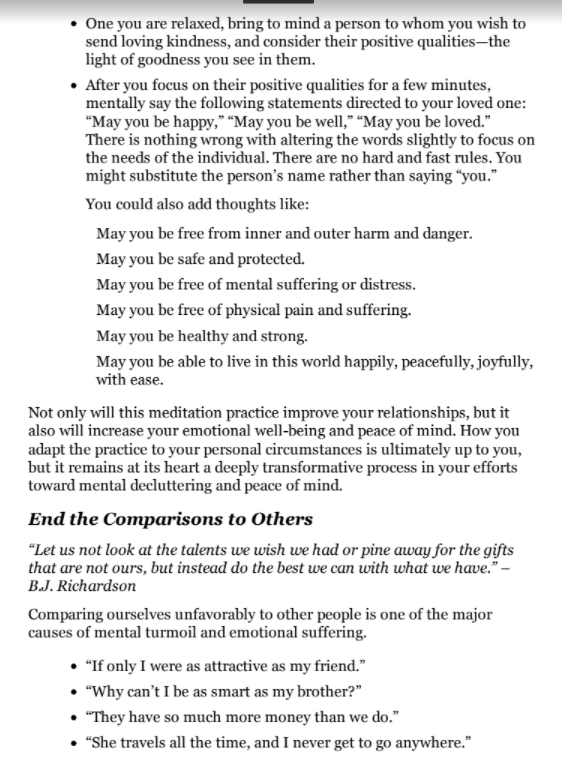
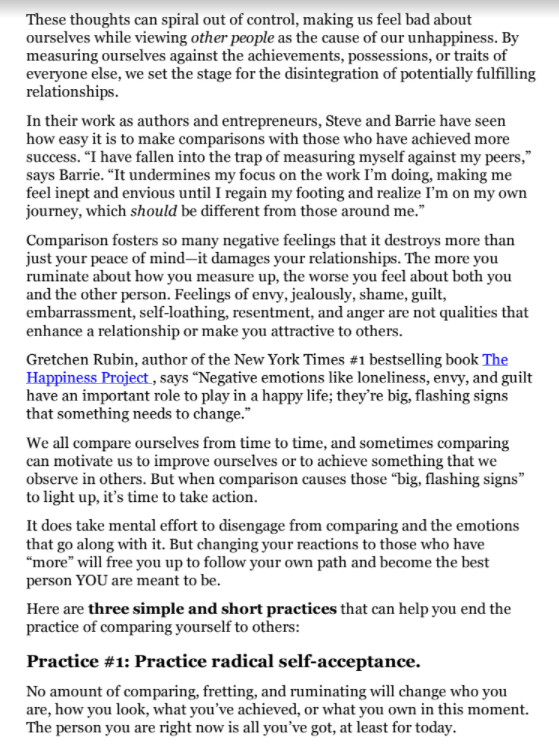
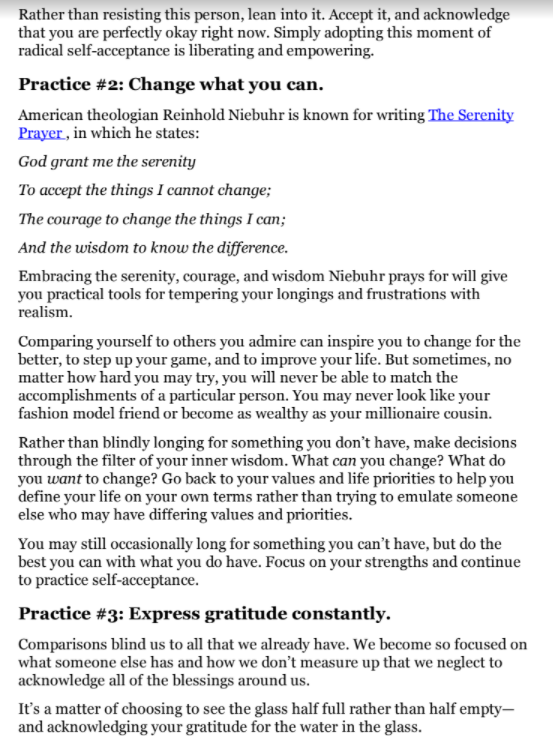
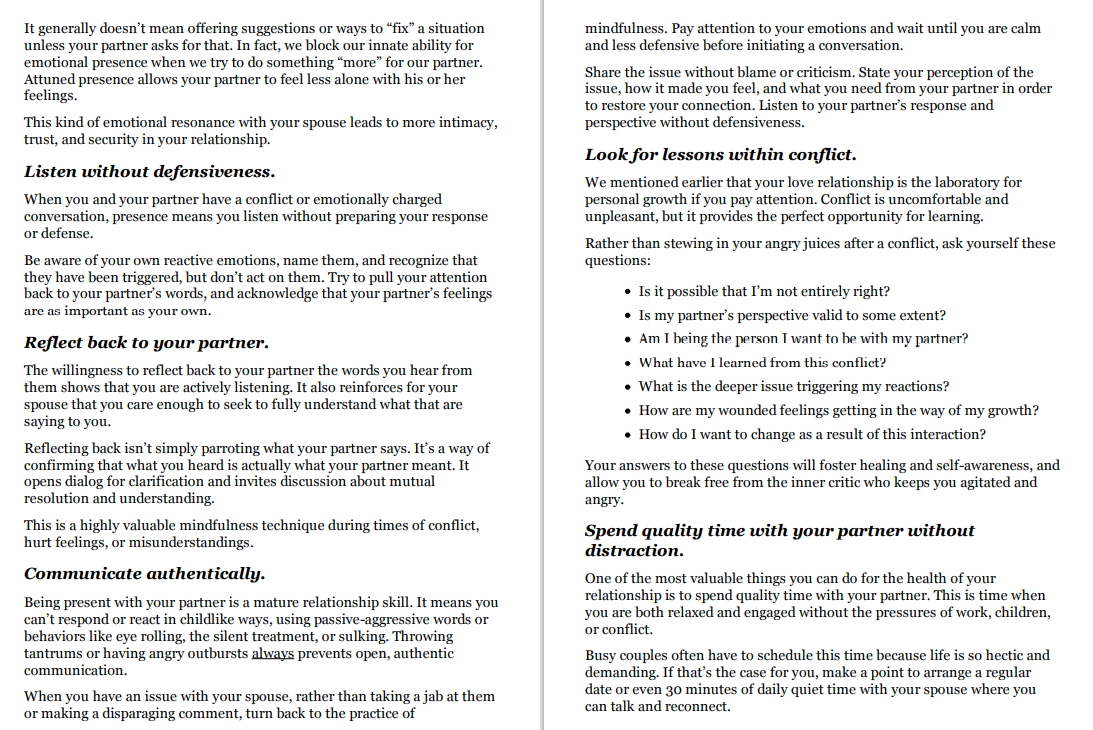
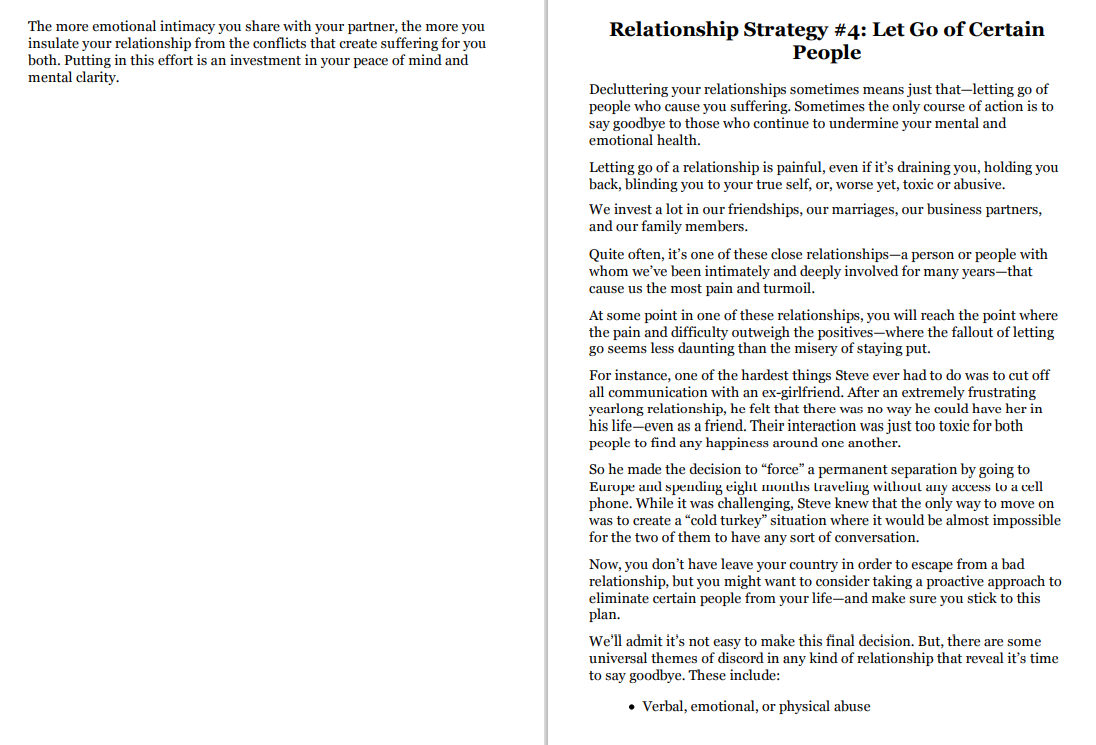
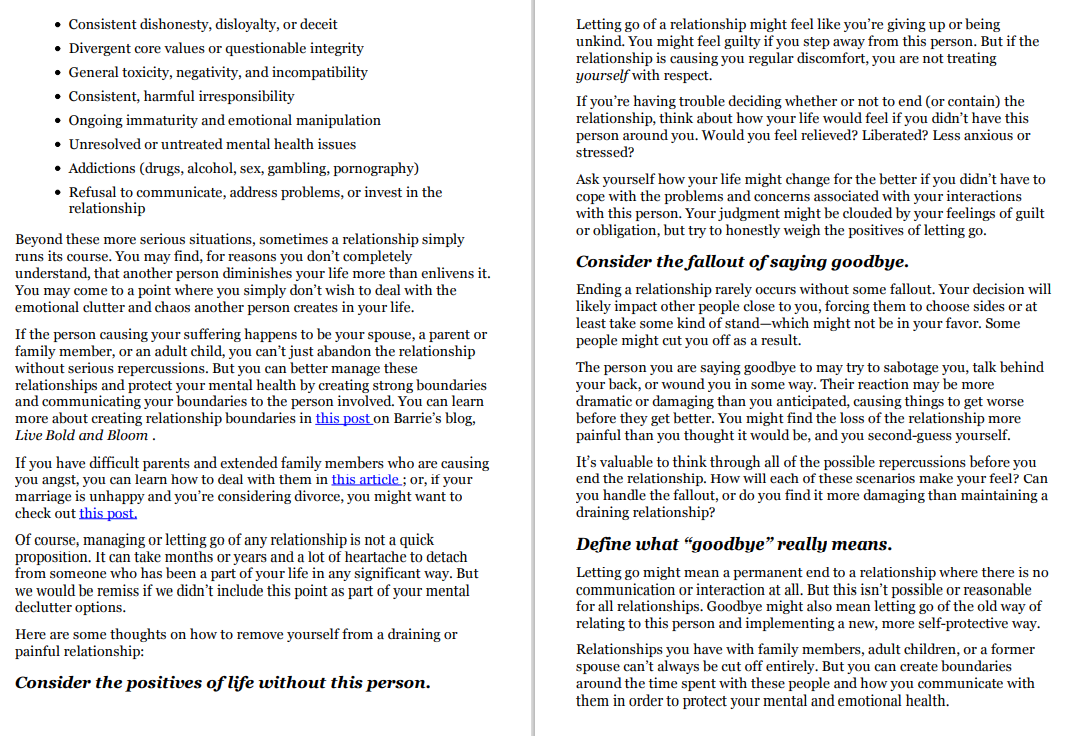
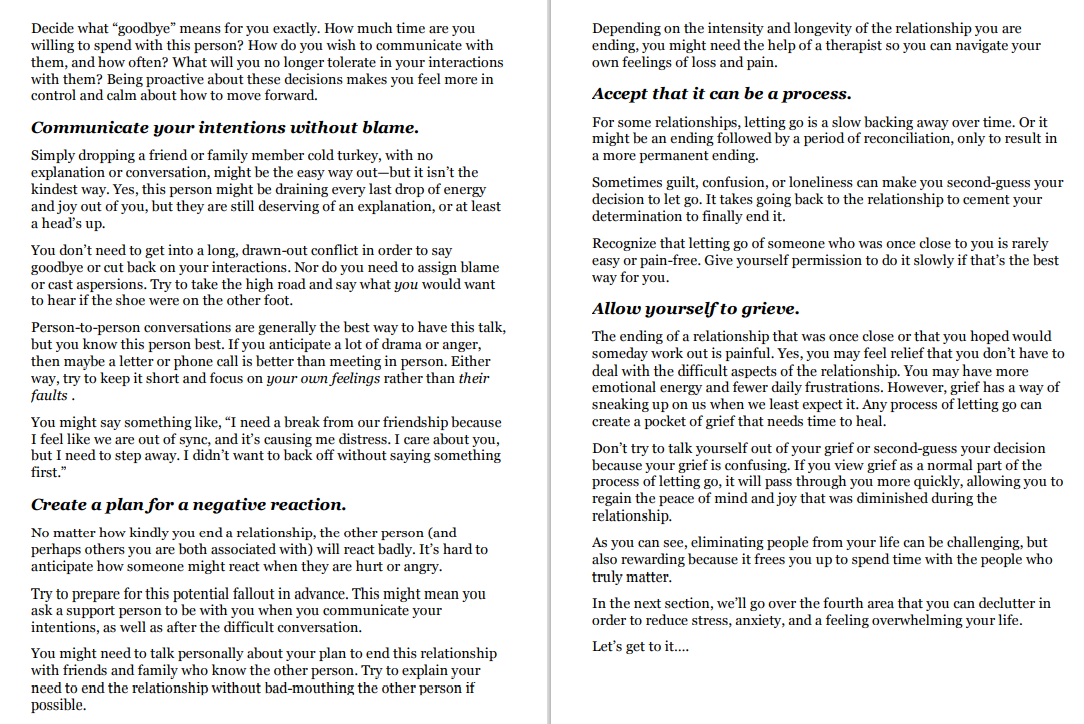
The Negative Impact of Bad Relationships Your children drive you crazy. Your parents are too needy. Your boss is a jerk. Your spouse doesn't understand you. Your best friend never calls. How often do you feel irritated, frustrated, or even furious with the people in your life? The answer to this question is important because relationship problems are a leading cause of unhappiness that people feel in life. We replay unpleasant conversations in our heads and stew for hours over a perceived slight. Or we're detached from our friends and loved ones, only to feel lonely, isolated, and unloved. We create false mental narratives about other people, assigning to them thoughts and behaviors that may or may not be true, but that feel hurtful and overwhelming nonetheless. Now, it's true that you can't coexist with others without the occasional misunderstanding. However, if you find that most interactions leave you emotionally drained, then you should look for ways to either improve these relationships or remove certain people from your life. Imagine if you had no anxiety related to the people in your life. How much less cluttered would your mind be? How much more energy could you put toward productive, positive pursuits? Although the important people in our lives can be the source of mental distress, our close relationships remain one of the fundamental components in life contributing to long-term happiness. Can Great Relationships Lead to Happiness? One of the longest studies ever conducted on happiness is the Harvard Study of Adult Development, previously known as the Grant Study in Social Adjustments. Since 1937, researchers at Harvard have been examining the question of what makes us happy by following 268 men who entered college in the late 1930s. They have followed them through war, career, marriage and divorce, parenthood and grandparenthood, and old age. Robert Waldinger, the psychiatrist and Harvard Medical School professor who currently leads the study, says the long-term research is unequivocal: "Close relationships and social connections keep you happy and healthy. That is the bottom line. People who were more concerned with achievement or less concerned with connection were less happy. Basically, humans are wired for personal connections." How is it that relationships can contribute so much to our happiness while also being a huge source of our mental fatigue? The key is not just having relationships-it's having high-quality relationships. Whether with a romantic partner, friend, family member, or even work associate, a high- quality relationship involves: Prioritizing the relationship Open communication Healthy conflict resolution Mutual trust and respect Shared interests Some level of emotional and/or intellectual intimacy Acceptance and forgiveness Physical touch (for personal relationships) It's in our best interest to be proactive about how we choose the people in our lives and how we choose to interact with them. Creating, maintaining, and nurturing good relationships is necessary for our well-being and peace of mind. Rather than looking to others to make relationship changes, the best place to start is within you . Even if your family members, friends, and business associates need to improve their relationship skills, you can go a long way in reducing stress in your life by initiating changes in you. You can't change others, anyway-you only have the power to control how you interact with and react to the people around you. Let's look at four ways you can improve your relationships, which can have a direct, positive impact on your mindset. Relationship Strategy #1: Be More Present A University of North Carolina study of relatively happy, nondistressed couples" revealed that couples who actively practiced mindfulness saw improvements to their relationship happiness. They also enjoyed healthier levels of "relationship stress, stress coping efficacy, and overall stress." The practice of mindfulness allows us to be present with our partners, to be less emotionally reactive with them, and to more quickly overcome stressful situations in the relationship. Relationship presence doesn't just apply to romantic couples. You can practice mindfulness in all of your relationships. What does it mean to be more present in your relationships? Here are a few strategies you can practice: Practice Empathic Listening Have you ever noticed that some people don't listen closely during a conversation? For many folks, it's hard to pay attention because our minds are full of so many thoughts. Often, when someone is talking, our mind is more focused on the minutia of our lives, our worries, or what we want to say next. Empathic (or active) listening is a willingness to step outside of your distracted mind and listen to their words in a non-judgmental way. Empathy is the grace note of empathic listening, as it allows the speaker to feel safe, validated, and understood. Active listening isn't part of a conversation in the traditional sense. There's no give and take, sharing dialogue, or competing to talk. With empathic listening, it's all about the other person and what they are trying to communicate-with their words, with the words left unspoken, and with their emotions. As an empathic listener, you must be willing to: Allow the other person to dominate the conversation and determine the topic discussed. Remain completely attentive to what the other person is saying. Avoid interrupting, even when you have something important to add. Ask open-ended questions that invite more from the speaker. Avoid coming to premature conclusions or offering solutions. Reflect back to the speaker what you heard them say. It may seem that empathic listening only provides benefits for the speaker, but as the listener you are in a state of focused awareness. When you listen empathically, it's impossible to be stuck in looping thoughts or distracted by worry or regret. You can start practicing empathic listening with your partner, family members, and close friends. In your next interaction, commit to 10 minutes of active listening where you are focused solely on the other person and what they are saying. This will bring you closer to your loved one and also give you a break from your cluttered thoughts. Mindful Speaking Negative thinking can have a damaging impact on the quality of your relationships. If your language is filled with fearful comments, self- condemnation, disparaging remarks about others, or self-pity, you do nothing more than convince others that you are a negative person to be around. On other hand, when you focus on fostering positive interactions, you can strengthen the relationships you do have. For instance, Dr. John Gottman discovered through his research that there should be five times as many positive interactions between partners as there are negative in order for a relationship to be stable and a marriage to last. Gottman's findings can be applied to other relationships as well. Conflict and negativity tend to push people away. Awareness is always the first step toward change. We recommend paying close attention to what you say during a conversation, particularly in your love relationship. Place a mental filter between your thoughts and words, recognizing the power your words have on one of the most important people in your life. Resist the temptation to simply react to someone's words or actions. Take a moment to choose your words carefully. Speak in ways that are loving, compassionate, and respectful, and try to use a calm, non-threatening voice, even if the other person is agitated or angry. As you speak more mindfully, those around you will often respond in kind. Even if they don't, you empower yourself to maintain self-control and inner peace. Through the practice of mindful speaking, you not only improve the quality of your relationships, but also improve the quality of your inner world. Loving Kindness Meditation A loving kindness meditation focuses on developing feelings of warmth towards others. You can use a loving kindness meditation specifically to improve your relationships with specific people in your life in order to reduce negative thinking about them. This kind of meditation cultivates our awareness of others as human beings deserving of compassion and love-even when they are being difficult-which can decrease relationship conflicts and improve your own well-being. There are three studies that support this claim. First, scientists from Stanford University found that meditation that focuses on loving kindness increases people's feelings of social connectedness. Also, according to a University of Utah study , loving kindness meditation practice "decreased overall levels of perceived hostility, insensitivity, interference, and ridicule from others." This special meditation practice will not only improve your intimate relationships, but your relationship with you as well. Finally, in a landmark study, researchers found that practicing seven weeks of loving kindness meditation increased feelings of love, joy, contentment, gratitude, pride, hope, interest, amusement, and awe. You can practice a loving kindness meditation anywhere, but start with a short 10-minute meditation in a quiet place without distraction. Here is a simple process for practicing this habit: Sit in a comfortable position, either on the floor with your legs crossed and your hands sitting loosely in your lap, or sitting up straight in a chair with your legs uncrossed, feet on the floor, and hands resting in your lap. Close your eyes and take two or three deep cleansing breathes, and then begin counting each breath, going from 1 to 10. These thoughts can spiral out of control, making us feel bad about ourselves while viewing other people as the cause of our unhappiness. By measuring ourselves against the achievements, possessions, or traits of everyone else, we set the stage for the disintegration of potentially fulfilling relationships. In their work as authors and entrepreneurs, Steve and Barrie have seen how easy it is to make comparisons with those who have achieved more success. I have fallen into the trap of measuring myself against my peers," says Barrie. It undermines my focus on the work I'm doing, making me feel inept and envious until I regain my footing and realize I'm on my own journey, which should be different from those around me. Comparison fosters so many negative feelings that it destroys more than just your peace of mind-it damages your relationships. The more you ruminate about how you measure up, the worse you feel about both you and the other person. Feelings of envy, jealously, shame, guilt, embarrassment, self-loathing, resentment, and anger are not qualities that enhance a relationship or make you attractive to others. Gretchen Rubin, author of the New York Times #1 bestselling book The Happiness Project, says "Negative emotions like loneliness, envy, and guilt have an important role to play in a happy life; they're big, flashing signs that something needs to change." We all compare ourselves from time to time, and sometimes comparing can motivate us to improve ourselves or to achieve something that we observe in others. But when comparison causes those big, flashing signs to light up, it's time to take action. It does take mental effort to disengage from comparing and the emotions that go along with it. But changing your reactions to those who have "more" will free you up to follow your own path and become the best person YOU are meant to be. Here are three simple and short practices that can help you end the practice of comparing yourself to others: Practice #1: Practice radical self-acceptance. No amount of comparing, fretting, and ruminating will change who you are, how you look, what you've achieved, or what you own in this moment. The person you are right now is all you've got, at least for today. Rather than resisting this person, lean into it. Accept it, and acknowledge that you are perfectly okay right now. Simply adopting this moment of radical self-acceptance is liberating and empowering. Practice #2: Change what you can. American theologian Reinhold Niebuhr is known for writing The Serenity Prayer , in which he states: God grant me the serenity To accept the things I cannot change; The courage to change the things I can; And the wisdom to know the difference. Embracing the serenity, courage, and wisdom Niebuhr prays for will give you practical tools for tempering your longings and frustrations with realism. Comparing yourself to others you admire can inspire you to change for the better, to step up your game, and to improve your life. But sometimes, no matter how hard you may try, you will never be able to match the accomplishments of a particular person. You may never look like your fashion model friend or become as wealthy as your millionaire cousin. Rather than blindly longing for something you don't have, make decisions through the filter of your inner wisdom. What can you change? What do you want to change? Go back to your values and life priorities to help you define your life on your own terms rather than trying to emulate someone else who may have differing values and priorities. You may still occasionally long for something you can't have, but do the best you can with what you do have. Focus on your strengths and continue to practice self-acceptance. Practice #3: Express gratitude constantly. Comparisons blind us to all that we already have. We become so focused on what someone else has and how we don't measure up that we neglect to acknowledge all of the blessings around us. It's a matter of choosing to see the glass half full rather than half empty- and acknowledging your gratitude for the water in the glass. When you wake up in the morning, before you get out of bed, make a mental list of everything good in your life and focus on each blessing for a minute or two. Do this before you go to sleep as well. You can reinforce feelings of gratitude by writing them in a gratitude journal. At the end of the day, mentally review everything positive that occurred and write it down. Take a moment to consider what your life would be like without the people you love, your home, your health, etc. When you consider having your blessings taken away from you, it becomes very clear how blessed you are. Relationship Strategy #2: Getting Unstuck from the Past We talked earlier in the book about ruminating on the past, and how it can cause those feelings of being mentally overwhelmed. When you think about the past, you may notice that many of your thoughts relate to encounters with the current people in your life. You replay conversations that were unpleasant or hurtful. You dwell on a broken relationship or a lost love. Maybe you reflect with longing and sadness about children who have grown and moved out of the house, friends who have drifted away, or siblings who seem disconnected. Perhaps you encountered relationship pain that was so deep and wounding you have never really healed from it, and it continues to disrupt your life and sabotage your thoughts. Looping these memories can trigger unresolved anger, shame, guilt, fear, and sadness. Because relationships are so integral to our lives, it's not surprising that people from our pasts continue to cause us pain weeks, months, or even years after an encounter or relationship has ended. You replay these "mind movies so often that you start to identify with them. Dragging the past around in this way is a heavy burden that drains you of energy and inner peace. Sometimes we replay past situations in an unconscious attempt to resolve them, but ruminating only keeps us stuck in the past and miserable in the present. How can we break free from our thoughts about the past so they don't continue to imprison us or bind us to people who should no longer be part of our lives? Eckhart Tolle, author of The Power of Now , says "We can learn to break the habit of accumulating and perpetuating old emotion by flapping our wings, metaphorically speaking, and refrain from mentally dwelling on the past, regardless of whether something happened yesterday or 30 years ago. We can learn not to keep situations or events alive in our minds, but to return our attention continuously to the pristine, timeless present moment rather than be caught up in mental movie-making." Easier said than done, right? It's hard to just drop painful memories and push these thoughts out of our minds. Hard...but not impossible. And certainly worth the effort if you want to free yourself to enjoy positive, loving relationships in your current life. If you want to be present with your family and friends today, you can't remain stuck in your thoughts about past relationships and old hurts. Here are some ways you can clear the clutter of negative thoughts about the past: Resolve what you can. If there's an unresolved problem or hurt between you and another person, take action to resolve the situation. Rather than stewing about the past issue, initiate communication with the other person to talk through it, even if you feel you were "wronged." It's hard to reach out to someone who has hurt you, but the discomfort of doing this is far less than the slow torment of lingering on past pain. Feelings of anger or hurt can make open dialog difficult, but learn more about healthy communication so you can have a productive talk with the other person. Part of resolution might include sharing your feelings and pain, listening to the other person's perspective, offering or asking for forgiveness, and discussing the future of the relationship. Break the "spell of your internal story about the past by talking about it openly. Having a productive conversation with someone from your past isn't always possible, but when it is, it can be the best way to release you from feeling trapped by your memories and pain. Challenge your story. When you mentally replay a situation over and over, your perspective becomes the ultimate truth for you. It seems impossible to view the situation from any other angle. You may believe your memories and interpretation of the relationship are correct, but the other person may have an entirely different perspective. Challenge your own interpretation by stepping into the other person's shoes. You can do this by answering these questions: How might they see what happened between you? What could you have said or done that they might have misinterpreted? Is it possible that your memories are incorrect? Does the other person have a valid point of view? Is it possible that things didn't occur exactly as you believe they did? characters who enter have short roles to play, others, much larger. Some are villains and others are good guys. But all of them are necessary, otherwise they wouldn't be in the play. Embrace them all, and move on to the next act." Offering forgiveness might require you forgive yourself for something you said or did in a relationship. Reflect honestly on your actions and how they might have hurt or offended the other person. You'll likely come up with many reasons why you behaved as you did, and perhaps have some legitimate rationalizations for your actions. But if there is any part of your behavior that was wrong, you must accept it and forgive yourself for it. It becomes easier to forgive yourself when you shift your perspective about past mistakes. Rather than beating yourself up over past relationship mistakes, try to honor the past and see your actions as a blessing. They were part of who you were at the time, and you needed to learn from them. Now you can move on and forgive yourself, knowing who you want to be and how you want to behave. When you empathize with the other person, it removes some of the pain or anger associated with the memory. By challenging your own beliefs and memories, you give yourself permission to view the situation from a less negative point of view. Offer forgiveness. The person from your past may never apologize, but offer forgiveness anyway. You don't have to forgive them in person, but forgive them inside your own heart and mind. Clinging to your anger and pain only prolongs suffering and mental distress. You forgive to set yourself free from this suffering so you can move on to live in the present with a clear mind. Bestselling self-improvement author Dr. Wayne Dyer says, Forgiving others is essential for spiritual growth. Your experience of someone who has hurt you, while painful, is now nothing more than a thought or feeling that you carry around. These thoughts of resentment, anger, and hatred represent slow, debilitating energies that will dis-empower you if you continue to let these thoughts occupy space in your head. If you could release them, you would know more peace." Forgiving someone doesn't necessarily mean you reconcile with them. It means you let go of resentment and anger so it doesn't further poison you. It may be hard to forgive, especially when the offending person hasn't accepted responsibility for their behavior. But you can begin by recognizing this person is doing the best they know how with the skills they possess. When you find yourself ruminating about their past offenses, shift your thoughts away from them and to yourself. Acknowledge your feelings without blaming the other person for them. Ask yourself, "What have I learned from this? How can I use it to improve myself?" As Dr. Dyer says, "Your life is like a play with several acts. Some of the Relationship Strategy #3: Mindfulness with Your Partner The two previous strategies we've discussed apply to any relationship in your life. But your intimate love relationship stands apart as one that deserves special attention. With your spouse or romantic partner, you have the opportunity for tremendous emotional and personal growth, especially if you view your partner as someone who is in your life to teach you something. It's through this relationship that you can learn to be more present and compassionate. Ironically, our love relationships tend to present us with the biggest challenges in our lives, causing the most "mental clutter" and distress. Practicing mindfulness in your love relationship gives you a tool for strengthening your intimate connection while reducing stress and angst in your life. Mindfulness expert and Professor of Medicine Emeritus Jon Kabat-Zinn describes mindfulness as paying attention to the present moment with intention, while letting go of judgment. This practice might seem impossible in the heat of an argument when you just want to lash out at your partner. But with practice, mindfulness increases our awareness of what we are experiencing with our partners, and allows us the space to determine how we want to act (and react) with them. When you're able to bypass emotional reactions with your spouse or partner, you feel more centered, calm, and capable of resolving issues in a loving manner. This ability alone can save you from days and even years of mental and emotional distress that depletes your emotional energy. "Mindfulness isn't about denying or burying our emotions," says psychologist and author Dr. Lisa Firestone in an article for Psychology Today. It's simply about cultivating a different relationship to our feelings and experiences, in which we are in the driver's seat. We can see our feelings and thoughts like a passing train roaring through the station, but we alone choose if we want to get on board." Choosing not to get on board is the beginning of a conscious relationship that promotes healing and intimacy rather than discord and divisiveness. Here are some simple actions you can take to become more present in your marriage or love relationship: Make the commitment. With the awareness that mindfulness will improve the quality of your connection with your partner, commit yourself to practicing this habit on a daily basis. If you've spent years in an unconscious relationship in which you and your partner are reactive, it will take some time to retrain yourself to interact differently. But if you're motivated to grow in your relationship and reduce stress in your life, you can change. This is the most important relationship in your life, and it impacts your mental health and your outlook on everything. Commit to this one practice in your relationship, and you'll see an improvement in all areas of your life. Put a note in a place you will see it first thing in the morning to remind you to be present with your spouse when you interact. You may need reminders in several places in the house when you begin this practice. Communicate your commitment. Your decision to be more mindful with your partner isn't predicated by your partner's mutual commitment-but it certainly helps. Sit down with your spouse when you can talk without interruption and let him or her know about your new plan. You might say something like, I've decided I want to be more present and compassionate in my relationship with you. It will make us closer and will help us resolve our differences without as much anger or hurt. I've made a commitment to this, and I'd like it if you'd commit to it as well." Your spouse may wonder exactly what this means, and this leads to the other actions in this chapter that you can practice. Be emotionally present. Being emotionally present means being fully attuned to your partner in conversation. If your partner is in pain, it means remaining emotionally open to the pain, and showing empathy. It also means paying attention to your partner's body language and reflecting it back, as well as using eye contact, gentle touch, and nodding to show you hear your partner. mindfulness. Pay attention to your emotions and wait until you are calm and less defensive before initiating a conversation. Share the issue without blame or criticism. State your perception of the issue, how it made you feel, and what you need from your partner in order to restore your connection. Listen to your partner's response and perspective without defensiveness. Look for lessons within conflict. We mentioned earlier that your love relationship is the laboratory for personal growth if you pay attention. Conflict is uncomfortable and unpleasant, but it provides the perfect opportunity for learning. Rather than stewing in your angry juices after a conflict, ask yourself these questions: It generally doesn't mean offering suggestions or ways to "fix" a situation unless your partner asks for that. In fact, we block our innate ability for emotional presence when we try to do something "more" for our partner. Attuned presence allows your partner to feel less alone with his or her feelings. This kind of emotional resonance with your spouse leads to more intimacy, trust and security in your relationship. Listen without defensiveness. When you and your partner have a conflict or emotionally charged conversation, presence means you listen without preparing your response or defense. Be aware of your own reactive emotions, name them, and recognize that they have been triggered, but don't act on them. Try to pull your attention back to your partner's words, and acknowledge that your partner's feelings are as important as your own. Reflect back to your partner. The willingness to reflect back to your partner the words you hear from them shows that you are actively listening. It also reinforces for your spouse that you care enough to seek to fully understand what that are saying to you. Reflecting back isn't simply parroting what your partner says. It's a way of confirming that what you heard is actually what your partner meant. It opens dialog for clarification and invites discussion about mutual resolution and understanding. This is a highly valuable mindfulness technique during times of conflict, hurt feelings, or misunderstandings. Communicate authentically. Being present with your partner is a mature relationship skill. It means you can't respond or react in childlike ways, using passive-aggressive words or behaviors like eye rolling, the silent treatment, or sulking. Throwing tantrums or having angry outbursts always prevents open, authentic communication. When you have an issue with your spouse, rather than taking a jab at them or making a disparaging comment, turn back to the practice of Is it possible that I'm not entirely right? Is my partner's perspective valid to some extent? Am I being the person I want to be with my partner? What have I learned from this conflict? What is the deeper issue triggering my reactions? How are my wounded feelings getting in the way of my growth? How do I want to change as a result of this interaction? Your answers to these questions will foster healing and self-awareness, and allow you to break free from the inner critic who keeps you agitated and angry. Spend quality time with your partner without distraction. One of the most valuable things you can do for the health of your relationship is to spend quality time with your partner. This is time when you are both relaxed and engaged without the pressures of work, children, or conflict. Busy couples often have to schedule this time because life is so hectic and demanding. If that's the case for you, make a point to arrange a regular date or even 30 minutes of daily quiet time with your spouse where you can talk and reconnect. The more emotional intimacy you share with your partner, the more you insulate your relationship from the conflicts that create suffering for you both. Putting in this effort is an investment in your peace of mind and mental clarity. Relationship Strategy #4: Let Go of Certain People Decluttering your relationships sometimes means just that-letting go of people who cause you suffering. Sometimes the only course of action is to say goodbye to those who continue to undermine your mental and emotional health. Letting go of a relationship is painful, even if it's draining you, holding you back, blinding you to your true self, or, worse yet, toxic or abusive. We invest a lot in our friendships, our marriages, our business partners, and our family members. Quite often, it's one of these close relationships-a person or people with whom we've been intimately and deeply involved for many years-that cause us the most pain and turmoil. At some point in one of these relationships, you will reach the point where the pain and difficulty outweigh the positiveswhere the fallout of letting go seems less daunting than the misery of staying put. For instance, one of the hardest things Steve ever had to do was to cut off all communication with an ex-girlfriend. After an extremely frustrating yearlong relationship, he felt that there was no way he could have her in his life-even as a friend. Their interaction was just too toxic for both people to find any happiness around one another. So he made the decision to "force" a permanent separation by going to Europe and spending eight months traveling without any access to a vell phone. While it was challenging, Steve knew that the only way to move on was to create a "cold turkey" situation where it would be almost impossible for the two of them to have any sort of conversation. Now, you don't have leave your country in order to escape from a bad relationship, but you might want to consider taking a proactive approach to a eliminate certain people from your life-and make sure you stick to this plan. We'll admit it's not easy to make this final decision. But, there are some universal themes of discord in any kind of relationship that reveal it's time to say goodbye. These include: Verbal, emotional, or physical abuse Consistent dishonesty, disloyalty, or deceit Divergent core values or questionable integrity General toxicity, negativity, and incompatibility Consistent, harmful irresponsibility Ongoing immaturity and emotional manipulation Unresolved or untreated mental health issues Addictions (drugs, alcohol, sex, gambling, pornography) Refusal to communicate, address problems, or invest in the relationship Beyond these more serious situations, sometimes a relationship simply runs its course. You may find, for reasons you don't completely understand, that another person diminishes your life more than enlivens it. You may come to a point where you simply don't wish to deal with the emotional clutter and chaos another person creates in your life. If the person causing your suffering happens to be your spouse, a parent or family member, or an adult child, you can't just abandon the relationship without serious repercussions. But you can better manage these relationships and protect your mental health by creating strong boundaries and communicating your boundaries to the person involved. You can learn more about creating relationship boundaries in this post on Barrie's blog, Live Bold and Bloom If you have difficult parents and extended family members who are causing you angst, you can learn how to deal with them in this article ; or, if your marriage is unhappy and you're considering divorce, you might want to check out this post. Of course, managing or letting go of any relationship is not a quick proposition. It can take months or years and a lot of heartache to detach from someone who has been a part of your life in any significant way. But we would be remiss if we didn't include this point as part of your mental declutter options. Here are some thoughts on how to remove yourself from a draining or painful relationship: Consider the positives of life without this person. Letting go of a relationship might feel like you're giving up or being unkind. You might feel guilty if you step away from this person. But if the relationship is causing you regular discomfort, you are not treating yourself with respect. If you're having trouble deciding whether or not to end (or contain the relationship, think about how your life would feel if you didn't have this person around you. Would you feel relieved? Liberated? Less anxious or stressed? Ask yourself how your life might change for the better if you didn't have to cope with the problems and concerns associated with your interactions with this person. Your judgment might be clouded by your feelings of guilt or obligation, but try to honestly weigh the positives of letting go. Consider the fallout of saying goodbye. Ending a relationship rarely occurs without some fallout. Your decision will likely impact other people close to you, forcing them to choose sides or at least take some kind of stand-which might not be in your favor. Some people might cut you off as a result. The person you are saying goodbye to may try to sabotage you, talk behind your back, or wound you some way. Their reaction may be more dramatic or damaging than you anticipated, causing things to get worse before they get better. You might find the loss of the relationship more painful than you thought it would be, and you second-guess yourself. It's valuable to think through all of the possible repercussions before you end the relationship. How will each of these scenarios make your feel? Can you handle the fallout, or do you find it more damaging than maintaining a draining relationship? Define what "goodbye" really means. Letting go might mean a permanent end to a relationship where there is no communication or interaction at all. But this isn't possible or reasonable for all relationships. Goodbye might also mean letting go of the old way of relating to this person and implementing a new, more self-protective way. Relationships you have with family members, adult children, or a former spouse can't always be cut off entirely. But you can create boundaries around the time spent with these people and how you communicate with them in order to protect your mental and emotional health. Decide what "goodbye" means for you exactly. How much time are you willing to spend with this person? How do you wish to communicate with them, and how often? What will you no longer tolerate in your interactions with them? Being proactive about these decisions makes you feel more in control and calm about how to move forward. Communicate your intentions without blame. Simply dropping a friend or family member cold turkey, with no explanation or conversation, might be the easy way out-but it isn't the kindest way. Yes, this person might be draining every last drop of energy and joy out of you, but they are still deserving of an explanation, or at least a head's up. You don't need to get into a long, drawn-out conflict in order to say goodbye or cut back on your interactions. Nor do you need to assign blame or cast aspersions. Try to take the high road and say what you would want to hear if the shoe were on the other foot. Person-to-person conversations are generally the best way to have this talk, but you know this person best. If you anticipate a lot of drama or anger, then maybe a letter or phone call is better than meeting in person. Either way, try to keep it short and focus on your own feelings rather than their faults. You might say something like, I need a break from our friendship because I feel like we are out of sync, and it's causing me distress. I care about you, but I need to step away. I didn't want to back off without saying something first." Depending on the intensity and longevity of the relationship you are ending, you might need the help of a therapist so you can navigate your own feelings of loss and pain. Accept that it can be a process. For some relationships, letting go is a slow backing away over time. Or it might be an ending followed by a period of reconciliation, only to result in a more permanent ending. Sometimes guilt, confusion, or loneliness can make you second-guess your decision to let go. It takes going back to the relationship to cement your determination to finally end it. Recognize that letting go of someone who was once close to you is rarely easy or pain-free. Give yourself permission to do it slowly if that's the best way for you. Allow yourself to grieve. The ending of a relationship that was once close or that you hoped would someday work out is painful. Yes, you may feel relief that you don't have to deal with the difficult aspects of the relationship. You may have more emotional energy and fewer daily frustrations. However, grief has a way of sneaking up on us when we least expect it. Any process of letting go can create a pocket of grief that needs time to heal. Don't try to talk yourself out of your grief or second-guess your decision because your grief is confusing. If you view grief as a normal part of the process of letting go, it will pass through you more quickly, allowing you to regain the peace of mind and joy that was diminished during the relationship As you can see, eliminating people from your life can be challenging, but also rewarding because it frees you up to spend time with the people who truly matter. In the next section, we'll go over the fourth area that you can declutter in order to reduce stress, anxiety, and a feeling overwhelming your life. Let's get to it.... Create a plan for a negative reaction. No matter how kindly you end a relationship, the other person (and perhaps others you are both associated with) will react badly. It's hard to anticipate how someone might react when they are hurt or angry. Try to prepare for this potential fallout in advance. This might mean you ask a support person to be with you when you communicate your intentions, as well as after the difficult conversation. You might need to talk personally about your plan to end this relationship with friends and family who know the other person. Try to explain your need to end the relationship without bad-mouthing the other person if possibleStep by Step Solution
There are 3 Steps involved in it

Get step-by-step solutions from verified subject matter experts
 Study Help