







Question: Instructions: Please read the article and write a SUMMARY of the article. What is the main idea of the article? WSJ article Yield hungry investors
Instructions:
- Please read the article and write a SUMMARY of the article.
- What is the main idea of the article?
WSJ article "Yield hungry investors revive carry trade in emerging markets"
Expectations that rates in the developed world are unlikely to rise have made high-yielding emerging-market currencies more appealing
A cautious shift from the worlds central banks is sending investors hunting for big paydays in emerging-market currencies, despite concerns that global growth may continue to slow.
Many are employing a strategy known as the carry trade, where an investor borrows in a low-yielding currency to roll the funds into a higher-yielding emerging-market asset, such as local bonds and pockets the difference. Emerging markets are popular targets for carry traders because they often offer yields that are much higher than those found in developed countries.
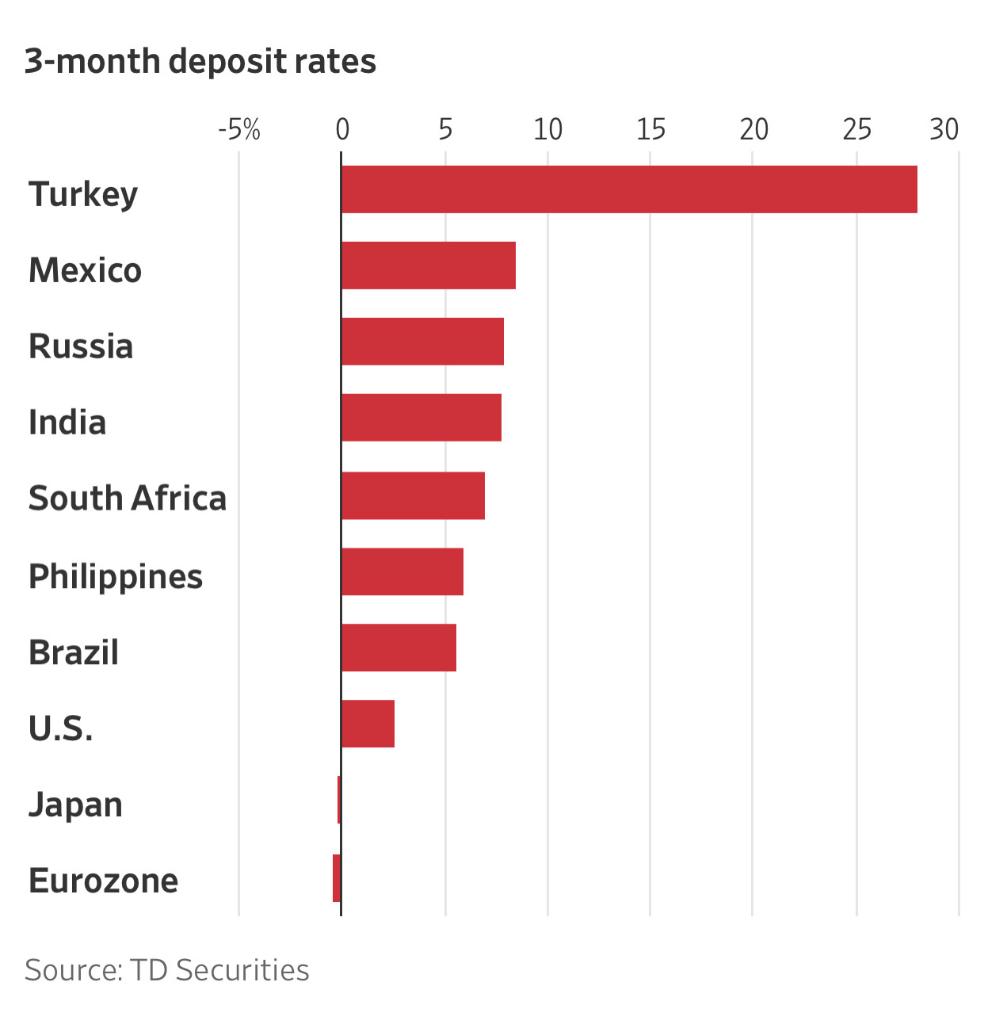
For example, Turkeys 3-month deposit rateone rate that traders use to calculate returns on carry tradesstood at 28% on Friday, while Russias was at 7.9%. The analogous rate in the U.S. is at around 2.6% and negative in the eurozone and Japan. An investor borrowing in dollars and buying Turkish assets hopes to collect a yield of more than 25% over three months, without accounting for moves in the underlying currencies and transaction costs.
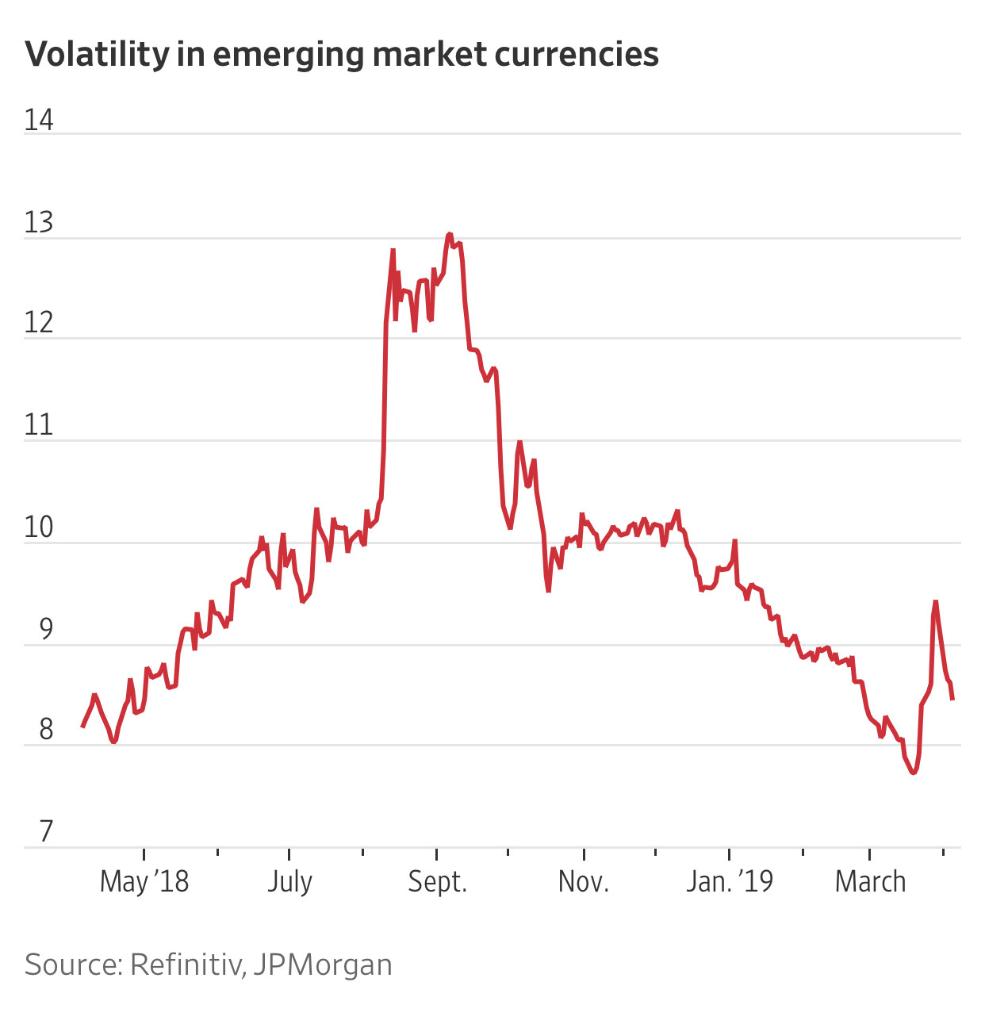
The trades popularity is another example of how recent market-friendly signals from the worlds biggest central banks have encouraged investors to embrace riskier strategies. Expectations that rates in the developed world are unlikely to rise have made high-yielding emerging-market currencies more appealing and helped soothe fears of a rapid global slowdown. Meanwhile, a relative calm in markets has allowed investors to collect yield without worrying about losing gains to unfavorable currency fluctuations.
Carry trades can backfire if markets turn rough, sometimes erasing weeks of gains in a single trading session. The Turkish lira dropped during a bout of investor jitters last month, although it has recovered some of its losses. Argentinas high yields have been undercut by its steadily falling peso, which has lost around 14% this year and ranks among the worlds worst-performing currencies.
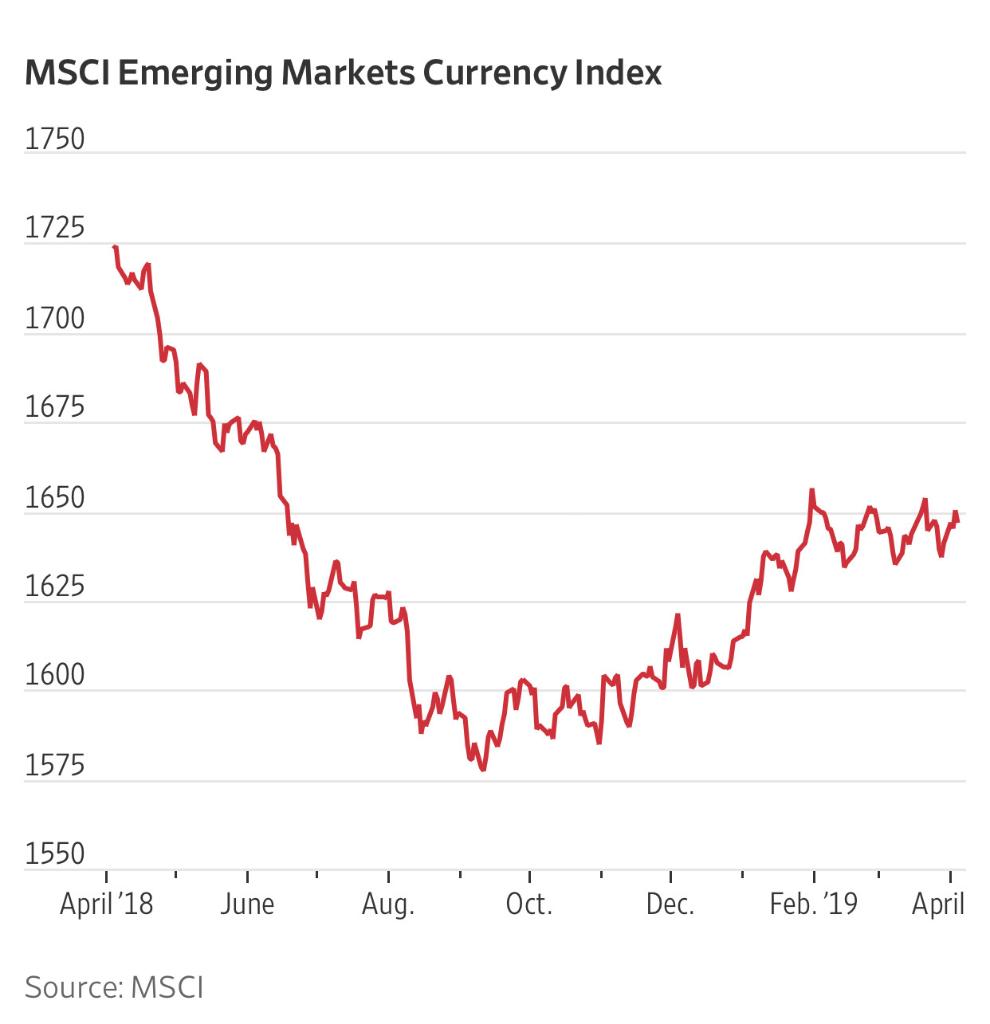
Many carry traders are watching for signs that growth is continuing to ebb despite central bankers efforts to contain the slowdown, a development that would likely push many to cut back on their exposure to riskier assets. So far, the signals have been mixed: Manufacturing data for China and the U.S. improved in March and U.S. hiring bounced back after a surprisingly weak showing in the previous month. Data in Europe, however, have continued to show an economy softening amid political uncertainty surrounding Britains bid to leave the European Union.
A separate risk is a sharp rebound in U.S. economic performance that bolsters the case for the Fed to once again begin tightening monetary policy. Higher rates in the U.S. tend to dent the allure of emerging-market assets while also making it harder for countries with dollar-denominated debt to service their loans.
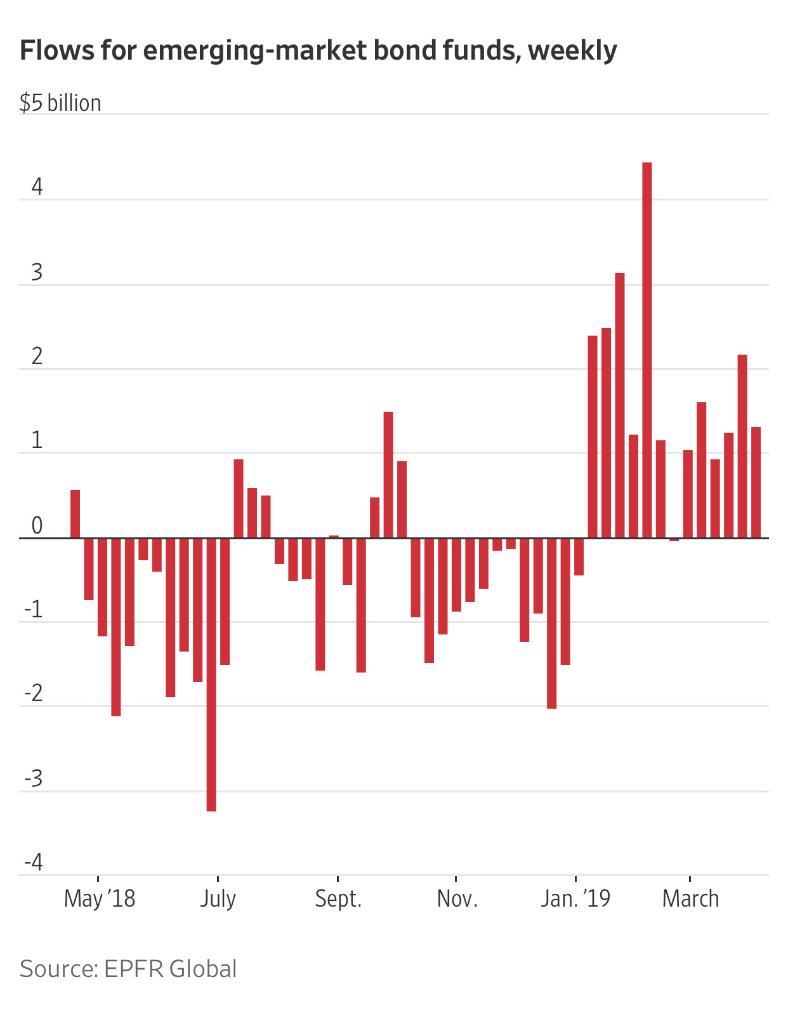
For emerging markets, the sweet spot is somewhere in the middle, said Ed Al-Hussainy, senior interest-rate and currency analyst at Columbia Threadneedle.
Wary of a slowdown in global growth, Mr. Al-Hussainy recently cut his positions in high-yielding, thinly traded currencies like the Argentine peso and Egyptian pound and increased holdings in currencies he believes will be comparatively less volatile, like the Brazilian real and Mexican peso.
Others are more optimistic. Mark McCormick, North American head of foreign-exchange strategy at TD Securities, is betting that Chinas efforts to stimulate its economy will soon bear fruit, giving global growth a boost. He also believes the U.S. and China are likely to agree a trade deal in the near term, removing another source of uncertainty around the worlds second-largest economy.
He is advising clients to buy currencies that would benefit from a resurgence of Chinese commodity demand, such as the Chilean peso. China accounts for roughly half of the worlds demand for copper, a top Chilean export.
Other emerging markets, such as Russia and Mexico, have benefited from this years rally in oil. Said Haidar, head of New York-based Haidar Capital Management, believes the Russian ruble will continue to be supported by strong oil prices and a hawkish central bank. He is also betting that dovish central banks will likely prevent growth from slowing too quickly and preserve the balance of factors that have made carry trades successful this year.
Unless you think the data will get materially worse, the carry trade still looks good this year, he said.
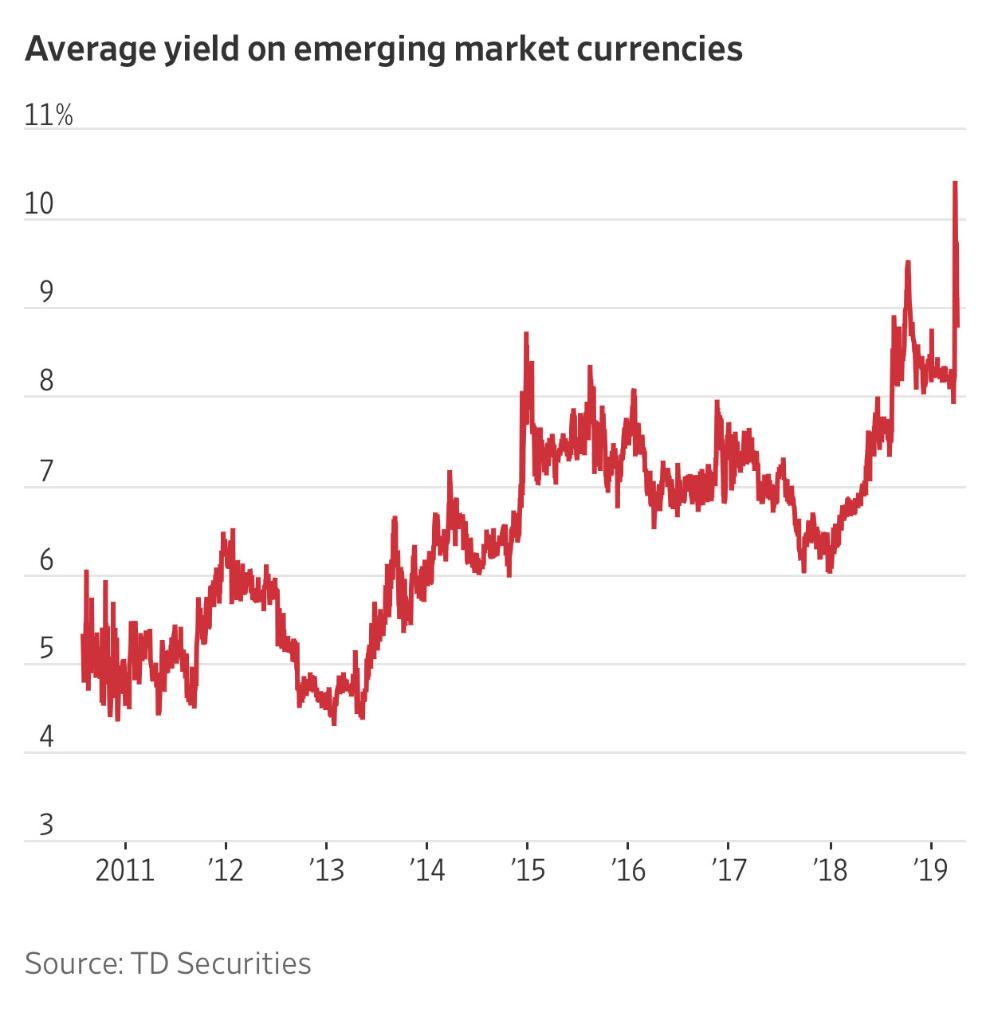
3-month deposit rates -5% 0 5 10 15 20 25 30 Turkey Mexico Russia India South Africa Philippines Brazil U.S. Japan Eurozone Source: TD Securities MSCI Emerging Markets Currency Index 1750 1725 1700 1675 Mm 1650 1625 stay 1600 manda 1575 1550 1 I April '18 June Aug. Oct. Dec. Feb.'19 April Source: MSCI Flows for emerging market bond funds, weekly $5 billion 4 3 2 1 0 -1 "T -2 -3 -4 May '18 July Sept. Nov. Jan. '19 March Source: EPFR Global Volatility in emerging market currencies 14 13 mm 12 11 10 vremmere 8 7 1 1 1 May '18 July Sept. Nov. Jan. '19 March Source: Refinitiv, JPMorgan Average yield on emerging market currencies 11% 10 9 8 7 6 5 3 2011 '12 '13 '14 15 '16 '17 '18 '19 Source: TD Securities 3-month deposit rates -5% 0 5 10 15 20 25 30 Turkey Mexico Russia India South Africa Philippines Brazil U.S. Japan Eurozone Source: TD Securities MSCI Emerging Markets Currency Index 1750 1725 1700 1675 Mm 1650 1625 stay 1600 manda 1575 1550 1 I April '18 June Aug. Oct. Dec. Feb.'19 April Source: MSCI Flows for emerging market bond funds, weekly $5 billion 4 3 2 1 0 -1 "T -2 -3 -4 May '18 July Sept. Nov. Jan. '19 March Source: EPFR Global Volatility in emerging market currencies 14 13 mm 12 11 10 vremmere 8 7 1 1 1 May '18 July Sept. Nov. Jan. '19 March Source: Refinitiv, JPMorgan Average yield on emerging market currencies 11% 10 9 8 7 6 5 3 2011 '12 '13 '14 15 '16 '17 '18 '19 Source: TD Securities
Step by Step Solution
There are 3 Steps involved in it

Get step-by-step solutions from verified subject matter experts
 Study Help