



Question: int n = 10; int f() { int x = n + 4; return x; } /* end of f */ int g() { int
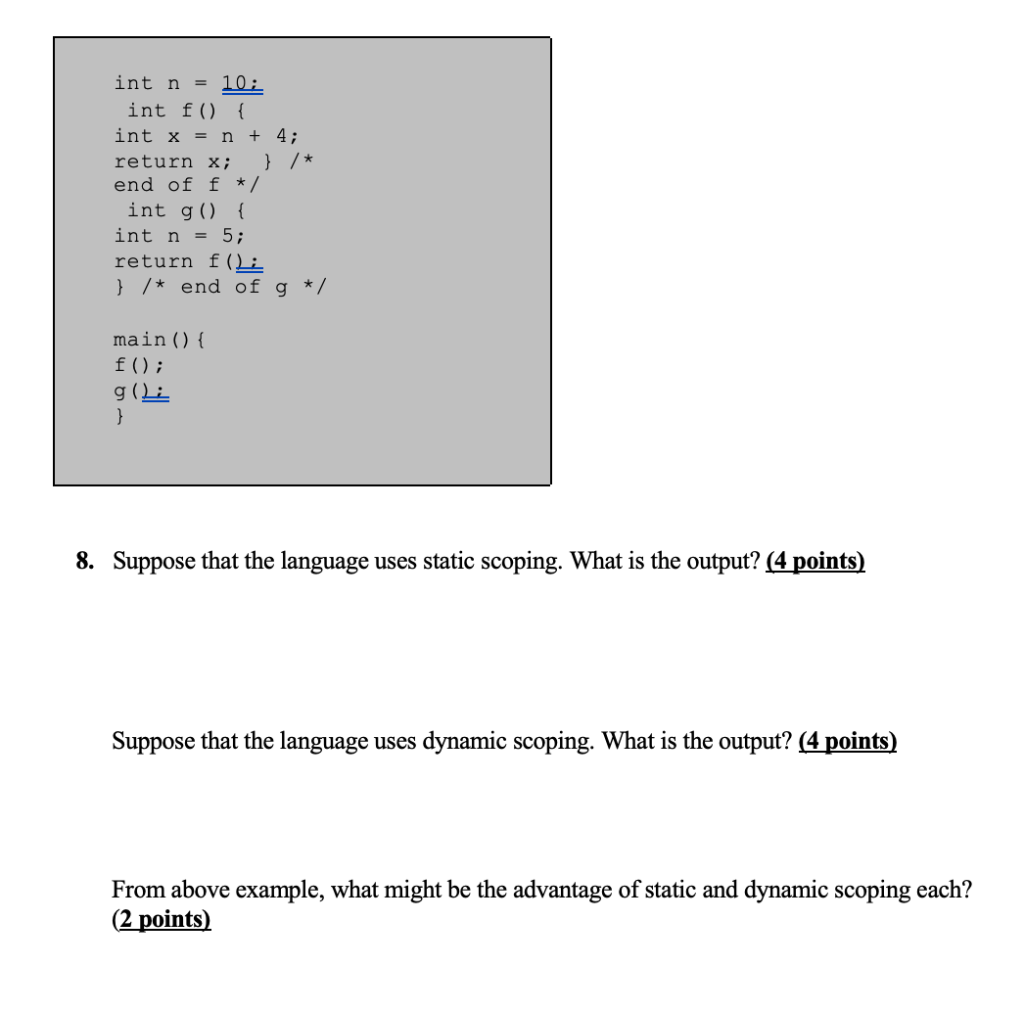
int n = 10; int f() { int x = n + 4; return x; } /* end of f */ int g() { int n = 5; return f(); } /* end of g */ main () { f(); g(): } 8. Suppose that the language uses static scoping. What is the output? (4 points) Suppose that the language uses dynamic scoping. What is the output? (4 points) From above example, what might be the advantage of static and dynamic scoping each? (2 points)
Step by Step Solution
There are 3 Steps involved in it
1 Expert Approved Answer
Step: 1 Unlock

Question Has Been Solved by an Expert!
Get step-by-step solutions from verified subject matter experts
Step: 2 Unlock
Step: 3 Unlock