







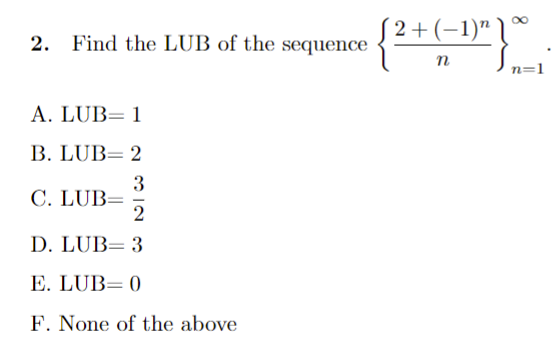
Question: Integration Techniques Just explain 17&18 and you can just answer everything else 2. Find the LUB of the sequence 2 + (-1) n n= 1
Integration Techniques
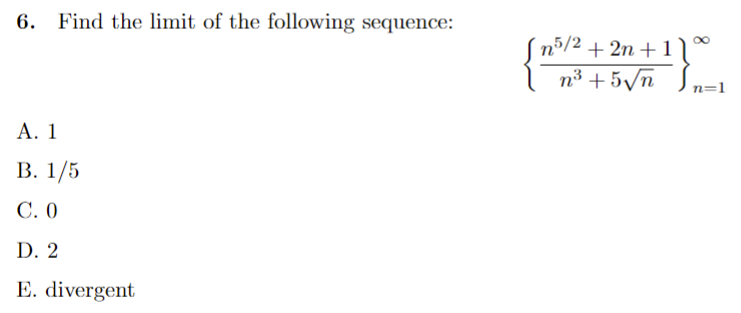
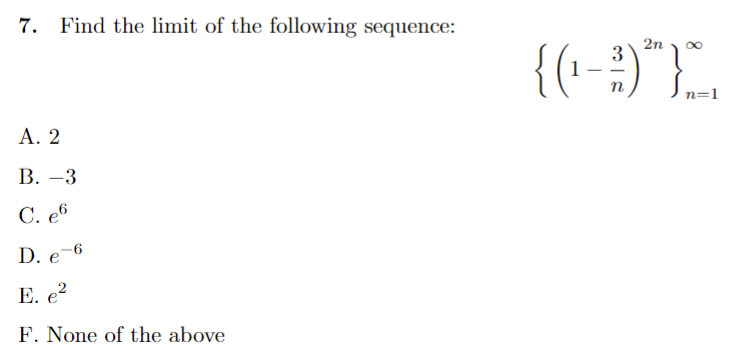
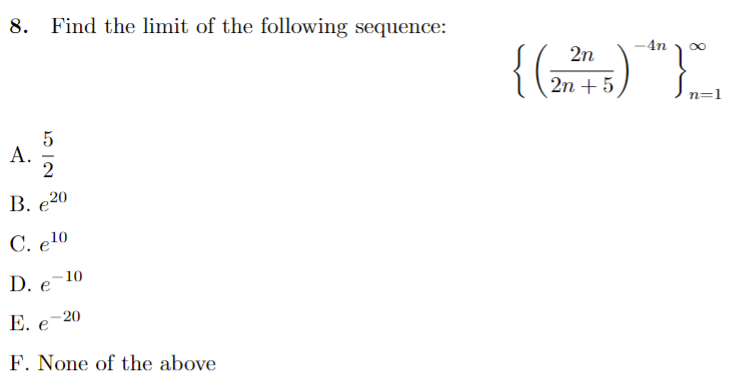
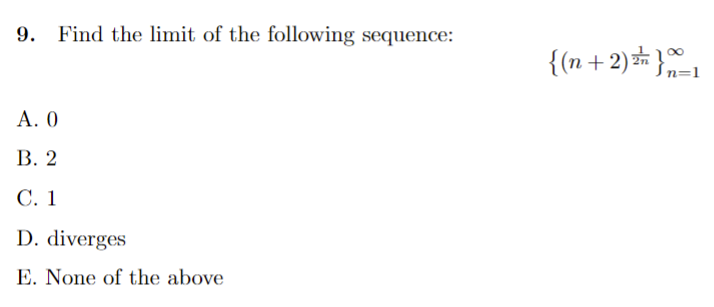
Just explain 17&18 and you can just answer everything else
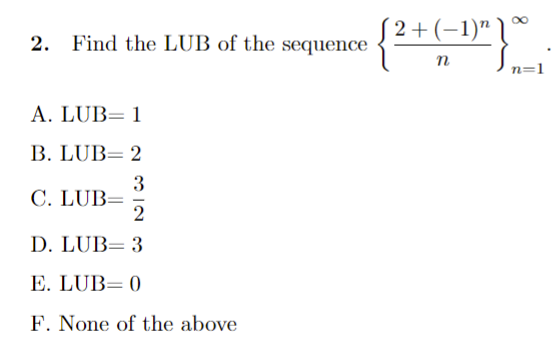
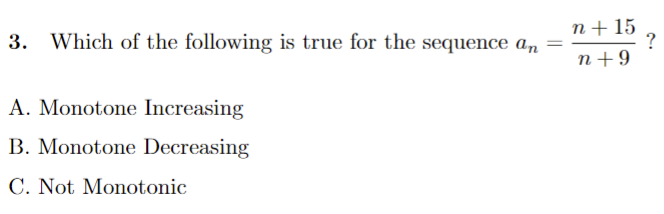
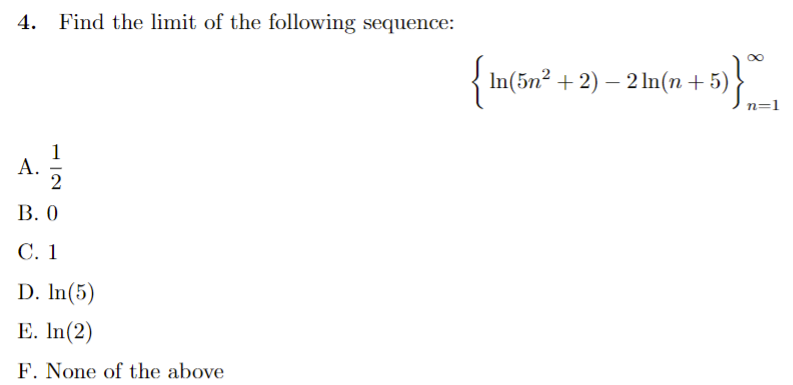
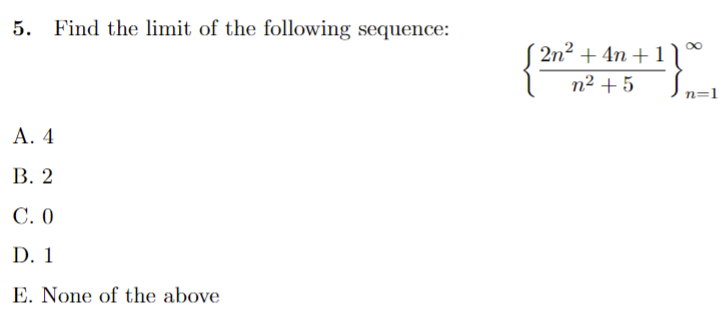
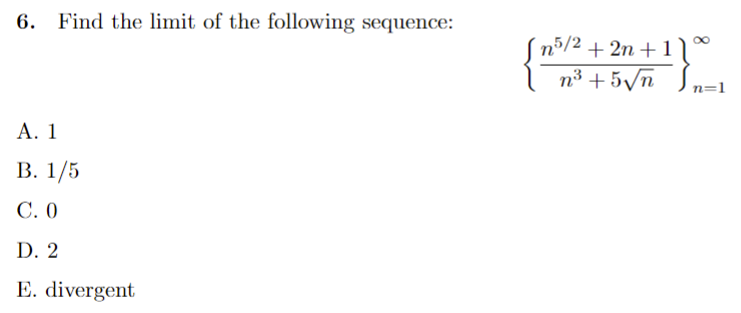
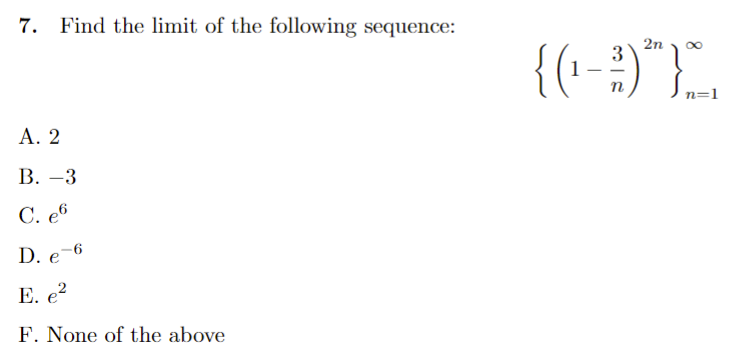
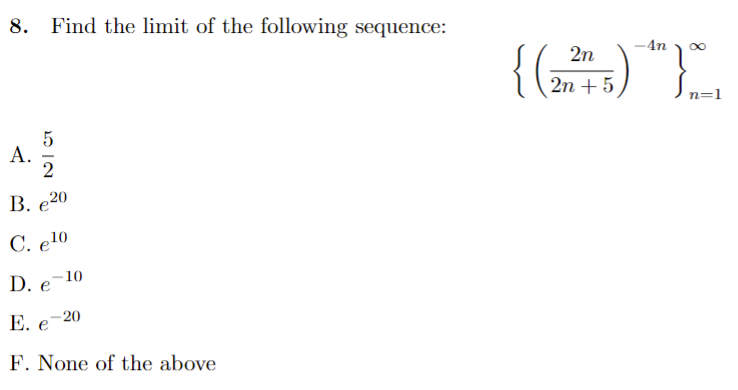
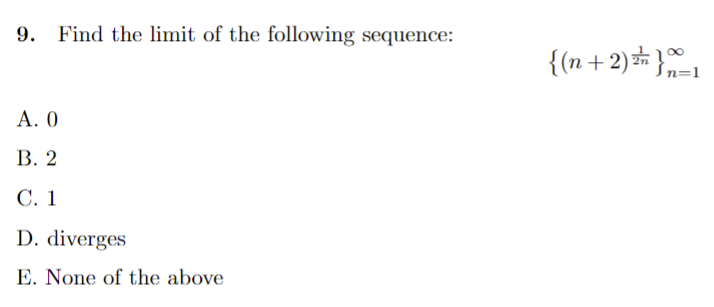
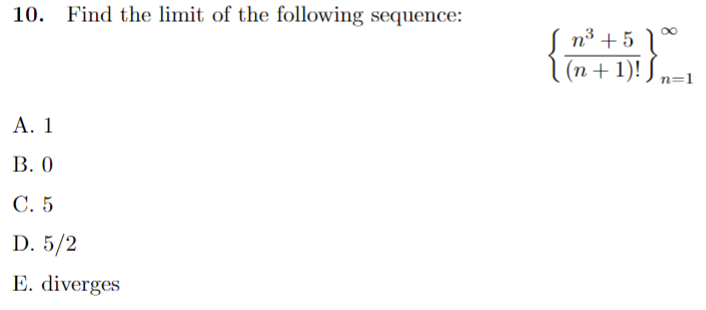
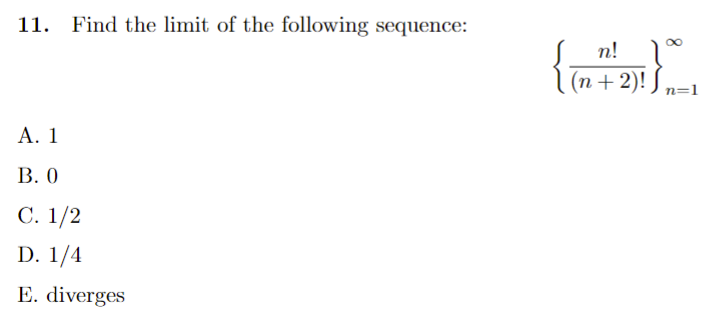
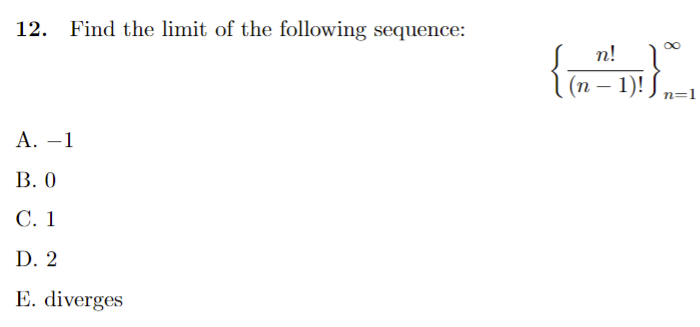
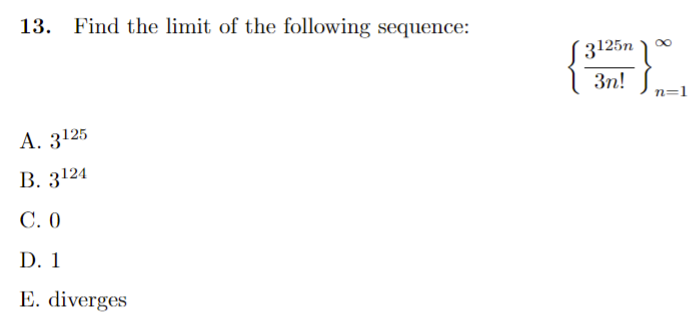
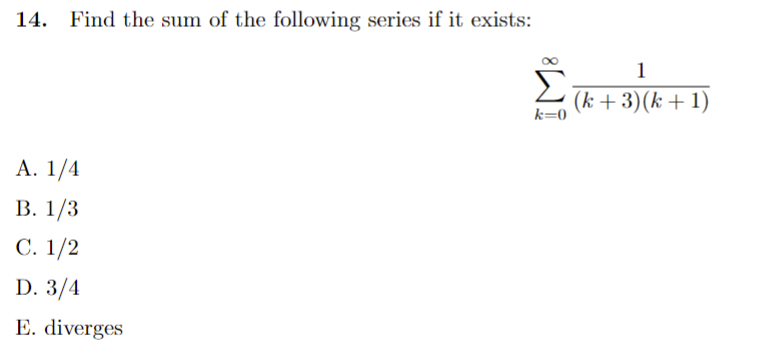
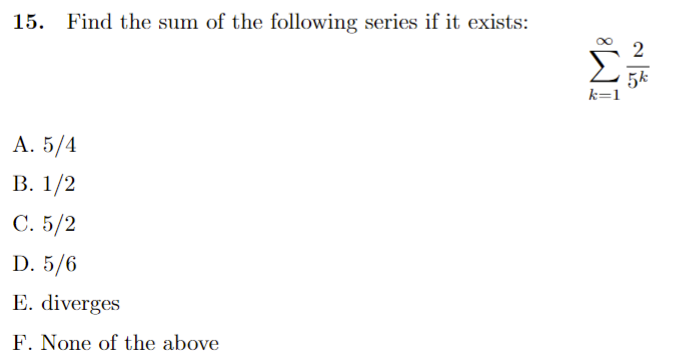
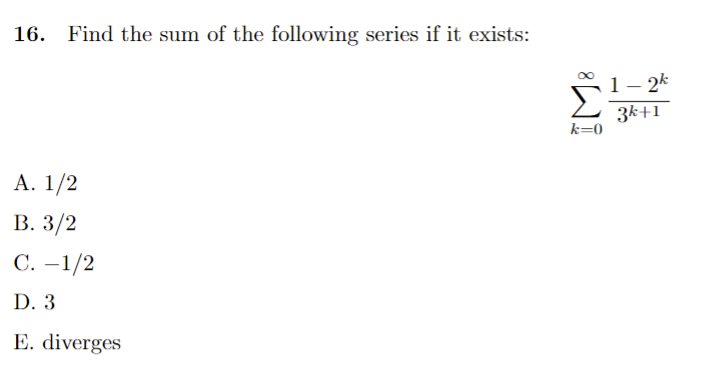
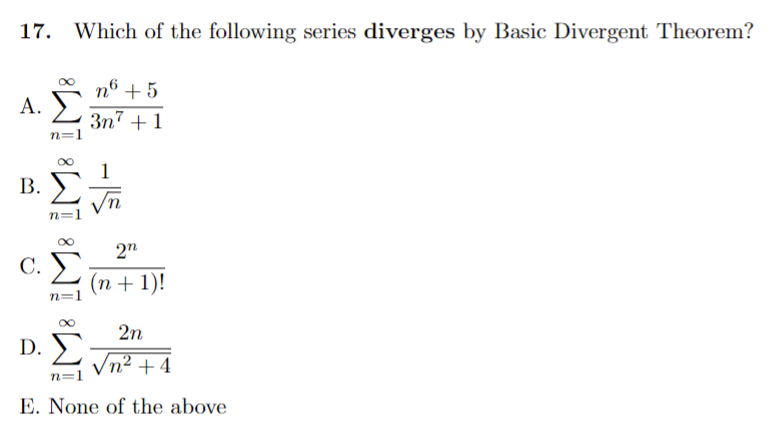
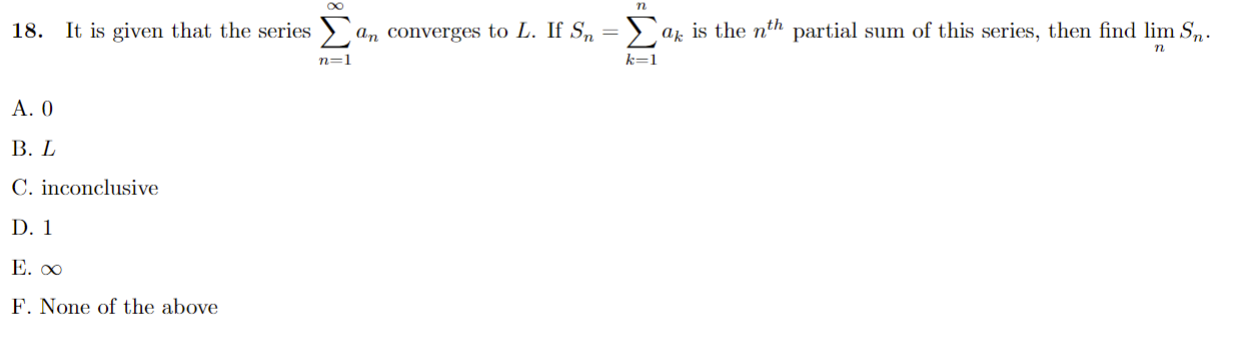
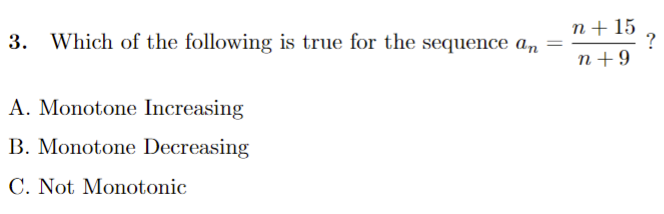
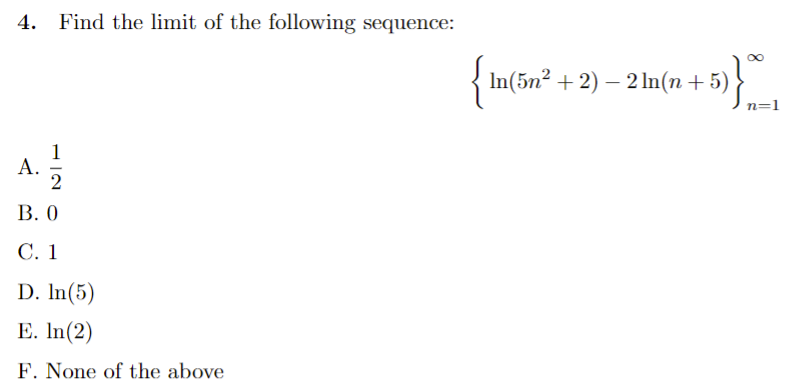
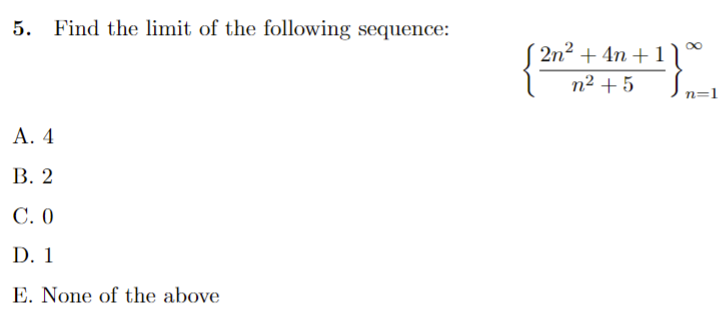
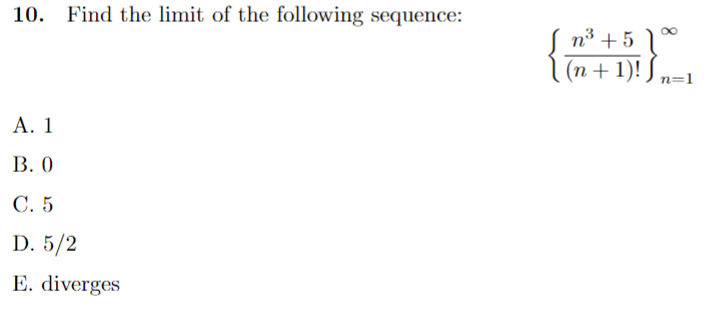
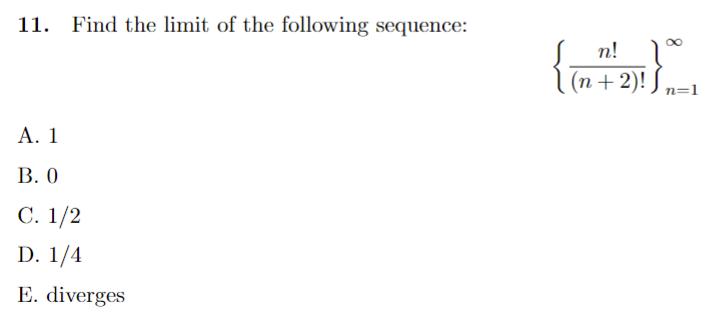
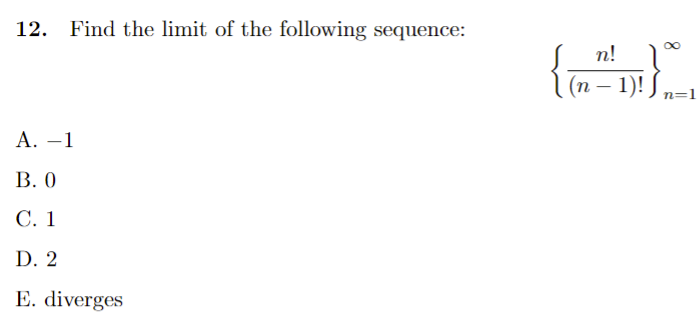
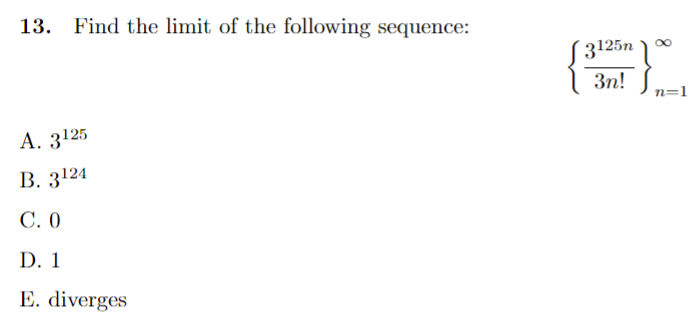
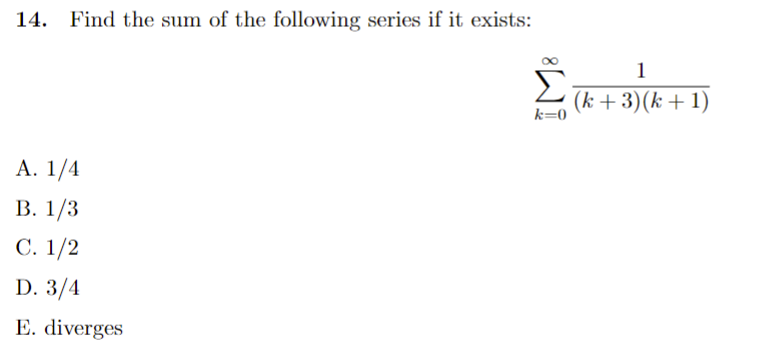
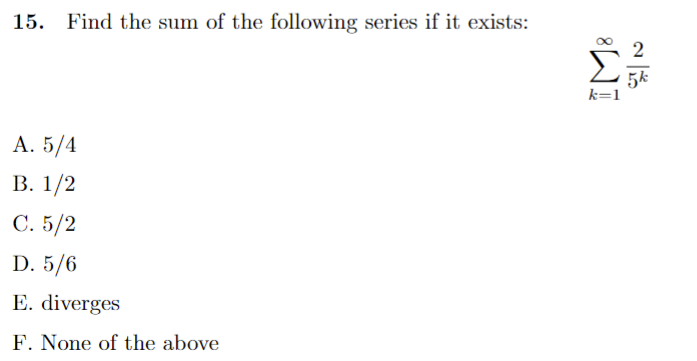
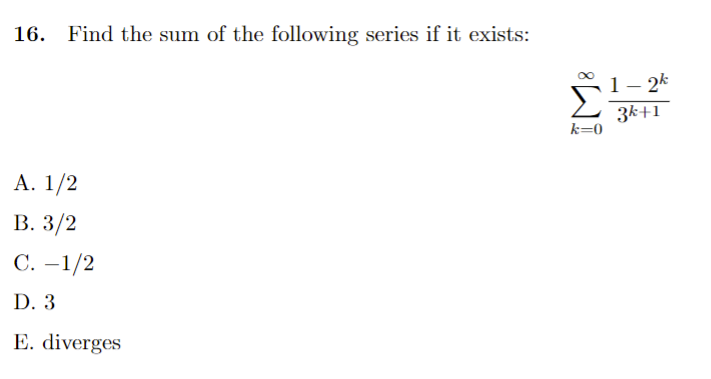
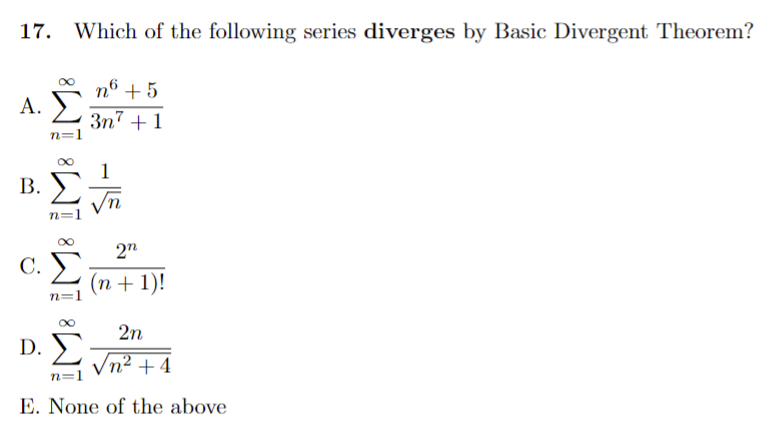
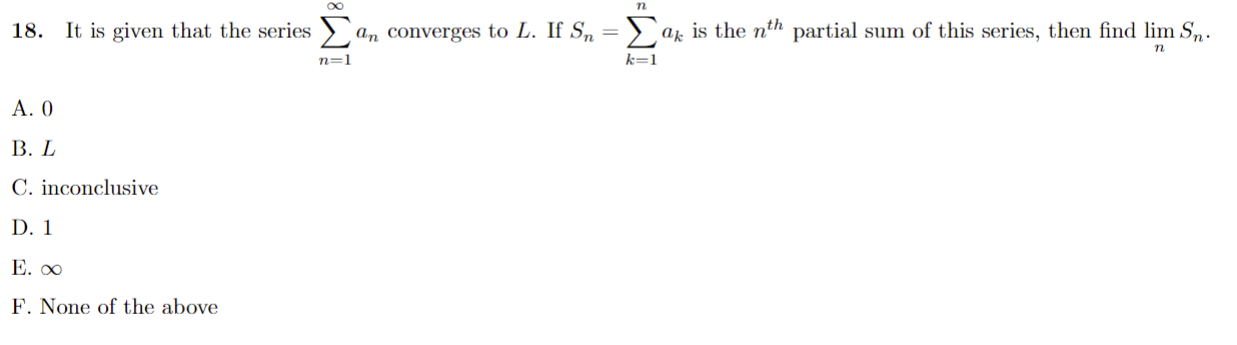
2. Find the LUB of the sequence 2 + (-1)" n n= 1 A. LUB= 1 B. LUB= 2 C. LUB = 09 101 09 D. LUB = 3 E. LUB=0 F. None of the aboven + 15 3. Which of the following is true for the sequence an = ? n +9 A. Monotone Increasing B. Monotone Decreasing C. Not Monotonic4. Find the limit of the following sequence: In(5n2 + 2) - 2 In(n + 5) n=1 A. B. 0 C. 1 D. In (5) E. In(2) F. None of the above5. Find the limit of the following sequence: 2n2 + 4n+ 1 n2 +5 n=1 A. 4 B. 2 C. 0 D. 1 E. None of the above6. Find the limit of the following sequence: 75/2 + 2n+1 n3 +5vn n=1 A. 1 B. 1/5 C. 0 D. 2 E. divergent7. Find the limit of the following sequence: 2n n= 1 A. 2 B. -3 C. e6 D. e -6 E. 2 F. None of the above8. Find the limit of the following sequence: 2n An 2n + 5 n=1 A. B. 20 C. elo D. e -10 E. e-20 F. None of the above9. Find the limit of the following sequence: (n + 2) 100 n=1 A. 0 B. 2 C. 1 D. diverges E. None of the above10. Find the limit of the following sequence: n3 + 5 (n + 1)! n= 1 A. 1 B. 0 C. 5 D. 5/2 E. diverges11. Find the limit of the following sequence: OO n! (n + 2)! n=1 A. 1 B. 0 C. 1/2 D. 1/4 E. diverges12. Find the limit of the following sequence: n! (n - 1)! n=1 A. -1 B. 0 C. 1 D. 2 E. diverges13. Find the limit of the following sequence: 3125n 3n! n=1 A. 3125 B. 3124 C. O D. 1 E. diverges14. Find the sum of the following series if it exists: (k + 3) (k + 1) k=0 A. 1/4 B. 1/3 C. 1/2 D. 3/4 E. diverges15. Find the sum of the following series if it exists: 2 k=1 A. 5/4 B. 1/2 C. 5/2 D. 5/6 E. diverges F. None of the above16. Find the sum of the following series if it exists: 1 - 2k 3k+1 k=0 A. 1/2 B. 3/2 C. -1/2 D. 3 E. diverges17. Which of the following series diverges by Basic Divergent Theorem? 25 + 5 A. 3n7 +1 n=1 1 B. iM 8 n 2n2 C. (n + 1)! n= 2n D. n= Vn2+4 E. None of the aboven 18. It is given that the series E an converges to L. If S = > ax is the nth partial sum of this series, then find lim S,. n n=1 k =1 A. 0 B. L C. inconclusive D. 1 E. Oo F. None of the above
Step by Step Solution
There are 3 Steps involved in it

Get step-by-step solutions from verified subject matter experts
 Study Help