







Question: Interferometers An interferometer is a device that uses interference principles to let us precisely measure very small changes in distance. The most straightforward ( and
Interferometers
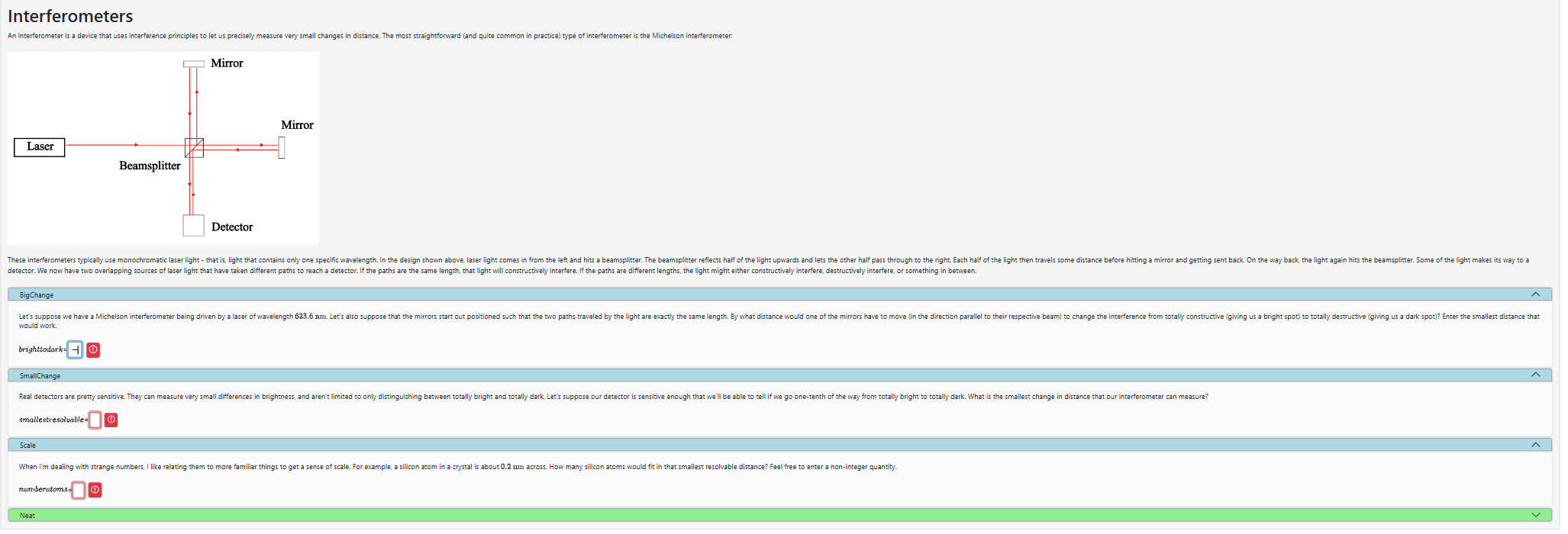
An interferometer is a device that uses interference principles to let us precisely measure very small changes in distance. The most straightforward and quite common in practice type of interferometer is the Michelson interferometer:
These interferometers typically use monochromatic laser light that is light that contains only one specific wavelength. In the design shown above, laser light comes in from the left and hits a beamsplitter. The beamsplitter reflects half of the light upwards and lets the other half pass through to the right. Each half of the light then travels some distance before hitting a mirror and getting sent back. On the way back, the light again hits the beamsplitter. Some of the light makes its way to a detector. We now have two overlapping sources of laser light that have taken different paths to reach a detector. If the paths are the same length, that light will constructively interfere. If the paths are different lengths, the light might either constructively interfere, destructively interfere, or something in between.
BigChange
Let's suppose we have a Michelson interferometer being driven by a laser of wavelengthnm
Let's also suppose that the mirrors start out positioned such that the two paths traveled by the light are exactly the same length. By what distance would one of the mirrors have to move in the direction parallel to their respective beam to change the interference from totally constructive giving us a bright spot to totally destructive giving us a dark spot Enter the smallest distance that would work.
SmallChange
Real detectors are pretty sensitive They can measure very small differences in brightness, and aren't limited to only distinguishing between totally bright and totally dark. Let's suppose our detector is sensitive enough that we'll be able to tell if we go onetenth of the way from totally bright to totally dark. What is the smallest change in distance that our interferometer can measure?
Scale
When Im dealing with strange numbers, I like relating them to more familiar things to get a sense of scale. For example, a silicon atom in a crystal is aboutnm
across How many silicon atoms would fit in that smallest resolvable distance? Feel free to enter a noninteger quantity.
Step by Step Solution
There are 3 Steps involved in it
1 Expert Approved Answer
Step: 1 Unlock

Question Has Been Solved by an Expert!
Get step-by-step solutions from verified subject matter experts
Step: 2 Unlock
Step: 3 Unlock
 Study Help