



Question: Intro to Management: Individual Differences, Values, Attitudes, and Diversity at Facebook Apply the knowledge of Management presented in this chapter to the following case. Applying
Intro to Management:
Individual Differences, Values, Attitudes, and Diversity at Facebook
Apply the knowledge of Management presented in this chapter to the following case. Applying this knowledge should enable you to have a better understanding of Facebooks approach to individual differences, values, attitudes and diversity.
Read the case below and answer the questions on the right.
Mark Zuckerberg, co-founder and creator of Facebook, is now its CEO. He was born in 1984 to well-educated parents: His mom was a psychiatrist and dad a dentist. He went to an exclusive preparatory school and was captain of the fencing team. He liked the classics and writing. He also had passion and skill for working with computers at a very young age.
Zuckerberg created his first messaging program using Atari BASIC around age 12. His family used it to communicate, and his dad used it in his dental office. He entered Harvard in 2002 and quickly became known as a skilled software developer. Zuckerberg developed computer skills at Harvard working on projects like CourseMatch, Facemash, and Harvard Connection. The Harvard Connection experience resulted in the famous lawsuit between the founders of Harvard Connection and Zuckerberg: Zuckerberg settled for around $65 million. He started the core of Facebook from his dorm room and left Harvard in 2004 to work full-time on Facebook.236
In 2016, there were more than 1.65 billion active Facebook users. This represents a 15% increase year over year. The most common demographic of users is age 2534 (29.7%). There are over 300 million photos posted daily and over 4.5 million daily likes. The companys revenue grew from $7.8 billion in 2013 to over $17 billion in 2015. Facebook is clearly the largest, and potentially most influential, social media site on the planet.237
Zuckerberg's Personal Characteristics
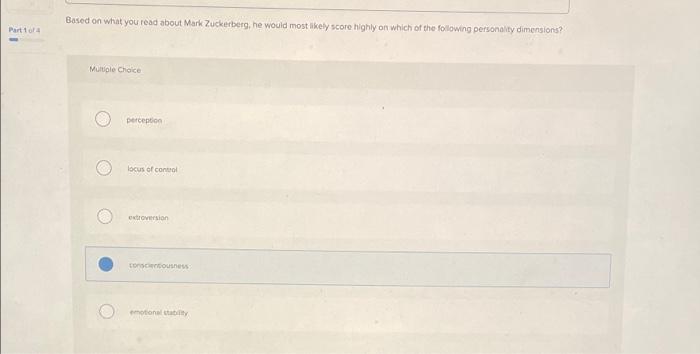
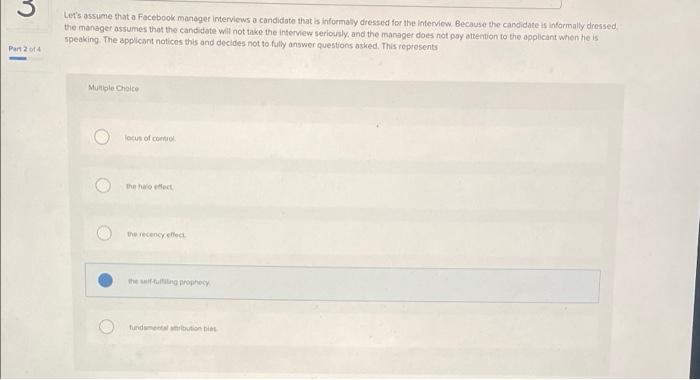
Zuckerberg, or Zuck, as known to his most of his acquaintances, is pale, medium build, and about five feet eight. He stands erect and generally dresses in T-shirts, jeans, and sneakers. His affect can be distant and disorienting, a strange mixture of shy and cocky, according to a New Yorker writer. When hes not interested in what someone is talking about, hell just look away and say, Yeah, yeah. Hes known to come across as flip and condescending, but face to face he is often charming, says the writer.238
Zuckerberg does not prefer speaking to the press or participating in public appearances. He is highly motivated and turned down offers to sell Facebook for billions in the early 2000s because he wanted to keep running and growing the company. Founding and growing the company demonstrates intelligence and risk taking. It certainly took courage to drop out of Harvard to pursue a dream.239
Hes generous and believes in equality, world peace, and happiness. In 2013, he donated $100 million to the failing Newark Public School system in New Jersey and signed the Giving Pledge, promising to donate at least 50 percent of his wealth to charity over the course of his lifetime.240
Zuckerberg is driven to achieve and has high expectations of others. He stated, Move fast and break things. Unless you are breaking stuff, you are not moving fast enough. He also cares about building something that improves the lives of others. And if you can make something that makes peoples life better, then thats something thats really good, he said.241
Facebooks Mission, Values, and Culture
Zuckerberg did not start Facebook to make money. Rather, he was pursuing a social mission to make the world more open and connected. In Facebooks IPO letter, Zuckerberg wrote, Facebook aspires to build the services that give people the power to share and help them once again transform many of our core institutions and industries. . . . We dont build services to make money; we make money to build better services.242
Facebooks five core values include the following: focus on impact, move fast, be bold, be open, and build social value.243 These values compose the core of Facebooks culture, which Zuckerberg refers to as the Hacker Way.
Zuckerberg described the hacker way as an approach to building that involves continuous improvement and iteration. Hackers believe that something can always be better, and that nothing is ever complete. . . . Hacker culture is also extremely open and meritocratic. Hackers believe that the best idea and implementation should always winnot the person who is lobbying for an idea or the person who manages the most people.244
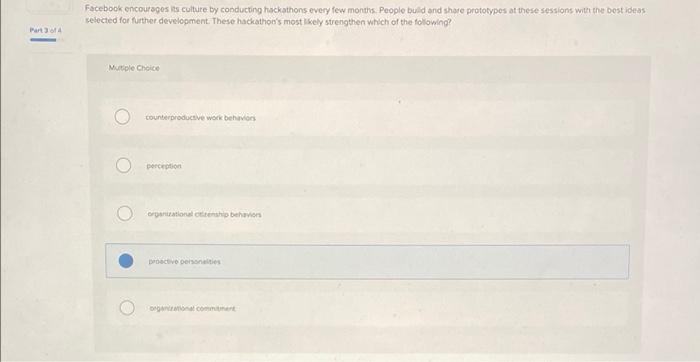
The company encourages this culture by conducting hackathons every few months. People build and share prototypes at these sessions. At the end, the best ideas are selected for further development.
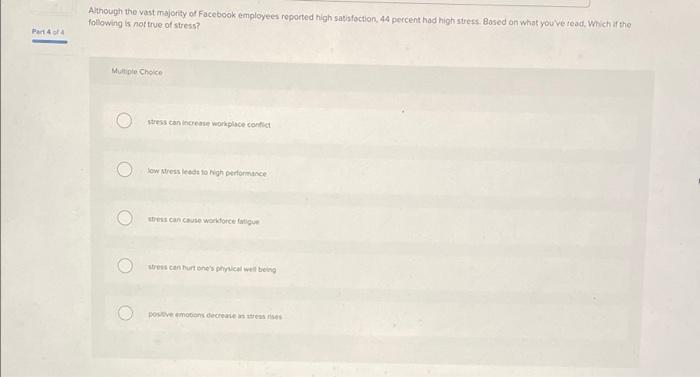
Employees are happy with Facebooks culture and work environment, according to a survey conducted by jobs site Payscale. Ninety-six percent of employees reported high satisfaction, and 44% had high stress. These results are better than those from peer companies like Google, Apple, Amazon, and Tesla.245
Facebook Lacks Diversity
Managing diversity is a hot topic among technology companies. This is an outgrowth of the demographic composition of people working in this industry. Rather than hide from this profile, companies have started to display transparency by publishing their diversity profiles.
Facebooks diversity report showed 68% male and 32% female. Ethnicity data for its U.S. workforce revealed 55% white, 36% Asian, 4% Hispanic, 3% two or more races, and 2% black. This pattern is similar to those of Google and Apple. Googles diversity report showed 70% male and U.S. workforce diversity of 61% white, 30% Asian, 4% two or more races, 3% Hispanic, and 2% black. Apples U.S. demographics found 30% female and 55% white, 15% Asian, 11% Hispanic, 7% black, 2% two or more races, 1% other, and 9% undeclared.246
Facebook executives acknowledge that the workforce is not overly diverse and committed to improving its demographic profile. Maxine Williams, global director of diversity, commented that diversity is central to Facebooks mission of creating a more open and connected world: its good for our products and for our business. Cognitive diversity, or diversity of thought, matters because we are building a platform that currently serves 1.4 billion people around the world. Its vital for us to have a broad range of perspectives, including people of different genders, races, ages, sexual orientations, characteristics and points of view.247
Facebook has initiated a number of programs aimed at improving its demographic profile. They include the following:
Diverse slate approach. This pilot program ensures that every job opening considers at least one candidate from an underrepresented group.
Facebook University. This program invites college freshmen with exceptional talent from underrepresented groups to work on summer projects with Facebook mentors.
Managing Bias training course. This course educates employees about stereotypes and implicit biases.
Computer Science & Engineering Lean In Circles. This program partners with LeanIn.org, LinkedIn, and The Anita Borg Institute to create a community of support for women and some men as they pursue technology and engineering careers.
Step by Step Solution
There are 3 Steps involved in it

Get step-by-step solutions from verified subject matter experts