







Question: Introduction- (Context and Rationale) of the case study? CLOUD COMPUTING: case study The term cloud computing conjures up beautiful visions of nature at its most
Introduction- (Context and Rationale) of the case study?
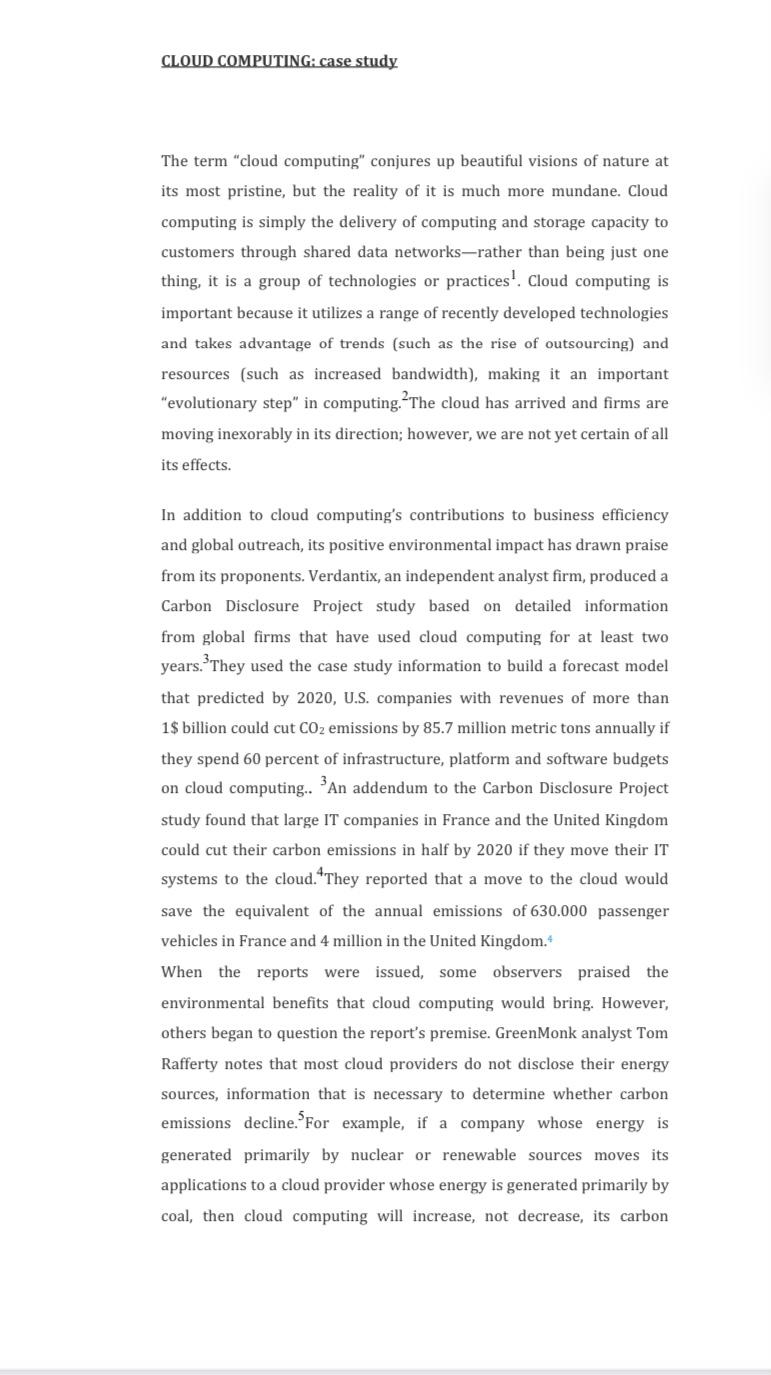
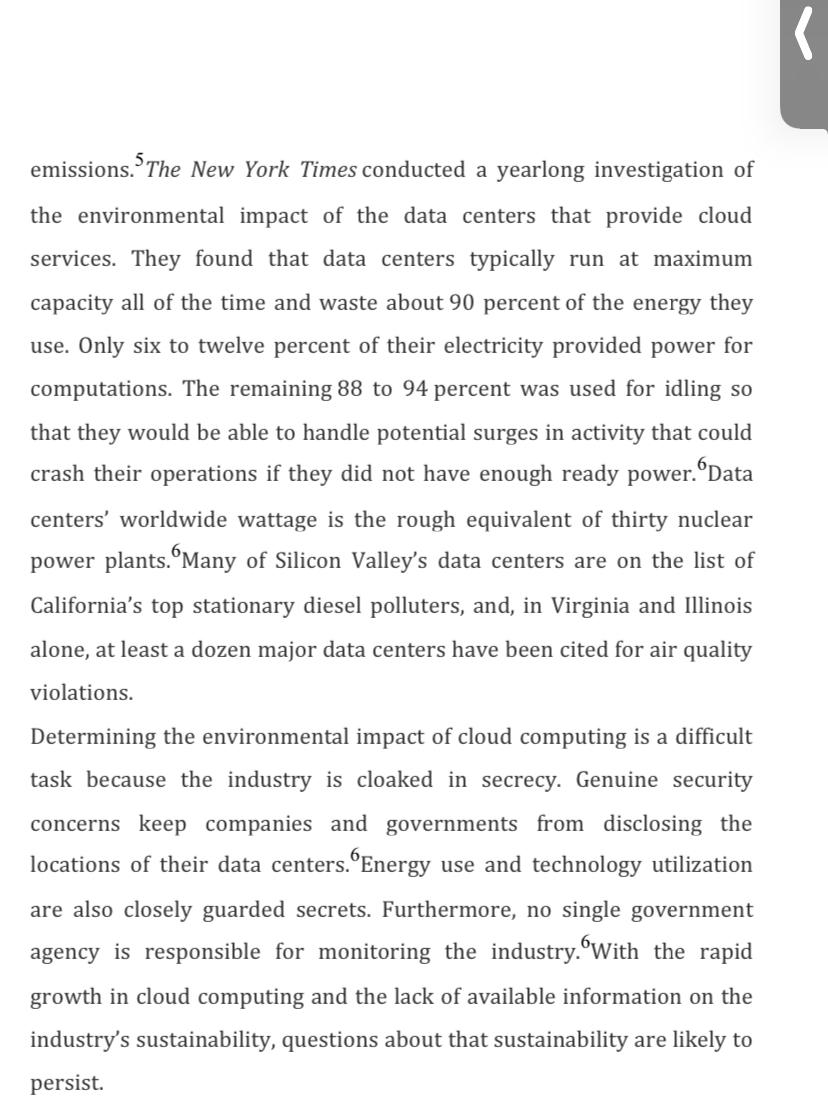
CLOUD COMPUTING: case study The term "cloud computing" conjures up beautiful visions of nature at its most pristine, but the reality of it is much more mundane. Cloud computing is simply the delivery of computing and storage capacity to customers through shared data networks-rather than being just one thing, it is a group of technologies or practices!. Cloud computing is important because it utilizes a range of recently developed technologies and takes advantage of trends (such as the rise of outsourcing) and resources (such as increased bandwidth), making it an important "evolutionary step" in computing. The cloud has arrived and firms are moving inexorably in its direction; however, we are not yet certain of all its effects. In addition to cloud computing's contributions to business efficiency and global outreach, its positive environmental impact has drawn praise from its proponents. Verdantix, an independent analyst firm, produced a Carbon Disclosure Project study based on detailed information from global firms that have used cloud computing for at least two years. They used the case study information to build a forecast model that predicted by 2020, U.S. companies with revenues of more than 1$ billion could cut CO2 emissions by 85.7 million metric tons annually if they spend 60 percent of infrastructure, platform and software budgets on cloud computing.. ?An addendum to the Carbon Disclosure Project study found that large IT companies in France and the United Kingdom could cut their carbon emissions in half 2020 if they move their IT systems to the cloud. "They reported that a move to the cloud would save the equivalent of the annual emissions of 630.000 passenger vehicles in France and 4 million in the United Kingdom. When the reports were issued, some observers praised the environmental benefits that cloud computing would bring. However, others began to question the report's premise. GreenMonk analyst Tom Rafferty notes that most cloud providers do not disclose their energy sources, information that is necessary to determine whether carbon emissions decline. For example, if a company whose energy is generated primarily by nuclear or renewable sources moves its applications to a cloud provider whose energy is generated primarily by coal, then cloud computing will increase, not decrease, its carbon emissions. The New York Times conducted a yearlong investigation of the environmental impact of the data centers that provide cloud services. They found that data centers typically run at maximum capacity all of the time and waste about 90 percent of the energy they use. Only six to twelve percent of their electricity provided power for computations. The remaining 88 to 94 percent was used for idling so that they would be able to handle potential surges in activity that could crash their operations if they did not have enough ready power. Data centers' worldwide wattage is the rough equivalent of thirty nuclear power plants. Many of Silicon Valley's data centers are on the list of California's top stationary diesel polluters, and, in Virginia and Illinois alone, at least a dozen major data centers have been cited for air quality violations. Determining the environmental impact of cloud computing is a difficult task because the industry is cloaked in secrecy. Genuine security concerns keep companies and governments from disclosing the locations of their data centers.Energy use and technology utilization are also closely guarded secrets. Furthermore, no single government agency is responsible for monitoring the industry.With the rapid growth in cloud computing and the lack of available information on the industry's sustainability, questions about that sustainability are likely to persistStep by Step Solution
There are 3 Steps involved in it
1 Expert Approved Answer
Step: 1 Unlock

Question Has Been Solved by an Expert!
Get step-by-step solutions from verified subject matter experts
Step: 2 Unlock
Step: 3 Unlock
 Study Help