







Question: Introduction: Extra Sensory Perception (ESP) is a controversial ability where some people claim to be able to see things or make predictions about future
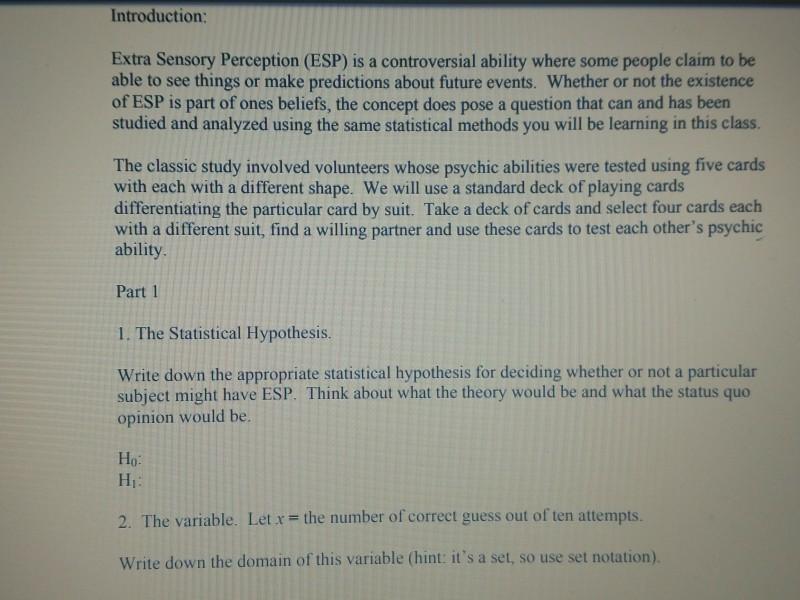
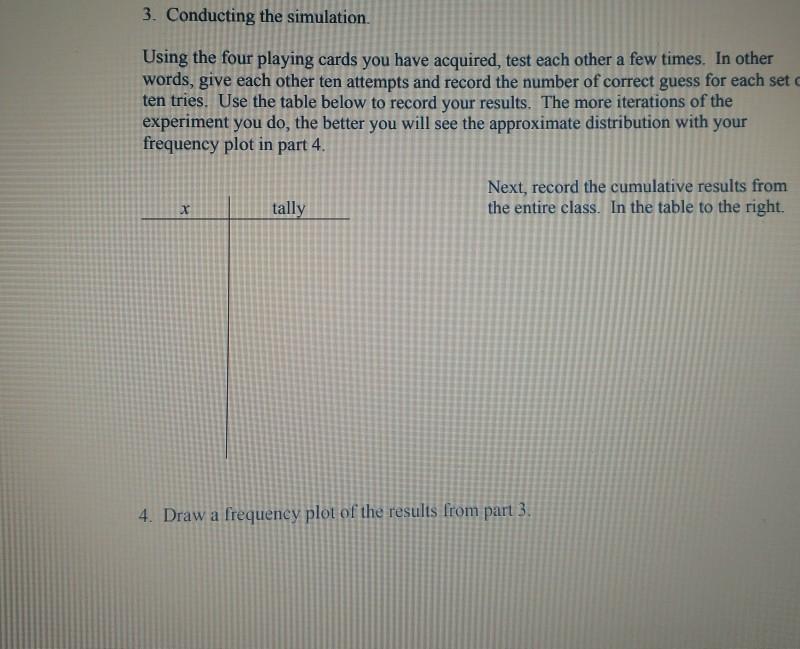

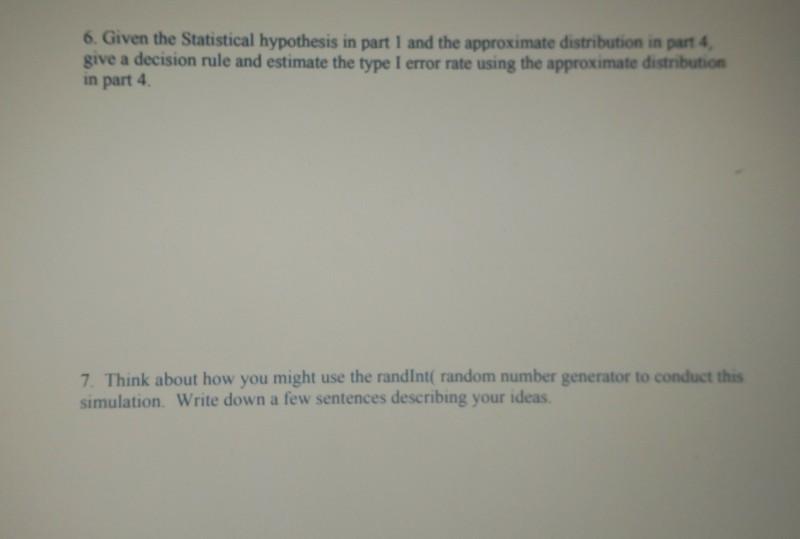
Introduction: Extra Sensory Perception (ESP) is a controversial ability where some people claim to be able to see things or make predictions about future events. Whether or not the existence of ESP is part of ones beliefs, the concept does pose a question that can and has been studied and analyzed using the same statistical methods you will be learning in this class. The classic study involved volunteers whose psychic abilities were tested using five cards with each with a different shape. We will use a standard deck of playing cards differentiating the particular card by suit. Take a deck of cards and select four cards each with a different suit, find a willing partner and use these cards to test each other's psychic ability. Part 1 1. The Statistical Hypothesis. Write down the appropriate statistical hypothesis for deciding whether or not a particular subject might have ESP. Think about what the theory would be and what the status quo opinion would be. Ho: H: 2. The variable. Let x = the number of correct guess out of ten attempts. Write down the domain of this variable (hint: it's a set, so use set notation). 3. Conducting the simulation. Using the four playing cards you have acquired, test each other a few times. In other words, give each other ten attempts and record the number of correct guess for each set ten tries. Use the table below to record your results. The more iterations of the experiment you do, the better you will see the approximate distribution with your frequency plot in part 4. X tally Next, record the cumulative results from the entire class. In the table to the right. 4. Draw a frequency plot of the results from part 3. 5. Describe the distribution indicated by the frequency plot in part 4. 6. Given the Statistical hypothesis in part 1 and the approximate distribution in part 4, give a decision rule and estimate the type I error rate using the approximate distribution in part 4. 7. Think about how you might use the randInt( random number generator to conduct this simulation. Write down a few sentences describing your ideas. Introduction: Extra Sensory Perception (ESP) is a controversial ability where some people claim to be able to see things or make predictions about future events. Whether or not the existence of ESP is part of ones beliefs, the concept does pose a question that can and has been studied and analyzed using the same statistical methods you will be learning in this class. The classic study involved volunteers whose psychic abilities were tested using five cards with each with a different shape. We will use a standard deck of playing cards differentiating the particular card by suit. Take a deck of cards and select four cards each with a different suit, find a willing partner and use these cards to test each other's psychic ability. Part 1 1. The Statistical Hypothesis. Write down the appropriate statistical hypothesis for deciding whether or not a particular subject might have ESP. Think about what the theory would be and what the status quo opinion would be. Ho: H: 2. The variable. Let x = the number of correct guess out of ten attempts. Write down the domain of this variable (hint: it's a set, so use set notation). 3. Conducting the simulation. Using the four playing cards you have acquired, test each other a few times. In other words, give each other ten attempts and record the number of correct guess for each set ten tries. Use the table below to record your results. The more iterations of the experiment you do, the better you will see the approximate distribution with your frequency plot in part 4. X tally Next, record the cumulative results from the entire class. In the table to the right. 4. Draw a frequency plot of the results from part 3. 5. Describe the distribution indicated by the frequency plot in part 4. 6. Given the Statistical hypothesis in part 1 and the approximate distribution in part 4, give a decision rule and estimate the type I error rate using the approximate distribution in part 4. 7. Think about how you might use the randInt( random number generator to conduct this simulation. Write down a few sentences describing your ideas. Introduction: Extra Sensory Perception (ESP) is a controversial ability where some people claim to be able to see things or make predictions about future events. Whether or not the existence of ESP is part of ones beliefs, the concept does pose a question that can and has been studied and analyzed using the same statistical methods you will be learning in this class. The classic study involved volunteers whose psychic abilities were tested using five cards with each with a different shape. We will use a standard deck of playing cards differentiating the particular card by suit. Take a deck of cards and select four cards each with a different suit, find a willing partner and use these cards to test each other's psychic ability. Part 1 1. The Statistical Hypothesis. Write down the appropriate statistical hypothesis for deciding whether or not a particular subject might have ESP. Think about what the theory would be and what the status quo opinion would be. Ho: H: 2. The variable. Let x = the number of correct guess out of ten attempts. Write down the domain of this variable (hint: it's a set, so use set notation). 3. Conducting the simulation. Using the four playing cards you have acquired, test each other a few times. In other words, give each other ten attempts and record the number of correct guess for each set ten tries. Use the table below to record your results. The more iterations of the experiment you do, the better you will see the approximate distribution with your frequency plot in part 4. X tally Next, record the cumulative results from the entire class. In the table to the right. 4. Draw a frequency plot of the results from part 3. 5. Describe the distribution indicated by the frequency plot in part 4. 6. Given the Statistical hypothesis in part 1 and the approximate distribution in part 4, give a decision rule and estimate the type I error rate using the approximate distribution in part 4. 7. Think about how you might use the randInt( random number generator to conduct this simulation. Write down a few sentences describing your ideas. Introduction: Extra Sensory Perception (ESP) is a controversial ability where some people claim to be able to see things or make predictions about future events. Whether or not the existence of ESP is part of ones beliefs, the concept does pose a question that can and has been studied and analyzed using the same statistical methods you will be learning in this class. The classic study involved volunteers whose psychic abilities were tested using five cards with each with a different shape. We will use a standard deck of playing cards differentiating the particular card by suit. Take a deck of cards and select four cards each with a different suit, find a willing partner and use these cards to test each other's psychic ability. Part 1 1. The Statistical Hypothesis. Write down the appropriate statistical hypothesis for deciding whether or not a particular subject might have ESP. Think about what the theory would be and what the status quo opinion would be. Ho: H: 2. The variable. Let x = the number of correct guess out of ten attempts. Write down the domain of this variable (hint: it's a set, so use set notation). 3. Conducting the simulation. Using the four playing cards you have acquired, test each other a few times. In other words, give each other ten attempts and record the number of correct guess for each set ten tries. Use the table below to record your results. The more iterations of the experiment you do, the better you will see the approximate distribution with your frequency plot in part 4. X tally Next, record the cumulative results from the entire class. In the table to the right. 4. Draw a frequency plot of the results from part 3. 5. Describe the distribution indicated by the frequency plot in part 4. 6. Given the Statistical hypothesis in part 1 and the approximate distribution in part 4, give a decision rule and estimate the type I error rate using the approximate distribution in part 4. 7. Think about how you might use the randInt( random number generator to conduct this simulation. Write down a few sentences describing your ideas. Introduction: Extra Sensory Perception (ESP) is a controversial ability where some people claim to be able to see things or make predictions about future events. Whether or not the existence of ESP is part of ones beliefs, the concept does pose a question that can and has been studied and analyzed using the same statistical methods you will be learning in this class. The classic study involved volunteers whose psychic abilities were tested using five cards with each with a different shape. We will use a standard deck of playing cards differentiating the particular card by suit. Take a deck of cards and select four cards each with a different suit, find a willing partner and use these cards to test each other's psychic ability. Part 1 1. The Statistical Hypothesis. Write down the appropriate statistical hypothesis for deciding whether or not a particular subject might have ESP. Think about what the theory would be and what the status quo opinion would be. Ho: H: 2. The variable. Let x = the number of correct guess out of ten attempts. Write down the domain of this variable (hint: it's a set, so use set notation). 3. Conducting the simulation. Using the four playing cards you have acquired, test each other a few times. In other words, give each other ten attempts and record the number of correct guess for each set ten tries. Use the table below to record your results. The more iterations of the experiment you do, the better you will see the approximate distribution with your frequency plot in part 4. X tally Next, record the cumulative results from the entire class. In the table to the right. 4. Draw a frequency plot of the results from part 3. 5. Describe the distribution indicated by the frequency plot in part 4. 6. Given the Statistical hypothesis in part 1 and the approximate distribution in part 4, give a decision rule and estimate the type I error rate using the approximate distribution in part 4. 7. Think about how you might use the randInt( random number generator to conduct this simulation. Write down a few sentences describing your ideas.
Step by Step Solution
3.42 Rating (155 Votes )
There are 3 Steps involved in it
1 Many experiments can be formulated using 4 cards each of a different house to test the ESP of a su... View full answer

Get step-by-step solutions from verified subject matter experts
 Study Help