



Question: Introduction Since the only constant change is change itself, planning change is critical to an organization. Although research indicates that less than a third of
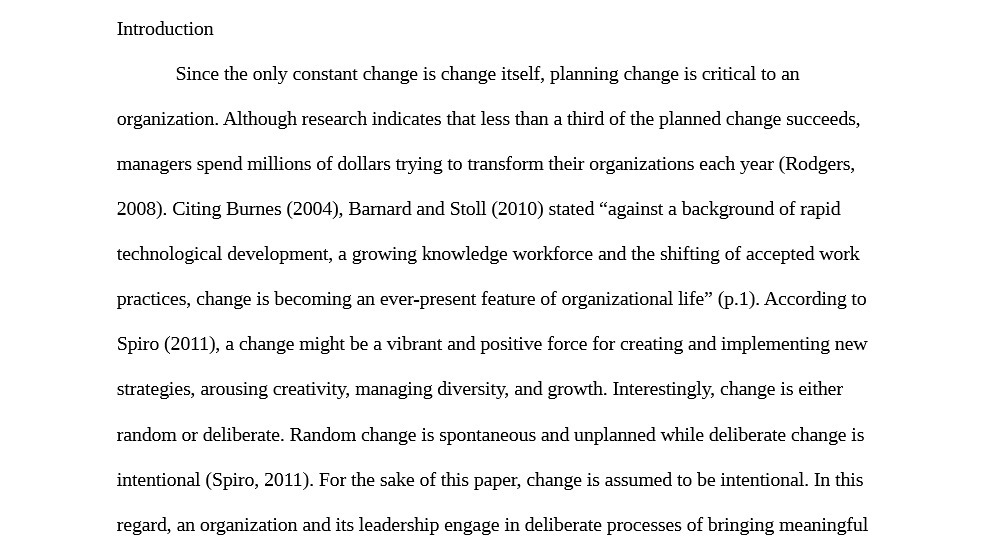
Introduction Since the only constant change is change itself, planning change is critical to an organization. Although research indicates that less than a third of the planned change succeeds, managers spend millions of dollars trying to transform their organizations each year (Rodgers, 2008). Citing Burnes (2004), Barnard and Stoll (2010) stated \"against a background of rapid technological development, a growing knowledge workforce and the shifting of accepted work practices, change is becoming an ever-present feature of organizational life\" (p1). According to Spiro (2011), a change might be a vibrant and positive force for creating and implementing new strategies, arousing creativity, managing diversity, and growth. Interestingly, change is either random or deliberate. Random change is spontaneous and unplanned while deliberate change is intentional (Spiro, 2011). For the sake of this paper, change is assumed to be intentional. In this regard, an organization and its leadership engage in deliberate processes of bringing meaningful
Step by Step Solution
There are 3 Steps involved in it

Get step-by-step solutions from verified subject matter experts