







Question: Investor A has a square root utility function (i.e., U(W) = logarithmic utility function (i.e., U (W ) = ln W ). Both investors have

Investor A has a square root utility function (i.e., U(W) =
logarithmic utility function (i.e., U (W ) = ln W ). Both investors have initial wealth W0 = $1, 000 and must decide how much how much to invest in a bond and how much to invest in a stock. The current (t = 0) prices of the bond and stock are B0 and S0 respectively.
Both investors expect to receive income from selling these securities at their t = 1 prices, which are B1 for the bond and S1 for the stock. Since the bond is risk, its t = 1 price is known with certainty to be B1 = B0(1+r), where r is the risk rate of interest. The price of the stock at t = 1 can be high or low; i.e., it will be S0(1+s) with probability .6 and it will be S0(1-s) with probability .4. Furthermore, assume that r = .02 and s = .12.
A. How much (in dollars and percentages) of Investor A's initial wealth should be invested in the stock and in the bond?
B. How much (in dollars and percentages) of Investor B's initial wealth should be invested in the stock and in the bond?
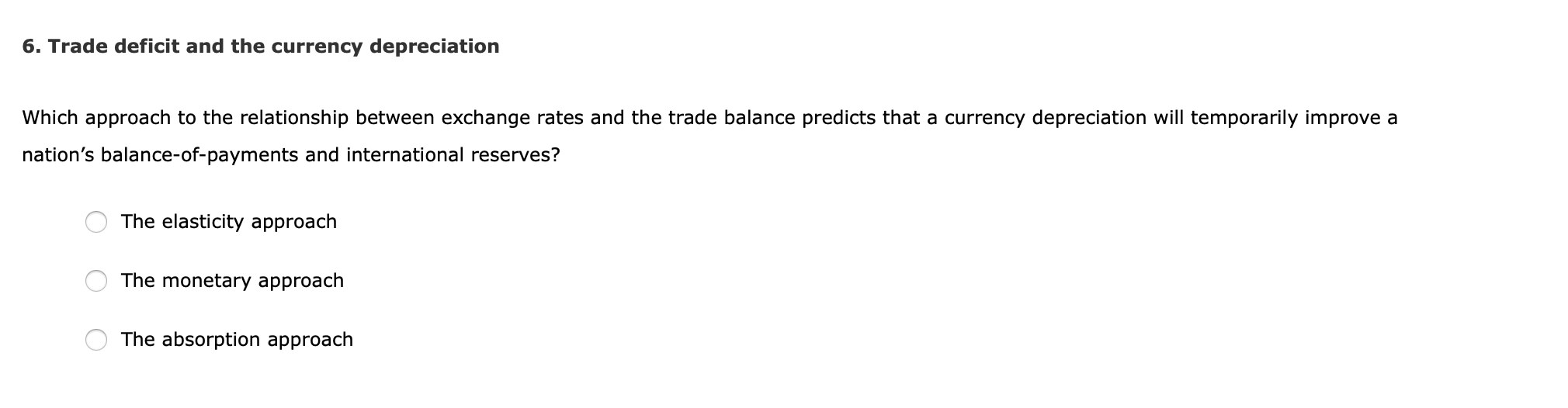
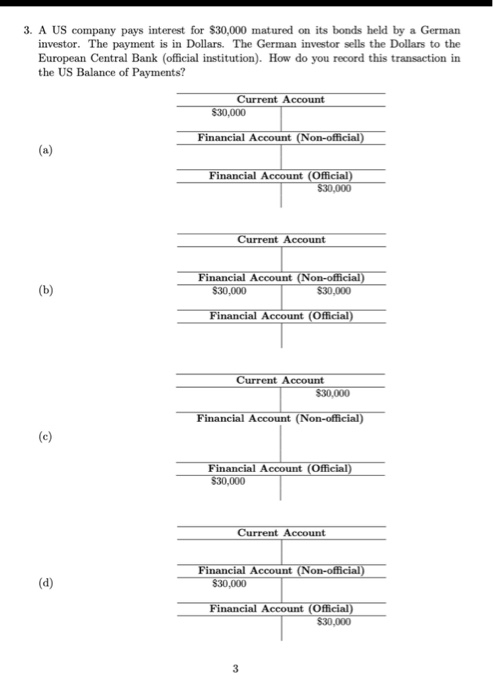
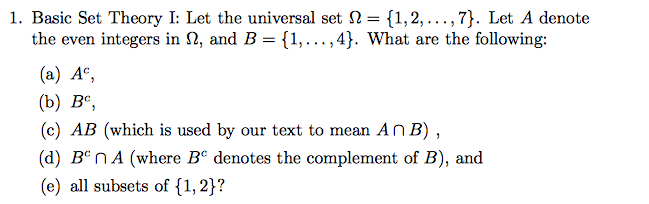

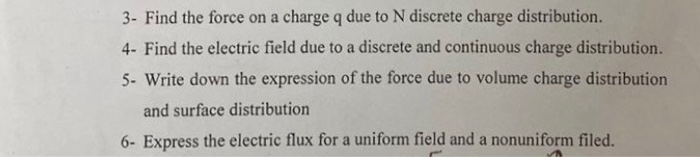
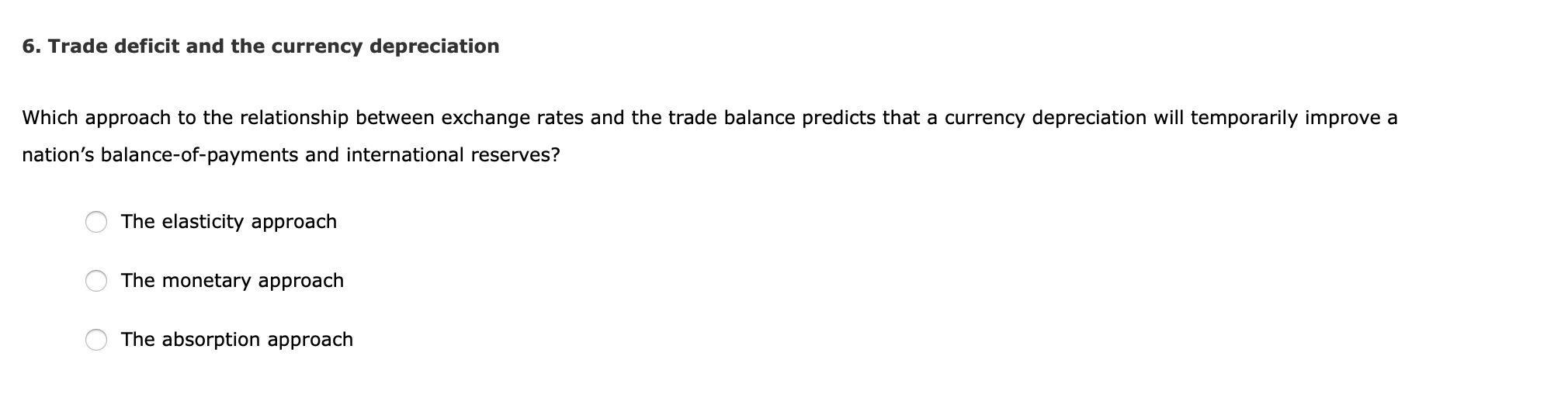
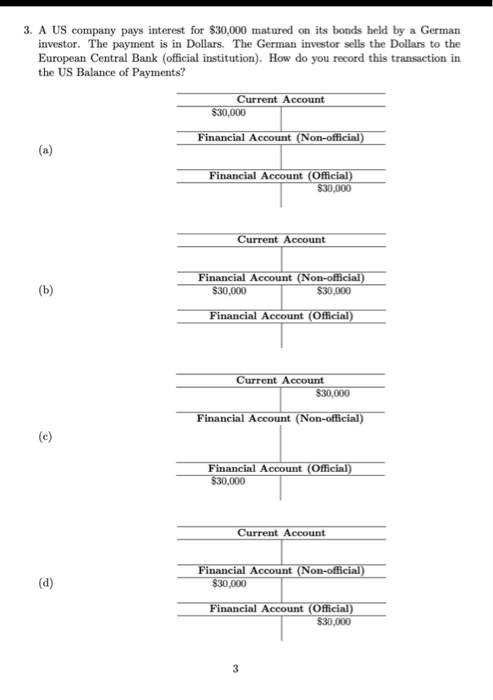
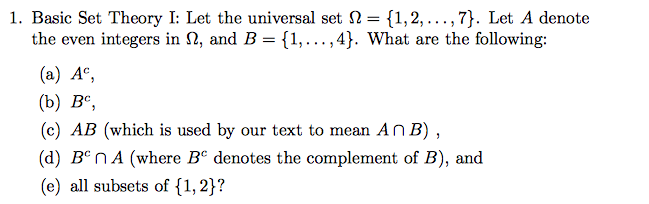
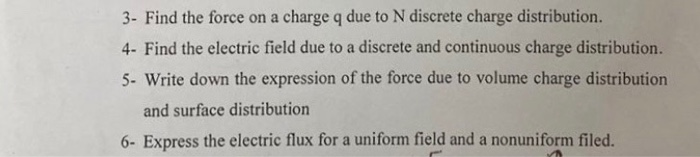
6. Trade deficit and the currency depreciation Which approach to the relationship between exchange rates and the trade balance predicts that a currency depreciation will temporarily improve a nation's balance-of-payments and international reserves? O The elasticity approach 0 The monetary approach A The absorption approach 3. A US company pays interest for $30,000 matured on its bonds held by a German investor. The payment is in Dollars. The German investor sells the Dollars to the European Central Bank (official institution). How do you record this transaction in the US Balance of Payments? Current Account $30,000 Financial Account (Non-official) (a) Financial Account (Official) $30.000 Current Account Financial Account (Non-official) (b) $30.000 $30,000 Financial Account (Official) Current Account $30.000 Financial Account (Non-official) (c) Financial Account (Official) $30,000 Current Account Financial Account (Non-official) (d) $30,000 Financial Account (Official) $30,000 31. Basic Set Theory I: Let the universal set ? = {1, 2, ..., 7}. Let A denote the even integers in 2, and B = {1, ...,4}. What are the following: (a) Ac, (b) Be, (c) AB (which is used by our text to mean An B) , (d) Ben A (where B* denotes the complement of B), and (e) all subsets of {1, 2}?Question #1: Let M be a module over a ring R. Suppose w1, ..., W/ E M are linear combinations of [v1, ..., Vx]. Prove that any linear combination of [w1, ..., w/] is also a linear combination of [v1,..., Vx]. Use only the properties M1)-M8) in the definition of a module, and the properties of a ring. Keep track of each time you use a property and which one you use (one step at a time!).3- Find the force on a charge q due to N discrete charge distribution. 4- Find the electric field due to a discrete and continuous charge distribution. 5- Write down the expression of the force due to volume charge distribution and surface distribution 6- Express the electric flux for a uniform field and a nonuniform filed
Step by Step Solution
There are 3 Steps involved in it

Get step-by-step solutions from verified subject matter experts
 Study Help