







Question: is common practice for companies to make two allowances for doubtful accounts: 1. The specific allowance is based on accounts the company has reason to
is common practice for companies to make two allowances for doubtful accounts:
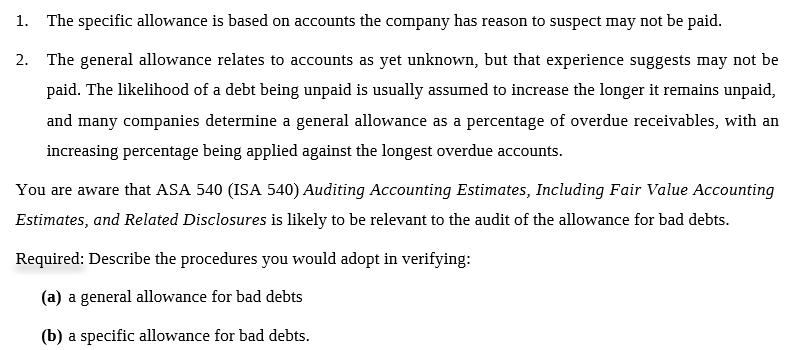
1. The specific allowance is based on accounts the company has reason to suspect may not be paid. 2. The general allowance relates to accounts as yet unknown, but that experience suggests may not be paid. The likelihood of a debt being unpaid is usually assumed to increase the longer it remains unpaid, and many companies determine a general allowance as a percentage of overdue receivables, with an increasing percentage being applied against the longest overdue accounts. You are aware that ASA 540 (ISA 540) Auditing Accounting Estimates, Including Fair Value Accounting Estimates, and Related Disclosures is likely to be relevant to the audit of the allowance for bad debts. Required: Describe the procedures you would adopt in verifying: (a) a general allowance for bad debts (b) a specific allowance for bad debts.
Step by Step Solution
3.41 Rating (157 Votes )
There are 3 Steps involved in it
Solution a In auditing general allowance for bad debts the auditor should perform the following 1 An... View full answer

Get step-by-step solutions from verified subject matter experts
 Study Help