







Question: Is this code right for the question? If not how can I improve it? 5 import csv 7 with open(freqs.tsv, r) as finput: 8 with
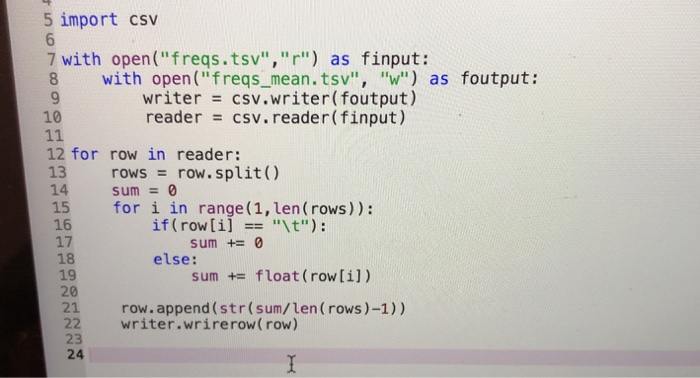
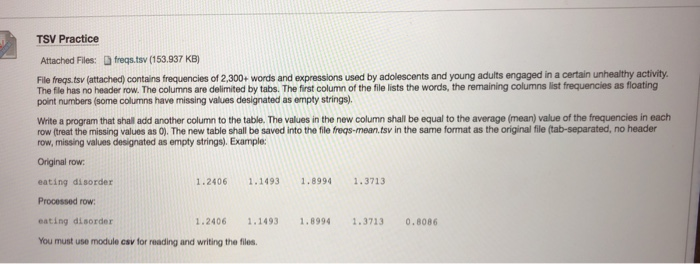
5 import csv 7 with open("freqs.tsv", "r") as finput: 8 with open("freqs_mean.tsv", " as foutput: writer reader csv.writer(foutput) csv. reader(finput) 10 12 for row in reader: 13 rowsrow.split() 14 Sum0 15 for i in range (1,len (rows)): 16 17 lf ( row [i] "\t"); = sum += 0 18 else: 19 sum float (row[i]) 20 21 22 23 24 row.append (str (sum/len (rows)-1)) writer.wrirerow(row) TSV Practice Attached Files: freqs.tsv (153.937 KB) File freqs tsv (attached) contains frequencies of 2.300+ words and expressions used by adolescents and young adults engaged in a certain unhealthy activity. The fle has no header row. The columns are delimited by tabs. The first column of the file lists the words, the remaining columns list frequencies as floating point numbers (some columns have missing values designated as empty strings) Write a program that shall add another column to the table. The values in the new column shall be equal to the average (mean) value of the frequencies in each row treat the missing values as 0). The new table shall be saved into the file fregs-mean.tsy in the same format as the original file (tab-separated, no header row, missing values designated as empty strings). Example: Original row eating di sorder Processed row eating disorder You must use module csv for reading and writing the files. 1.2406 1.14931.8994 1.3713 1.2406 1.1493 1.8994 1.3713 0,8086
Step by Step Solution
There are 3 Steps involved in it

Get step-by-step solutions from verified subject matter experts
 Study Help