







Question: It is not graded. Show work clearly and solve in paper or in course hero no python codes 1. Short Answer. SHOW ALL WORK (20
It is not graded. Show work clearly and solve in paper or in course hero no python codes 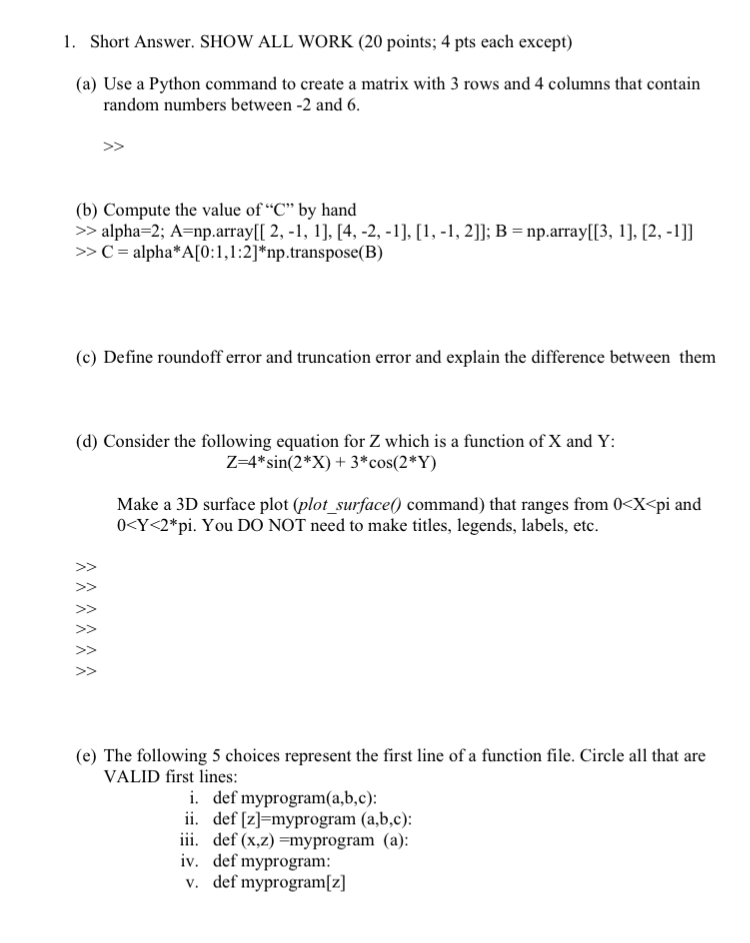
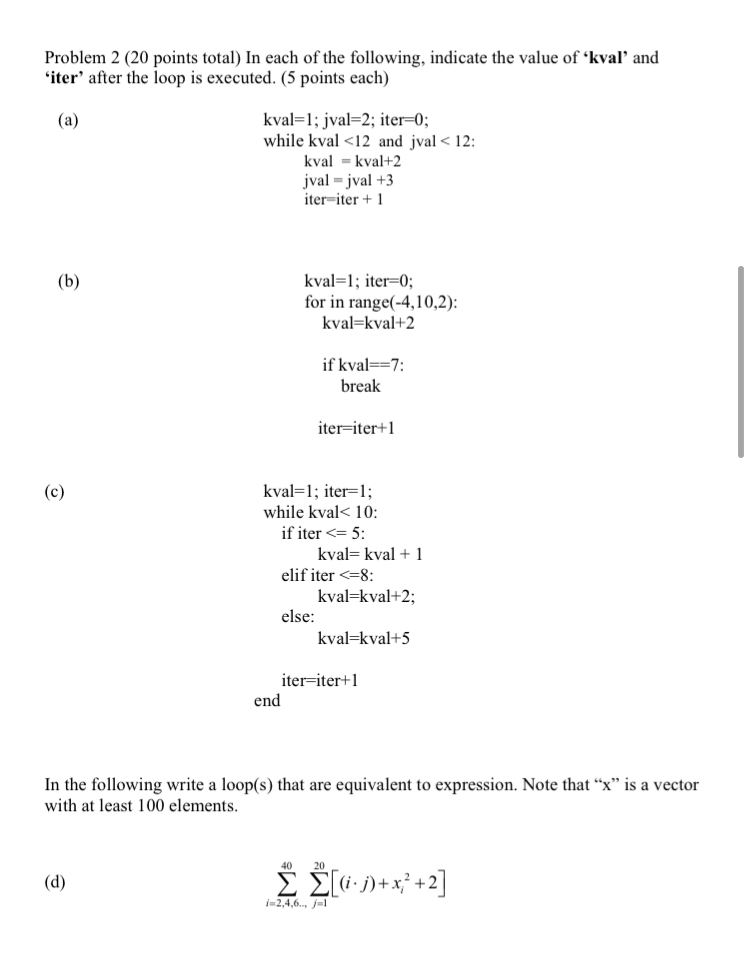
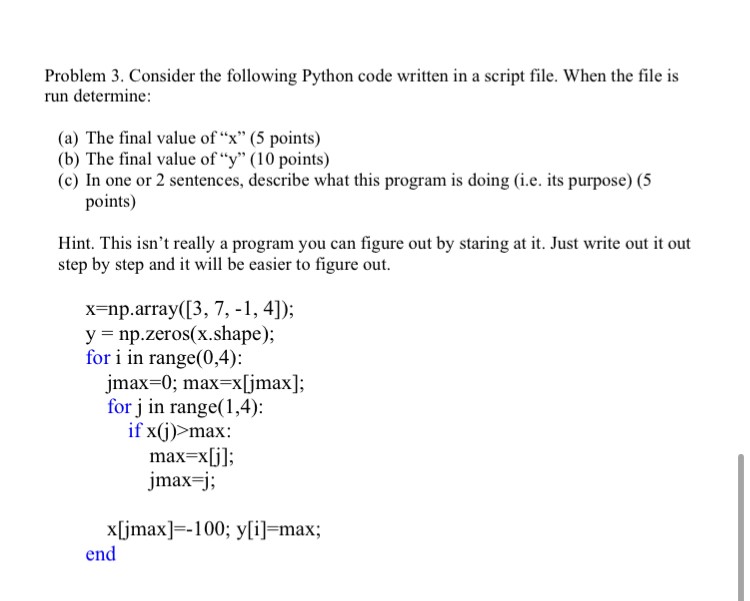
![the value of "C" by hand >> alpha=2; A=np.array[[ 2, -1, 1],](https://dsd5zvtm8ll6.cloudfront.net/si.experts.images/questions/2024/02/65c3760e1024a_55765c3760dd087f.jpg)
![[4, -2, -1], [1, -1, 2]]; B = np.array[[3, 1], [2, -1]]](https://dsd5zvtm8ll6.cloudfront.net/si.experts.images/questions/2024/02/65c3760ec003a_55865c3760e6d295.jpg)
![>> C= alpha* A[0:1, 1:2] *np.transpose(B) (c) Define roundoff error and truncation](https://dsd5zvtm8ll6.cloudfront.net/si.experts.images/questions/2024/02/65c3760f39b6f_55965c3760f1cd64.jpg)
1. Short Answer. SHOW ALL WORK (20 points; 4 pts each except) (a) Use a Python command to create a matrix with 3 rows and 4 columns that contain random numbers between-2 and 6. (b) Compute the value of "C" by hand >> alpha=2; A=np.array[[ 2, -1, 1], [4, -2, -1], [1, -1, 2]]; B = np.array[[3, 1], [2, -1]] >> C= alpha* A[0:1, 1:2] *np.transpose(B) (c) Define roundoff error and truncation error and explain the difference between them (d) Consider the following equation for Z which is a function of X and Y: Z=4* sin(2*X) + 3* cos(2*Y) ^ ^ ^ ^ ^ ^ Make a 3D surface plot (plot_surface() command) that ranges from 0
Step by Step Solution
There are 3 Steps involved in it

Get step-by-step solutions from verified subject matter experts
 Study Help