







Question: It is often the case that more than one sinusoidal function can be used to model the movement of a periodic function. Examine the example
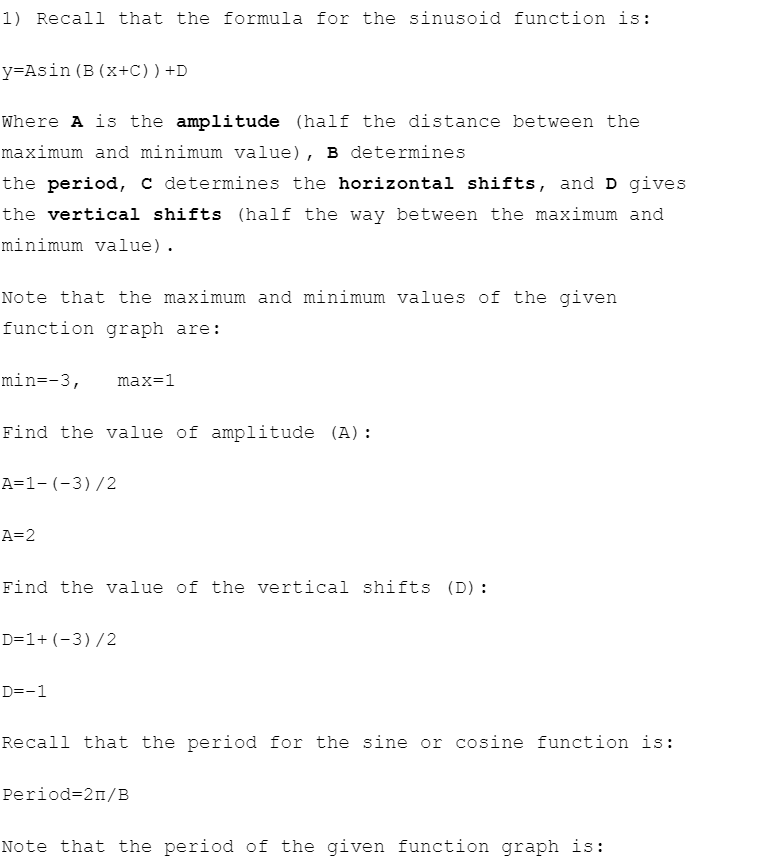
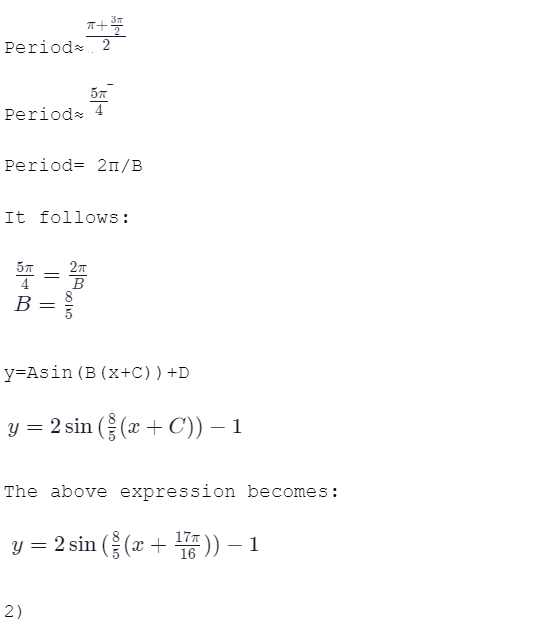
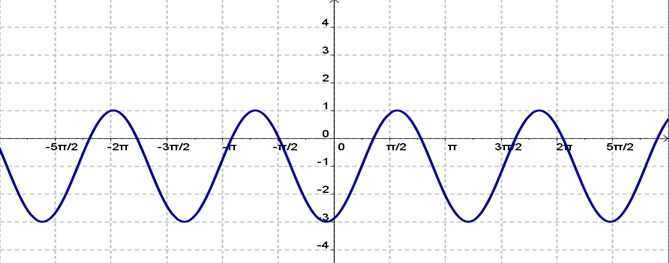
It is often the case that more than one sinusoidal function can be used to model the movement of a periodic function. Examine the example periodic function given below and determine an equation.
For this discussion,
1) Post an equation you got for the given graph.
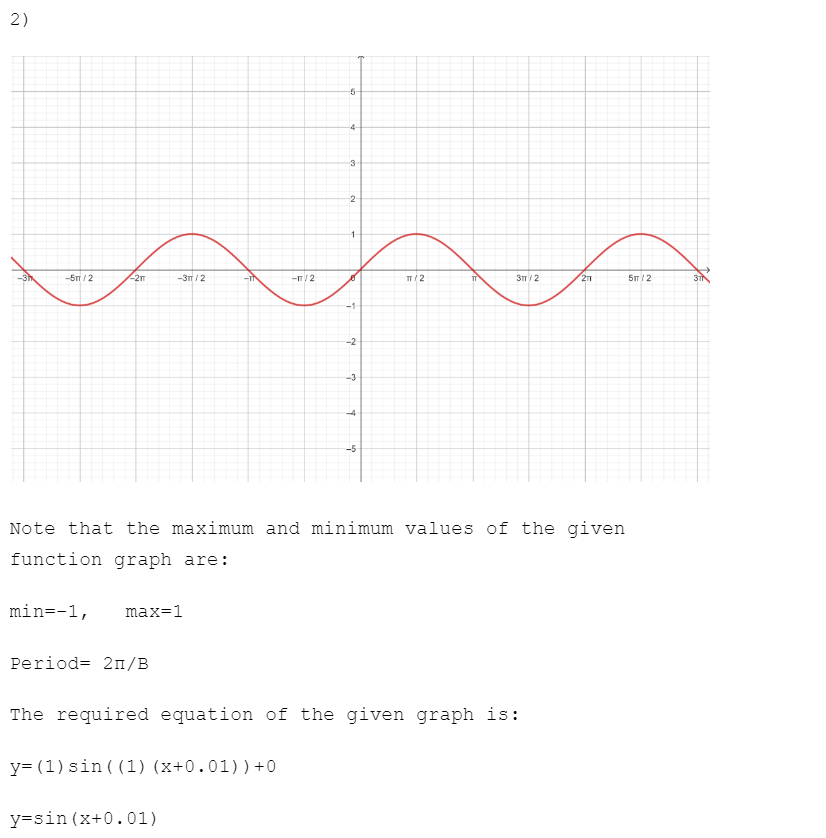
2) Create your own graph of a transformed trigonometric function and giveONE possible equation for it.
a) Post your graph and equation to the Discussions.
c) Make sure your equation is different from my example.
Step by Step Solution
There are 3 Steps involved in it
1 Expert Approved Answer
Step: 1 Unlock

Question Has Been Solved by an Expert!
Get step-by-step solutions from verified subject matter experts
Step: 2 Unlock
Step: 3 Unlock
 Study Help