Question: Java packages facilitate a hierarchical organization and enable the logical and manageable partitioning of large programs into smaller units. True False QUESTION 2 Which of
 Java packages facilitate a hierarchical organization and enable the logical andmanageable partitioning of large programs into smaller units. True False QUESTION 2Which of the following statements about package declarations is incorrect? The packagedeclaration in Java is based on files, meaning that all classes ina single source code file are part of the same package. The

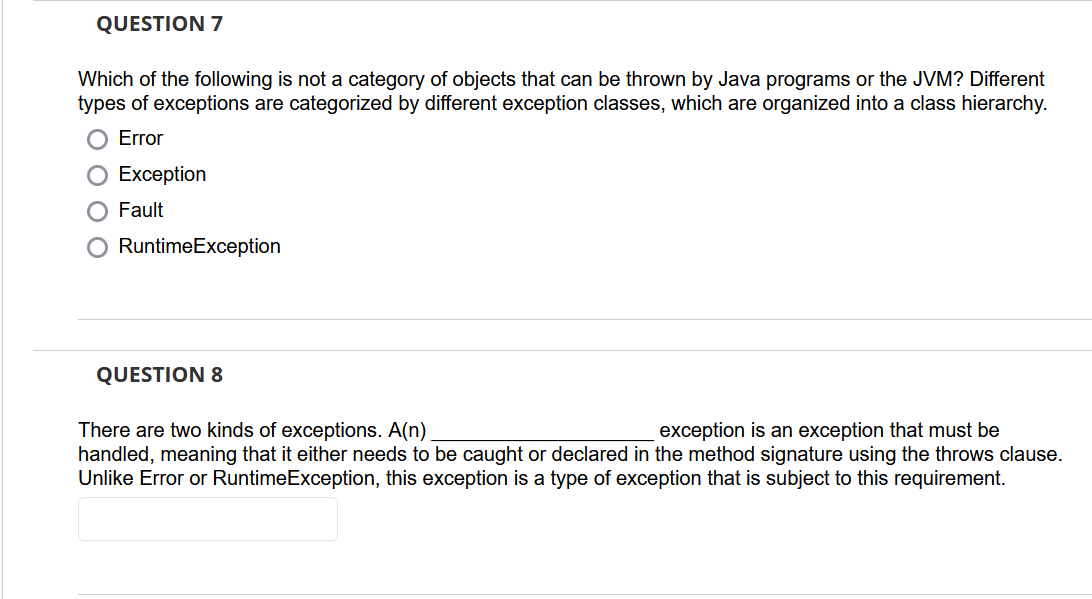
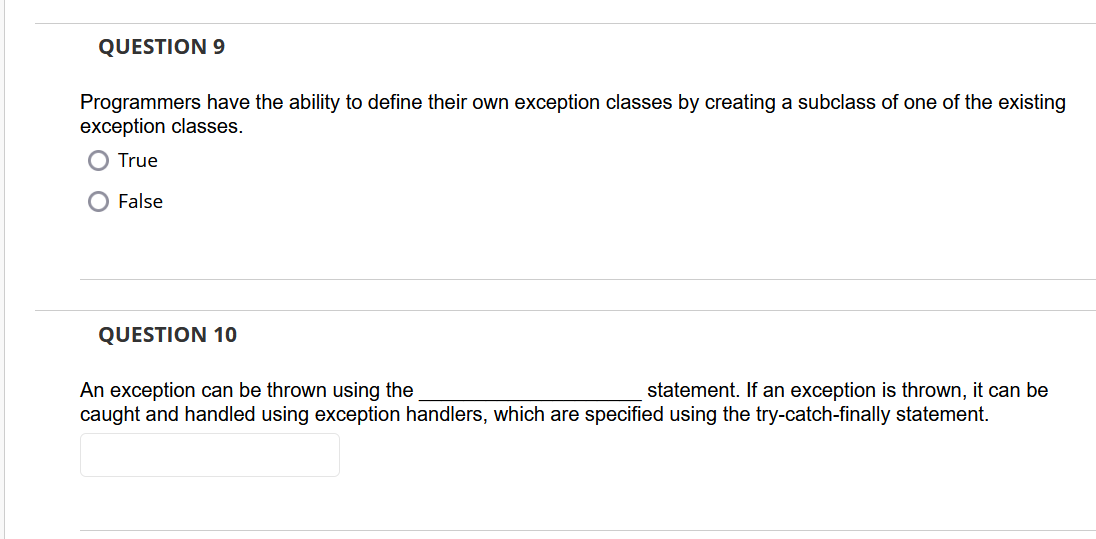
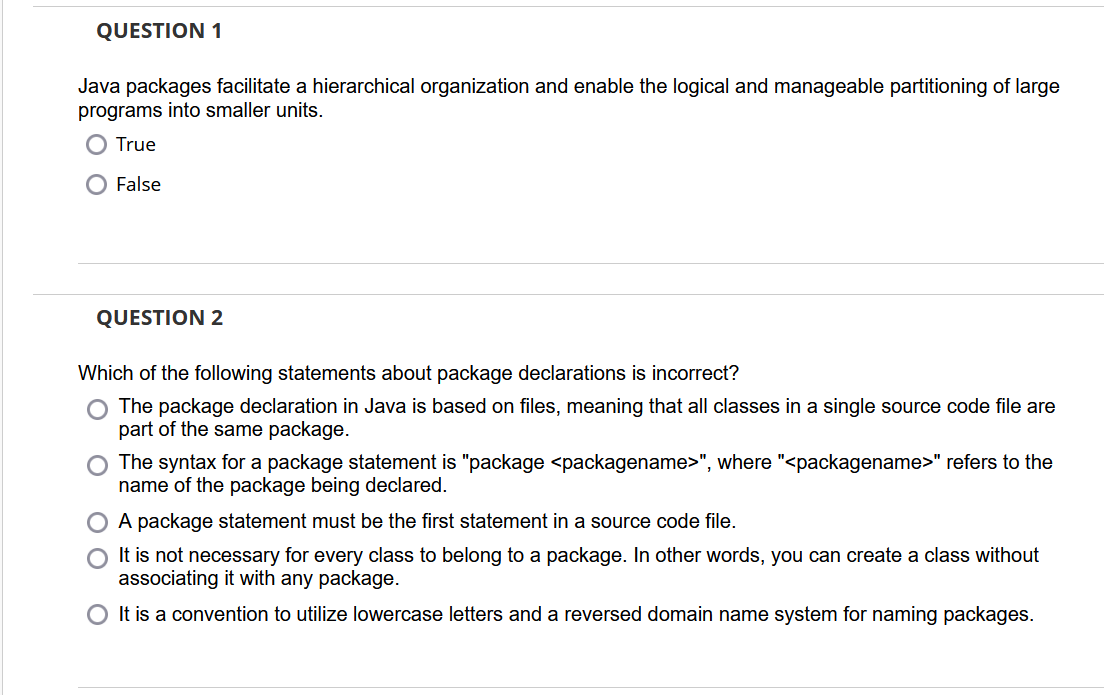
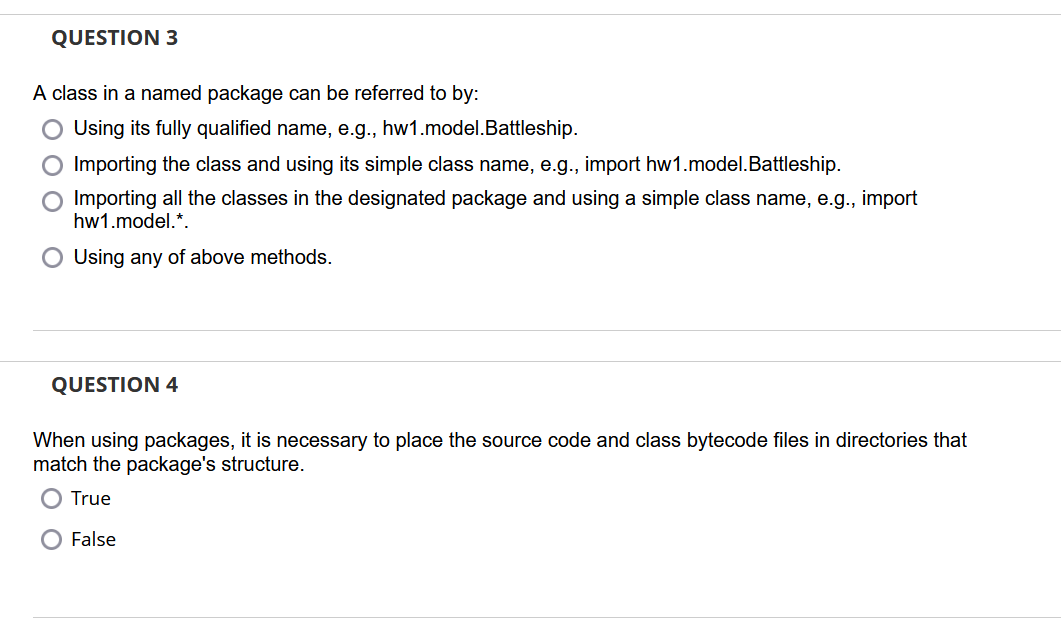
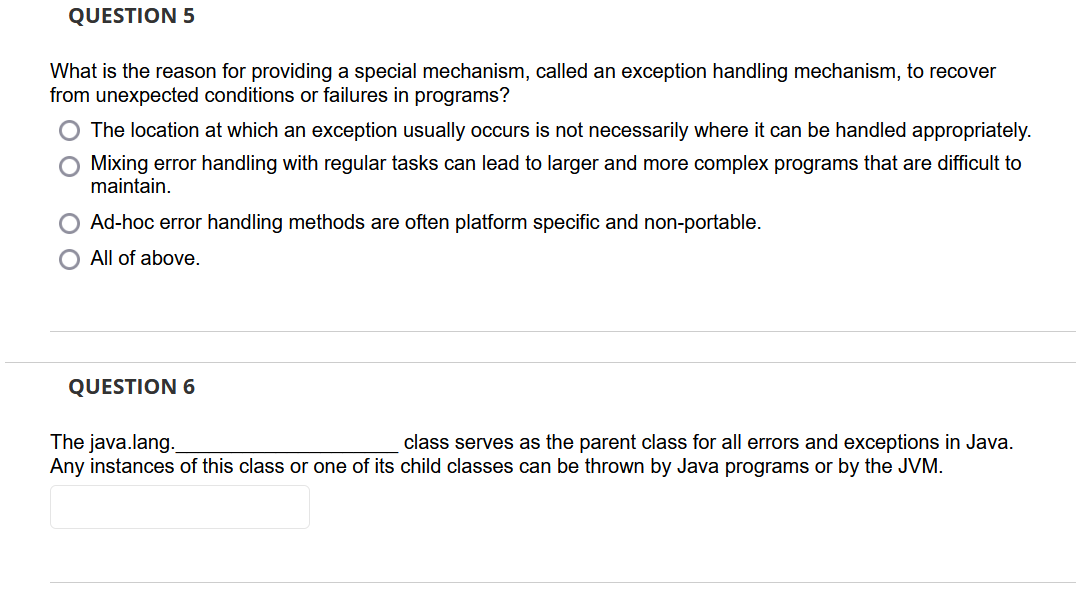
Java packages facilitate a hierarchical organization and enable the logical and manageable partitioning of large programs into smaller units. True False QUESTION 2 Which of the following statements about package declarations is incorrect? The package declaration in Java is based on files, meaning that all classes in a single source code file are part of the same package. The syntax for a package statement is "package ", where "" refers to the name of the package being declared. A package statement must be the first statement in a source code file. It is not necessary for every class to belong to a package. In other words, you can create a class without associating it with any package. It is a convention to utilize lowercase letters and a reversed domain name system for naming packages. A class in a named package can be referred to by: Using its fully qualified name, e.g., hw1.model.Battleship. Importing the class and using its simple class name, e.g., import hw1.model.Battleship. Importing all the classes in the designated package and using a simple class name, e.g., import hw1.model.". Using any of above methods. QUESTION 4 When using packages, it is necessary to place the source code and class bytecode files in directories that match the package's structure. True False What is the reason for providing a special mechanism, called an exception handling mechanism, to recover from unexpected conditions or failures in programs? The location at which an exception usually occurs is not necessarily where it can be handled appropriately. Mixing error handling with regular tasks can lead to larger and more complex programs that are difficult to maintain. Ad-hoc error handling methods are often platform specific and non-portable. All of above. QUESTION 6 The java.lang. class serves as the parent class for all errors and exceptions in Java. Any instances of this class or one of its child classes can be thrown by Java programs or by the JVM. Which of the following is not a category of objects that can be thrown by Java programs or the JVM? Different types of exceptions are categorized by different exception classes, which are organized into a class hierarchy. Error Exception Fault RuntimeException QUESTION 8 There are two kinds of exceptions. A(n, exception is an exception that must be handled, meaning that it either needs to be caught or declared in the method signature using the throws clause. Unlike Error or RuntimeException, this exception is a type of exception that is subject to this requirement. Programmers have the ability to define their own exception classes by creating a subclass of one of the existing exception classes. True False QUESTION 10 An exception can be thrown using the statement. If an exception is thrown, it can be caught and handled using exception handlers, which are specified using the try-catch-finally statement
Step by Step Solution

There are 3 Steps involved in it

1 Expert Approved Answer
Step: 1 Unlock blur-text-image
Question Has Been Solved by an Expert!

Get step-by-step solutions from verified subject matter experts

Step: 2 Unlock
Step: 3 Unlock

Students Have Also Explored These Related Databases Questions!