







Question: java programming IDE eclips can anyone help me please ! Thanks What is the output of the following program? public class at static/ System.out.println(static); 3
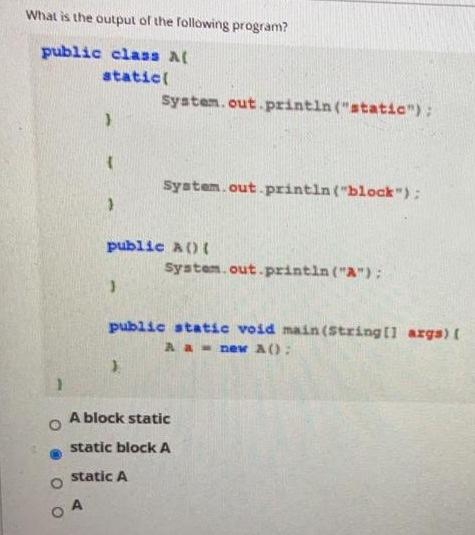
![System.out.println("static"); 3 System.out.println("block"): 1 public ) System.out.println(""); public static void main(String[] args)](https://s3.amazonaws.com/si.experts.images/answers/2024/09/66e142cf8b5d6_73566e142cf2cbe5.jpg)
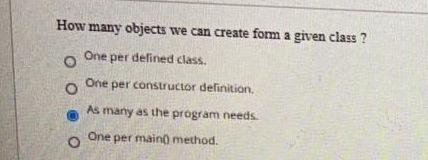
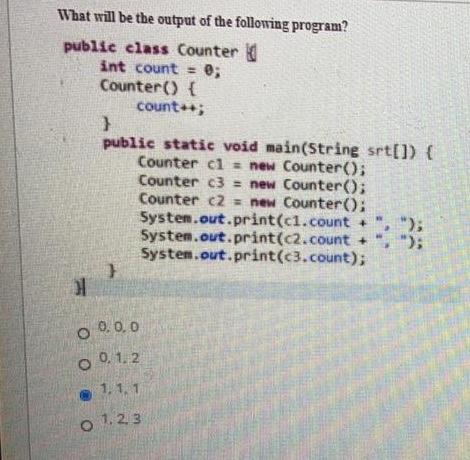
What is the output of the following program? public class at static/ System.out.println("static"); 3 System.out.println("block"): 1 public ) System.out.println(""); public static void main(String[] args) a new (: ) 1 A block static static block A static A A What will be the output of the following program? public class Counter int count = @; Counter() { count++; } public static void main(String srt[]) { Counter cl = new Counter(); Counter c3 = new Counter(); Counter C2 = new Counter(); System.out.print(c1.count + "); System.out.print(c2.count + "); System.out.print(c3.count); 0.0.0 0 o 0.1.2 1.1.1 1.2.3 Output of following Java Program? class Base public void show() { System.out.println("Base::show() called"); } > class Derived extends Base { public void show() System.out.printin("Derived::show() called"); 3 } public class Main ( public static void main(String[] args) { Base b = new Derived); b.show(); } Derived::show() called Base show called No Output O Error How many objects we can create form a given class? O One per defined class. O One per constructor definition As many as the program needs. One per main method
Step by Step Solution
There are 3 Steps involved in it

Get step-by-step solutions from verified subject matter experts
 Study Help