







Question: Java programming question: Please convert the UML diagram to java code The following is what needs to be completed: Finish at least one //1. View
Java programming question:
Please convert the UML diagram to java code
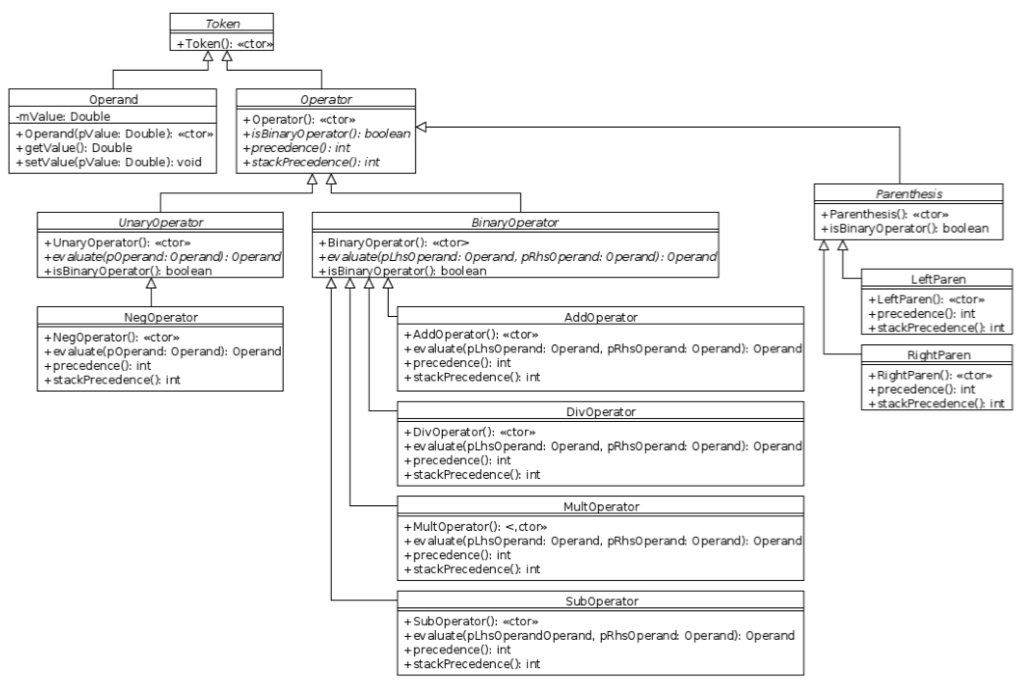
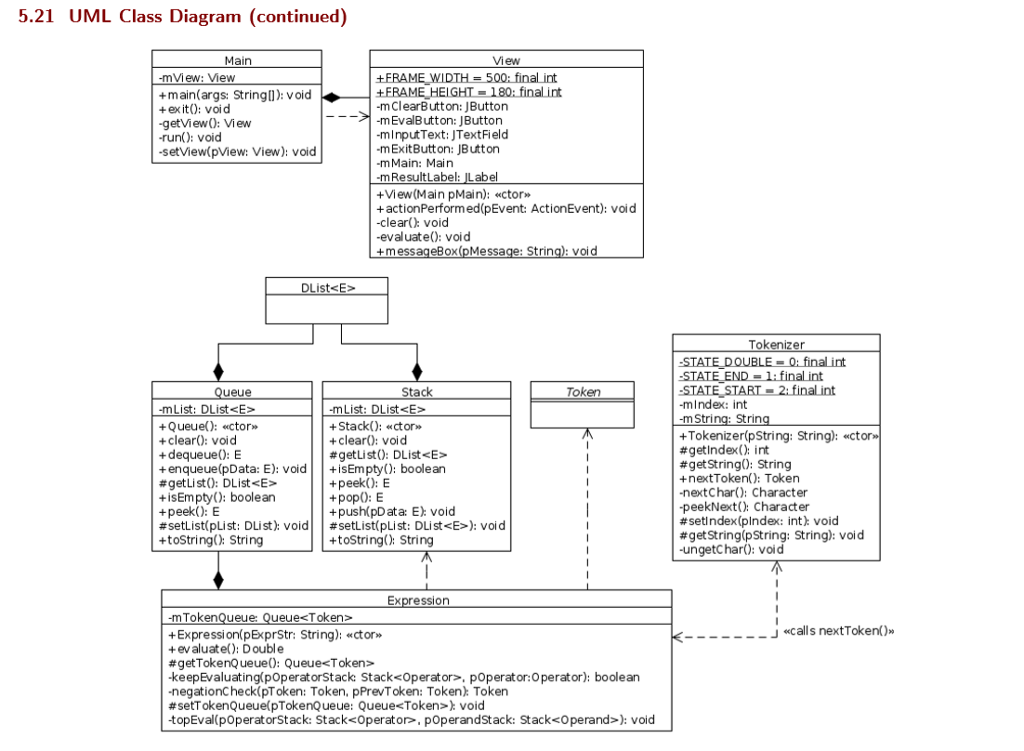
The following is what needs to be completed:
Finish at least one
//1. View Class
package p04;
import java.awt.event.ActionEvent; import java.awt.event.ActionListener; import javax.swing.Box; import javax.swing.BoxLayout; import javax.swing.JButton; import javax.swing.JFrame; import javax.swing.JLabel; import javax.swing.JOptionPane; import javax.swing.JPanel; import javax.swing.JTextField;
/** * The View class implements the GUI. */ public class View extends JFrame implements ActionListener {
public static final int FRAME_WIDTH = 500; public static final int FRAME_HEIGHT = 180;
// Declare instance variables private JButton mClearButton; private JButton mEvalButton; private JTextField mInputText; private JButton mExitButton; private Main mMain; private JLabel mResultLabel;
/** * View() * * The View constructor creates the GUI interface and makes the frame * visible at the end. */ public View(Main pMain) { // Save a reference to the Main object pMain in mMain. ? ? ? // PSEUDOCODE: // Declare and create a JPanel named panelLabel using the default FlowLayout layout manager. // Create mResultLabel as a JLabel initialized to the empty string "" // Add mResultLabel to panelLabel ? ? ? // PSEUDOCODE: // Declare and create a JPanel named panelInput using the default FlowLayout layout manager. // Create mInputText as a JTextField initialized to 40 columns wide // Add mInputText to panelInput ? ? ? // PSEUDOCODE: // Create a JPanel named panelButtons using FlowLayout. // Create the Clear button mClearButton. // Make this View the action listener for mClearButton. // Add the Clear button to the panel. // Repeat the three above statements for the Evalute button. // Repeat the three above statements for the Exit button. ? ? ? // PSEUDOCODE // Create a JPanel named panelMain using a vertical BoxLayout. // Add some vertical glue to panelMain // Add panelLabel to panelMain. // Add panelInput to panelMain. // Add panelButtons to panelMain. ? ? ? setTitle("Kalkutron-9001"); setSize(FRAME_WIDTH, FRAME_HEIGHT); setResizable(false); setDefaultCloseOperation(JFrame.EXIT_ON_CLOSE); add(panelMain); setVisible(true); }
/** * actionPerformed() * * Called when one of the JButtons is clicked. Detects which button was * clicked and handles it. * * PSEUDOCODE: If the source of the event was mClearbutton Then Call clear() * ElseIf the source of the event was mEvalButton Then Call evaluate() * ElseIf the source of the event was mExitButton Then Call exit() on mMain. * End If */ ???
/** * clear() is called when the Clear button is clicked. Set the text in mInputText and mResultLabel to the * empty strings "". */ ???
/** * evaluate() is called when the Evaluate button is clicked. * * PSEUDOCODE: * Retrieve the text string from mInputText * Declare and create an Expression object named expr passing the text string to the ctor * Call expr.evaluate() and assign the return value a Double object named result * Display result in mResultLabel (call toString on result) */ ???
/** * messageBox() */ public void messageBox(String pMessage) { JOptionPane.showMessageDialog(this, pMessage, "Message", JOptionPane.PLAIN_MESSAGE); }
}
//-------------------------------------------------------------------------------------
//2.Operator Class
/** * Operator is the superclass of all binary and unary operators. */ ???
//-------------------------------------------------------------------------------------
//3. Operand Class
/** * An operand is a numeric value represented as a Double. */ ???
//-------------------------------------------------------------------------------------
//4. Expression Class
package p04;
/** * Represents an infix expression to be evaluated. */ public class Expression {
/** * A queue which stores the tokens of the infix expression in the order in * which they were input. */ Queue mTokenQueue;
/** * Expression(String) * * pExprStr is a string representing an infix expression, such as "(1 + 2) * * -3". This ctor uses the Tokenizer class to break the string into Token * objects which are stored in the token queue instance variable. * * PSEUDOCODE: Create a new Queue object and pass it to setTokenQueue * (this initializes mTokenQueue) Declare and create a Tokenizer object * named tokenizer passing pExprStr to the ctor Declare a Token object named * prevToken initialized to null -- Read the first token Declare a Token * object named token and assign the return value from tokenizer.nextToken() * to it -- Keep reading tokens until tokenizer.nextToken() returns null * While token is not null Do -- Check for and handle the negation operator. * If token instanceof SubOperator Then token = negationCheck(token, pToken) * End if -- Add the token to the queue. Call getTokenQueue().enqueue(token) * prevToken = token -- Read the next token. token = call * tokenizer.nextToken() End While */ ???
/** * Evaluates the expression and returns the result as a Double. * * PSEUDOCODE: * Declare and create a Stack object named operatorStack * Declare and create a Stack object named operandStack * While mTokenQueue is not empty Do * Declare and create a Token object named token assigning getTokenQueue().dequeue() to it * If token instanceof Operand Then * Push token onto the operand stack (type cast token to Operand) * ElseIf token instanceof LeftParen Then * Push token onto the operator stack (type cast token to LeftParen) * ElseIf token instanceof RightParen Then * While the operator on the top of the operator stack is not an instanceof LeftParen Do * Call topEval(operatorStack, operandStack) * End While * Pop the top operator from the operator stack -- removes the LeftParen * Else * Declare Operator object named operator and assign token to it (type cast to Operator) * While keepEvaluating(operatorStack, operator) is true Do * Call topEval(operatorStack, operandStack) * EndWhile * Push operator onto the operator stack * End If * End While * While the operator stack is not empty Do * Call topEval(operatorStack, operandStack) * End While * Pop the top Operand from the operand stack and return its value (call getValue() on the Operand). */ ???
/** * Accessor method for mTokenQueue. */ protected Queue getTokenQueue() { return mTokenQueue; }
/** * Returns true when we need to pop the operator on top of the operator * stack and evaluate it. If the stack is empty, returns false since there * is no operator to pop. Otherwise, return true if the operator on top of * the operator stack has stack precedence greater than or equal to the * normal precedence of pOperator. */ private boolean keepEvaluating(Stack pOperatorStack, Operator pOperator) { if (pOperatorStack.isEmpty()) { return false; } else { return pOperatorStack.peek().stackPrecedence() >= pOperator.precedence(); } }
/** * Since the negation and subtraction operators look the same we can * identify negation when: * * 1. The previous pToken is null (negation can be the first operator in an * expression but sub cannot) 2. Or if the previous pToken was a binary * operator (sub cannot be preceded by another binary operator) 3. Or if the * previous pToken was a left parenthesis (sub cannot be preceded by a left * paren) * * This method determines if pToken is really a negation operator rather * than a subtraction operator, and if so, will return a negation operator * pToken. If pToken represents subtraction, then we simply return pToken. */ private Token negationCheck(Token pToken, Token pPrevToken) { if (pPrevToken == null || pPrevToken instanceof BinaryOperator || pPrevToken instanceof LeftParen) { pToken = new NegOperator(); } return pToken; }
/** * Mutator method for mTokenQueue. */ protected void setTokenQueue(Queue pTokenQueue) { mTokenQueue = pTokenQueue; }
/** * topEval() * * Evaluates the "top" of the stack. If the top operator on the operator * stack is a unary operator, we pop one operand from the operand stack, * evaluate the result, and push the result onto the operand stack. If the * top operator on the operator stack is a binary operator, we pop two * operands from the operand stack, evaluate the result of the operation, * and push the result onto the operand stack. * * PSEUDOCODE: Declare and create Operand object named right = Call * pOperandStack.pop() Declare and create Operator object named operator = * Call pOperatorStack.pop() If operator instanceof UnaryOperator Then * Typecast operator to UnaryOperator and call evaluate(right) on it Push * the returned Operand from the above statement onto the operand stack Else * Declare and create Operand object named left = Call pOperandStack.pop() * Typecast operator to BinaryOperator and call evaluate(left, right) on it * Push the returned Operand from the above statement onto the operand stack * End If */
???
}
Token +Token0: ctor Operand mValue Double +Operand pValue: Double): "ctor+isBinaryO peratorO: boolean +getValue0: Double +setValue pValue: Double): void +Operator): ctor +precedence0: int +stackPrecedence): int Parenthesis Parenthesis(): ctor ator Bina ator +isBinaryOperator boolean +UnaryOperatorO: "ctor +evaluatelpOperand: Operand): Oper +isBinarvOperat +BinaryOperator): ctor +evaluatelpLhsoperand: Operand, pRhsOperand: Operand):O ool ean rat bool ean LeftParen +LeftParen0: "ctor +precedence0: int +stackPrecedence( int NegOperator Addoperator +NegOperator0: ctor +ev aluat e(pOperand: Operand): Operand +precedence0: int +stackPrecedence int +AddOperator): "ctor +evaluate(pLhsOperand: Operand, pRhsOperand: Operand): Oper +precedence0: int +stackPrecedence): int +RightParen):"ctor +precedence0: int +stackPrecedence( int Divoperator +DivOperator): "ctor +ev aluate(pLhsOperand: Operand, pRhsOperand: Operand): Oper +precedence): int +stackPrecedence): int MultOperator +MultOperatorO:
Step by Step Solution
There are 3 Steps involved in it

Get step-by-step solutions from verified subject matter experts
 Study Help