





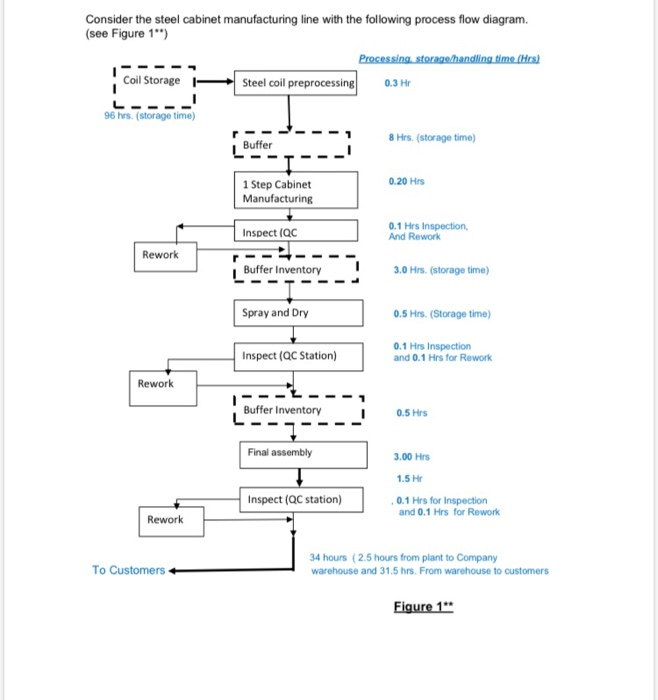
Question: JIT Implementation using Value Analysis Consider the steel cabinet manufacturing line with the following process flow diagram. (see Figure 1**) Processing, storage/handling time (Hrs) Coil

JIT Implementation using Value Analysis JIT Implementation using Value Analysis Consider
JIT Implementation using Value Analysis Consider
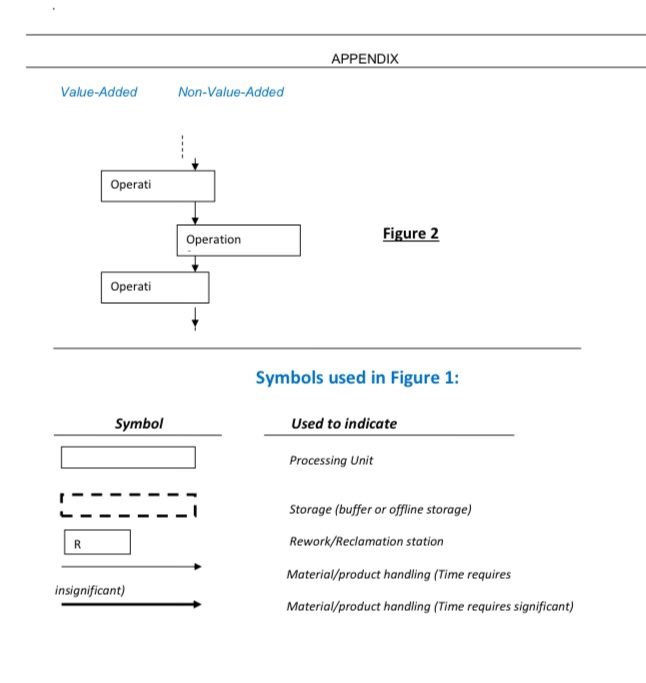
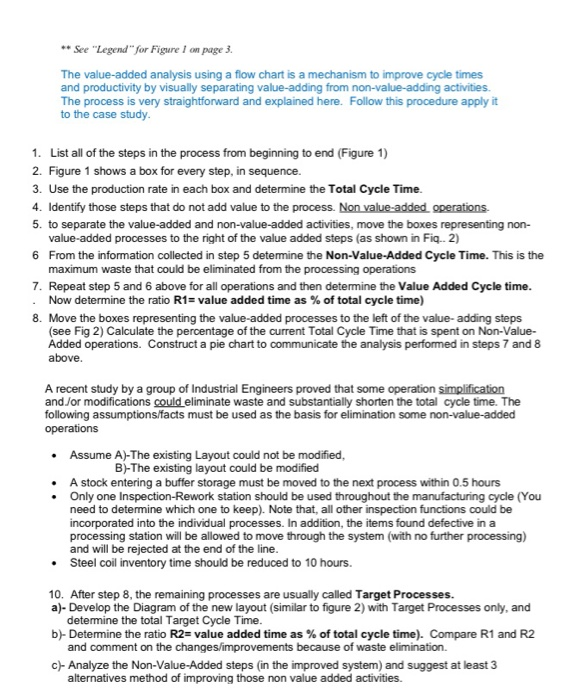
Consider the steel cabinet manufacturing line with the following process flow diagram. (see Figure 1**) Processing, storage/handling time (Hrs) Coil Storage - Steel coil preprocessing) 0.3 Hr L - - - 96 hrs. (storage time) 8 Hrs. (storage time) Buffer 0.20 Hrs 1 Step Cabinet Manufacturing Inspect (QC 0.1 Hrs Inspection, And Rework Rework - - Buffer Inventory 3.0 Hrs. (storage time) Spray and Dry 0.5 Hrs. (Storage time) Inspect (QC Station) 0.1 Hrs Inspection and 0.1 Hirs for Rework Rework Buffer Inventory 0.5 Hrs Final assembly 3.00 Hrs 1.5 H Inspect (QC station) 0.1 Hrs for Inspection and 0.1 Hrs for Rework Rework To Customers 34 hours (2.5 hours from plant to Company warehouse and 31.5 hrs. From warehouse to customers Figure 1** ** See "Legend "for Figure I on page 3 The value-added analysis using a flow chart is a mechanism to improve cycle times and productivity by visually separating value-adding from non-value-adding activities. The process is very straightforward and explained here. Follow this procedure apply it to the case study. 1. List all of the steps in the process from beginning to end (Figure 1) 2. Figure 1 shows a box for every step, in sequence. 3. Use the production rate in each box and determine the Total Cycle Time. 4. Identify those steps that do not add value to the process. Non value-added operations 5. to separate the value-added and non-value-added activities, move the boxes representing non- value-added processes to the right of the value added steps (as shown in Fig. 2) 6 From the information collected in step 5 determine the Non-Value Added Cycle Time. This is the maximum waste that could be eliminated from the processing operations 6 above for all operations and then determine the Value Added Cycle time . Now determine the ratio R1= value added time as % of total cycle time) 8. Move the boxes representing the value-added processes to the left of the value-adding steps (see Fig 2) Calculate the percentage of the current Total Cycle Time that is spent on Non-Value- Added operations. Construct a pie chart to communicate the analysis performed in steps 7 and 8 above. A recent study by a group of Industrial Engineers proved that some operation simplification and/or modifications could eliminate waste and substantially shorten the total cycle time. The following assumptions/facts must be used as the basis for elimination some non-value-added operations Assume A)-The existing Layout could not be modified, B)-The existing layout could be modified A stock entering a buffer storage must be moved to the next process within 0.5 hours Only one Inspection-Rework station should be used throughout the manufacturing cycle (You need to determine which one to keep). Note that, all other inspection functions could be incorporated into the individual processes. In addition, the items found defective in a processing station will be allowed to move through the system (with no further processing) and will be rejected at the end of the line. Steel coil inventory time should be reduced to 10 hours. 10. After step 8, the remaining processes are usually called Target Processes. a)- Develop the Diagram of the new layout (similar to figure 2) with Target Processes only, and determine the total Target Cycle Time. b)-Determine the ratio R2= value added time as % of total cycle time). Compare R1 and R2 and comment on the changes/improvements because of waste elimination. c)-Analyze the Non-Value Added steps in the improved system) and suggest at least 3 alternatives method of improving those non value added activities. APPENDIX Value Added Non-Value Added Operati Operation Figure 2 Operati Symbols used in Figure 1: Symbol Used to indicate Processing Unit - - - Storage (buffer or offline storage) Rework/Reclamation station Material/product handling (Time requires insignificant) Material/product handling (Time requires significant)

Step by Step Solution

There are 3 Steps involved in it

1 Expert Approved Answer
Step: 1 Unlock blur-text-image

Question Has Been Solved by an Expert!

Get step-by-step solutions from verified subject matter experts

Step: 2 Unlock
Step: 3 Unlock

Students Have Also Explored These Related General Management Questions!