



Question: Jonczyk Company is considering two different, mutually exclusive capital expenditure proposals. Project A will cost $537,000, has an expected useful life of 15 years and
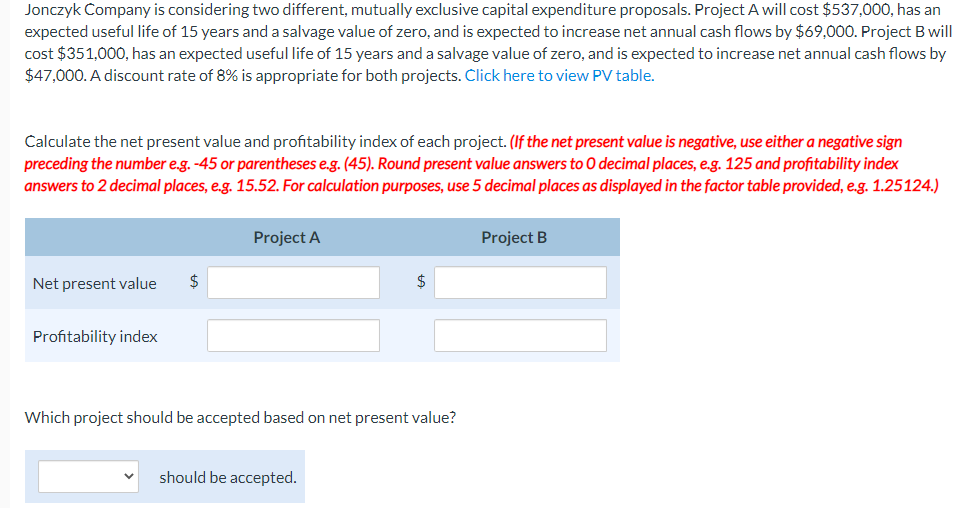
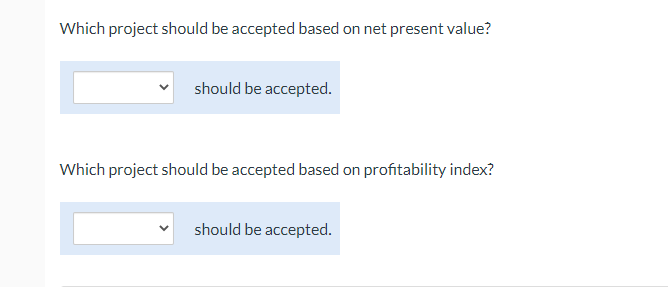
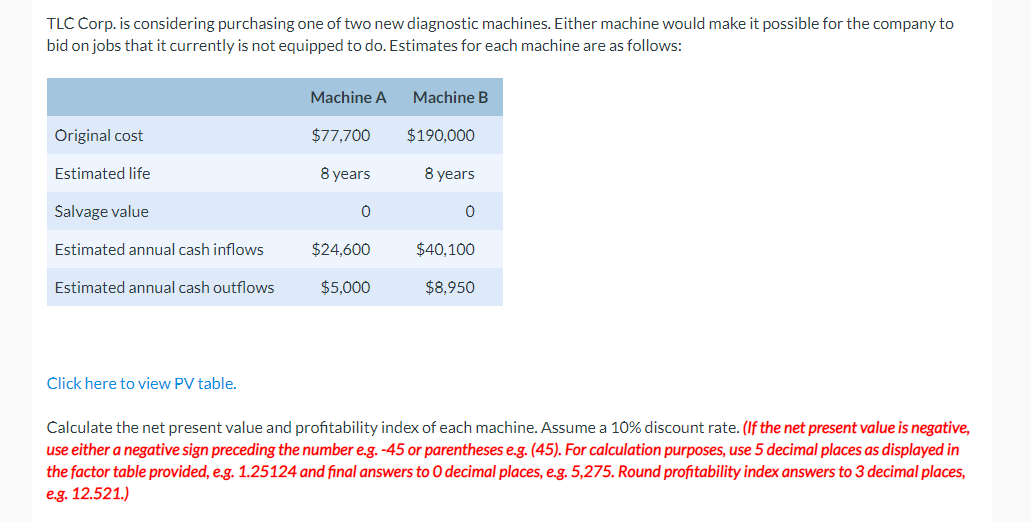
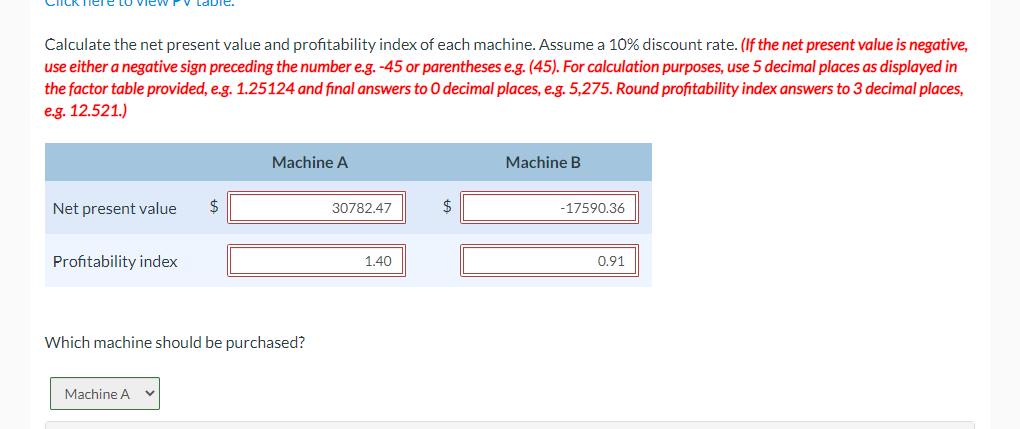
Jonczyk Company is considering two different, mutually exclusive capital expenditure proposals. Project A will cost $537,000, has an expected useful life of 15 years and a salvage value of zero, and is expected to increase net annual cash flows by $69,000. Project B will cost $351,000, has an expected useful life of 15 years and a salvage value of zero, and is expected to increase net annual cash flows by $47,000. A discount rate of 8% is appropriate for both projects. Click here to view PV table. Calculate the net present value and profitability index of each project. (If the net present value is negative, use either a negative sign preceding the number e.g. -45 or parentheses e.g. (45). Round present value answers to 0 decimal places, e.g. 125 and profitability index answers to 2 decimal places, e.g. 15.52. For calculation purposes, use 5 decimal places as displayed in the factor table provided, e.g. 1.25124.) Project A Project B Net present value $ $ $ Profitability index Which project should be accepted based on net present value? should be accepted. Which project should be accepted based on net present value? should be accepted. Which project should be accepted based on profitability index? should be accepted. TLC Corp. is considering purchasing one of two new diagnostic machines. Either machine would make it possible for the company to bid on jobs that it currently is not equipped to do. Estimates for each machine are as follows: Machine A Machine B Original cost $77,700 $190,000 Estimated life 8 years 8 years Salvage value 0 0 Estimated annual cash inflows $24,600 $40,100 Estimated annual cash outflows $5,000 $8,950 Click here to view PV table. Calculate the net present value and profitability index of each machine. Assume a 10% discount rate. (If the net present value is negative, use either a negative sign preceding the number e.g. -45 or parentheses e.g. (45). For calculation purposes, use 5 decimal places as displayed in the factor table provided, e.g. 1.25124 and final answers to 0 decimal places, e.g. 5,275. Round profitability index answers to 3 decimal places, eg. 12.521.) Calculate the net present value and profitability index of each machine. Assume a 10% discount rate. (If the net present value is negative, use either a negative sign preceding the number e.g.-45 or parentheses e.g. (45). For calculation purposes, use 5 decimal places as displayed in the factor table provided, e.g. 1.25124 and final answers to decimal places, e.g. 5,275. Round profitability index answers to 3 decimal places, e.g. 12.521.) Machine A Machine B Net present value $ 30782.47 $ - 17590.36 Profitability index 1.40 0.91 Which machine should be purchased? Machine A
Step by Step Solution
There are 3 Steps involved in it

Get step-by-step solutions from verified subject matter experts