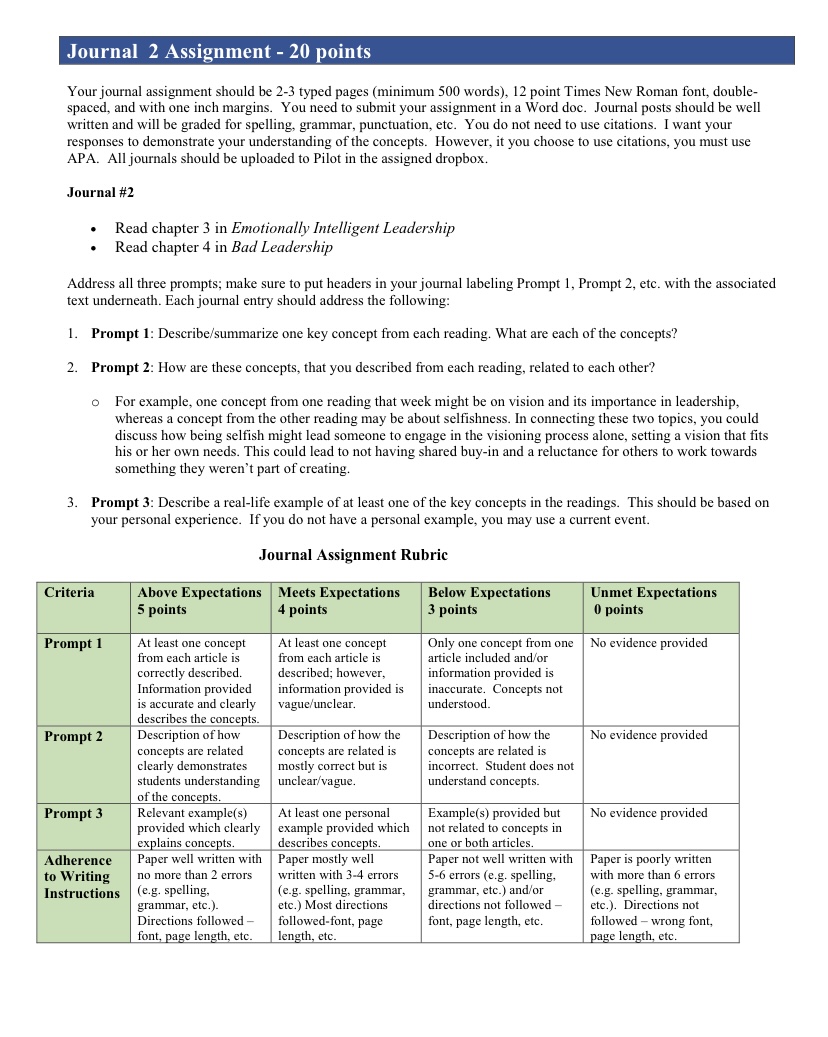
Question: Journal 2 Assignment - 20 points Your journal assignment should be 2-3 typed pages (minimum 500 words), 12 point Times New Roman font, double- spaced,
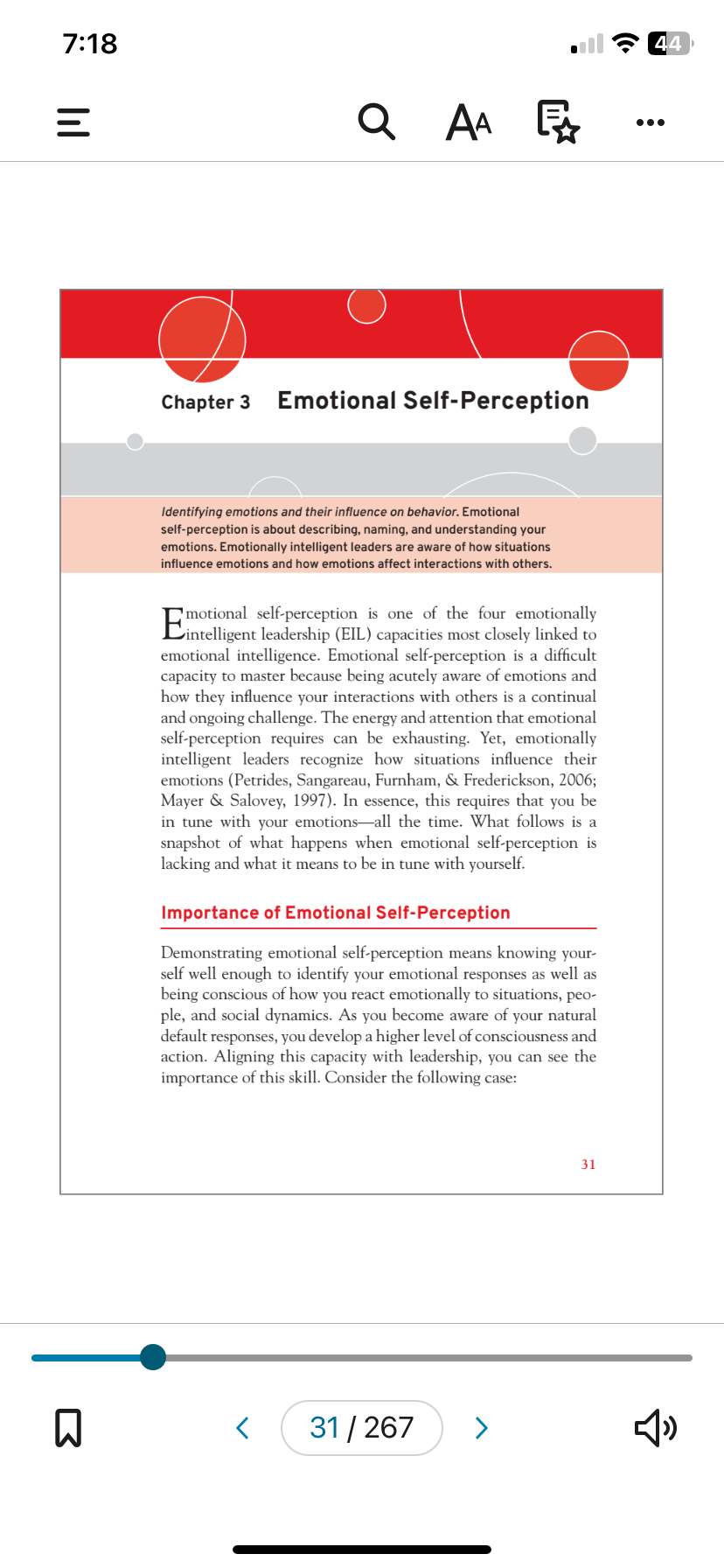
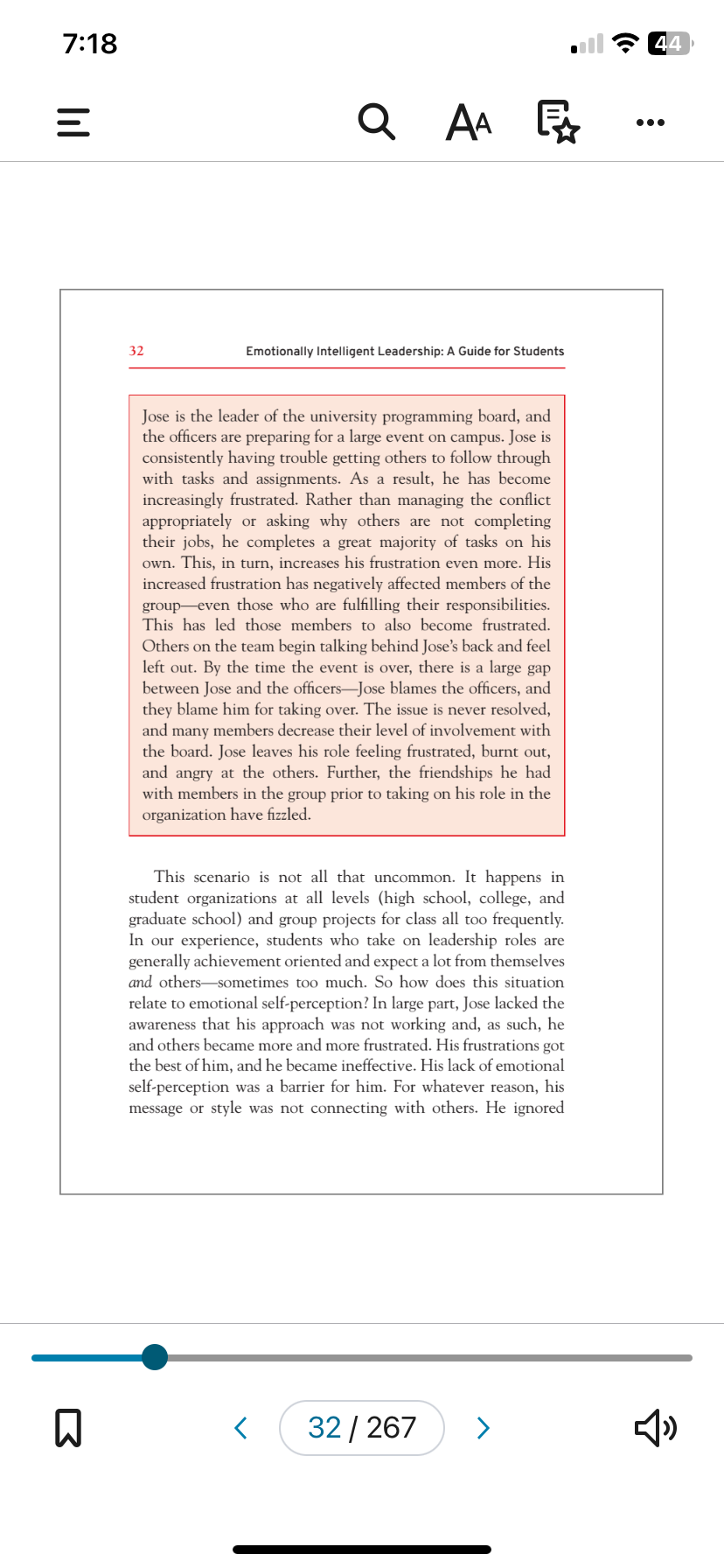
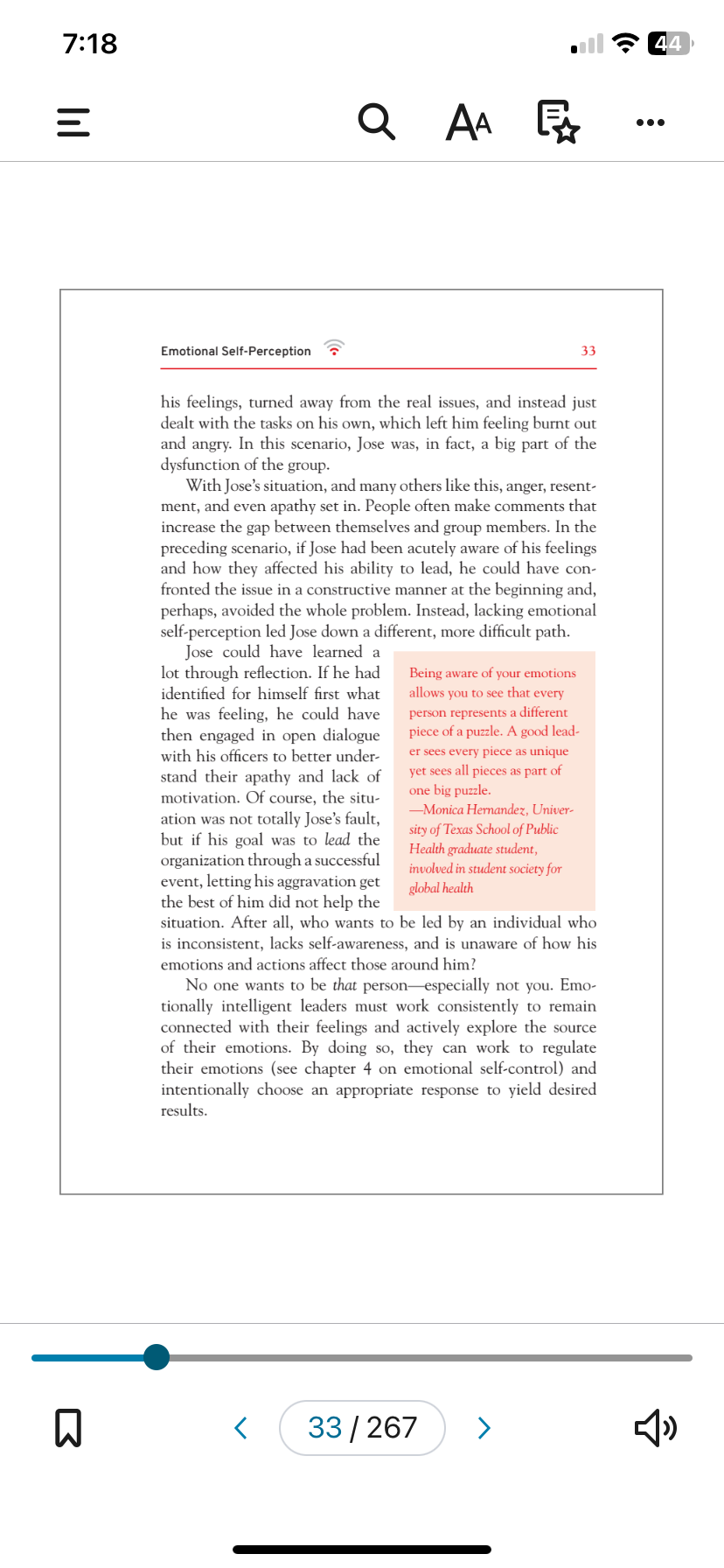
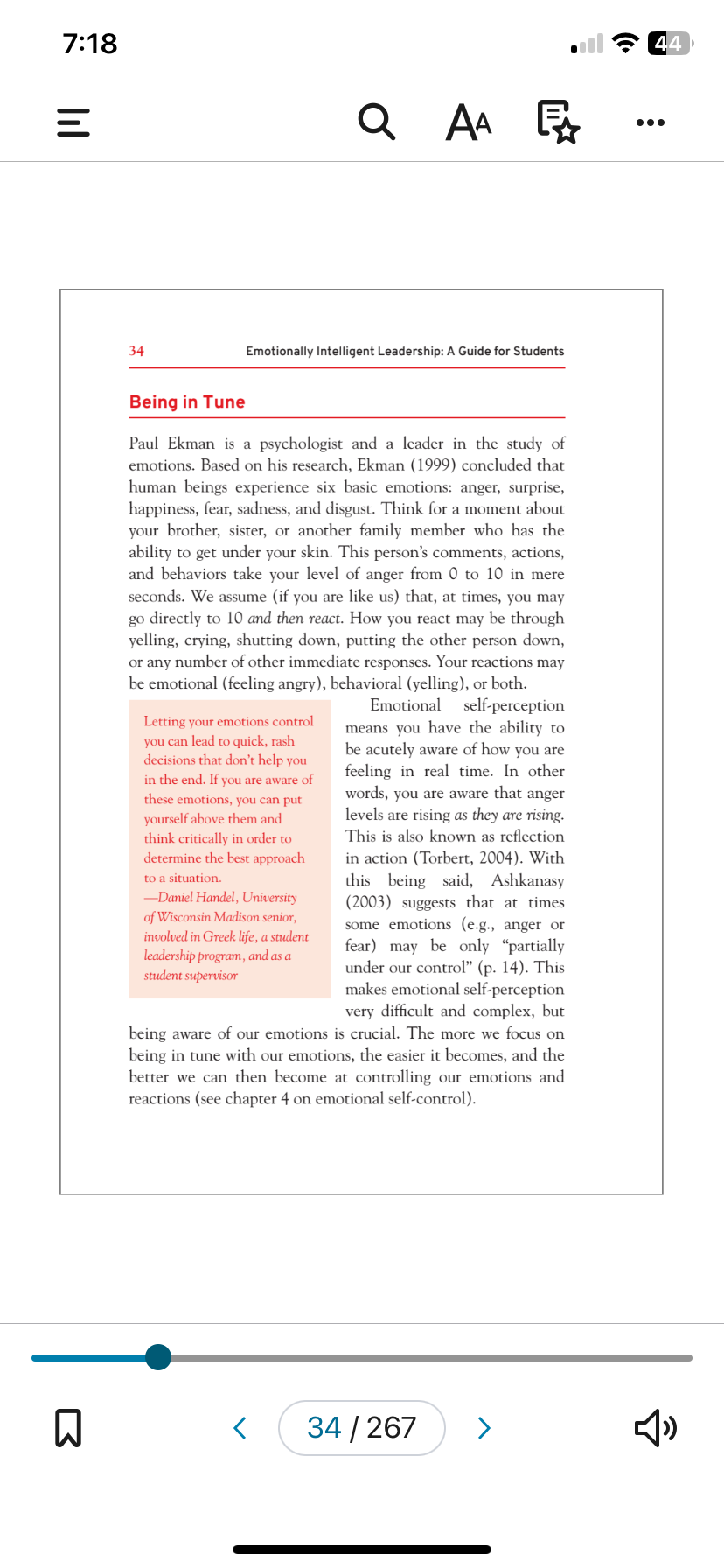
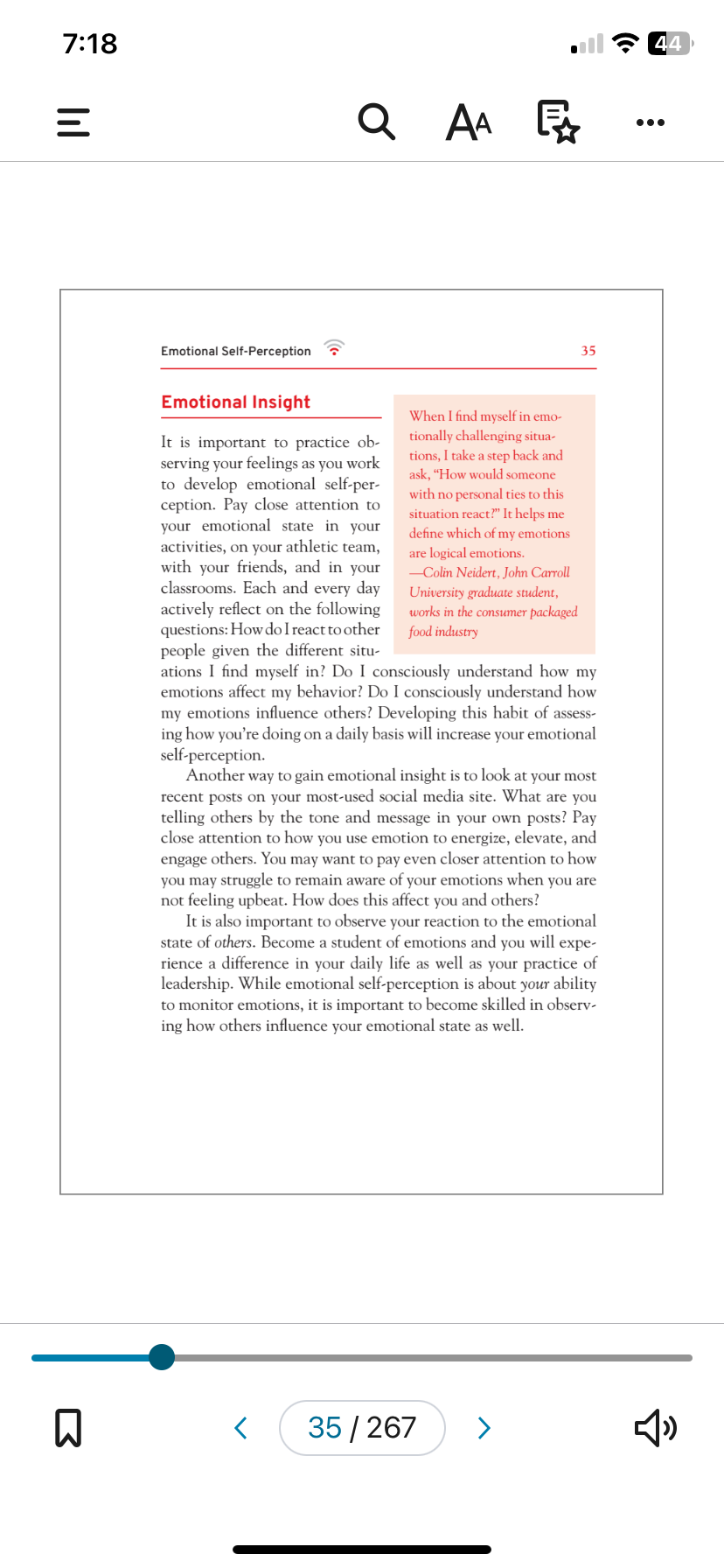
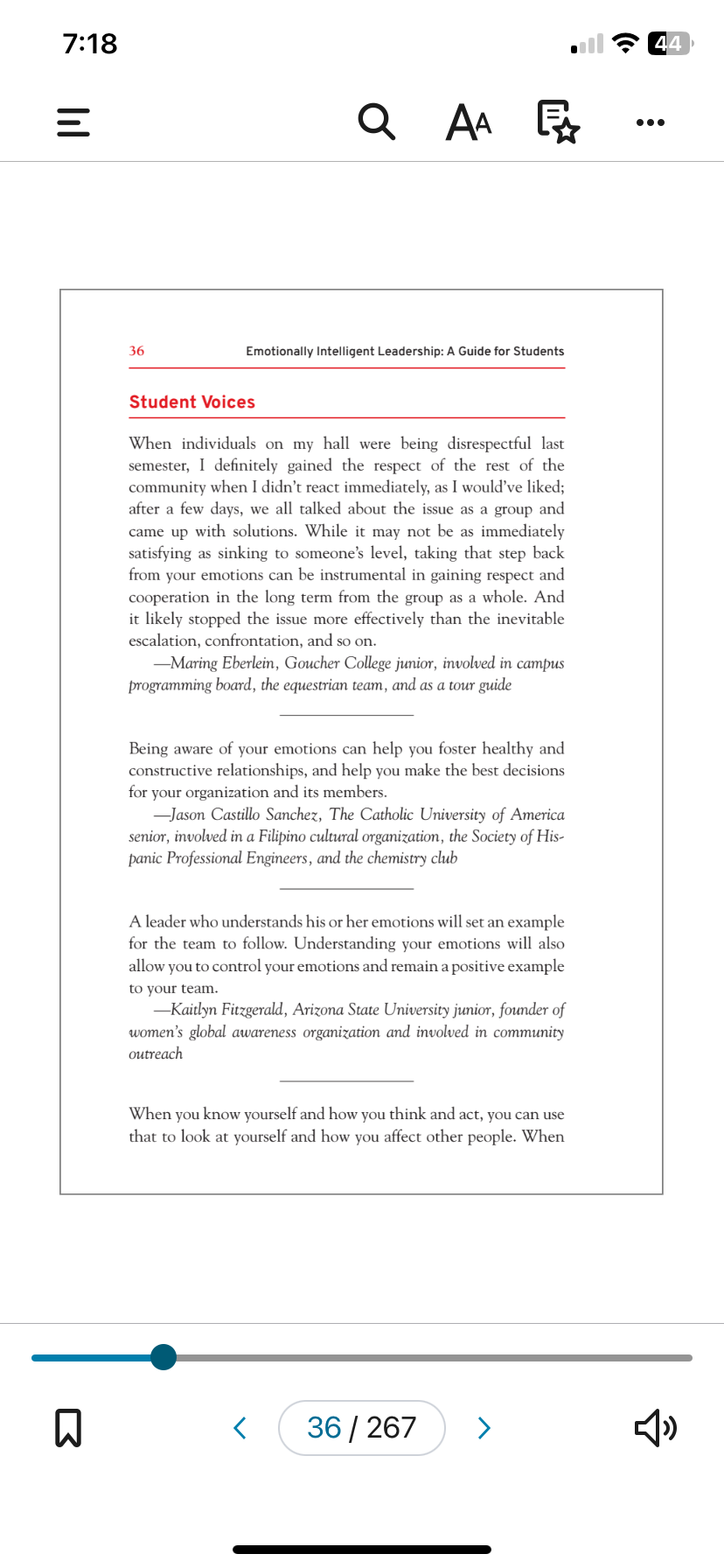
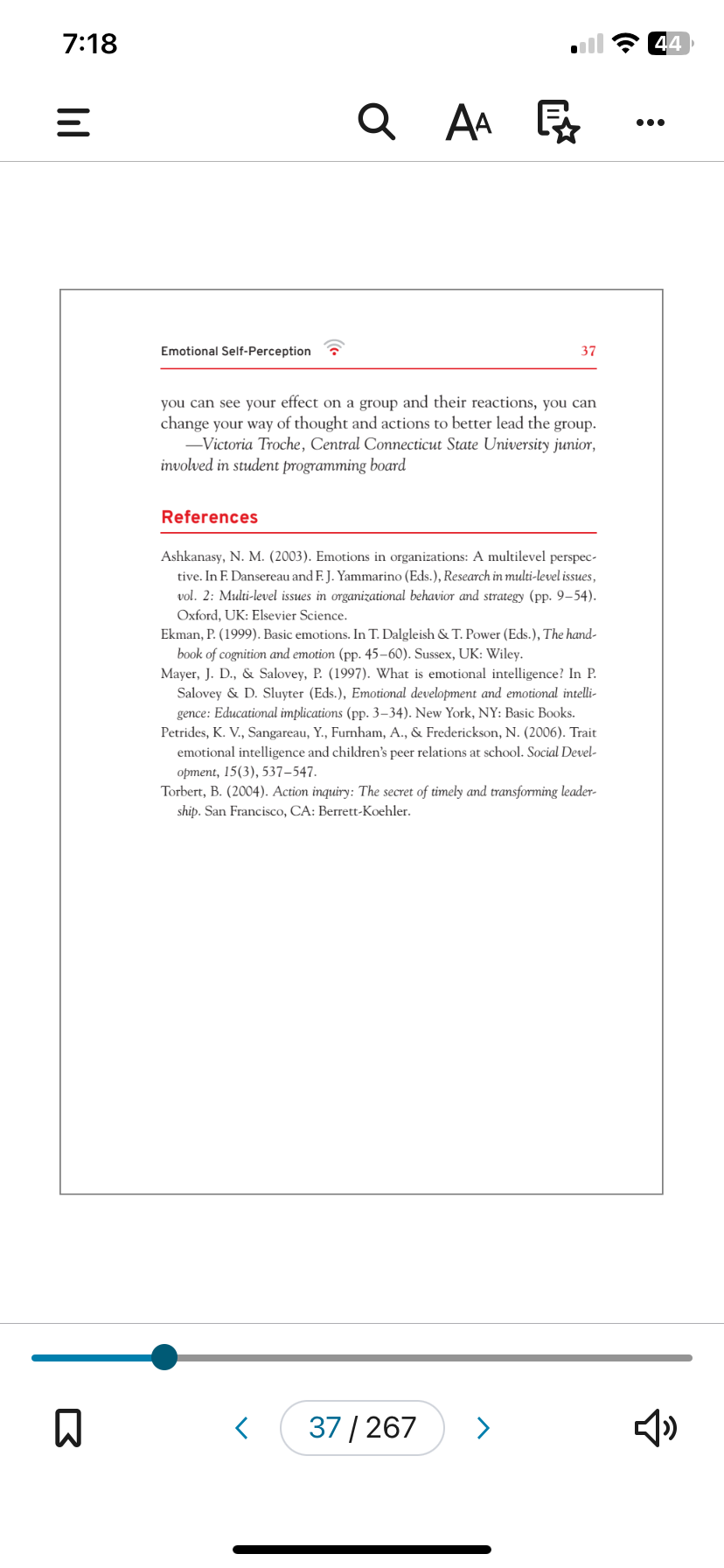
Journal 2 Assignment - 20 points Your journal assignment should be 2-3 typed pages (minimum 500 words), 12 point Times New Roman font, double- spaced, and with one inch margins. You need to submit your assignment in a Word doc. Journal posts should be well written and will be graded for spelling, grammar, punctuation, etc. You do not need to use citations. [ want your responses to demonstrate your understanding of the concepts. However, it you choose to use citations, you must use APA. All journals should be uploaded to Pilot in the assigned dropbox. Journal #2 Read chapter 3 in Emotionally Intelligent Leadership s Read chapter 4 in Bad Leadership Address all three prompts; make sure to put headers in your journal labeling Prompt |, Prompt 2, etc. with the associated text underneath. Each journal entry should address the following: I. Prompt 1: Describe/summarize one key concept from each reading. What are each of the concepts? 2. Prompt 2: How are these concepts, that you described from each reading, related to each other? o For example, one concept from one reading that week might be on vision and 1ts importance in leadership, whereas a concept from the other reading may be about selfishness. In connecting these two topics, vou could discuss how being selfish might lead someone to engage in the visioning process alone, setting a vision that fits his or her own needs. This could lead to not having shared buy-in and a reluctance for others to work towards something they weren't part of creating. 3. Prompt 3: Describe a real-life example of at least one of the key concepts in the readings. This should be based on your personal experience. If you do not have a personal example, you may use a current event. Criteria Prompt 1 Prompt 2 Prompt 3 Adherence to Writing Instructions Journal Assignment Rubric Above Expectations 5 points At least one concept from each article 1s correctly described. Information provided is accurate and clearly _describes the concepts. Description of how concepts are related clearly demonstrates students understanding of the concepts. Relevant example(s) provided which clearly explains concepts. Paper well written with no more than 2 errors (e.g. spelling, grammar, etc. ). Directions followed font, page length, etc. Meets Expectations 4 points At least one concept from each article is described; however, information provided is vague/unclear. Diescription of how the concepts are related 1s mostly correct but is unclear/vague. At least one personal example provided which describes concepts. Paper mostly well written with 3-4 errors {e.g. spelling, grammar, ete.) Most directions followed-font, page length, etc. Below Expectations 3 points Only one concept from one article included and/or mformation provided 1s inaccurate. Concepts not understood. I Description of how the concepts are related 1s incorrect. Student does not understand concepts. Example(s) provided but not related to concepts in one or both articles. Paper not well written with 5-6 errors (e.g. spelling, grammar, ete.) and/or directions not followed font, page length, etc. Unmet Expectations 0 points No evidence provided | No evidence provided No evidence provided Paper is poorly written with more than & errors {e.g. spelling, grammar, ete.). Directions not tollowed wrong font, age length, etc. 7118 ) = chapter 3 Emotional Self-Perception Identifying emotions and their influence on behavior. Emotional self-perception is about describing, naming, and understanding your emotions. Emotionally intelligent leaders are aware of how situations influence emotions and how emotions affect interactions with others. Emotional self-perception is one of the four emotionally intelligent leadership (EIL) capacities most closely linked to emotional intelligence. Emotional self-perception is a diffhicult capacity to master because being acutely aware of emotions and how they influence your interactions with others is a continual and ongoing challenge. The energy and attention that emorional self-perception requires can be exhausting. Yet, emotionally intelligent leaders recognize how situations influence their emotions (Petrides, Sangareau, Furnham, & Frederickson, 2006; Mayer & Salovey, 1997). In essence, this requires that you be in tune with your emotionsall the time. What follows is a snapshot of what happens when emotional self-perception is lacking and what it means to be in tune with yourself. Importance of Emotional Self-Perception Demonstrating emotional self-perception means knowing your- self well enough to identify your emotional responses as well as being conscious of how you react emotionally to situations, peo- ple, and social dynamics. As you become aware of your natural default responses, you develop a higher level of consciousness and action. Aligning this capacity with leadership, you can see the importance of this skill. Consider the following case: 31 7:18 all 44 S Q AA RX . .. 32 Emotionally Intelligent Leadership: A Guide for Students Jose is the leader of the university programming board, and the officers are preparing for a large event on campus. Jose is consistently having trouble getting others to follow through with tasks and assignments. As a result, he has become increasingly frustrated. Rather than managing the conflict appropriately or asking why others are not completing their jobs, he completes a great majority of tasks on his own. This, in turn, increases his frustration even more. His increased frustration has negatively affected members of the group-even those who are fulfilling their responsibilities. This has led those members to also become frustrated. Others on the team begin talking behind Jose's back and feel left out. By the time the event is over, there is a large gap between Jose and the officers-Jose blames the officers, and they blame him for taking over. The issue is never resolved, and many members decrease their level of involvement with the board. Jose leaves his role feeling frustrated, burnt out, and angry at the others. Further, the friendships he had with members in the group prior to taking on his role in the organization have fizzled. This scenario is not all that uncommon. It happens in student organizations at all levels (high school, college, and graduate school) and group projects for class all too frequently. In our experience, students who take on leadership roles are generally achievement oriented and expect a lot from themselves and others-sometimes too much. So how does this situation relate to emotional self-perception? In large part, Jose lacked the awareness that his approach was not working and, as such, he and others became more and more frustrated. His frustrations got the best of him, and he became ineffective. His lack of emotional self-perception was a barrier for him. For whatever reason, his message or style was not connecting with others. He ignored W 32 / 267718 D En Emotional Self-Perception = his feelings, turned away from the real issues, and instead just dealt with the tasks on his own, which left him feeling burnt out and angry. In this scenario, Jose was, in fact, a big part of the dysfunction of the group. With Jose's situation, and many others like this, anger, resent- ment, Elnd even apathy set in. PEDpiE nl:[en lTl'Ell(C comments that increase the gap between themselves and group members. In the preceding scenario, if Jose had been acutely aware of his feelings and how they affected his ability to lead, he could have con- fronted the issue in a constructive manner at the beginning and, perhaps, avoided the whole problem. Instead, lacking emotional self-perception led Jose down a different, more difficult path. Jose could have learned a lot through reflection. If he had identified for himself first what Being aware of your emotions allows you to see that every hc was fl:'('ling, hl:' C()uld l'\\ElV[' then engaged in open dialogue with his officers to better under- person represents a different piece of a puzzle. A good lead- er sees every piece as unique yet sees all pieces as part of one big puzzle. Monica Hernandez, Univer- sity of Texas School of Public Health graduate student, involved in student society for global health stand their apathy and lack of motivation. Of course, the situ- ation was not totally Jose's fault, but if his goal was to lead the organization through a successful event, letting his aggravation get the best of him did not help the situation. After all, who wants to be led by an individual who is inconsistent, lacks self-awareness, and is unaware of how his emotions and actions affect those around him? No one wants to be that personespecially not you. Emo- tionally intelligent leaders must work consistently to remain connected with their feelings and actively explore the source of their emotions. By doing so, they can work to regulate their emotions (see chapter 4 on emotional self-control) and intentionally choose an appropriate response to yield desired results. W 7:18 all 44 S Q AA RX . .. 34 Emotionally Intelligent Leadership: A Guide for Students Being in Tune Paul Ekman is a psychologist and a leader in the study of emotions. Based on his research, Ekman (1999) concluded that human beings experience six basic emotions: anger, surprise, happiness, fear, sadness, and disgust. Think for a moment about your brother, sister, or another family member who has the ability to get under your skin. This person's comments, actions, and behaviors take your level of anger from 0 to 10 in mere seconds. We assume (if you are like us) that, at times, you may go directly to 10 and then react. How you react may be through yelling, crying, shutting down, putting the other person down, or any number of other immediate responses. Your reactions may be emotional (feeling angry), behavioral (yelling), or both. Emotional self-perception Letting your emotions control means you have the ability to you can lead to quick, rash decisions that don't help you be acutely aware of how you are in the end. If you are aware of feeling in real time. In other these emotions, you can put words, you are aware that anger yourself above them and levels are rising as they are rising. think critically in order to This is also known as reflection determine the best approach in action (Torbert, 2004). With to a situation. this being said, Ashkanasy -Daniel Handel, University (2003) suggests that at times of Wisconsin Madison senior, some emotions (e.g., anger or involved in Greek life, a student leadership program, and as a fear) may be only "partially student supervisor under our control" (p. 14). This makes emotional self-perception very difficult and complex, but being aware of our emotions is crucial. The more we focus on being in tune with our emotions, the easier it becomes, and the better we can then become at controlling our emotions and reactions (see chapter 4 on emotional self-control). W 34 / 26718 Emotional Self-Perception = Emotional Insight It is important to practice ob- serving your feelings as you work to develop emotional self-per- ception. Pay close attention to your emotional state in your activities, on your athletic team, with your friends, and in your classrooms. Each and every day actively reflect on the following When | find myself in emo- tionally challenging situa- tions, | take a step back and ask, \"How would someone with no personal ties to this situation react!\" It helps me define which of my emotions are logical emotions. Colin Neidert, John Carvoll University graduate student, works in the consumer packaged questions: Howdo I react to other food industry people given the different situ- ations | find myself in? Do | consciously understand how my emotions affect my behavior! Do I consciously understand how my emotions influence others! Developing this habit of assess- ing how you're doing on a daily basis will increase your emotional self-perception. Another way to gain emotional insight is to look at your most recent posts on your most-used social media site. What are you telling others by the tone and message in your own posts? Pay close attention to how you use emotion to energize, elevate, and engage others. You may want to pay even closer attention to how you may S[lggle to Temirl aware Df your Emtins W}]en you are not feeling upbeat. How does this affect you and others? It is also important to observe your reaction to the emotional state of others. Become a student of emotions and you will expe- rience a difference in your daily life as well as your practice of leadership. While emotional self-perception is about your ability to monitor emotions, it is important to become skilled in observ- ing how others influence your emotional state as well. W 7118 Emaotionally Intelligent Leadership: A Guide for Students Student Voices When individuals on my hall were being disrespectful last semester, | definitely gained the respect of the rest of the community when I didn't react immediately, as | would've liked; after a few days, we all ralked about the issue as a group and came up with solutions. While it may not be as immediately satisfying as sinking to someone's level, taking that step back from your emotions can be instrumental in gaining respect and Conperati()n in the ing term frm the group as a Whll?. And it likely stopped the issue more effectively than the inevirable escalation, confrontation, and so on. Maring Eberlein, Goucher College junior, involved in campus programming board, the equestrian team, and as a tour guide Being aware of your emotions can help you foster healthy and constructive relationships, and help you make the best decisions for your organization and its members. Jason Castillo Sanchez, The Catholic University of America senior, involved in a Filipino cultural organization, the Society of His- panic Professional Engineers, and the chemistry club A leader who understands his or her emotions will set an example for the team t follow. Understanding your emotions will also allow you to control your emotions and remain a positive example to your team. Kaitlyn Fitzgerald, Arizona State University junior, founder of women''s global awareness organization and involved in community outreach When you know yourself and how you think and act, you can use that to look at yourself and how you affect other people. When 7:18 all 44 S Q AA RX . .. Emotional Self-Perception 37 you can see your effect on a group and their reactions, you can change your way of thought and actions to better lead the group. -Victoria Troche, Central Connecticut State University junior, involved in student programming board References Ashkanasy, N. M. (2003). Emotions in organizations: A multilevel perspec- tive. In F. Dansereau and F. J. Yammarino (Eds.), Research in multi-level issues, vol. 2: Multi-level issues in organizational behavior and strategy (pp. 9-54). Oxford, UK: Elsevier Science. Ekman, P. (1999). Basic emotions. In T. Dalgleish & T. Power (Eds.), The hand- book of cognition and emotion (pp. 45-60). Sussex, UK: Wiley. Mayer, J. D., & Salovey, P. (1997). What is emotional intelligence? In P. Salovey & D. Sluyter (Eds.), Emotional development and emotional intelli- gence: Educational implications (pp. 3-34). New York, NY: Basic Books. Petrides, K. V., Sangareau, Y., Furnham, A., & Frederickson, N. (2006). Trait emotional intelligence and children's peer relations at school. Social Devel opment, 15(3), 537-547. Torbert, B. (2004). Action inquiry: The secret of timely and transforming leader- ship. San Francisco, CA: Berrett-Koehler. W 37 / 267CHAPTER FOUR Incompetent Juan Antonio Samaranch Incompetent LeadershipThe leader and at least some followers lack the will or skill (or both) to sustain effective action. With regard to at least one important leadership challenge, they do not create positive change. INCOMPETENT LEADERS are ubiquitous. Sometimes they are so obviously and extremely incompetent that we wonder how they were able to assume leadership roles in the first place. And sometimes they're just incompetent enough to interfere with their own best-laid plans to sustain stability or create change. Leaders are incompetent for various reasons. Some lack experience, education, or expertise. Others lack drive, energy, or the ability to focus. Still others are not clever enough, flexible enough, stable enough, emotionally intelligent enoughor whatever enough. In addition, leaders are incompetent in various ways, ranging from miscalculation to mismanagement, from silliness to stupidity, from carelessness to callousness. Incompetent aadess-Raan-aa-daad 3t meeting mismanagement, from silliness to stupidity, from carelessness to callousness. Incompetent leaders may be bad at meeting challenges such as mastering information, coping with complexity, minding the store, making decisions under conditions of uncertainty, managing change, managing conflict, managing crises, or managing themselves. Some leaders are unwilling or unable to employ necessary and appropriate leadership strategies such as envisioning, prioritizing, communicating, educating, inspiring, persuading, mobilizing, organizing, coalition building, listening, adapting, getting information, managing, delegating, coordinating, negotiating, implementing well, you name it. In other words, to the question of exactly in what ways leaders are incompetent, there is only one reply: Let me count the ways. And how exactly are followers incompetent? By ignoring or discounting warning signs, and by letting bad leadership linger. Brief Examples Abdurrahman Wahid Every now and then there is a leader who is incompetent nearly across the board. An example is Abdurrahman Wahid. In October 1999, Wahid, a half-blind Muslim cleric, became president of Indonesia, the world's fourth most populous country. Wahid succeeded Achmed Sukarno and Mohamed Suharto, despots who, in the wake of Dutch rule, promised democracy and reform but instead delivgred repression and corruption. Suharto, despots who, in the wake of Dutch rule, promised democracy and reform but instead delivered repression and corruption. Only after Suharto was ousted did the Indonesian people finally have free and open elections. Because Wahid was Indonesia's first democratically elected head of state, hopes for him were high. Political instability and economic crises notwithstanding, he was expected to undertake major reforms that were badly needed and long overdue. On the surface, the optimism was justified. Wahid had defeated his rivals by brilliant political maneuvering. He headed the fortymillion-strong Muslim Nahdlatul Ulama, one of the largest religious organizations in the world. Wahid was a veteran political player whose progressive vision of Islam seemed in keeping with Indonesia's future as a global player of major consequence. And in a country rife with ethnic conflict, he preached tolerance and promised to let democracy flourish. Moreover, in contrast to Sukarno and Suharto, Wahid enjoyed a refreshingly modest lifestyle. He lived in a plain house in Jakarta, on a small street crowded with children and vendors. And after he became president, his manner and style remained simple. He appeared at all except the most formal functions in sandals, a batik shirt, and the traditional black hat known as a peci.? But it was apparent almost immediately that the early faith in Wahid was misplaced. His perilous health, which included declining eyesight, diabetesi kidnez failurel and a series ~f mbimlimn mmmale i ad cilke i e ol s 2P perilous health, which included declining eyesight, diabetes, kidney failure, and a series of strokes, combined with bizarre behavior even as he moved into the presidential palace, soon brought confusion and disillusionment. When he first became president, Wahid's unusual history and personality seemed to be assets. But soon the contrast between his inclination toward the traditional world of Javanese mysticism, on the one hand, and his vision of a modern, progressive Indonesia, on the other, made him increasingly difficult to read. His management style was capricious. His policy preferences were inconsistent. And he proved capable of appearing literally to laugh off Indonesia's most pressing problems. In particular, Wahid was erratic and bewildering with regard to his political and economic agenda: He ran his cabinet like a bus terminal (twenty-two ministers came and went in a two-year period), clashed with members of parliament, and made rash statements to the press. He traveled frequently and refused to return home when ethnic conflicts erupted into violence. He ignored financial scandals that ultimately stained his own reputation for incorruptibility, he alienated members of the military, political, and business elites, and finally he failed to secure the crucial support of the international financial community. Potential investors in Indonesia's economy, including the International Monetary Fund, were legitimately concerned that Wahid knew little (and cared less) about economic management, that his economic ministers were at loggerheads with each other and with him and that .e hhll'l'l('al aime intarfarad with 1l ICIBCI 1
Step by Step Solution
There are 3 Steps involved in it
1 Expert Approved Answer
Step: 1 Unlock
Question Has Been Solved by an Expert!
Get step-by-step solutions from verified subject matter experts
Step: 2 Unlock
Step: 3 Unlock
Students Have Also Explored These Related General Management Questions!















 Study Help