Question: L Case Study_20 MARKS PdPR oh PdPR... En. Radzi, a headmaster of one of primary schools in Kubang Pasu, Kedah faced some serious issues lately.
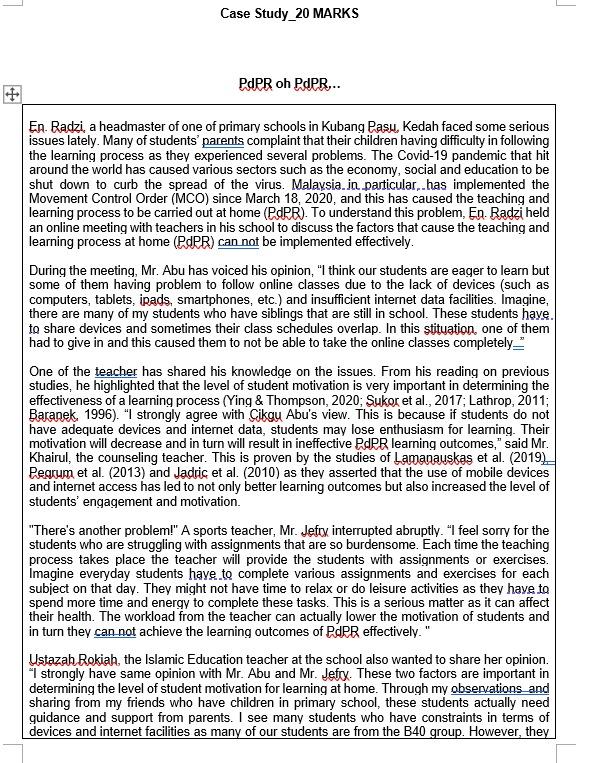
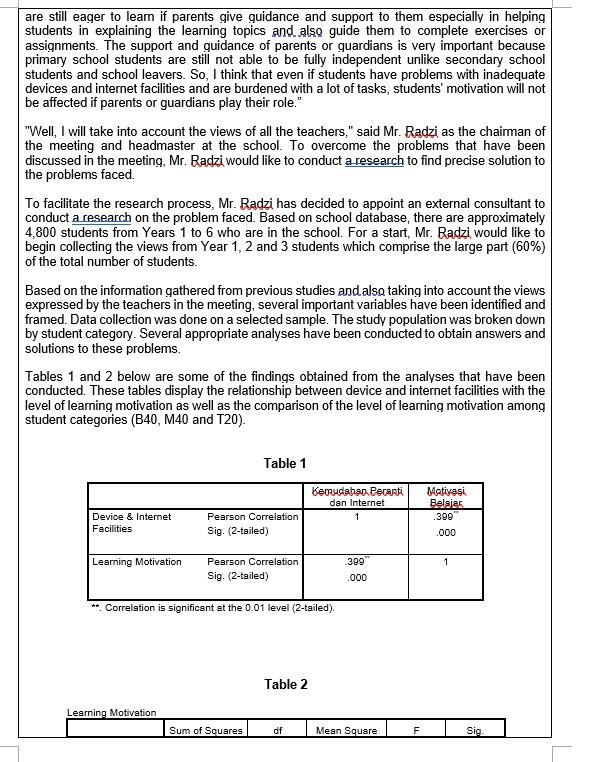
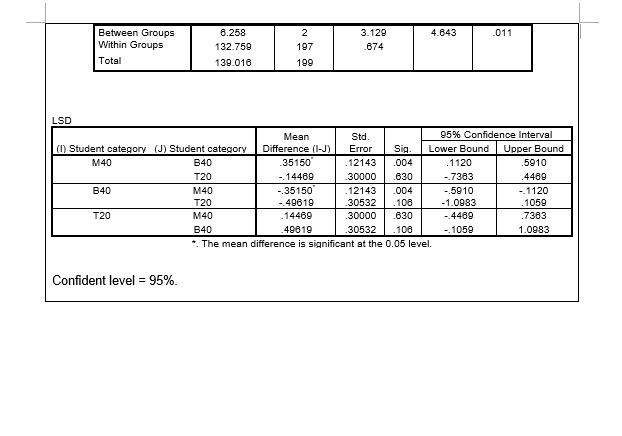
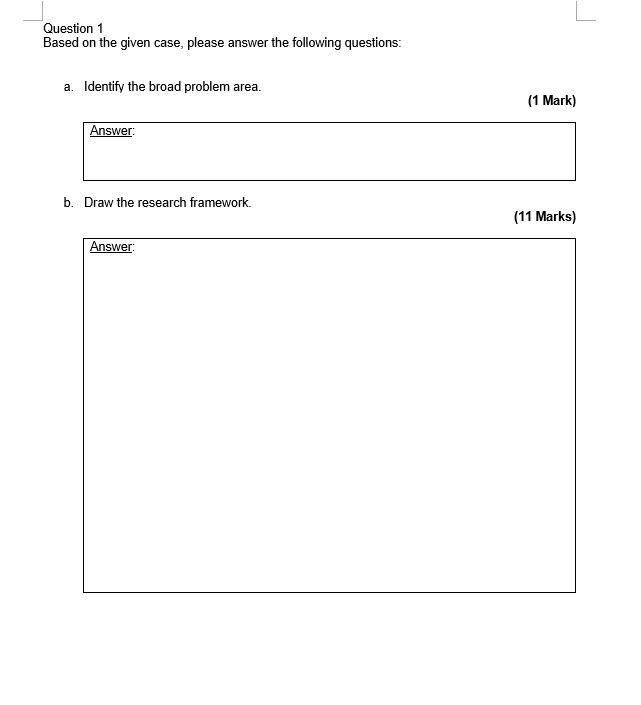
L Case Study_20 MARKS PdPR oh PdPR... En. Radzi, a headmaster of one of primary schools in Kubang Pasu, Kedah faced some serious issues lately. Many of students' parents complaint that their children having difficulty in following the learning process as they experienced several problems. The Covid-19 pandemic that hit around the world has caused various sectors such as the economy, social and education to be shut down to curb the spread of the virus. Malaysia, in particular, has implemented the Movement Control Order (MCO) since March 18, 2020, and this has caused the teaching and learning process to be carried out at home (PDPR). To understand this problem, En. Radzi held an online meeting with teachers in his school to discuss the factors that cause the teaching and learning process at home (Pder) can not be implemented effectively. During the meeting, Mr. Abu has voiced his opinion, "I think our students are eager to learn but some of them having problem to follow online classes due to the lack of devices (such as computers, tablets, ipads, smartphones, etc.) and insufficient internet data facilities. Imagine, there are many of my students who have siblings that are still in school. These students have. to share devices and sometimes their class schedules overlap. In this stituation, one of them had to give in and this caused them to not be able to take the online classes completely One of the teacher has shared his knowledge on the issues. From his reading on previous studies, he highlighted that the level of student motivation is very important in determining the effectiveness of a learning process (Ying & Thompson, 2020; Sukor et al., 2017, Lathrop, 2011; Baranek. 1996). "I strongly agree with Cikgu Abu's view. This is because if students do not have adequate devices and internet data, students may lose enthusiasm for learning. Their motivation will decrease and in turn will result in ineffective PdPR learning outcomes," said Mr. Khairul, the counseling teacher. This is proven by the studies of Lamanauskas et al. (20192 Pegrum et al. (2013) and Jadric et al. (2010) as they asserted that the use of mobile devices and internet access has led to not only better learning outcomes but also increased the level of students' engagement and motivation. "There's another problem!" A sports teacher, Mr. Jefry interrupted abruptly. "I feel sorry for the students who are struggling with assignments that are so burdensome. Each time the teaching process takes place the teacher will provide the students with assignments or exercises. Imagine everyday students have to complete various assignments and exercises for each subject on that day. They might not have time to relax or do leisure activities as they have to spend more time and energy to complete these tasks. This is a serious matter as it can affect their health. The workload from the teacher can actually lower the motivation of students and in turn they can not achieve the learning outcomes of PdPR effectively." Ustazah Rokiah, the Islamic Education teacher at the school also wanted to share her opinion. "I strongly have same opinion with Mr. Abu and Mr. Jefry. These two factors are important in determining the level of student motivation for learning at home. Through my observations and sharing from my friends who have children in primary school, these students actually need guidance and support from parents. I see many students who have constraints in terms of devices and internet facilities as many of our students are from the B40 group. However, they are still eager to leam if parents give guidance and support to them especially in helping students in explaining the learning topics and also guide them to complete exercises or assignments. The support and guidance of parents or guardians is very important because primary school students are still not able to be fully independent unlike secondary school students and school leavers. So, I think that even if students have problems with inadequate devices and internet facilities and are burdened with a lot of tasks, students' motivation will not be affected if parents or guardians play their role." "Well, I will take into account the views of all the teachers," said Mr. Radzi as the chairman of the meeting and headmaster at the school. To overcome the problems that have been discussed in the meeting, Mr. Radzi would like to conduct a research to find precise solution to the problems faced. To facilitate the research process, Mr. Radzi has decided to appoint an external consultant to conduct a research on the problem faced. Based on school database, there are approximately 4.800 students from Years 1 to 6 who are in the school. For a start, Mr. Radzi would like to begin collecting the views from Year 1, 2 and 3 students which comprise the large part (60%) of the total number of students. Based on the information gathered from previous studies and also taking into account the views expressed by the teachers in the meeting, several important variables have been identified and framed. Data collection was done on a selected sample. The study population was broken down by student category. Several appropriate analyses have been conducted to obtain answers and solutions to these problems. Tables 1 and 2 below are some of the findings obtained from the analyses that have been conducted. These tables display the relationship between device and internet facilities with the level of learning motivation as well as the comparison of the level of learning motivation among student categories (B40, M40 and T20). Table 1 Kemudahan Pecanti dan Internet 1 Device & Internet Facilities Pearson Correlation Sig. (2-tailed) Motivasi Belajas .390 .000 Learning Motivation 1 Pearson Correlation Sig. (2-tailed) 399 .000 ** Correlation is significant at the 0.01 level (2-tailed). Table 2 Learning Motivation Sum of Squares df Mean Square F Sig 4.843 .011 Between Groups Within Groups Total 8.258 132.759 139.016 2 197 3.129 .674 199 LSD Mean Std. 95% Confidence Interval (I) Student category (J) Student category Difference (1-J) Error Sig. Lower Bound Upper Bound M40 B40 35150 12143 .004 .1120 .5910 T20 - 14489 30000 630 -7383 4489 B40 M40 -35150 .12143 .004 - 5910 - 1120 T20 -49610 30532 . 108 -1.0983 .1059 T20 M40 .14469 30000 .630 -4489 .7363 B40 49619 .30532 . 108 - 1050 1.0983 The mean difference is significant at the 0.05 level. Confident level = 95%. Question 1 Based on the given case, please answer the following questions: a. Identify the broad problem area. (1 Mark) Answer: b. Draw the research framework. (11 Marks)









 Study Help