







Question: Lab 15.1 - M253: Problem 1 Previous Problem (1 point) The function 76(13, y) : 692 005(53) has a critical point at (0, 0). What
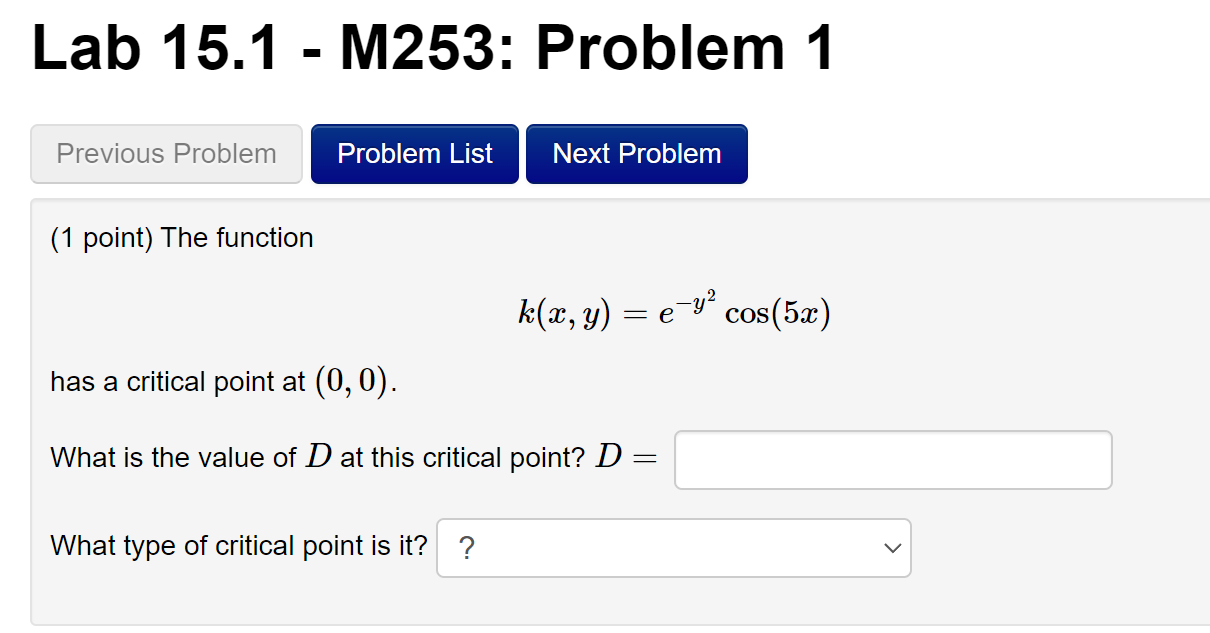
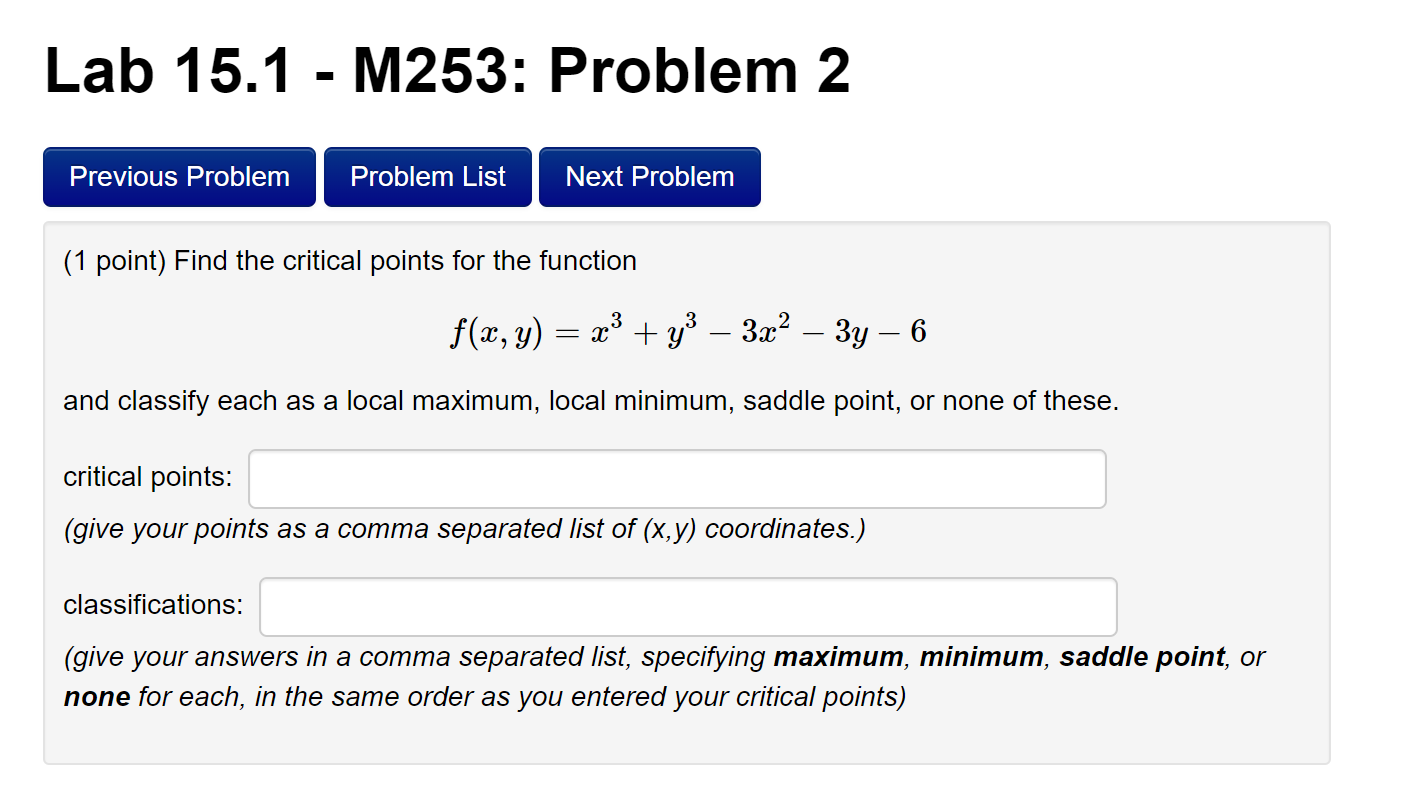
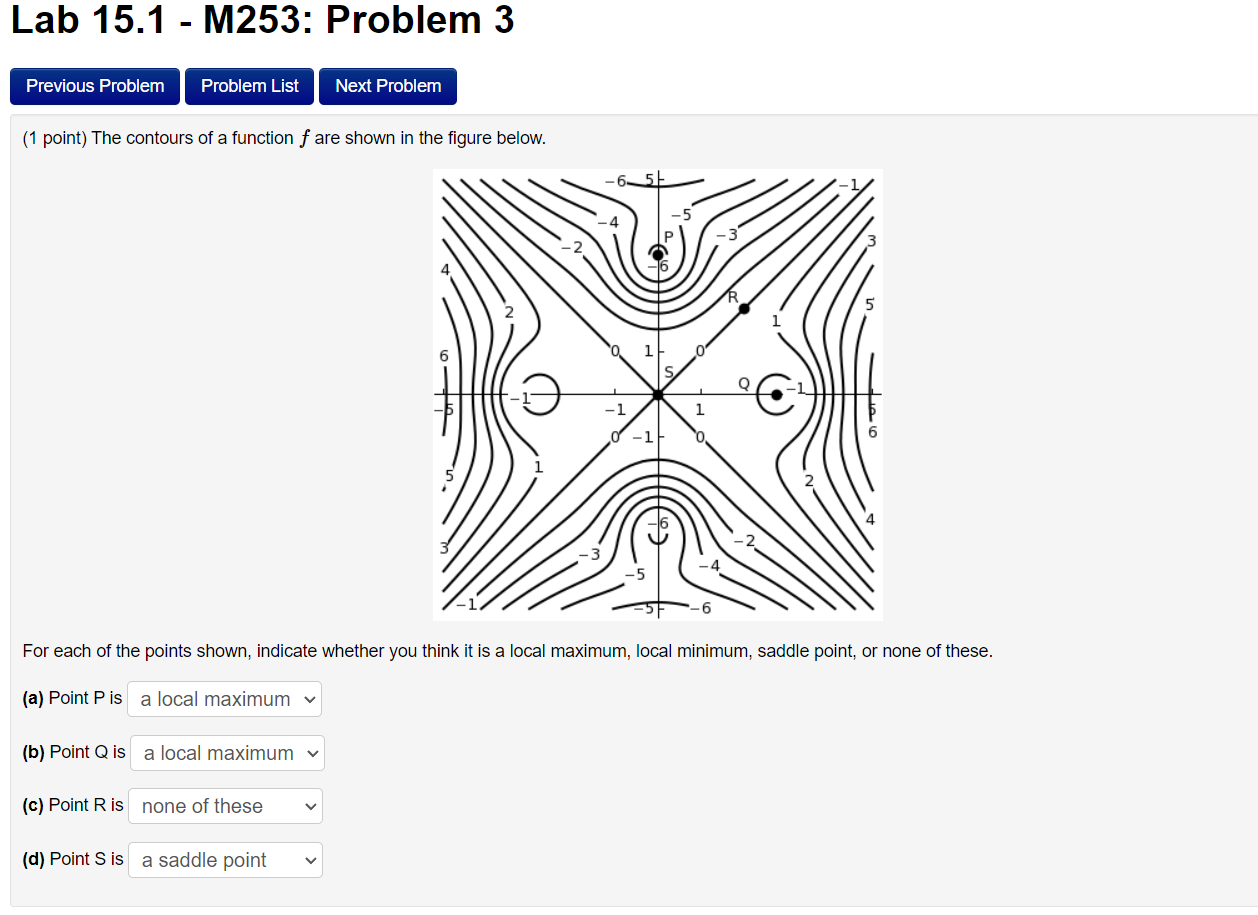
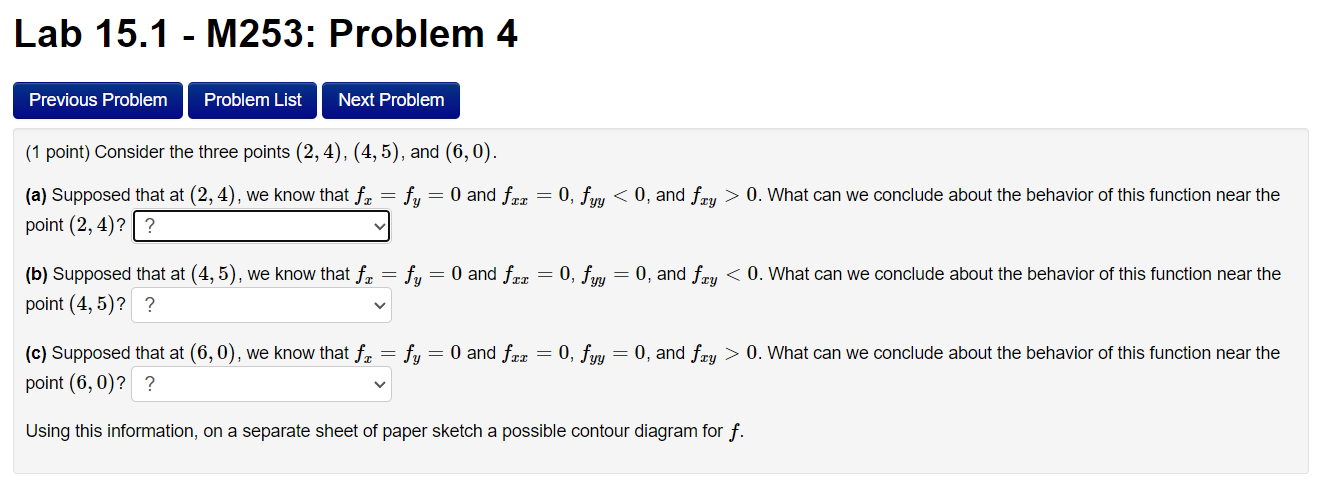
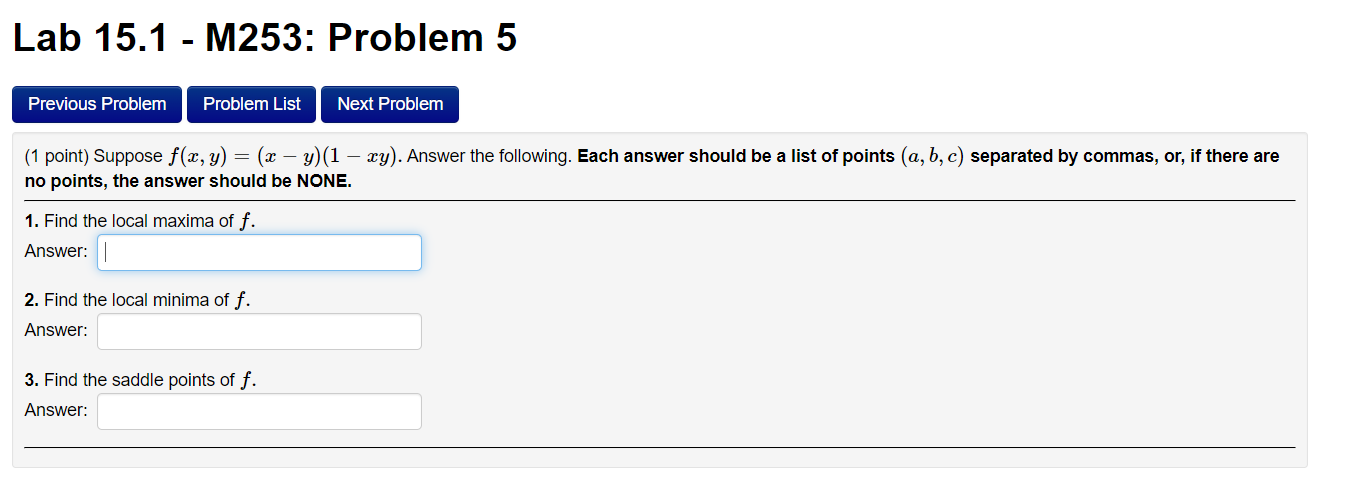
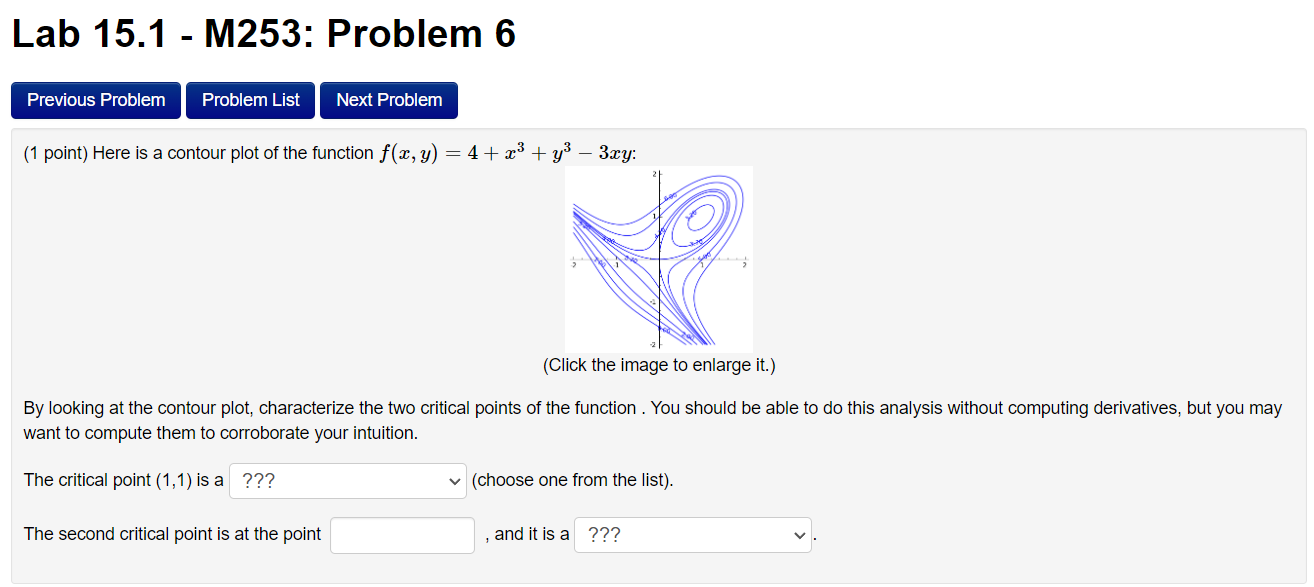
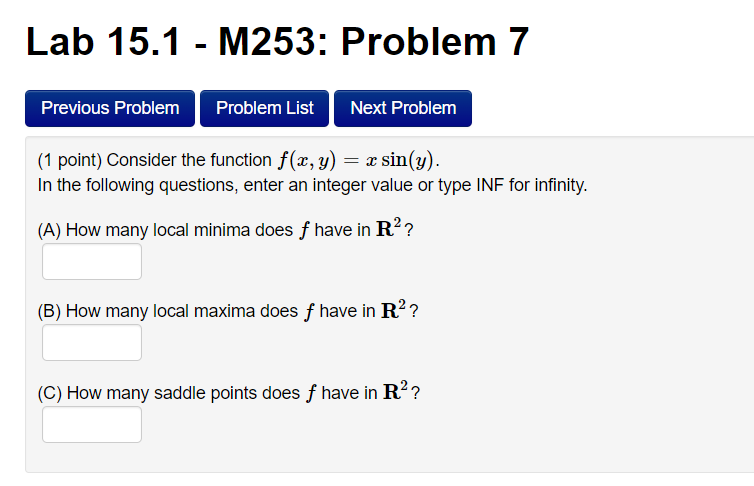
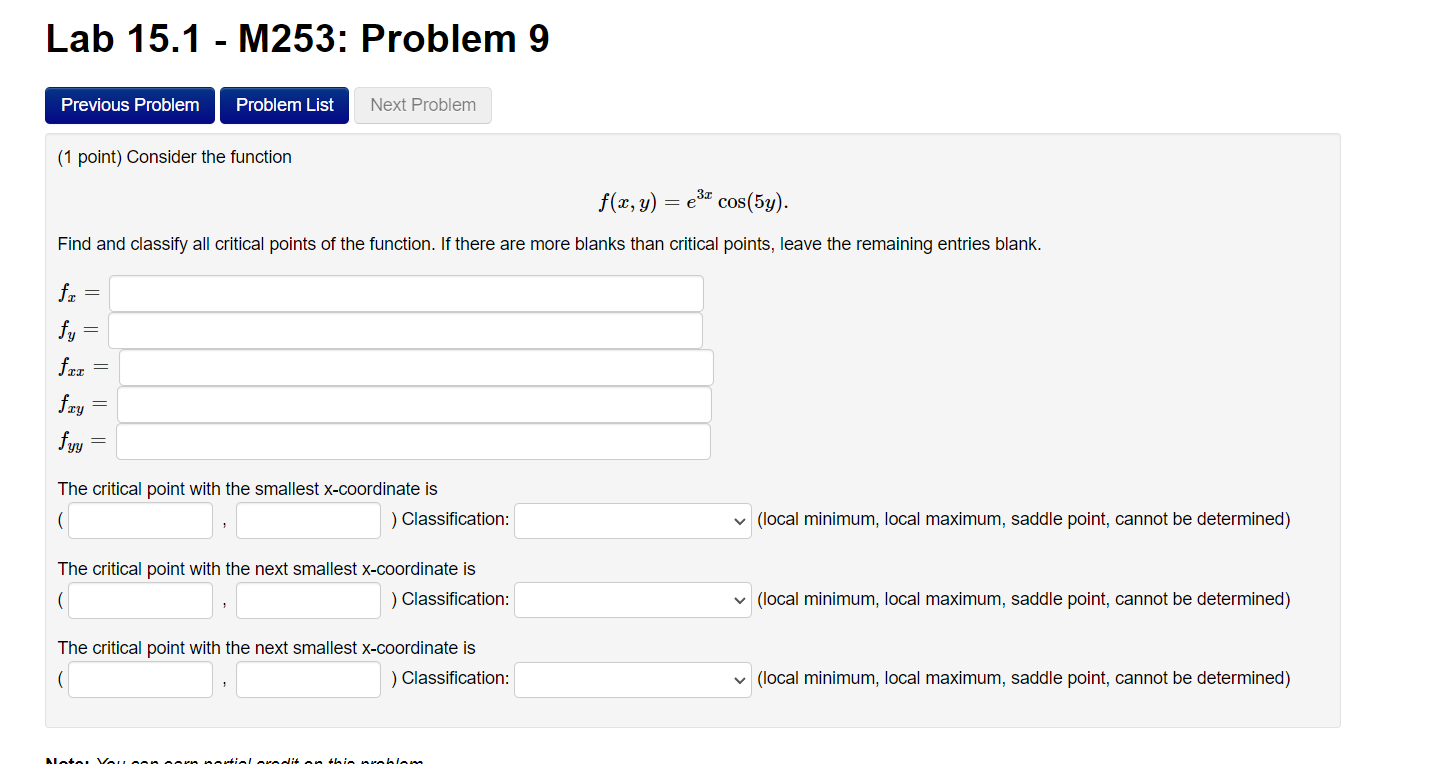
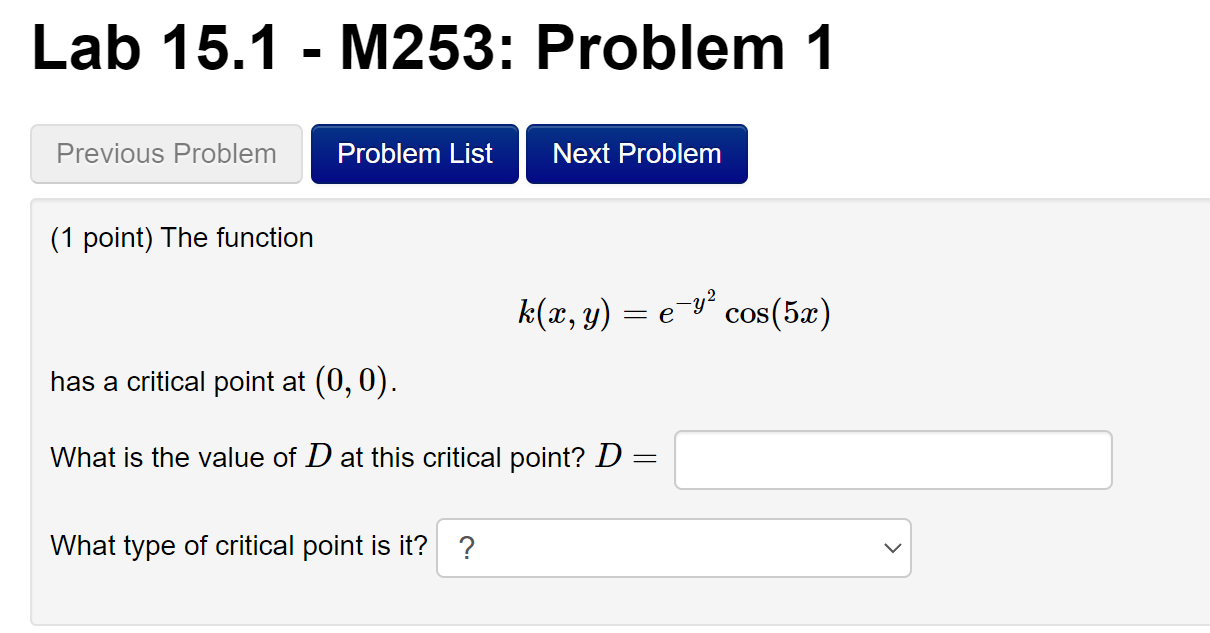
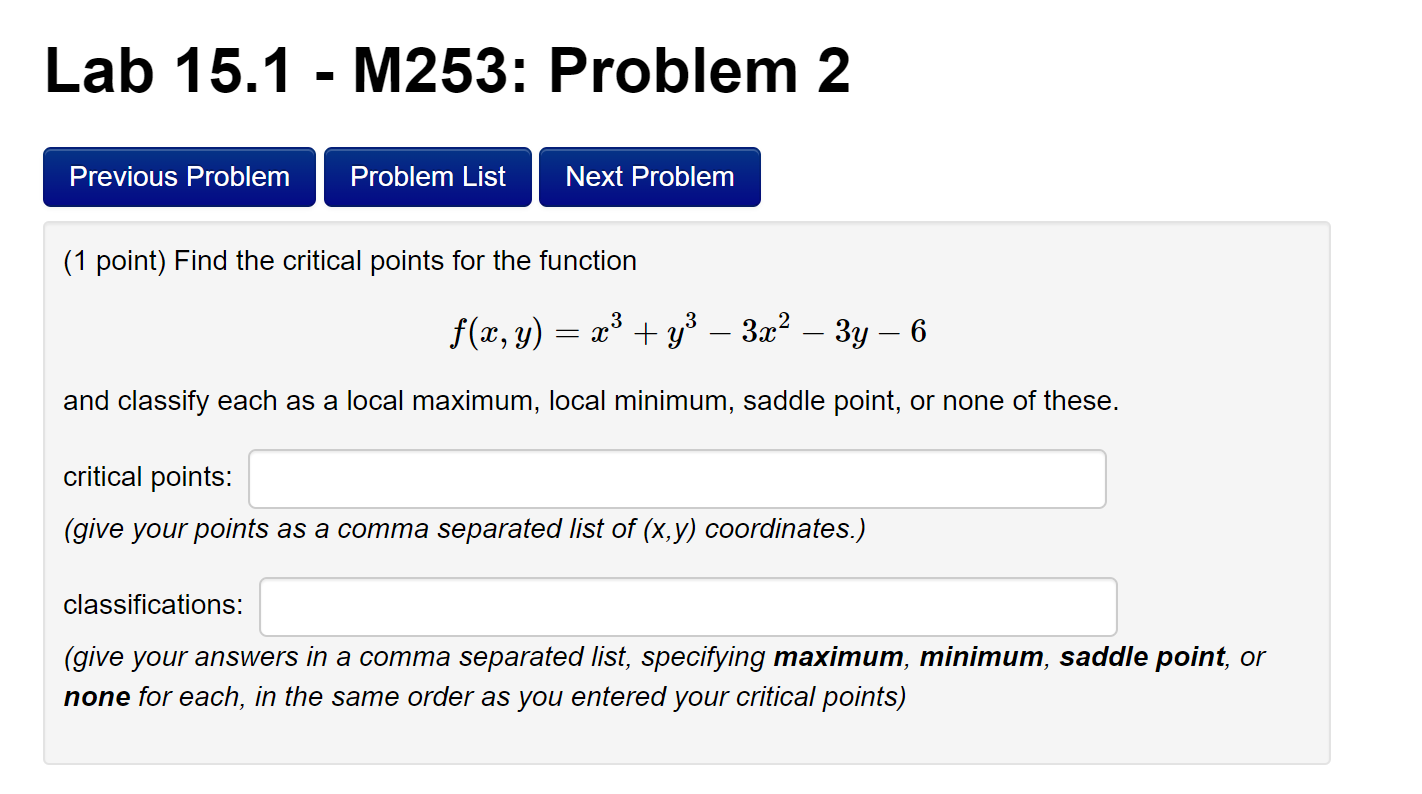
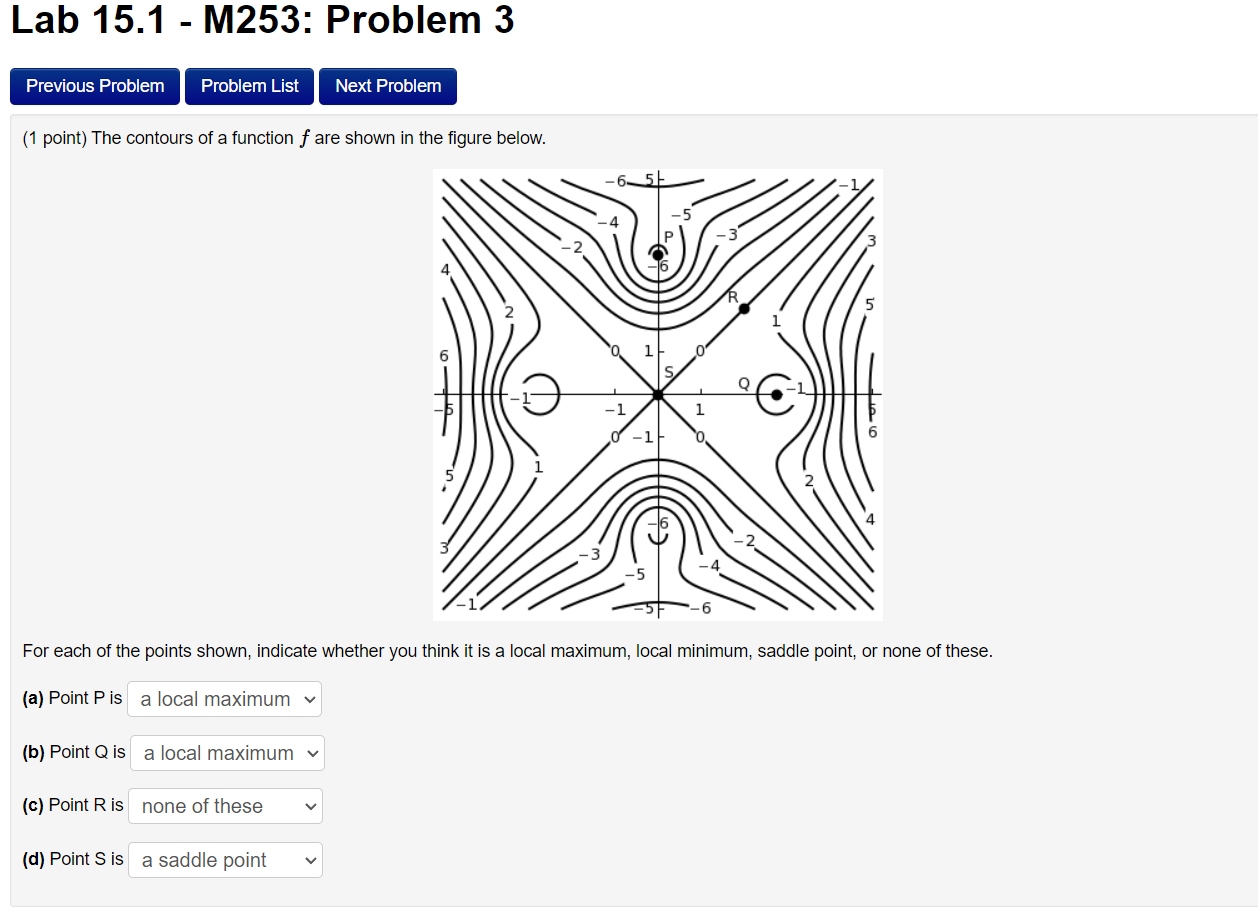
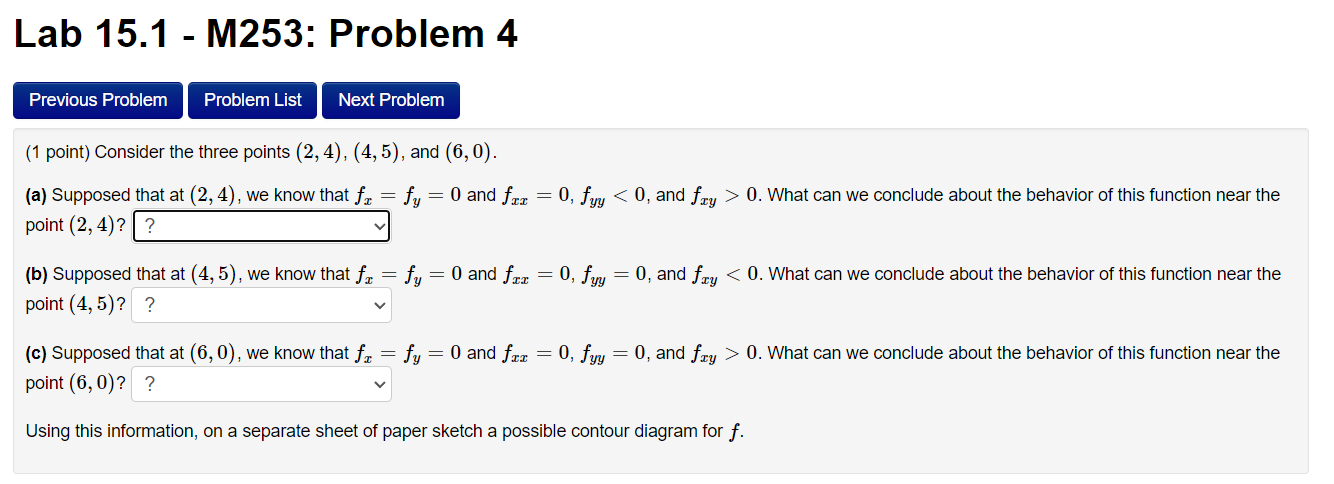
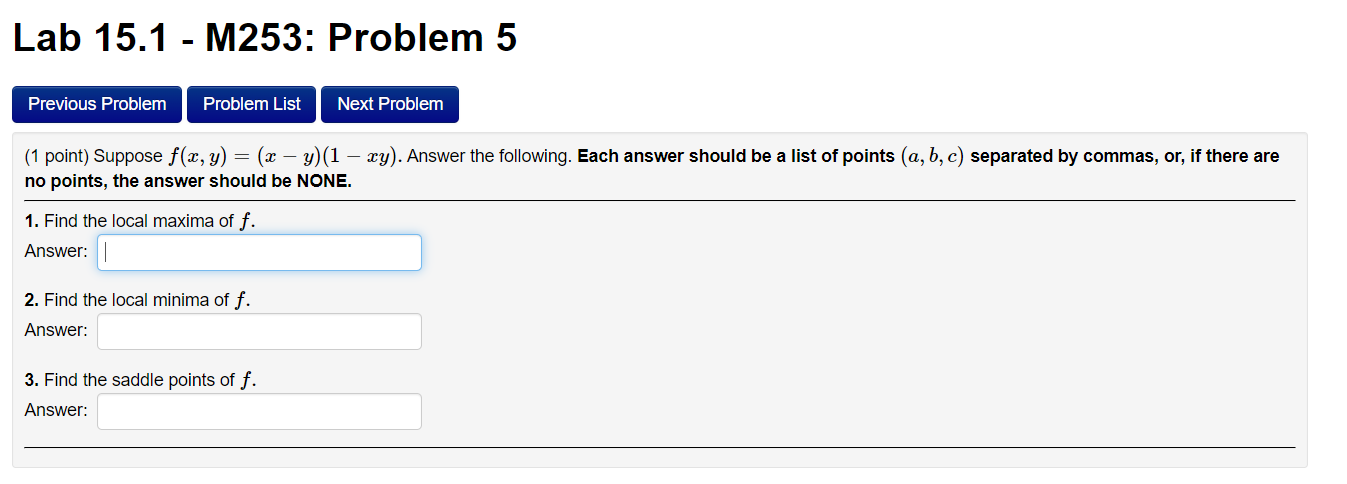
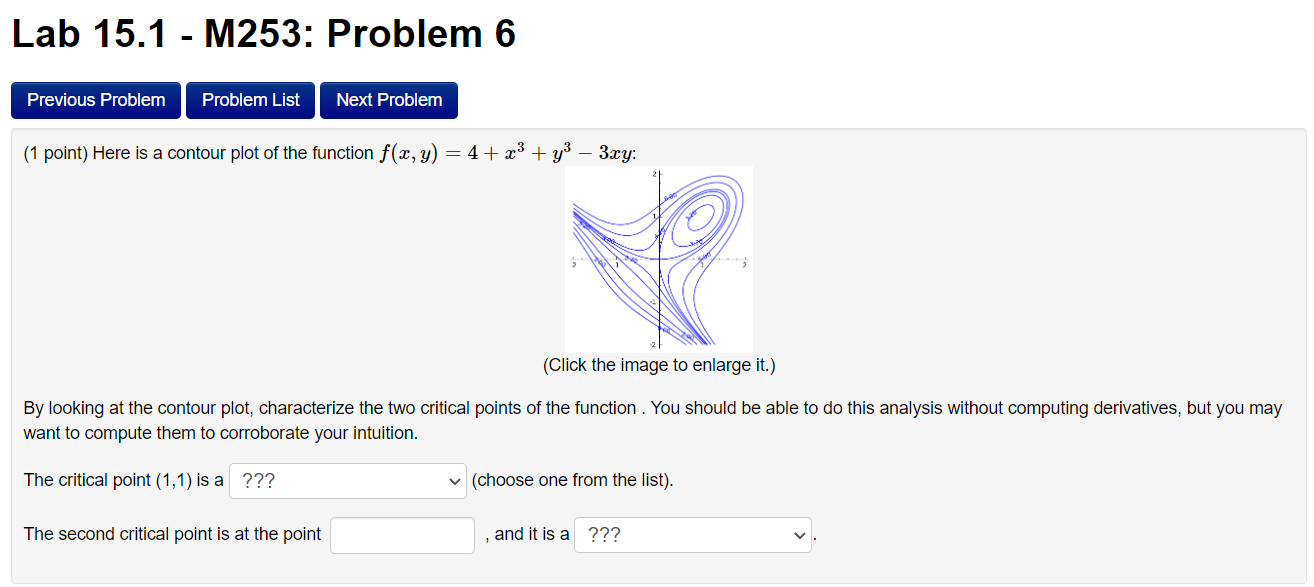
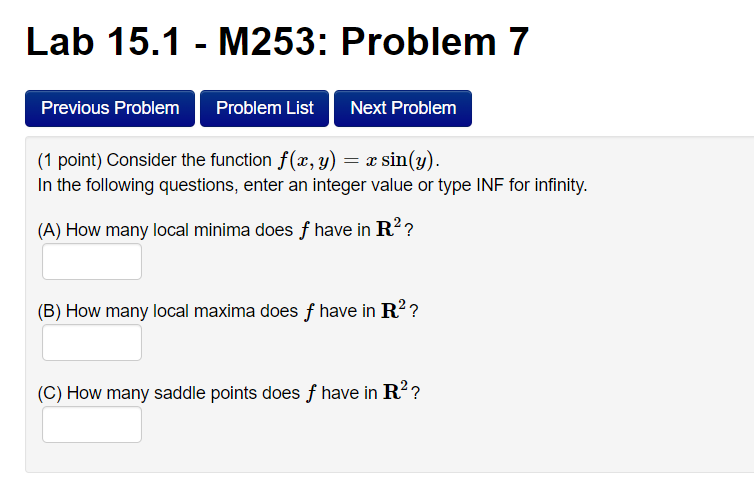
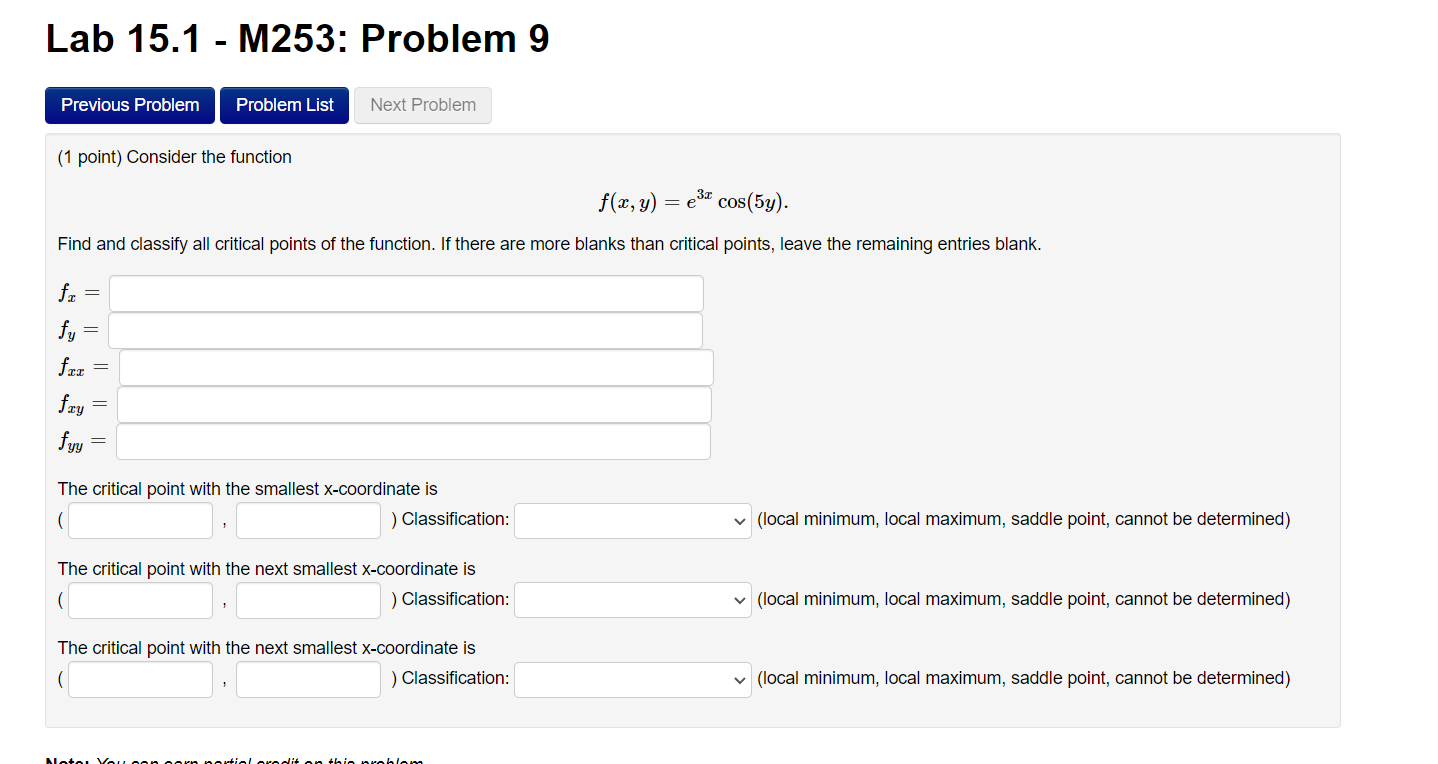
Lab 15.1 - M253: Problem 1 Previous Problem (1 point) The function 76(13, y) : 692 005(53) has a critical point at (0, 0). What is the value of D at this critical point? D : What type of critical point is it? ? Lab 15.1 - M253: Problem 2 (1 point) Find the critical points for the function My) : $3 +213 3:c2 3y6 and classify each as a local maximum, local minimum, saddle point, or none of these. critical points: (give your points as a comma separated list of (x, y) coordinates.) classifications: (give your answers in a comma separated list, specifying maximum, minimum, saddle point, or none for each, in the same order as you entered your criticai points) Lab 15.1 - M253: Problem 3 (1 point) The contours of a function f are shown in the gure below. For each of the points shown: indicate whether you think it is a local maximum, local minimum: saddle point: or none of these. {alPointPiS a local maximum v {bjPointQiS a local maximum v {clPoianis none of these v {d} Point 8 is a saddle point v Lab 15.1 - M253: Problem 4 (1 point) Consider the three points (2, 4). (4, 5), and (6,0). (a) Supposed that at (2, 4). we know that f1 = fy = 0 and f\". = O, fyy 0. What can we conclude about the behavior of this function nearthe (2,4)? lb) Supposed that at (4, 5). we know that f1 = fy = 0 and f\" = 0, fyy = 01 and fry 0. What can we conclude about the behavior of this function nearthe point (6,0)? ? v Using this information, on a separate sheet of paper sketch 3 possible contour diagram for f. Lab 15.1 - M253: Problem 5 (1 point) Suppose m, y) : (z y)(1 my). Answerthe following. Each answer should be a list of points (a, b,c) separated by commas, or, if there are no points, the answer should be NONE. 1. Find the local maxima of 3'. Answer: | 2. Find the local minima of f. Answer: 3. Find the saddle points of f. Answer: Lab 15.1 - M253: Problem 6 (1 point) Here is a contour plot of the function x, 3;) = 4 + .123 + y3 7 33m: (Click the image to enlarge it.) By looking at the contour plot: characterize the two critical points of the function . You should be able to do this analysis without computing derivatives: but you may want to compute them to corroborate your intuition. The critical point (1,1) is a ??? v (choose one from the list). The second critical point is at the point . and it is a ?'?'? v .
Step by Step Solution
There are 3 Steps involved in it

Get step-by-step solutions from verified subject matter experts
 Study Help