







Question: Lab #5: Angular & Physical Sizes (continued) Page 2 of 6 PROCEDURE Along the edge of this page is a scale that you can use
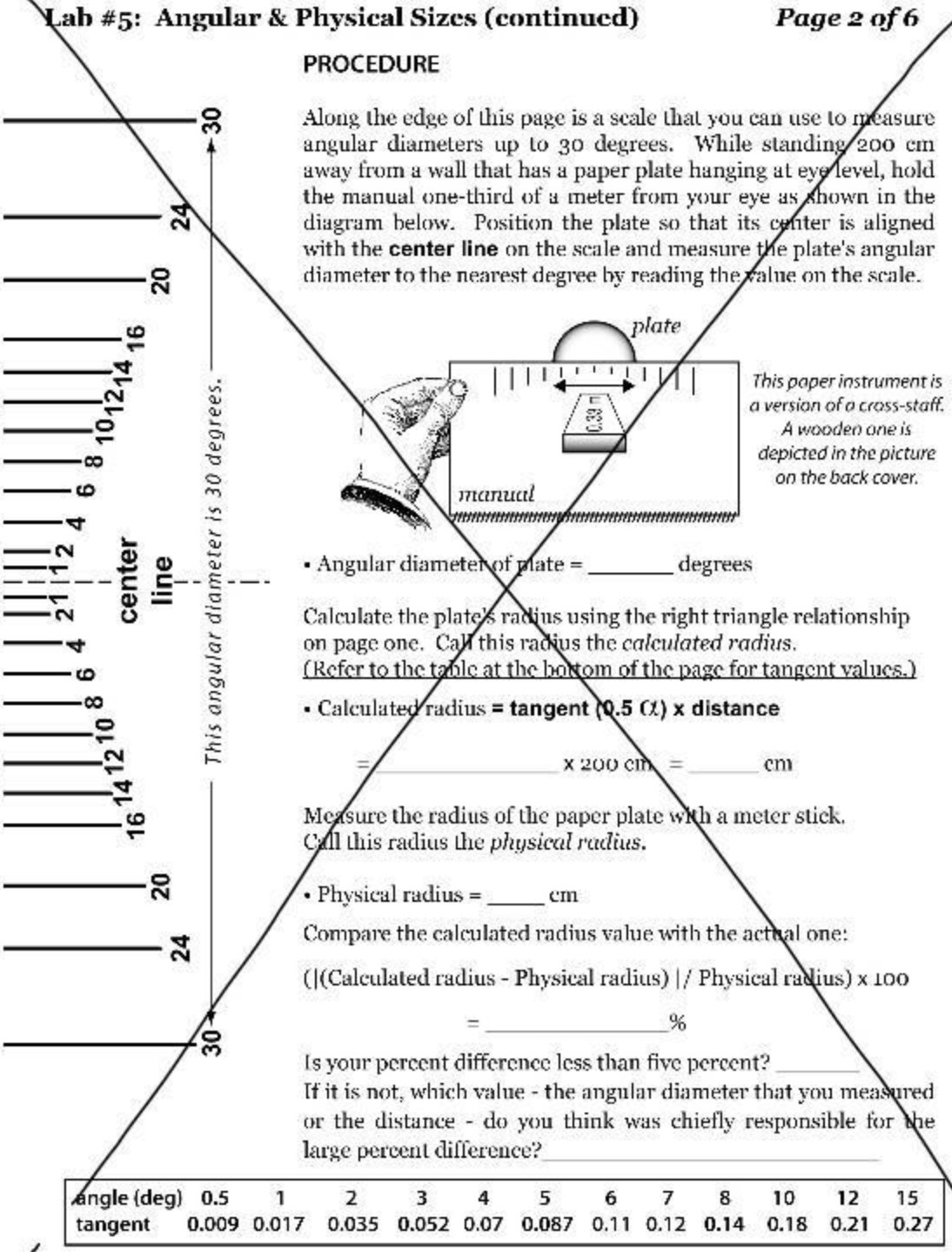
Lab #5: Angular & Physical Sizes (continued) Page 2 of 6 PROCEDURE Along the edge of this page is a scale that you can use to measure angular diameters up to 30 degrees. While standing 200 em away from a wall that has a paper plate hanging at eye level, hold the manual one-third of a meter from your eye as shown in the diagram below. Position the plate so that its center is aligned with the center line on the scale and measure the plate's angular diameter to the nearest degree by reading the value on the scale. plate This paper instrument is 6 8 101214 16 a version of a cross-staff. A wooden one is depicted in the picture on the back cover. 12 . Angular diameter of plate = degrees This angular diameter is 30 degrees. center line 21! Calculate the plate's radius using the right triangle relationship on page one. Call this radius the calculated radius. (Refer to the table at the bottom of the page for tangent values.) . Calculated radius = tangent (Q.5 (x) x distance 16 14 12 10 8 6 4 =/ x 200 cIn cm Measure the radius of the paper plate with a meter stick. Call this radius the physical radius. . Physical radius = .em Compare the calculated radius value with the actual one: (I(Calculated radius - Physical radius) |/ Physical radius) x 100 % S Is your percent difference less than five percent? If it is not, which value - the angular diameter that you measured or the distance - do you think was chiefly responsible for the large percent difference? angle (deg) 0.5 1 2 3 4 5 6 7 8 10 12 15 tangent 0.009 0.017 0.035 0.052 0.07 0.087 0.11 0.12 0.14 0.18 0.21 0.27
Step by Step Solution
There are 3 Steps involved in it

Get step-by-step solutions from verified subject matter experts
 Study Help