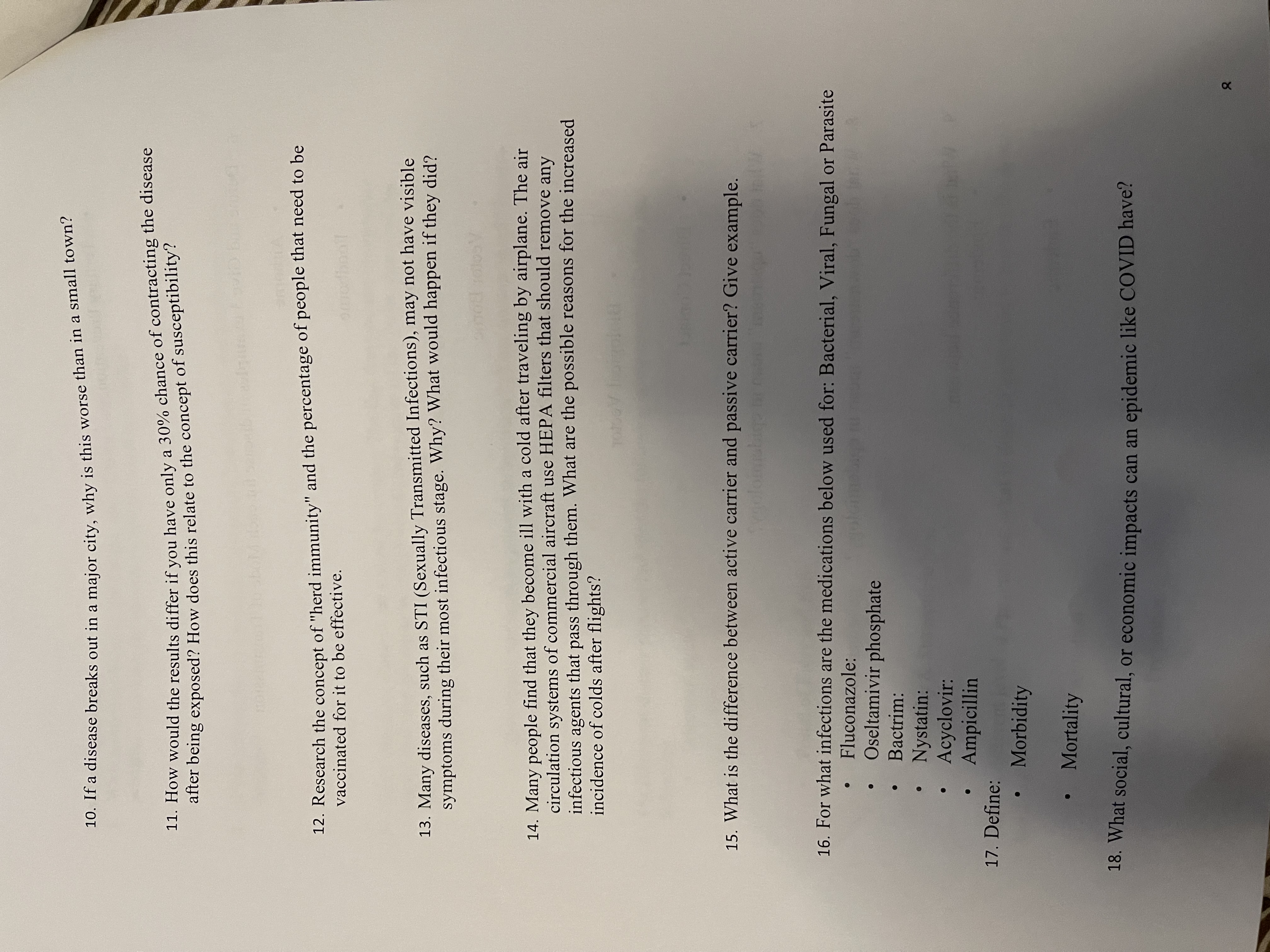
Question: Lab Report: Epidemic Simulation Name Data and Observations 1. After completing step 8 above and being prompted by the instructor, add a drop of phenolphthalein
Lab Report: Epidemic Simulation Name Data andLab Report: Epidemic Simulation Name Data andLab Report: Epidemic Simulation Name Data andLab Report: Epidemic Simulation Name Data and
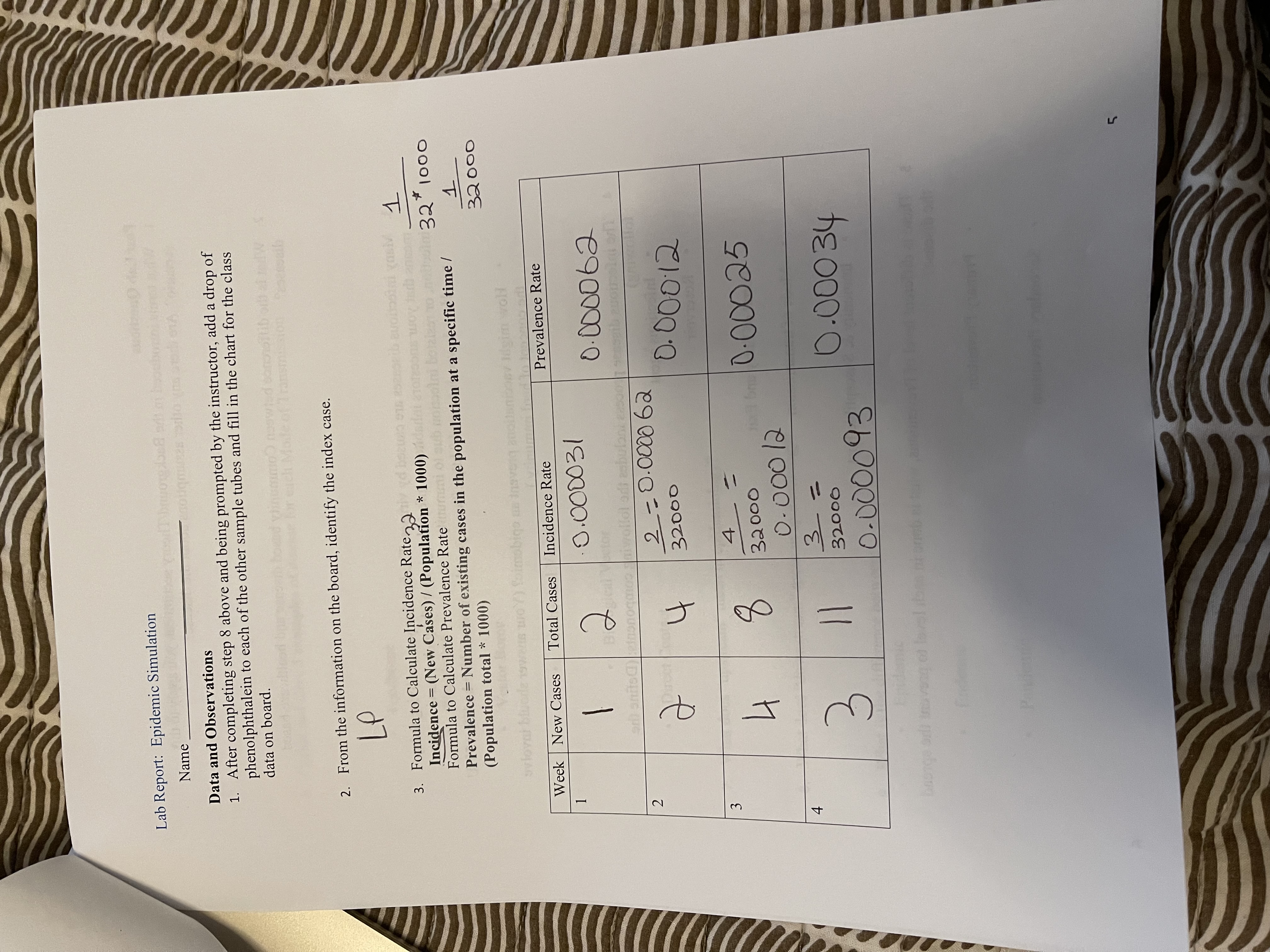
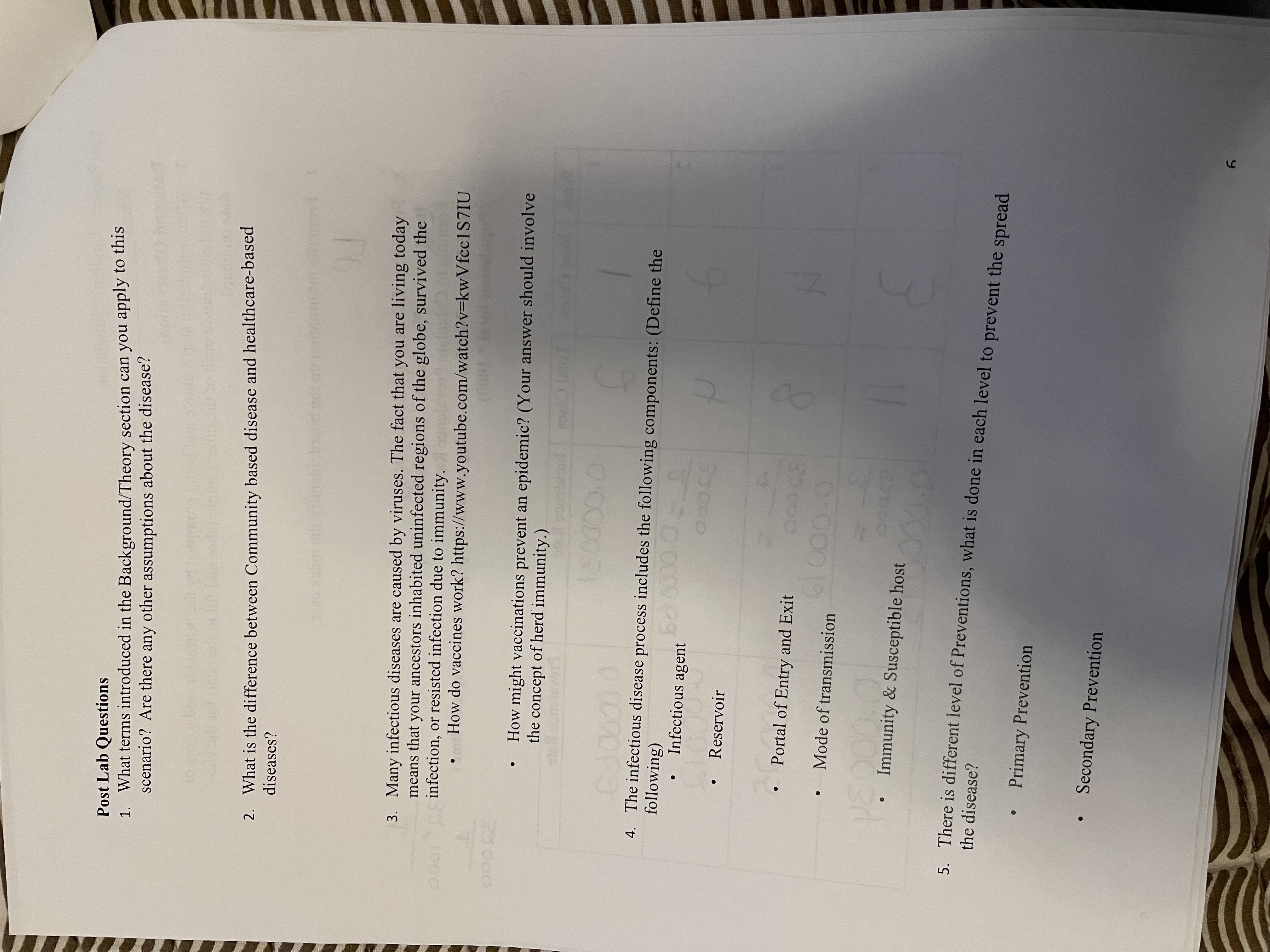
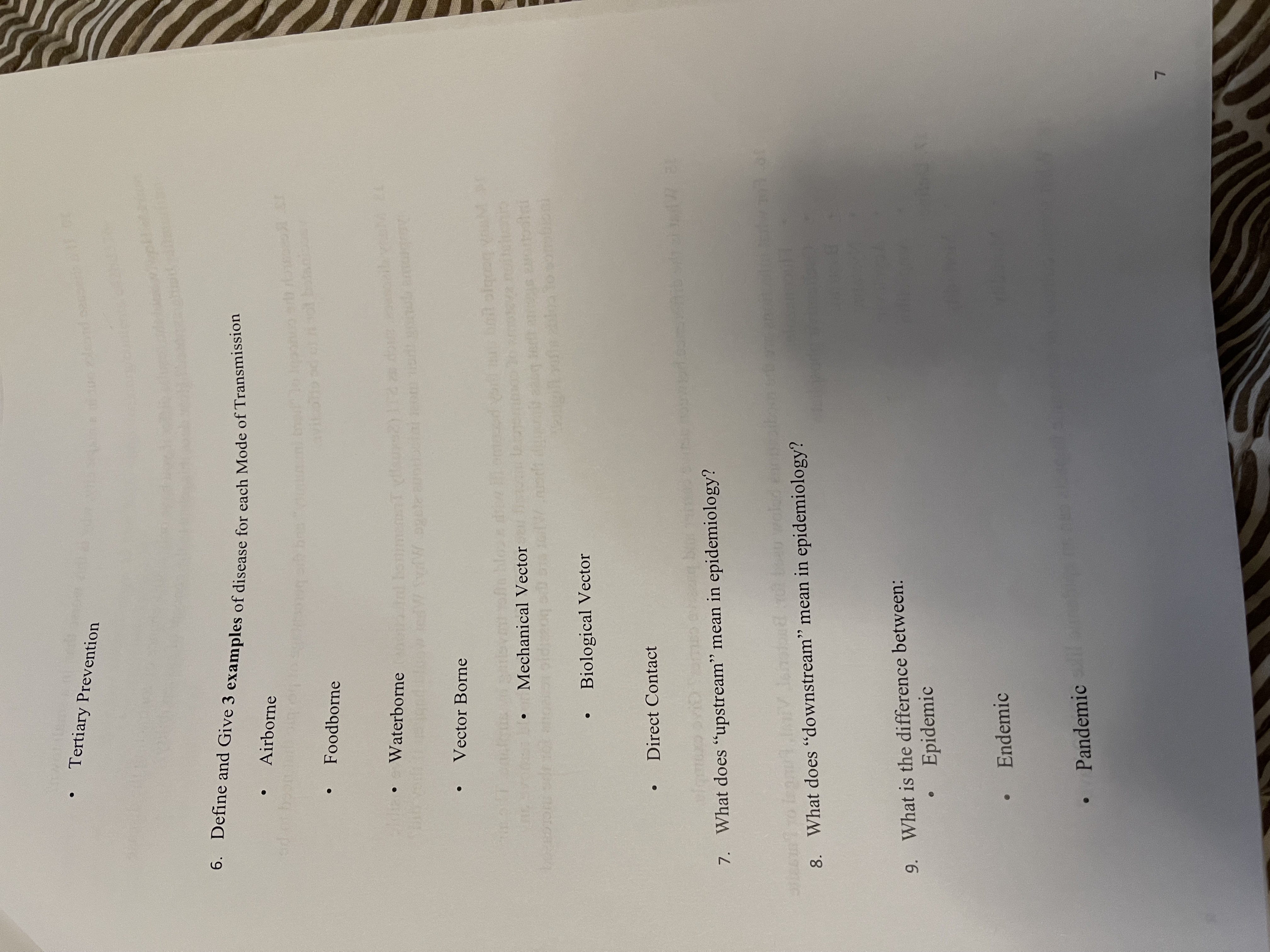
Lab Report: Epidemic Simulation Name Data and Observations 1. After completing step 8 above and being prompted by the instructor, add a drop of phenolphthalein to each of the other sample tubes and fill in the chart for the class data on board. 2. From the information on the board, identify the index case. LP 3. Formula to Calculate Incidence Rate 32 1 Incidence = (New Cases) / (Population * 1000) Formula to Calculate Prevalence Rate 32 1000 Prevalence = Number of existing cases in the population at a specific time / 1 (Population total * 1000) 32000 Week New Cases Total Cases Incidence Rate Prevalence Rate 1 2 . 0.000031 0.00 0 0 62 2 2 = 0.0000 62 4 32000 0.000.12 3 4 4 8 32000 0.00025 0.00 0 12 4 11 3 2 32000 0. 00034 0. 00 0 0 93 bronge orli inviting of tore 5Post Lab Questions 1. What terms introduced in the Background/Theory section can you apply to this scenario? Are there any other assumptions about the disease? 2. What is the difference between Community based disease and healthcare-based diseases? 3. Many infectious diseases are caused by viruses. The fact that you are living today means that your ancestors inhabited uninfected regions of the globe, survived the infection, or resisted infection due to immunity. .How do vaccines work? https://www.youtube.com/watch?v=kwVfcclS7IU How might vaccinations prevent an epidemic? (Your answer should involve the concept of herd immunity.) 180300.0 . The infectious disease process includes the following components: (Define the following) Infectious agent ed 6030.0 Reservoir . Portal of Entry and Exit OCICE . Mode of transmission 61 000.0 Immunity & Susceptible host the disease? 5. There is different level of Preventions, what is done in each level to prevent the spread Primary Prevention Secondary Prevention 6Tertiary Prevention 6. Define and Give 3 examples of disease for each Mode of Transmission Airborne Foodborne Waterborne Vector Borne Mechanical Vector Biological Vector . Direct Contact 7. What does "upstream" mean in epidemiology? 8. What does "downstream" mean in epidemiology? 9. What is the difference between: Epidemic . Endemic . Pandemic 710. If a disease breaks out in a major city, why is this worse than in a small town? 11. How would the results differ if you have only a 30% chance of contracting the disease after being exposed? How does this relate to the concept of susceptibility? 12. Research the concept of "herd immunity" and the percentage of people that need to be vaccinated for it to be effective. 13. Many diseases, such as STI (Sexually Transmitted Infections), may not have visible symptoms during their most infectious stage. Why? What would happen if they did? 14. Many people find that they become ill with a cold after traveling by airplane. The air circulation systems of commercial aircraft use HEPA filters that should remove any infectious agents that pass through them. What are the possible reasons for the increased incidence of colds after flights? 15. What is the difference between active carrier and passive carrier? Give example. 16. For what infections are the medications below used for: Bacterial, Viral, Fungal or Parasite Fluconazole: Oseltamivir phosphate Bactrim: . Nystatin: Acyclovir: Ampicillin 17. Define: Morbidity . Mortality 18. What social, cultural, or economic impacts can an epidemic like COVID have? 8
Step by Step Solution

There are 3 Steps involved in it

1 Expert Approved Answer
Step: 1 Unlock blur-text-image
Question Has Been Solved by an Expert!

Get step-by-step solutions from verified subject matter experts

Step: 2 Unlock
Step: 3 Unlock

Students Have Also Explored These Related Mathematics Questions!