







Question: ------------------------------------------------------------------------------------------------------------------------------------------------------------------------------------------------------------------------------------------------- LabProgram.java import java.util.Scanner; public class LabProgram { public static int fibonacci(int n) { /* Type your code here. */ } public static void main(String[]
-------------------------------------------------------------------------------------------------------------------------------------------------------------------------------------------------------------------------------------------------
LabProgram.java
import java.util.Scanner;
public class LabProgram { public static int fibonacci(int n) { /* Type your code here. */ } public static void main(String[] args) { Scanner scnr = new Scanner(System.in); int startNum; startNum = scnr.nextInt(); System.out.println("fibonacci(" + startNum + ") is " + fibonacci(startNum)); } } -------------------------------------------------------------------------------------------------------------------------------------------------------------------------------------------------------------------------------------------------
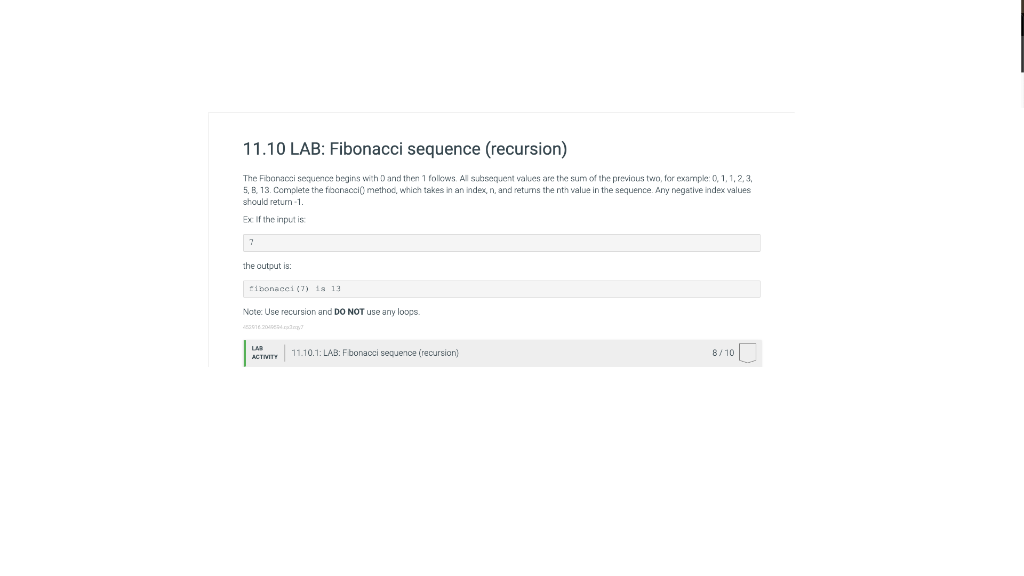
11.10 LAB: Fibonacci sequence (recursion) The Fibonacei sequence begins with D and then 1 follows. All subsequent values are the sum of the previous two, for example: 0,1,1,2,3, 5, B. 13. Complete the fisonacciC method, which takes in an index, n, and retums the nt value in the sequence. Any negative index values should return-1. Ex If the input is 7 the output is: thonacei(7)1s13 Note: Use recursion and DO NOT use any loops. 11.10.1: LAB: F bonacci sequence (recursion) 8/10
Step by Step Solution
There are 3 Steps involved in it

Get step-by-step solutions from verified subject matter experts
 Study Help