



Question: Last one is the question.... please ans as soon as possible Case Study #3 - The $2.5 Billion Cross-Border Expansion Mistake Read the case study
Last one is the question.... please ans as soon as possible
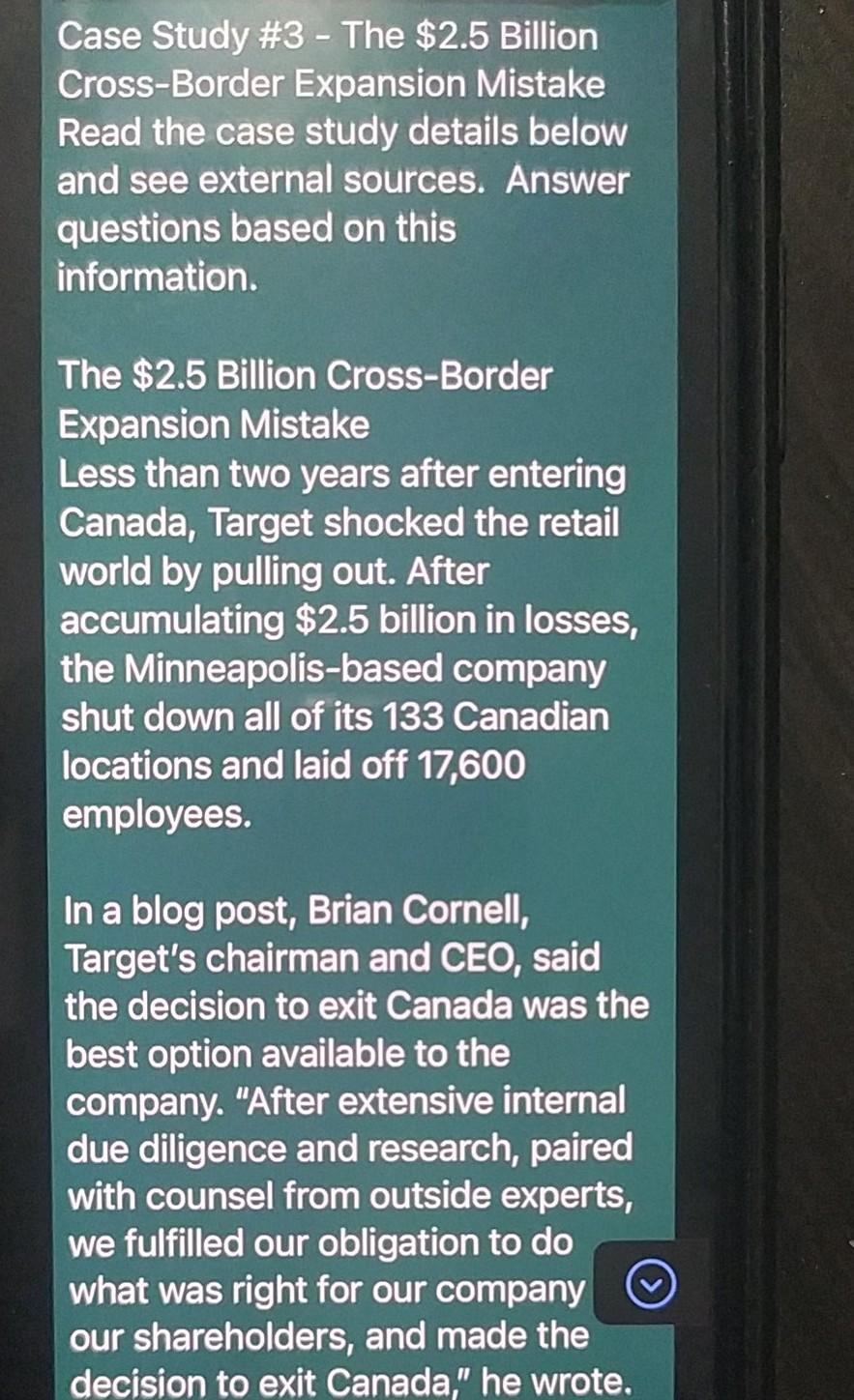
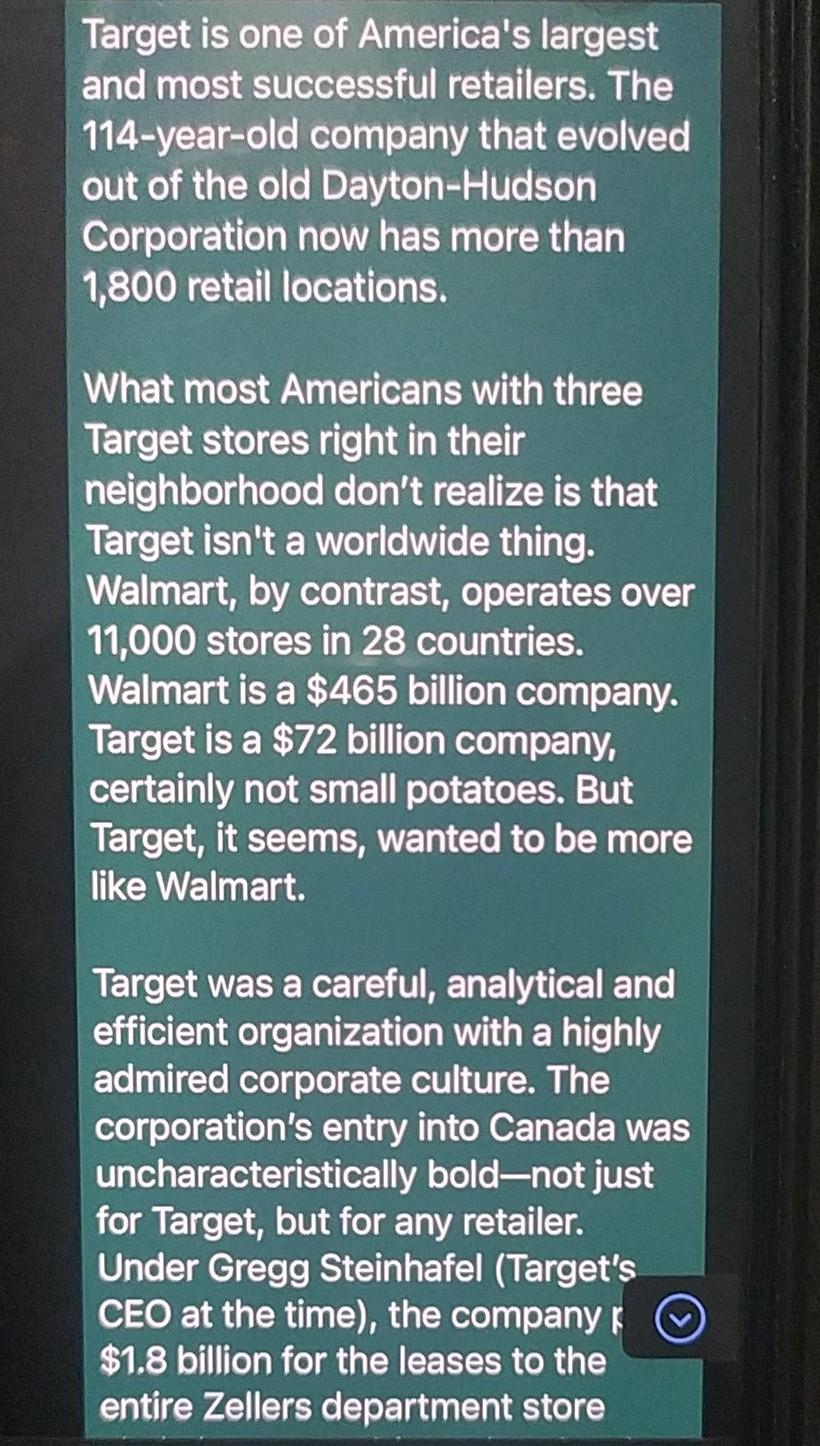
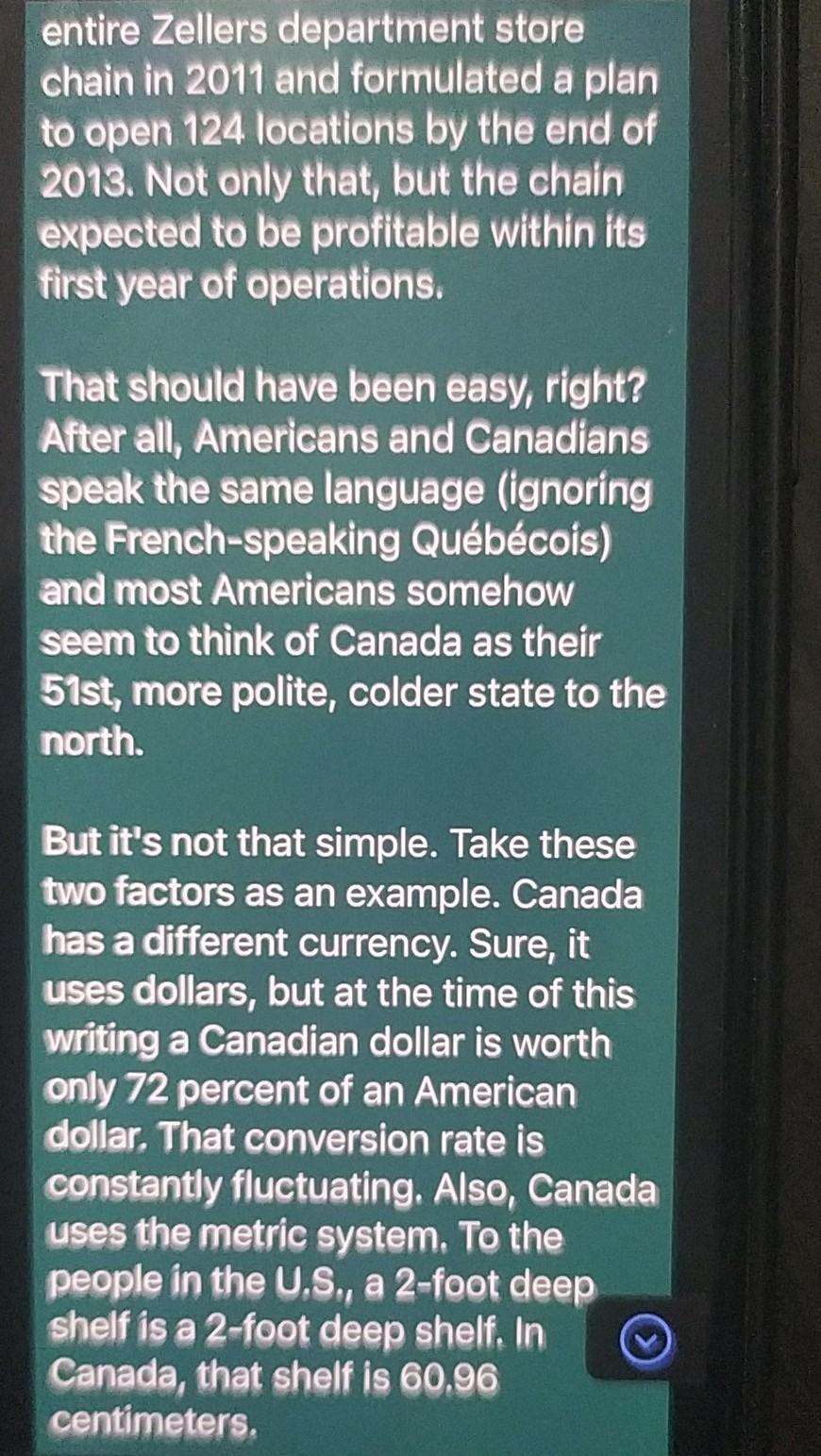
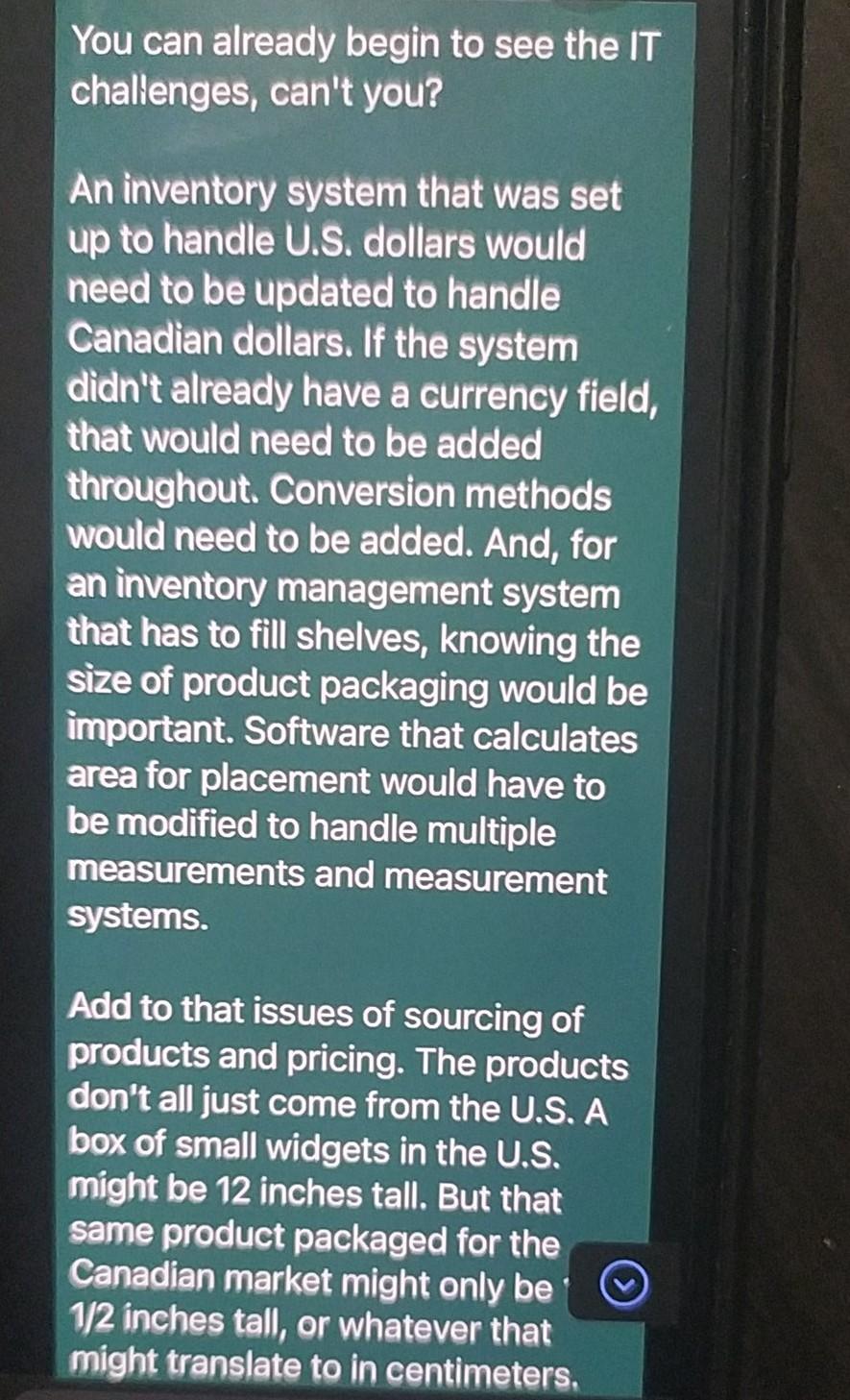
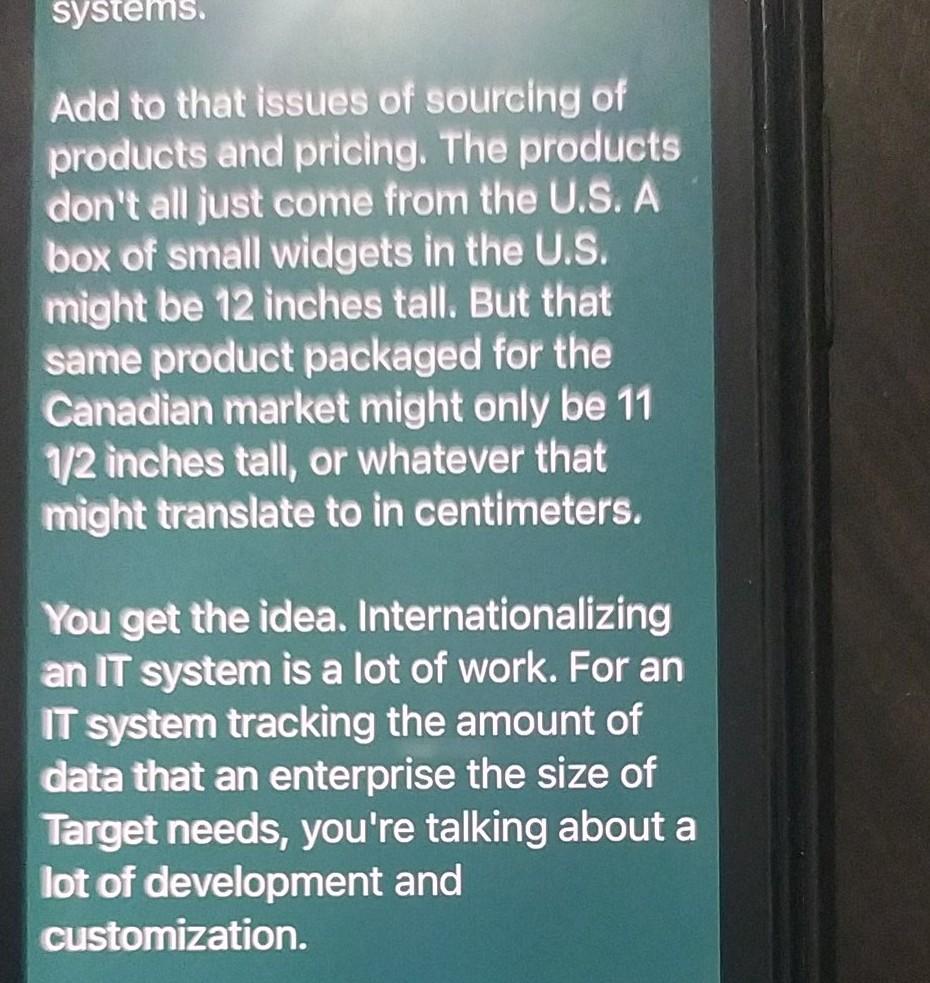
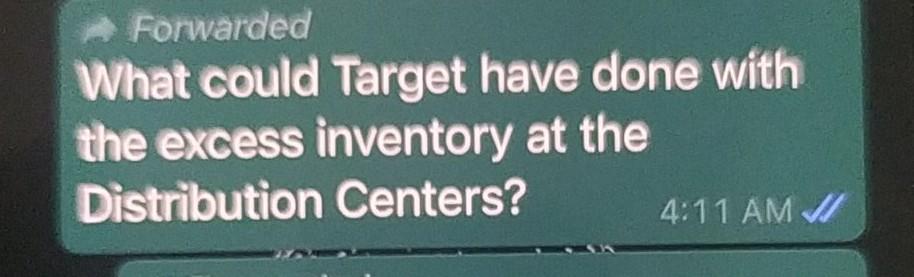
Case Study #3 - The $2.5 Billion Cross-Border Expansion Mistake Read the case study details below and see external sources. Answer questions based on this information. The $2.5 Billion Cross-Border Expansion Mistake Less than two years after entering Canada, Target shocked the retail world by pulling out. After accumulating $2.5 billion in losses, the Minneapolis-based company shut down all of its 133 Canadian locations and laid off 17,600 employees. In a blog post, Brian Cornell, Target's chairman and CEO, said the decision to exit Canada was the best option available to the company. "After extensive internal due diligence and research, paired with counsel from outside experts, we fulfilled our obligation to do what was right for our company our shareholders, and made the decision to exit Canada," he wrote. Target is one of America's largest and most successful retailers. The 114-year-old company that evolved out of the old Dayton-Hudson Corporation now has more than 1,800 retail locations. What most Americans with three Target stores right in their neighborhood don't realize is that Target isn't a worldwide thing. Walmart, by contrast, operates over 11,000 stores in 28 countries. Walmart is a $465 billion company. Target is a $72 billion company, certainly not small potatoes. But Target, it seems, wanted to be more like Walmart. Target was a careful, analytical and efficient organization with a highly admired corporate culture. The corporation's entry into Canada was uncharacteristically bold-not just for Target, but for any retailer. Under Gregg Steinhafel (Target's CEO at the time), the company $1.8 billion for the leases to the entire Zellers department store entire Zellers department store chain in 2011 and formulated a plan to open 124 locations by the end of 2013. Not only that, but the chain expected to be profitable within its first year of operations. That should have been easy, right? After all, Americans and Canadians speak the same language (ignoring the French-speaking Qubcois) and most Americans somehow seem to think of Canada as their 51st, more polite, colder state to the north. But it's not that simple. Take these two factors as an example. Canada has a different currency. Sure, it uses dollars, but at the time of this writing a Canadian dollar is worth only 72 percent of an American dollar. That conversion rate is constantly fluctuating. Also, Canada uses the metric system. To the people in the U.S., a 2-foot deep shelf is a 2-foot deep shelf. In Canada, that shelf is 60,96 centimeters. You can already begin to see the IT challenges, can't you? An inventory system that was set up to handle U.S. dollars would need to be updated to handle Canadian dollars. If the system didn't already have a currency field, that would need to be added throughout. Conversion methods would need to be added. And, for an inventory management system that has to fill shelves, knowing the size of product packaging would be important. Software that calculates area for placement would have to be modified to handle multiple measurements and measurement systems. Add to that issues of sourcing of products and pricing. The products don't all just come from the U.S. A box of small widgets in the U.S. might be 12 inches tall. But that same product packaged for the Canadian market might only be 1/2 inches tall, or whatever that might translate to in centimeters, systems. Add to that issues of sourcing of products and pricing. The products don't all just come from the U.S. A box of small widgets in the U.S. might be 12 inches tall. But that same product packaged for the Canadian market might only be 11 1/2 inches tall, or whatever that might translate to in centimeters. You get the idea. Internationalizing an IT system is a lot of work. For an IT system tracking the amount of data that an enterprise the size of Target needs, you're talking about a lot of development and customization. Forwarded What could Target have done with the excess inventory at the Distribution Centers? 4:11 AM /Step by Step Solution
There are 3 Steps involved in it
1 Expert Approved Answer
Step: 1 Unlock

Question Has Been Solved by an Expert!
Get step-by-step solutions from verified subject matter experts
Step: 2 Unlock
Step: 3 Unlock