







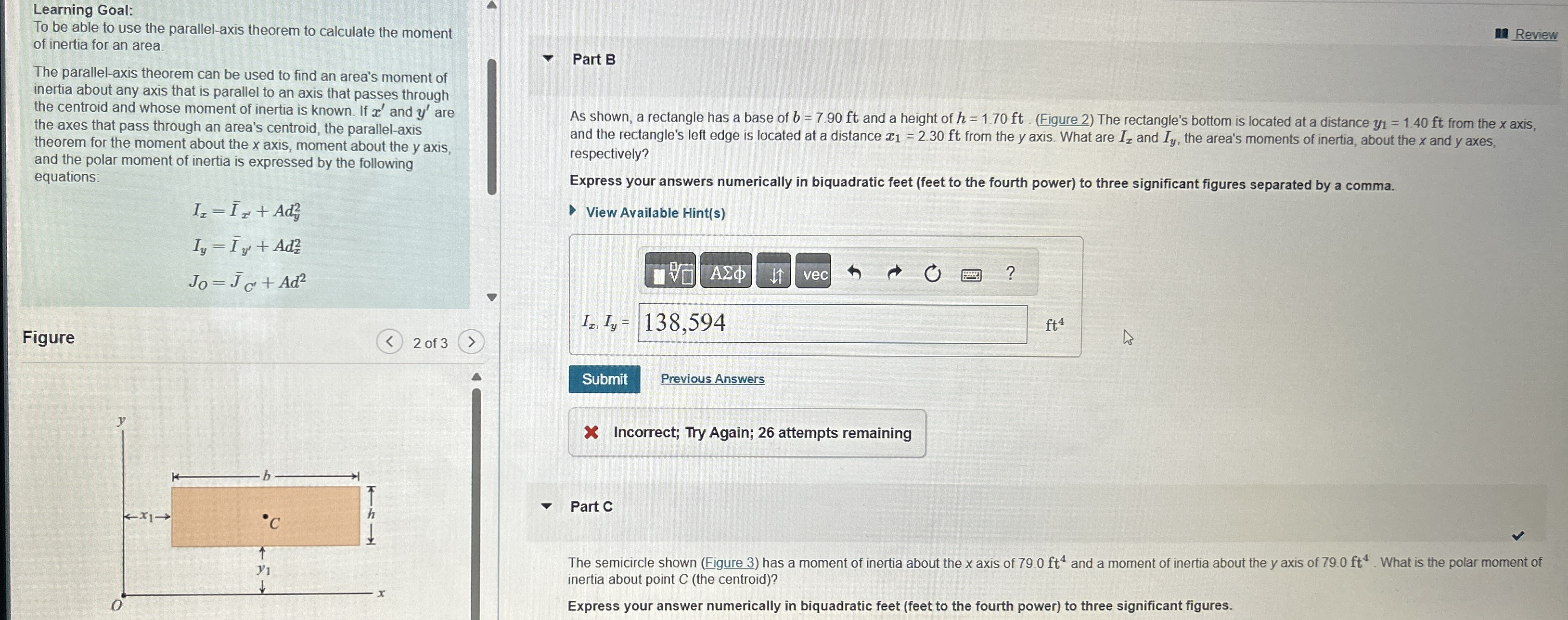
Question: Learning Goal: To be able to use the parallel - axis theorem to calculate the moment of inertia for an area. The parallel - axis
Learning Goal:
To be able to use the parallelaxis theorem to calculate the moment of inertia for an area.
The parallelaxis theorem can be used to find an area's moment of inertia about any axis that is parallel to an axis that passes through the centroid and whose moment of inertia is known. If and are the axes that pass through an area's centroid, the parallelaxis theorem for the moment about the axis, moment about the axis, and the polar moment of inertia is expressed by the following equations:
Figure
of
Step by Step Solution
There are 3 Steps involved in it
1 Expert Approved Answer
Step: 1 Unlock

Question Has Been Solved by an Expert!
Get step-by-step solutions from verified subject matter experts
Step: 2 Unlock
Step: 3 Unlock
 Study Help