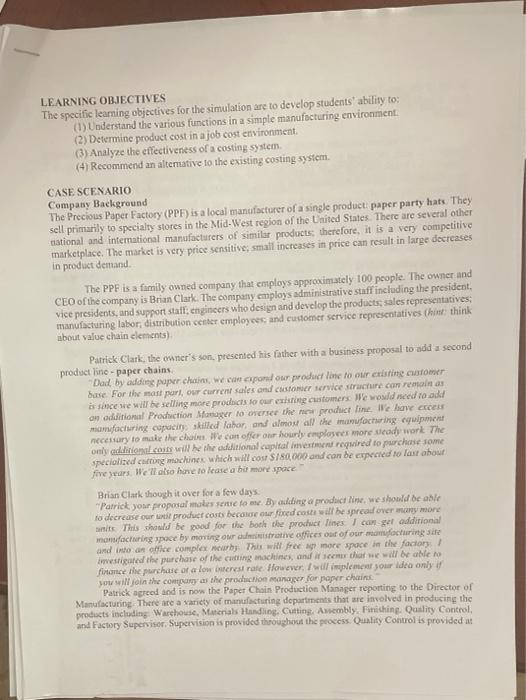
Question: LEARNING OBJECTIVES The specific learning objectives for the simulation are to develop students' ability to: (1) Understand the various functions in a simple manufacturing environment.
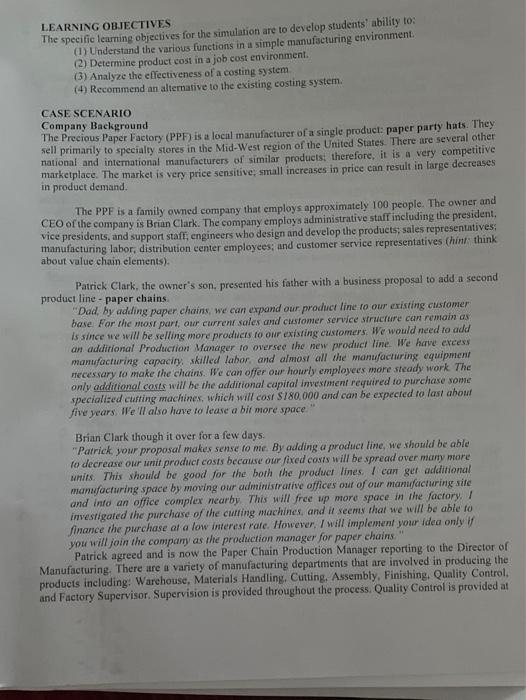
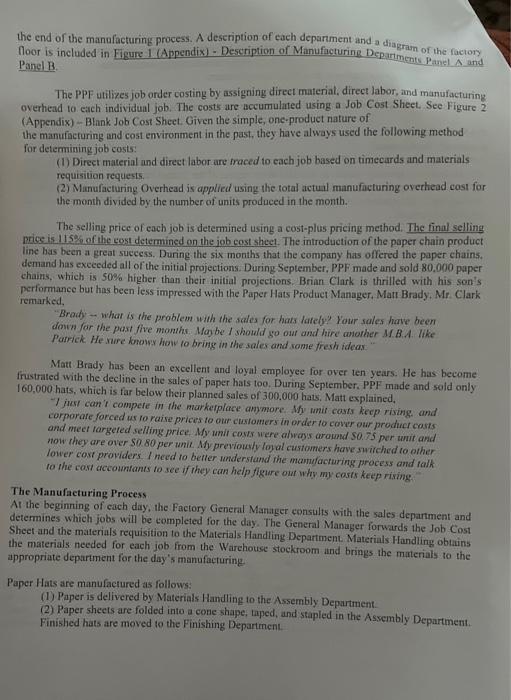
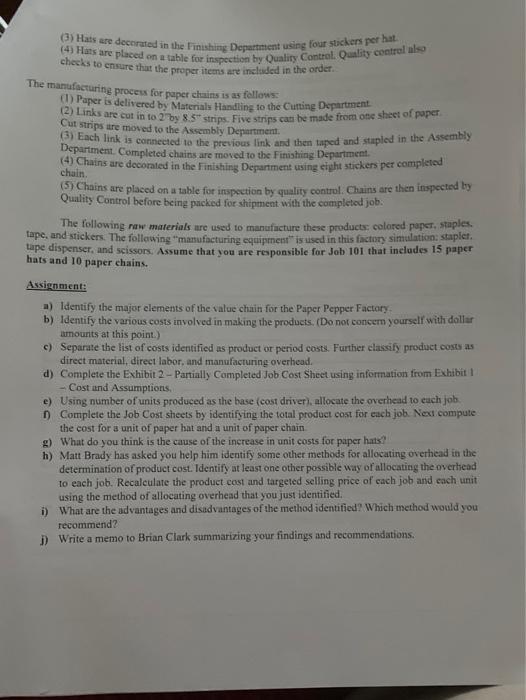
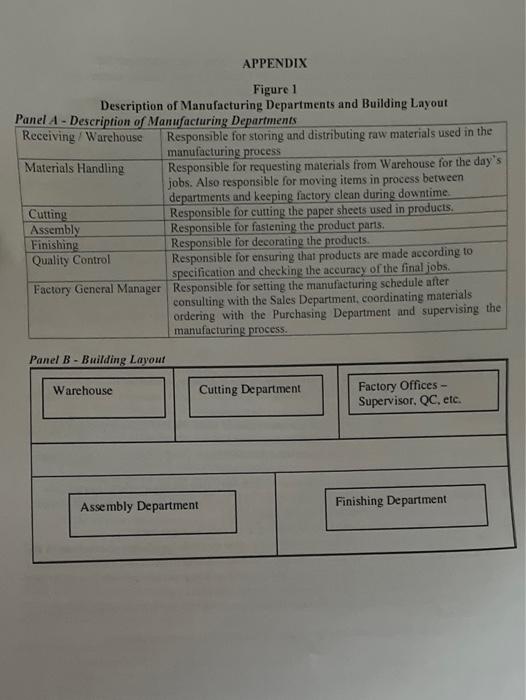
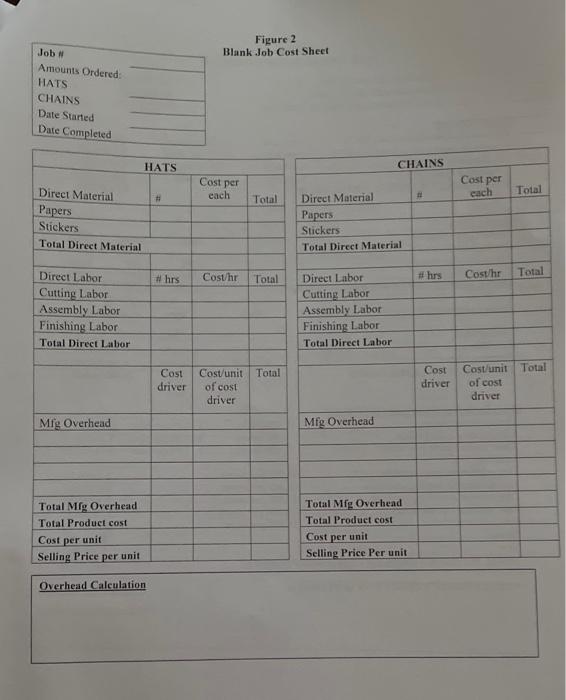
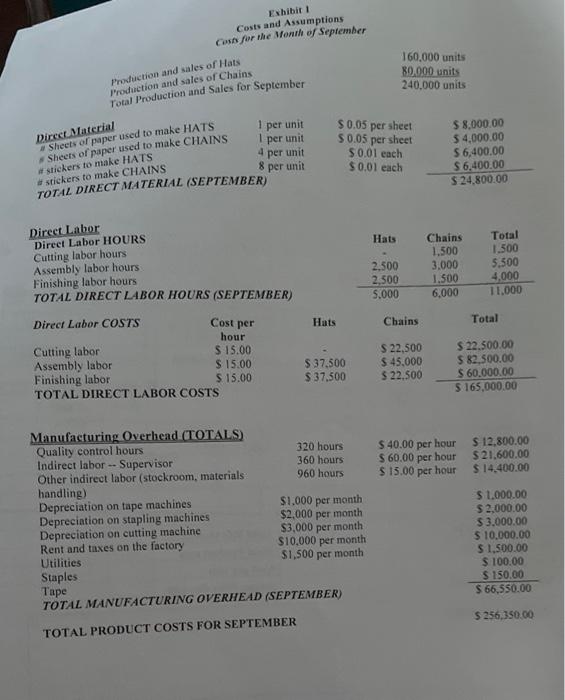
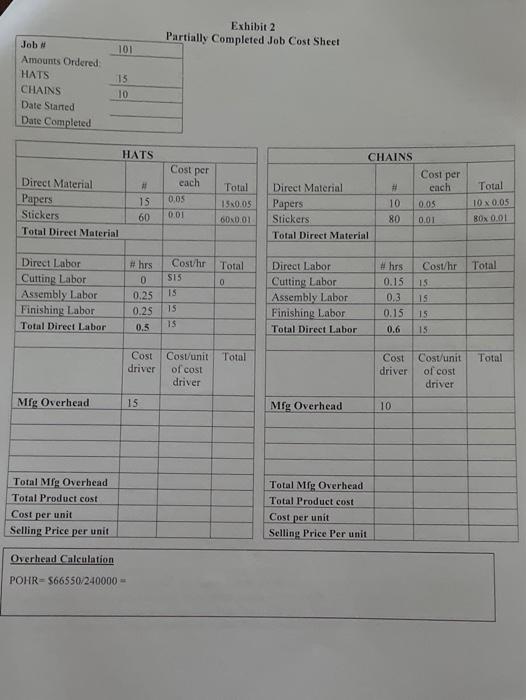
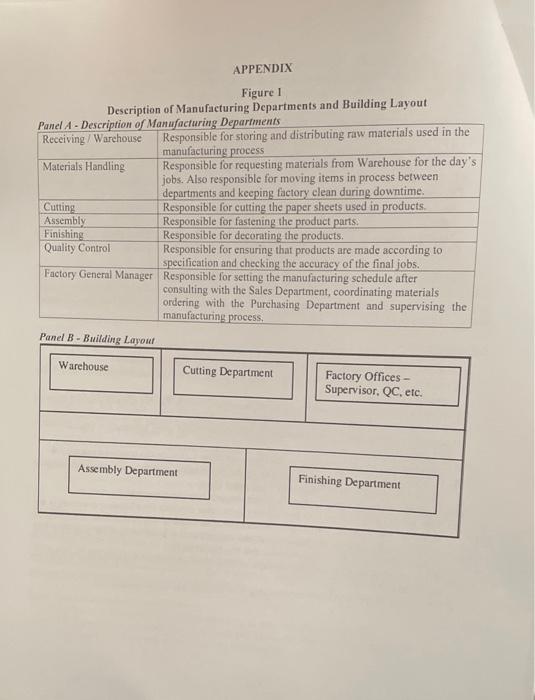
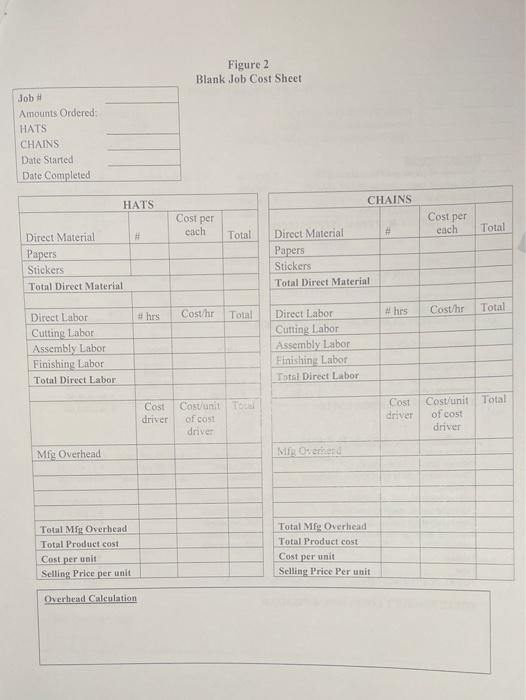
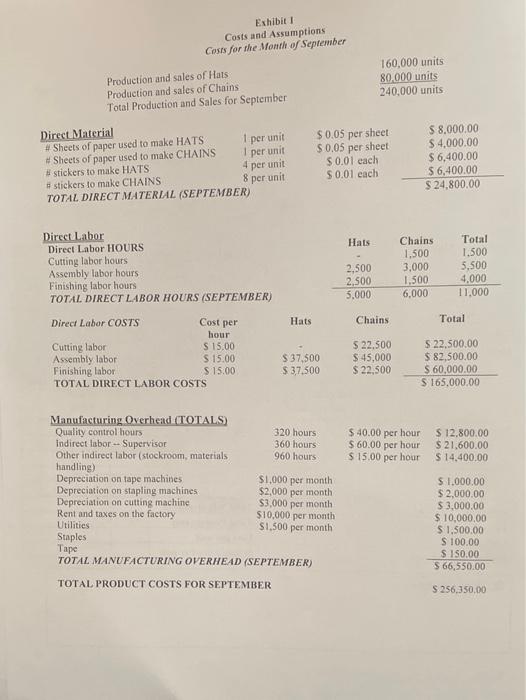
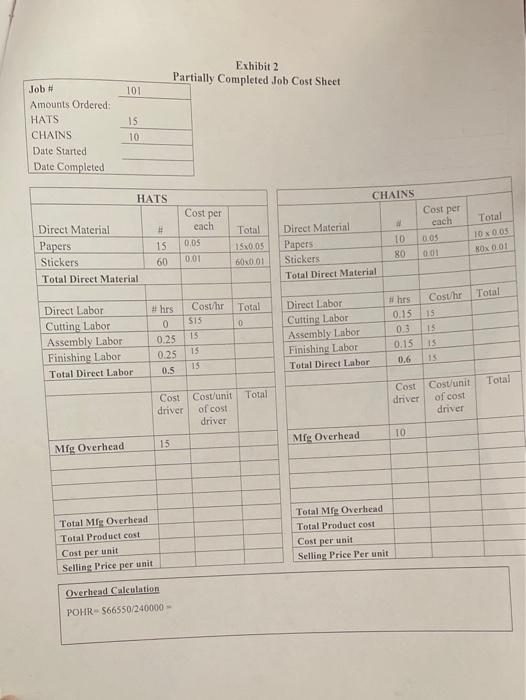
LEARNING OBJECTIVES The specific learning objectives for the simulation are to develop students' ability to: (1) Understand the various functions in a simple manufacturing environment. (2) Determine product cost in a job cost environment. (3) Analyze the effectiveness of a costing system (4) Recommend an alternative to the existing costing system. CASE SCENARIO Company Background The Precious Paper Factory (PPF) is a local manufacturer of a single product: paper party hats. They sell primarily to specialty stores in the Mid-West region of the United States. There are several other national and international manufacturers of similar products, therefore, it is a very competitive marketplace. The market is very price sensitive small increases in price can result in large decreases in product demand. The PPF is a family owned company that employs approximately 100 people. The owner and CEO of the company is Brian Clark. The company employs administrative staffincluding the president, vice presidents, and support staff, engineers who design and develop the products, sales representatives manufacturing labor, distribution center employees, and customer service representatives Chint think about value chain elements) Patrick Clark, the owner's son, presented his father with a business proposal to add a second product line-paper chains "Dad. by adding paper chains, we can expand our product line to our existing customer base. For the most part, our current sales and customer service structure can remain as is since we will be selling more products to our existing customers. We would need to add an additional Production Manager to oversee the new product line. We have excess manufacturing capacity skilled labor and almost all the manufacturing equipment necessary to make the chains. We can offer our hourly employees more steady work The only additional costs will be the additional capital investment required to purchase some specialized cutting machines, which will cost $180,000 and can be expected to last about five years. We'll also have to leave a bit more space Brian ark though it over for a few days. "Patrick your proposal makes sense to me. By adding a product line, we should be able to decrease our unit product costs because our fixed costs will be spread over many more units. This should be good for the both the product lines. I can get additional manufacturing space by moving our administrative offices out of our manufacturing site and into an office complex nearby. This will free up more space in the factory. I investigated the purchase of the cutting machines, and it seems that we will be able to finance the purchase at a low interest rate. However, I will implement your idea only w you will join the company as the production manager for paper chains Patrick agreed and is now the Paper Chain Production Manager reporting to the Director of Manufacturing. There are a variety of manufacturing departments that are involved in producing the products including: Warehouse, Materials Handling, Cutting. Assembly. Finishing. Quality Control and Factory Supervisor. Supervision is provided throughout the process. Quality Control is provided at the end of the manufacturing process. A description of each department and a diagram of the factory floor is included in Figure 1 (Appendix) - Description of Manufacturing Departments Pithe action Panel B The PPF utilizes job order costing by assigning direct material direct labor, and manufacturing overhead to each individual job. The costs are accumulated using a Job Cost Sheet See Figure 2 (Appendix) - Blank Job Cost Sheet. Given the simple, one product nature of the manufacturing and cost environment in the past, they have always used the following method for determining job costs: (1) Direct material and direct labor are traced to each job based on timecards and materials requisition requests 2) Manufacturing Overhead is applied using the total actual manufacturing overhead cost for the month divided by the number of units produced in the month. The selling price of each job is determined using a cost-plus pricing method. The final selling price is 15% of the cost determined on the job cost sheel. The introduction of the paper chain product line has been a great success. During the six months that the company has offered the paper chains. demand has exceeded all of the initial projections. During September, PPF made and sold 80.000 paper chains, which is 50% higher than their initial projections. Brian Clark is thrilled with his son's performance but has been less impressed with the Paper Hats Product Manager. Matt Brady, Mr. Clark remarked, Brody -- what is the problem with the sales for hats lately? Your sales have been down for the past five months. Maybe I should go out and hire another M.B.A. like Patrick He sure know how to bring in the sales and some fresh ideas Matt Brady has been an excellent and loyal employee for over ten years. He has become frustrated with the decline in the sales of paper hats too. During September. PPF made and sold only 160,000 hats, which is far below their planned sales of 300,000 hats. Matt explained. 7 just can't compete in the marketplace anymore. My unit costs keep rising and corporate forced us to raise prices to our customers in order to cower our product costs and meet targeted selling price. My unit costs were always around 80.75 per unit and how they are over 50 80 per unit. My previously loyal customers have switched to other lower cost providers I need to better understand the manufacturing process and talk to the cost accountants to see if they can help figure out why my costs keep Fixing, The Manufaeturing Process At the beginning of each day, the Factory General Manager consults with the sales department and determines which jobs will be completed for the day. The General Manager forwards the Job Cost Sheet and the materials requisition to the Material Handling Department. Materials Handling obtains the materials needed for each job from the Warehouse stockroom and brings the materials to the appropriate department for the day's manufacturing Paper Hats are manufactured as follows: (1) Paper is delivered by Material Handling to the Assembly Department (2) Paper sheets are folded into a cone shape, taped, and stapled in the Assembly Department Finished hats are moved to the Finishing Department (4) Hans are placed on a table for inspection by Quality Control Quality control also (3) Hats are decorated in the Finishing Department using four stickers per hat checks to ensure that the proper items are included in the order The manufacturing process for paper chains is as follows Paper is delivered by Material Handling to the Cutting Department 2) Links are cut in to 2 by 8.5 strips. Five strips can be made from one sheet of paper Be Each link is connected to the previous link and then taped and stapled in the Assembly (4) Chains are decorated in the finishing Department using eight stickers per completed 5) Chains are placed on a table for inspection by quality control. Chains are then inspected by Quality Control before being packed for shipment with the completed job. The following raw materials are used to manufacture these products colored paper, staples. Lape, and stickers. The following "manufacturing equipment is used in this factory simulation: stapler tape dispenser, and scissors. Assume that you are responsible for Job 101 that includes 15 paper hats and 10 paper chains. Assignment: a) Identify the major elements of the value chain for the Paper Pepper Factory b) Identify the various costs involved in making the products. (Do not concem yourself with dollar amounts at this point) c) Separate the list of costs identified as product or period costs. Further classify product costs as direct material, direct labor, and manufacturing overhead. d) Complete the Exhibit 2 - Partially completed Job Cost Sheet using information from Exhibit! - Cost and Assumptions, e) Using number of units produced as the base (cost driver), allocate the overhead to euch job 1 Complete the Job Cost sheets by identifying the total product cost for each job. Next compute the cost for a unit of paper hat and a unit of paper chain g) What do you think is the cause of the increase in unit costs for paper hats? h) Matt Brady has asked you help him identify some other methods for allocating overhead in the determination of product cost. Identify at least one other possible way of allocating the overhead to each job. Recalculate the product cost and targeted selling price of cach job and each unit using the method of allocating overhead that you just identified. i) What are the advantages and disadvantages of the method identified? Which method would you recommend D) Write a memo to Brian Clark summarizing your findings and recommendations APPENDIX Figure 1 Description of Manufacturing Departments and Building Layout Panel A - Description of Manufacturing Departments Receiving / Warehouse Responsible for storing and distributing raw materials used in the manufacturing process Materials Handling Responsible for requesting materials from Warehouse for the day's jobs. Also responsible for moving items in process between departments and keeping factory clean during downtime. Cutting Responsible for cutting the paper sheets used in products, Assembly Responsible for fastening the product paris, Finishing Responsible for decorating the products Quality Control Responsible for ensuring that products are made according to specification and checking the accuracy of the final jobs. Factory General Manager Responsible for setting the manufacturing schedule after consulting with the Sales Department, coordinating materials ordering with the Purchasing Department and supervising the manufacturing process. Panel B - Building Layout Warehouse Cutting Department Factory Offices - Supervisor. QC, etc. Assembly Department Finishing Department Figure 2 Blank Job Cost Sheet Job Amounts Ordered HATS CHAINS Date Started Date Completed HATS CHAINS Cost per Cost per each Total # cach Total Direct Material Papers Stickers Total Direct Material Direct Material Papers Stickers Total Direct Material Costhr #hrs Total Total #hrs Cost/hr Direct Labor Cutting Labor Assembly Labor Finishing Labor Total Direct Labor Direct Labor Cutting Labor Assembly Labor Finishing Labor Total Direct Labor Total Cost/unit Total Cost driver Cost driver of cost Cost/unit of cost driver driver Mig Overhead Mfg Overhead Total Mlg Overhead Total Product cost Cost per unit Selling Price per unit Total Mig Overhead Total Product cost Cost per unit Selling Price Per unit Overhead Calculation Exhibit Costs and Assumptions Cosa for the Month of September 160,000 units 80.000 units 240,000 units Production and sales of Hats Production and sales of Chains Total Production and Sales for September Direct Material Sheets of paper used to make HATS Sheets of paper used to make CHAINS #stickers to make HATS #stickers to make CHAINS 1 per unit I per unit 4 per unit 8 TOTAL DIRECT MATERIAL (SEPTEMBER) $ 0.05 per sheet $ 0.05 per sheet $ 0.01 each $ 0.01 each $ 8,000.00 $ 4.000.00 $ 6,400.00 $ 6,400.00 $ 24,800.00 per unit Hats Direct Labor Direct Labor HOURS Cutting labor hours Assembly labor hours Finishing labor hours 2.500 2.500 5.000 Chains 1,500 3.000 1.500 6,000 Total 1.500 5.500 4,000 11.000 TOTAL DIRECT LABOR HOURS (SEPTEMBER Cost per Hats Chains Total Direct Labor COSTS hour Cutting labor S 15.00 Assembly labor $ 15.00 Finishing labor S 15.00 TOTAL DIRECT LABOR COSTS $37.500 $ 37,500 S 22,500 $ 45,000 $22.500 $ 22,500.00 $ 82,500.00 $ 60,000.00 $ 165,000.00 $ 40.00 per hour $12,800.00 $ 60,00 per hour $21.600.00 $ 15.00 per hour $ 14,400.00 Manufacturing Overhead (TOTALS) Quality control hours 320 hours Indirect labor -- Supervisor 360 hours Other indirect labor (stockroom, materials 960 hours handling) Depreciation on tape machines $1.000 per month Depreciation on stapling machines $2,000 per month Depreciation on cutting machine $3,000 per month Rent and taxes on the factory $10,000 per month Utilities $1,500 per month Staples TOTAL MANUFACTURING OVERHEAD (SEPTEMBER) $ 1.000.00 $ 2.000.00 $ 3.000.00 $ 10,000.00 $ 1.500.00 $ 100.00 $ 150.00 $ 66,550.00 $ 256,350.00 TOTAL PRODUCT COSTS FOR SEPTEMBER Exhibit 2 Partially Completed Job Cost Sheet 101 Job Amounts Ordered HATS CHAINS Date Started Date Completed 13 10 HATS CHAINS Cost per Cost per Direct Material Papers Stickers Total Direct Material # 15 60 each 0,05 0.01 Total 1510.05 600.01 Direct Material Papers Stickers Total Direct Material # 10 80 cach 0.05 0.01 Total 10 x 0.05 80x 0.01 Total Total Direct Labor Cutting Labor Assembly Labor Finishing Labor Total Direct Labor 0 #hrs 0 0.25 0.25 0.5 Cost/hr SIS 15 Direct Labor Cutting Labor Assembly Labor Finishing Labor Total Direct Labor #hrs 0.15 0.3 0.15 0.6 Cost/hr 15 15 15 15 IS 15 Total Cost driver Total Cost/unit of cost driver Cost Cost/unit driver of cost driver Mfg Overhead 15 Mfg Overhead 10 Total Mig Overhead Total Product cost Cost per unit Selling Price per unit Total Mig Overhead Total Product cost Cost per unit Selling Price Per unit Overhead Calculation POHR-S66550/240000 LEARNING OBJECTIVES The specific learning objectives for the simulation are to develop students' ability to (1) Understand the various functions in a simple manufacturing environment (2) Determine product cost in a job cost environment. (3) Analyze the effectiveness of a costing system (4) Recommend an alternative to the existing costing system CASE SCENARIO Company Background The Precious Paper Factory (PPF) is a local manufacturer of a single product paper party hats. They sell primarily to specialty stores in the Mid-West region of the United States. There are several other tational and international manufacturers of similar products therefore, it is a very competitive marketplace. The market is very price sensitive, small increases in price can result in large decreases in product demand The PPF is a family owned company that employs approximately 100 people. The owner and CEO of the company is Brian Clark. The company employs administrative staff including the president, vice presidents, and support staff, engineers who design and develop the products, sales representatives manufacturing labor, distribution center employees and customer service representatives Cho think about value chain clements) Patrick Clark, the owner's son, presented his father with a business proposal to add a second product line-paper chains Dad, by adding paper chains, we can expand our product line to our existing customer base. For the most parl, our current sales and customer service structure can remains is since we will be selling more products to our exhiring customers. We would need to add on additional Production Manager to ease the new product line. We have to omfacturing capacity skilled labor and almost all the manufacturing ngent necessary to make the chalecon offer our hourly emplasee more ready work. The only additional costs will be the additional capital imest required to purchase some specialized cottong machine which will cost $180,000 and can be expected to last about five years. We'll also have to leave a bit more space Brian Clark though it over for a few days "Patrick your proposal makes sense to me. By auding a product we should be able to decrease our unit prochet costs become our feed costs will be spread over many more uit This should be good for the both the product lines can get additional manufacturing space by moving our strative offices out of our comfocuing site and into an office complex mari The will free more space in the factors investigated the purchase of the cutting machines, and it comes that we will be able to finance the purchase or a low terest rate However, I will implement your idea only if you will join the company as the production manager for paper chain Patrick agreed and is now the Papet Chain Production Manager reporting to the Director of Manufacturing. There are a variety of manufacturing departments that are involved in producing the products including Warehouse Material Handling. Cutting. Assembly Finishing, Oaxlity Control, and Factory Supervisor Supervision is provided throughout the process. Quality Control is provided at the end of the manufacturing process. A description of cach department and a diagram of the factory floor is included in Figure 1 (Appendix) - Description of Manufacturing Departments Panel A and Pane B The PPF utilizes job order costing by assigning direct material, direct labor, and manufacturing overhead to each individual job. The costs are accumulated using a Job Cost Sheet. See Figure 2 (Appendix) Blank Job Cost Sheet. Given the simple, one-product nature of the manufacturing and cost environment in the past, they have always used the following method for determining job costs: (1) Direct material and direct labor are traced to each job based on timecards and materials requisition requests (2) Manufacturing Overhead is applied using the total actual manufacturing overhead cost for the month divided by the number of units produced in the month. The selling price of each job is determined using a cost-plus pricing method. The first selling price is 115% of the cost determined on the job cost sheet. The introduction of the paper chair groduct line has been a great success. During the six months that the company has offered the paper chains, demand has exceeded all of the initial projections. During September, PPF made and sold 80.000 paper chains, which is 50% higher than their initial projections. Brian Clark is thrilled with his son's performance but has been less impressed with the Paper Hats Product Manager, Matt Brady Mr. Clark remarked, Brady -- what is the problem with the sales for hars lately? Your sales have been down for the past five months. Maybe I should go out and fire another M.B.A like Patrick He sure knows how to bring in the sales and some fresh ideas." Matt Brady has been an excellent and loyal employee for over ten years. He has become frustrated with the decline in the sales of paper hats too. During September. PPF made and sold only 160,000 hats, which is far below their planned sales of 300,000 hats. Matt explained I just can't compete in the markerplace amore. My truit costs keep rising and corporate forced us to raise prices to our customers in order to cover our product costs and meet targeted selling price. My unit costs were always around 50 75 per unit and now they are over 50 80 per unit. My previously loyal customers have switched to other lower cost providers. I need to better understand the manufacturing process and talk to the cost accountants to see if they can help figure our why my costs krep rising." The Manufacturing Process At the beginning of each day, the Factory General Manager consults with the sales department and determines which jobs will be completed for the day. The General Manager forwards the Job Cost Sheet and the materials requisition to the Materials Handling Department. Materials Handling obtains the materials needed for each job from the Warehouse stockroom and brings the materials to the appropriate department for the day's manufacturing Paper Hats are manufactured as follows (1) Paper is delivered by Material Handling to the Assembly Department (2) Paper sheets are folded into a cone shape, taped, and stapled in the Assembly Department. Finished hats are moved to the Finishing Department (3) Hats are decorated in the Finishing Department using four stickers per hat (4) Hats are placed on a table for inspection by Quality Control. Quality control also checks to ensure that the proper items are included in the order. The manufacturing process for paper chains is as follows: (1) Paper is delivered by Materials Handling to the Cutting Department, (2) Links are cut into 2"by 8.5" strips. Five strips can be made from one sheet of paper. Cut strips are moved to the Assembly Department (3) Each link is connected to the previous link and then taped and stapled in the Assembly Department. Completed chains are moved to the Finishing Department (4) Chains are decorated in the Finishing Department using eight stickers per completed chain (5) Chains are placed on a table for inspection by quality control. Chains are then inspected by Quality Control before being packed for shipment with the completed job. The following raw materials are used to manufacture these products: colored paper, staples, tape, and stickers. The following "manufacturing equipment" is used in this factory simulation: stapler, tape dispenser, and scissors. Assume that you are responsible for Job 101 that includes 15 paper hats and 10 paper chains. Assignment: a) Identify the major elements of the value chain for the Paper Pepper Factory b) Identify the various costs involved in making the products. (Do not concern yourself with dollar amounts at this point.) c) Separate the list of costs identified as product or period costs. Further classify product costs as direct material, direct labor, and manufacturing overhead d) Complete the Exhibit 2 - Partially Completed Job Cost Sheet using information from Exhibit 1 Cost and Assumptions c) Using number of units produced as the base (cost driver), allocate the overhead to each job. 1) Complete the Job Cost sheets by identifying the total product cost for each job. Next compute the cost for a unit of paper hat and a unit of paper chain. g) What do you think is the cause of the increase in unit costs for paper hats? b) Matt Brady has asked you help him identify some other methods for allocating overhead in the determination of product cost. Identify at least one other possible way of allocating the overhead to each job. Recalculate the product cost and targeted selling price of each job and each unit using the method of allocating overhead that you just identified, 1) What are the advantages and disadvantages of the method identified? Which method would you recommend? 1) Write a memo to Brian Clark summarizing your findings and recommendations APPENDIX Figure 1 Description of Manufacturing Departments and Building Layout Panel A-Description of Manufacturing Departments Receiving / Warehouse Responsible for storing and distributing raw materials used in the manufacturing process Materials Handling Responsible for requesting materials from Warehouse for the day's jobs. Also responsible for moving items in process between departments and keeping factory clean during downtime. Cutting Responsible for cutting the paper sheets used in products. Assembly Responsible for fastening the product parts. Finishing Responsible for decorating the products, Quality Control Responsible for ensuring that products are made according to specification and checking the accuracy of the final jobs. Factory General Manager Responsible for setting the manufacturing schedule after consulting with the Sales Department, coordinating materials ordering with the Purchasing Department and supervising the manufacturing process Panel B - Building Layout Warehouse Cutting Department Factory Offices - Supervisor. QC, etc. Assembly Department Finishing Department Figure 2 Blank Job Cost Sheet Job # Amounts Ordered HATS CHAINS Date Started Date Completed HATS CHAINS Cost per Cost per each # Total Total each # Direct Material Papers Stickers Total Direct Material Direct Material Papers Stickers Total Direct Material Total Cost/hr #hrs #hrs Total Cost/hr Direct Labor Cutting Labor Assembly Labor Finishing Labor Total Direct Labor Direct Labor Cutting Labor Assembly Labor Finishing Labor Total Direct Labor Cost driver Costunit of cost driver Cost driver Costunit Total of cost driver Mfg Overhead MO Total Mfg Overhead Total Product cost Cost per unit Selling Price per unit Total Mfg Overhead Total Product cost Cost per unit Selling Price Per unit Overhead Calculation Exhibit Costs and Assumptions Costs for the Month of September 160,000 units 80.000 units 240,000 units Production and sales of Hats Production and sales of Chains Total Production and Sales for September Direct Material Sheets of paper used to make HATS I per unit #Sheets of paper used to make CHAINS 1 per unit #stickers to make HATS 4 per unit #stickers to make CHAINS 8 per unit TOTAL DIRECT MATERIAL (SEPTEMBER $ 0.05 per sheet $ 0.05 per sheet $ 0.01 each S 0.01 each $ 8.000.00 $ 4,000.00 $6,400.00 $ 6,400.00 S 24.800.00 Hals Direct Labor Direct Labor HOURS Cutting labor hours Assembly labor hours Finishing labor hours TOTAL DIRECT LABOR HOURS (SEPTEMBER) 2,500 2.500 5.000 Chains 1,500 3,000 1,500 6,000 Total 1.500 5.500 4,000 11,000 Cost per Hats Chains Total Direct Labor COSTS hour Cutting labor S 15.00 Assembly labor S 15.00 Finishing labor S 15.00 TOTAL DIRECT LABOR COSTS $ 37.500 $ 37.500 $ 22.500 $ 45,000 $ 22,500 $ 22,500.00 $ 82,500.00 $ 60,000.00 $ 165,000.00 $ 40.00 per hour $60.00 per hour $15.00 per hour S 12.800.00 S 21,600.00 $ 14,400.00 Manufacturing Overhead (TOTALS) Quality control hours 320 hours Indirect labor-Supervisor 360 hours Other indirect labor (stockroom, materials 960 hours handling) Depreciation on tape machines $1,000 per month Depreciation on stapling machines $2,000 per month Depreciation on cutting machine $3,000 per month Rent and taxes on the factory $10,000 per month Utilities $1.500 per month Staples Tape TOTAL MANUFACTURING OVERHEAD (SEPTEMBER) $ 1.000.00 $ 2,000.00 $3,000.00 $ 10,000.00 $ 1.500.00 S 100.00 $ 150.00 $ 66,550.00 TOTAL PRODUCT COSTS FOR SEPTEMBER S 256,350,00 Exhibit 2 Partially Completed Job Cost Sheet 101 Job Amounts Ordered: HATS CHAINS Date Started Date Completed 15 10 HATS CHAINS Cost per Cost per cach Direct Material Papers Stickers Total Direct Material # 15 60 Total 15x0.05 60001 Direct Material Papers Stickers Total Direct Material 0.05 0.01 cach 0.05 0.01 10 80 Total 10 x 0.05 NOK 0.01 Total Total Cosuhr 515 Cosuhr 15 15 0 Direct Labor Cutting Labor Assembly Labor Finishing Labor Total Direet Labor #hrs 0 0.25 0.25 0.5 Ihrs 0.15 03 0.15 0.6 Direct Labor Cutting Labor Assembly Labor Finishing Labor Total Direct Labor 15 15 15 15 15 Total Cost Cost/unit Total driver of cost driver Cost Cost/unit driver of cost driver 10 15 Mfg Overhead Mfg Overhead Total ME Overhead Total Product cost Cost per unit Selling Price per unit Total Mfg Overhead Total Product cost Cost per unit Selling Price Per unit Overhead Calculation POHR-566550/240000









 Study Help