







Question: Lecture-Example (posted before lecture) 10/03 (Monday) Example: A car is traveling at 10 m/s. (a) How fast would the car need to go to double
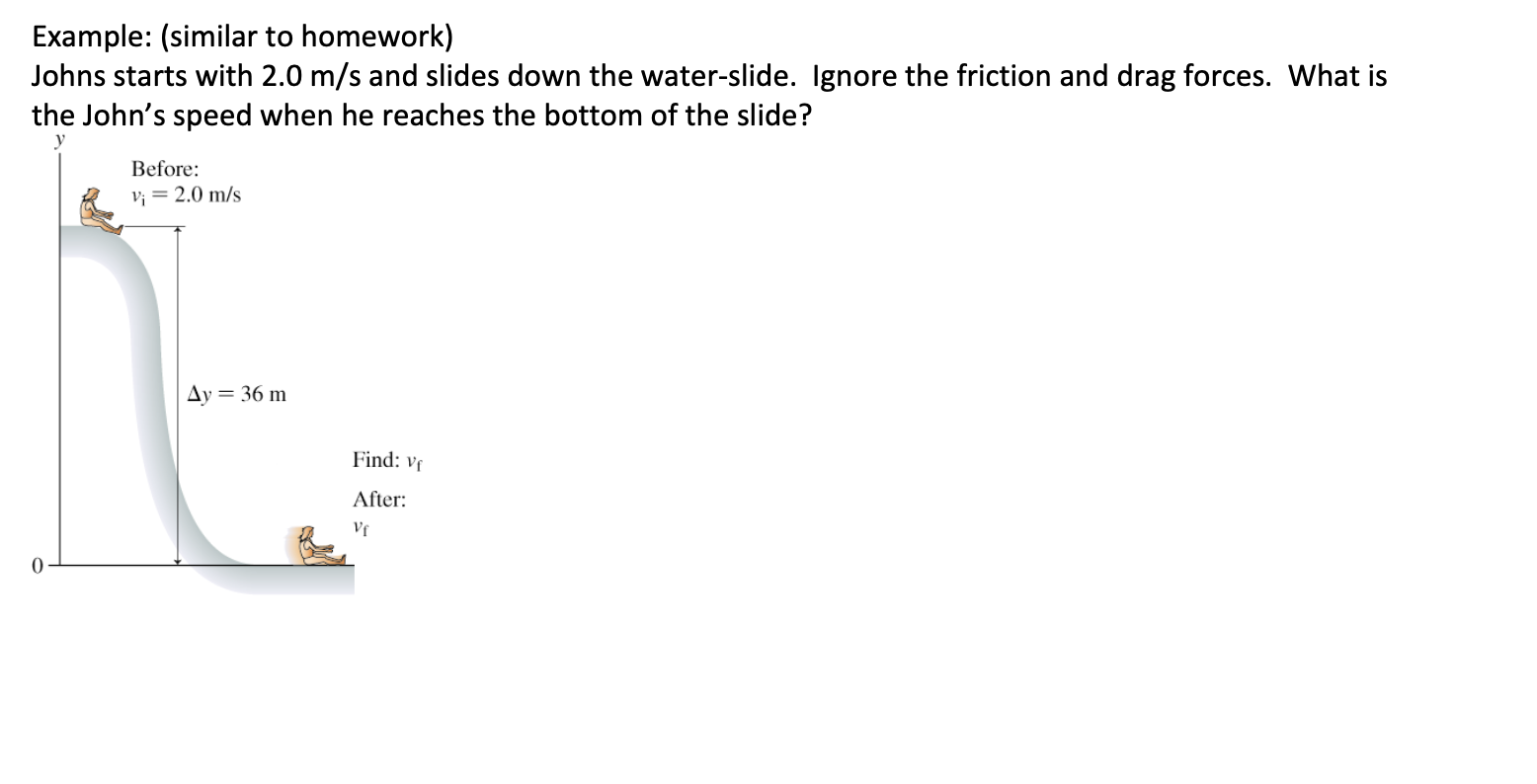
Lecture-Example (posted before lecture) 10/03 (Monday) Example: A car is traveling at 10 m/s. (a) How fast would the car need to go to double its kinetic energy? (b) By what factor does the car's kinetic energy increase if its speed is doubled to 20 m/s? Homework- Problem 6-29 (page 165) A 65 kg hiker starts at an elevation of 1270 m and climbs to the top of a peak 2660 m high. (a) What is the hiker's change in potential energy? (b) What is the minimum work required of the hiker? (c) Can the actual work done be greater than this? Homework - Question #21 (page 162) Suppose you lift a suitcase from the floor to a table. The work you do on the suitcase depends on which of the following: (a) whether you lift it straight up or along a different path, (b) the time the lifting takes, (c) the height of the table, (d) the weight of the suitcase? Homework- uestion 18 a e162 A heavy ball is hung from the ceiling by a steel wire. The instructor pulls the ball back and stands against the wall with the ball against his chin. To avoid injury the instructor is supposed to release the ball without pushing it. Why? Question: Starting from rest, a marble first rolls down a steeper hill, then down a less steep hill of the same height. For which is it going faster at the bottom? Homework - Question 12 (Page 162) Water balloons are tossed from the roof of a building, all with the same speed but with different launch angles. Which one has the highest speed when it hits the ground? Ignore the air resistance. Example: {similar to homework) Johns starts with 2.0 m/s and slides down the water-slide. Ignore the friction and drag forces. What is the John's speed when he reaches the bottom of the slide? Be fore: g, l\" 7 2.0 III/s A)' = 31') in Find: 1-.- After: R H 0'i
Step by Step Solution
There are 3 Steps involved in it

Get step-by-step solutions from verified subject matter experts
 Study Help