







Question: Let 0 be an unknown population parameter associated with the collection of observations ( X1 , Y1), ( X2, Y2 ), .... ( Xn, Yn)
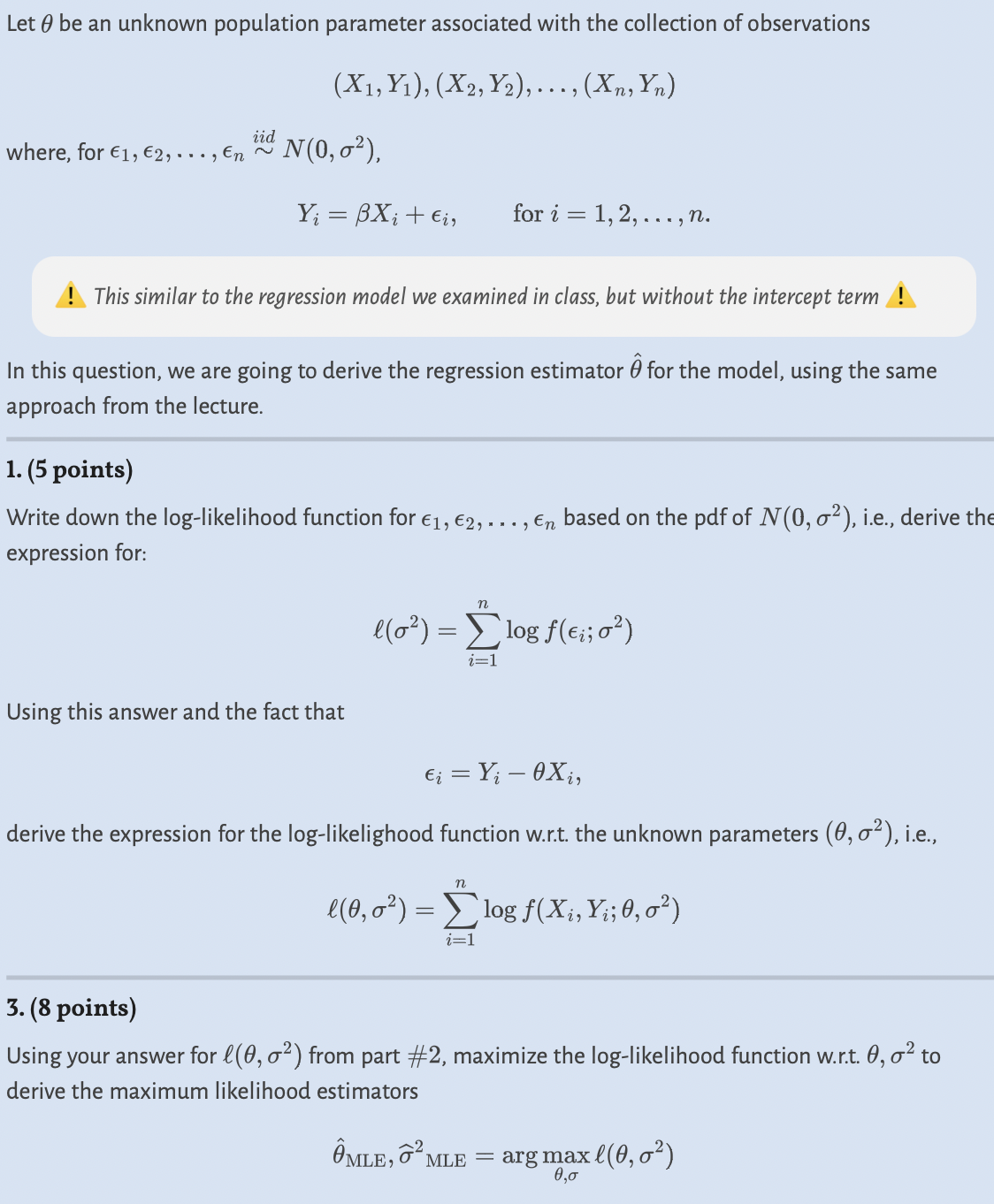
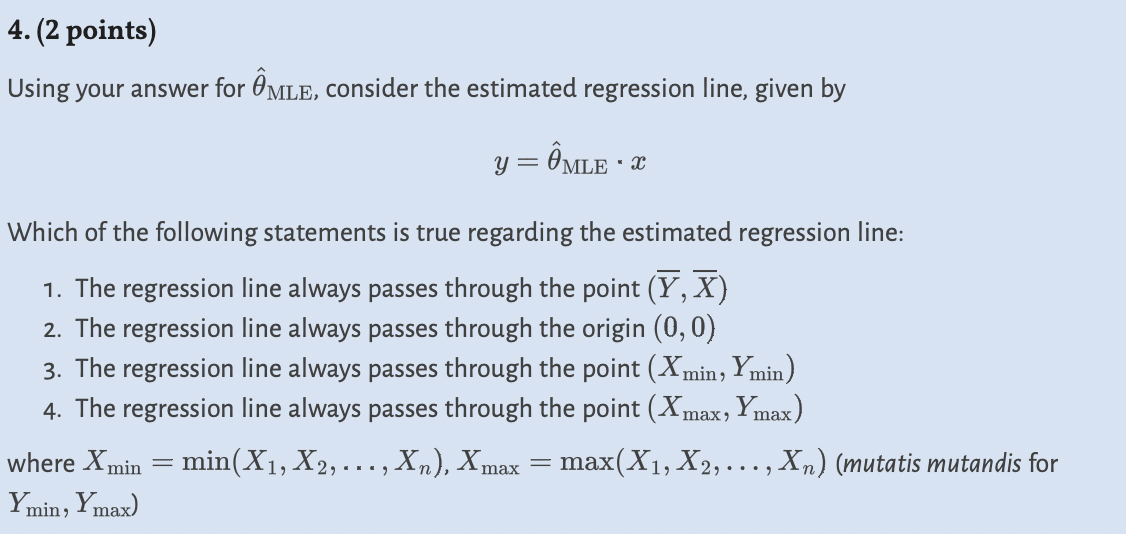
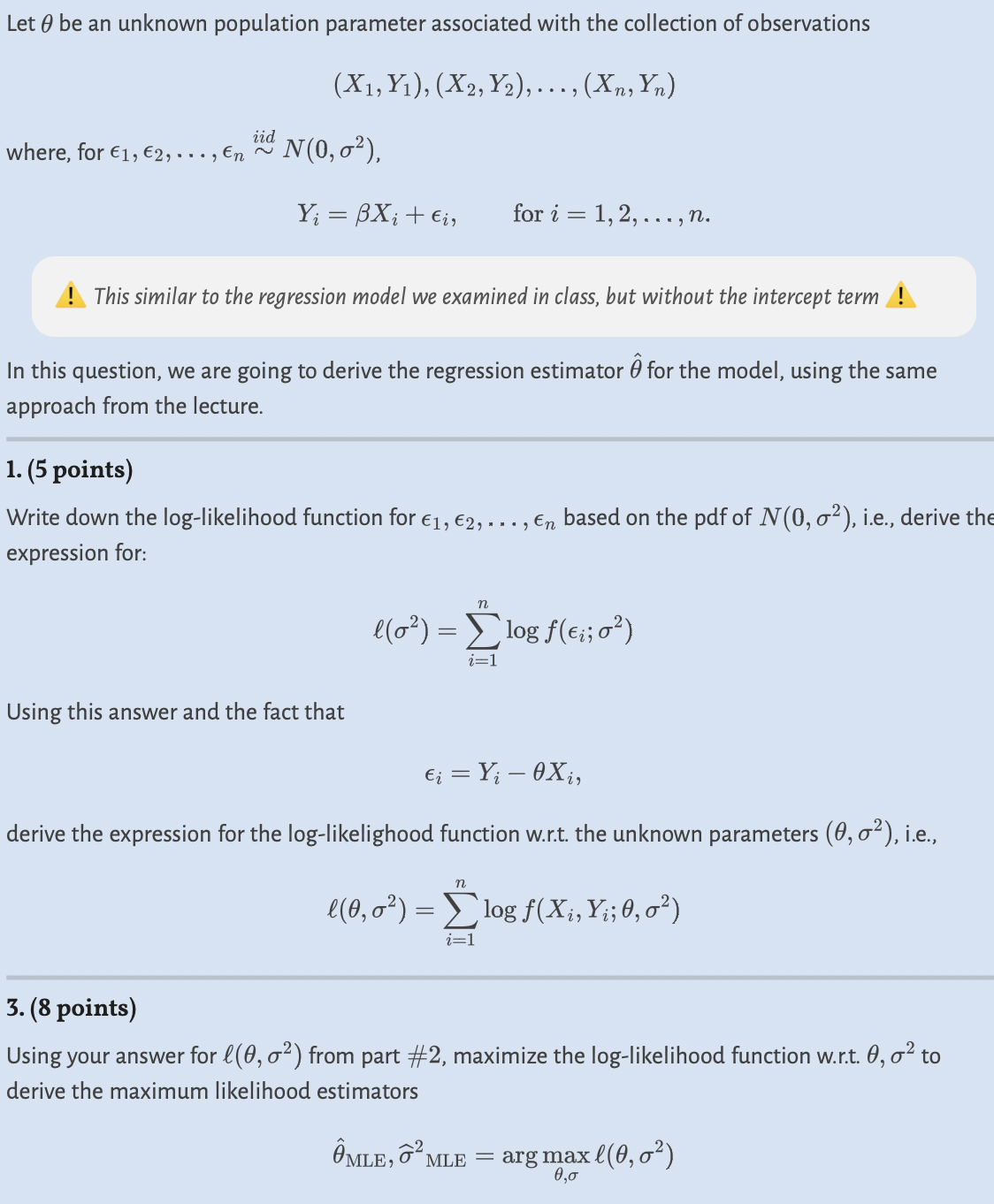
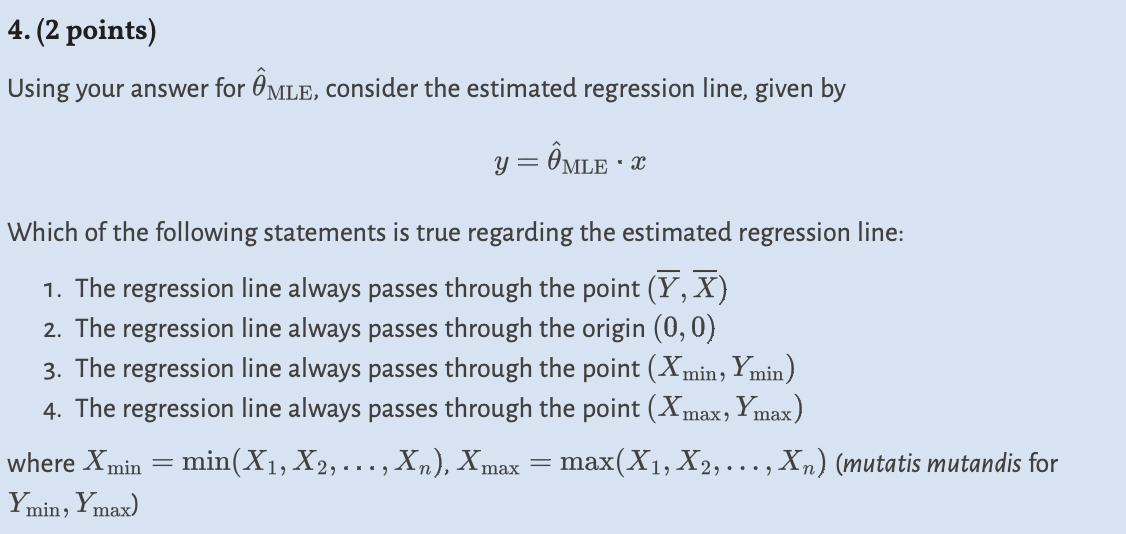
Let 0 be an unknown population parameter associated with the collection of observations ( X1 , Y1), ( X2, Y2 ), .... ( Xn, Yn) where, for E1, E2, . .. , En ~ N(0, 02), Yi = BXit ci, for i = 1, 2, ..., n. This similar to the regression model we examined in class, but without the intercept term ! In this question, we are going to derive the regression estimator 0 for the model, using the same approach from the lecture. 1. (5 points) Write down the log-likelihood function for 1, E2, . . . , En based on the pdf of N(0, o2), i.e., derive the expression for: e(02 ) = >log f (cio? ) Using this answer and the fact that ci = Yi - 0Xi, derive the expression for the log-likelighood function w.r.t. the unknown parameters (0, 02), i.e., e(0, 02) = >log f(Xi, Yi;0, 02) 3. (8 points) Using your answer for &(0, o2) from part #2, maximize the log-likelihood function w.r.t. 0, o2 to derive the maximum likelihood estimators OMLE, O'MLE = arg max e(0, 02) 0,04. (2 points) Using your answer for OMLE, consider the estimated regression line, given by y = OMLE - 2 Which of the following statements is true regarding the estimated regression line: 1. The regression line always passes through the point (Y, X) 2. The regression line always passes through the origin (0, 0) 3. The regression line always passes through the point (Xmin, Ymin) 4. The regression line always passes through the point (Xmax, Ymax) where Xmin = min(X1, X2, . .., Xn), Xmax = max(X1, X2, . .., Xn) (mutatis mutandis for Ymin, Ymax)
Step by Step Solution
There are 3 Steps involved in it

Get step-by-step solutions from verified subject matter experts
 Study Help