







Question: Level 1, Course 2: Unit 1 - Hazard Recognition Part 1 E Help Abbreviations | Glossary 1 Resources Exit Question 10 of 10 According to
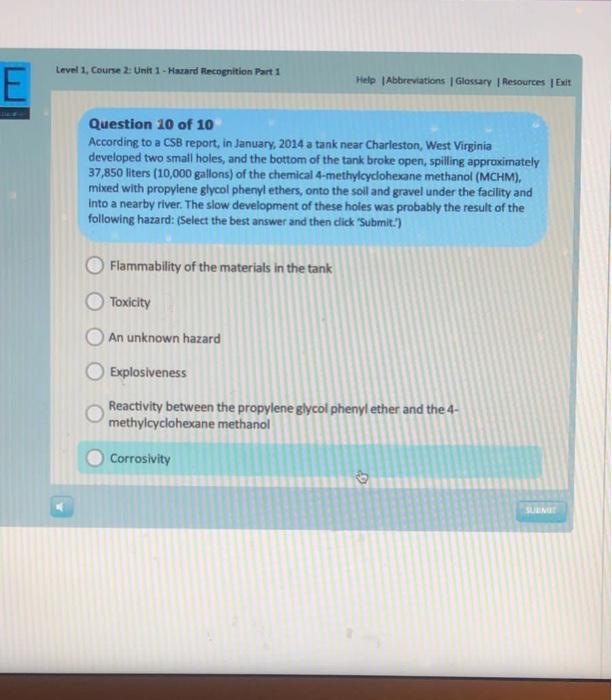
Level 1, Course 2: Unit 1 - Hazard Recognition Part 1 E Help Abbreviations | Glossary 1 Resources Exit Question 10 of 10 According to a CSB report, in January, 2014 a tank near Charleston, West Virginia developed two small holes, and the bottom of the tank broke open, spilling approximately 37,850 liters (10,000 gallons) of the chemical 4-methylcyclohexane methanol (MCHM). mixed with propylene glycol phenyl ethers, onto the soil and gravel under the facility and into a nearby river. The slow development of these holes was probably the result of the following hazard: (Select the best answer and then dick "Submit.") Flammability of the materials in the tank Toxicity An unknown hazard Explosiveness Reactivity between the propylene glycol phenyl ether and the 4- methylcyclohexane methanol Corrosivity SLEN
Step by Step Solution
There are 3 Steps involved in it

Get step-by-step solutions from verified subject matter experts
 Study Help