







Question: Light - emitting diode ( LED ) light bulbs have become required in recent years, but do they make financial sense? Suppose a typical 6
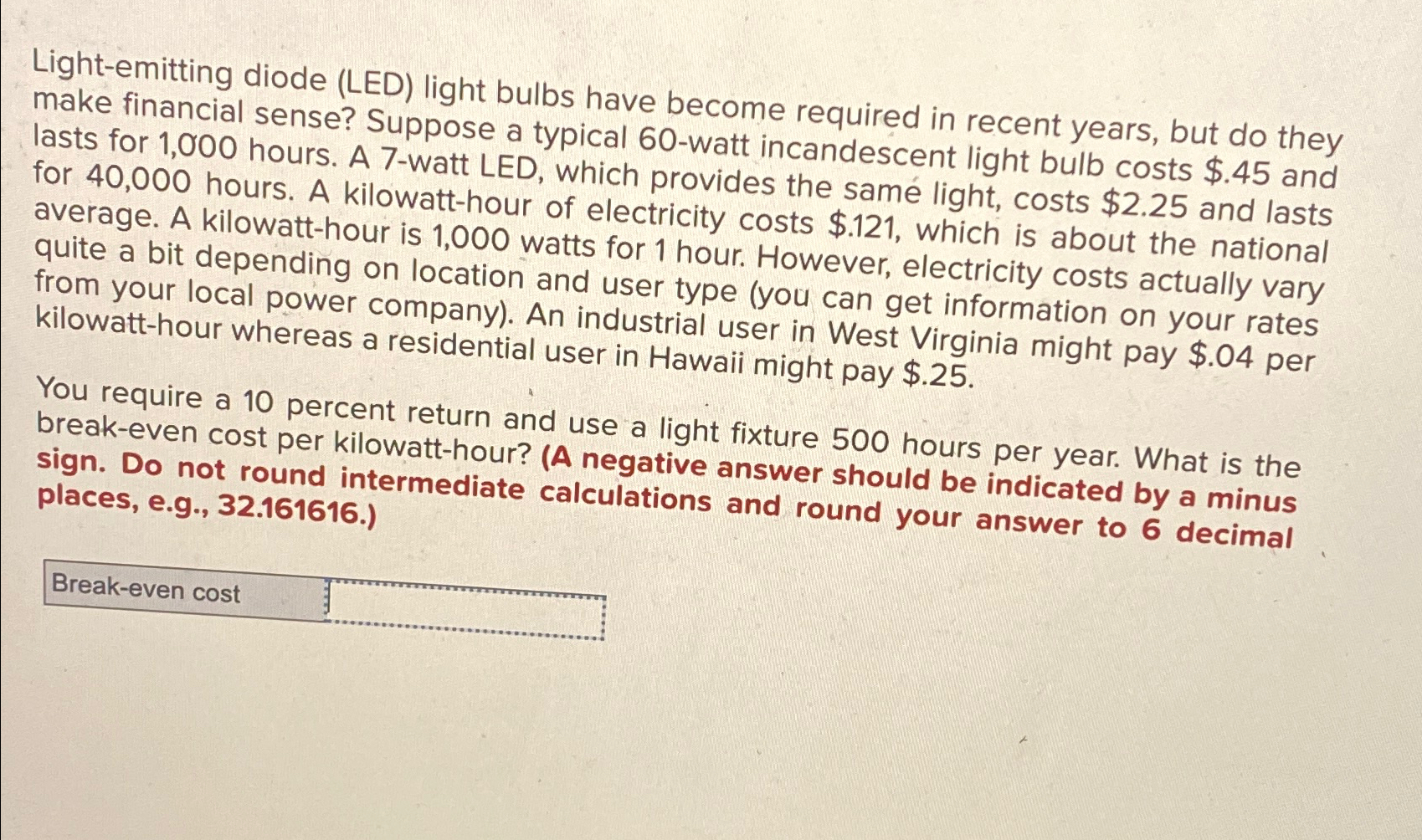
Lightemitting diode LED light bulbs have become required in recent years, but do they make financial sense? Suppose a typical watt incandescent light bulb costs $ and lasts for hours. A watt LED, which provides the sam light, costs $ and lasts for hours. A kilowatthour of electricity costs $ which is about the national average. A kilowatthour is watts for hour. However, electricity costs actually vary quite a bit depending on location and user type you can get information on your rates from your local power company An industrial user in West Virginia might pay $ per kilowatthour whereas a residential user in Hawaii might pay $
You require a percent return and use a light fixture hours per year. What is the breakeven cost per kilowatthour? A negative answer should be indicated by a minus sign. Do not round intermediate calculations and round your answer to decimal places, eg
Step by Step Solution
There are 3 Steps involved in it
1 Expert Approved Answer
Step: 1 Unlock

Question Has Been Solved by an Expert!
Get step-by-step solutions from verified subject matter experts
Step: 2 Unlock
Step: 3 Unlock
 Study Help