Question: Literature Review Please note Assignment 2 will be continuation from Assignment 1. https://drive.google.com/file/d/1vmBDs08rFnpPrDN3uDGldQwP7FNuRAk1/view?usp=drive_link Assignment 2 is contfinuation from Assignment 1. You have carried out the
Literature Review
Please note Assignment 2 will be continuation from Assignment 1.
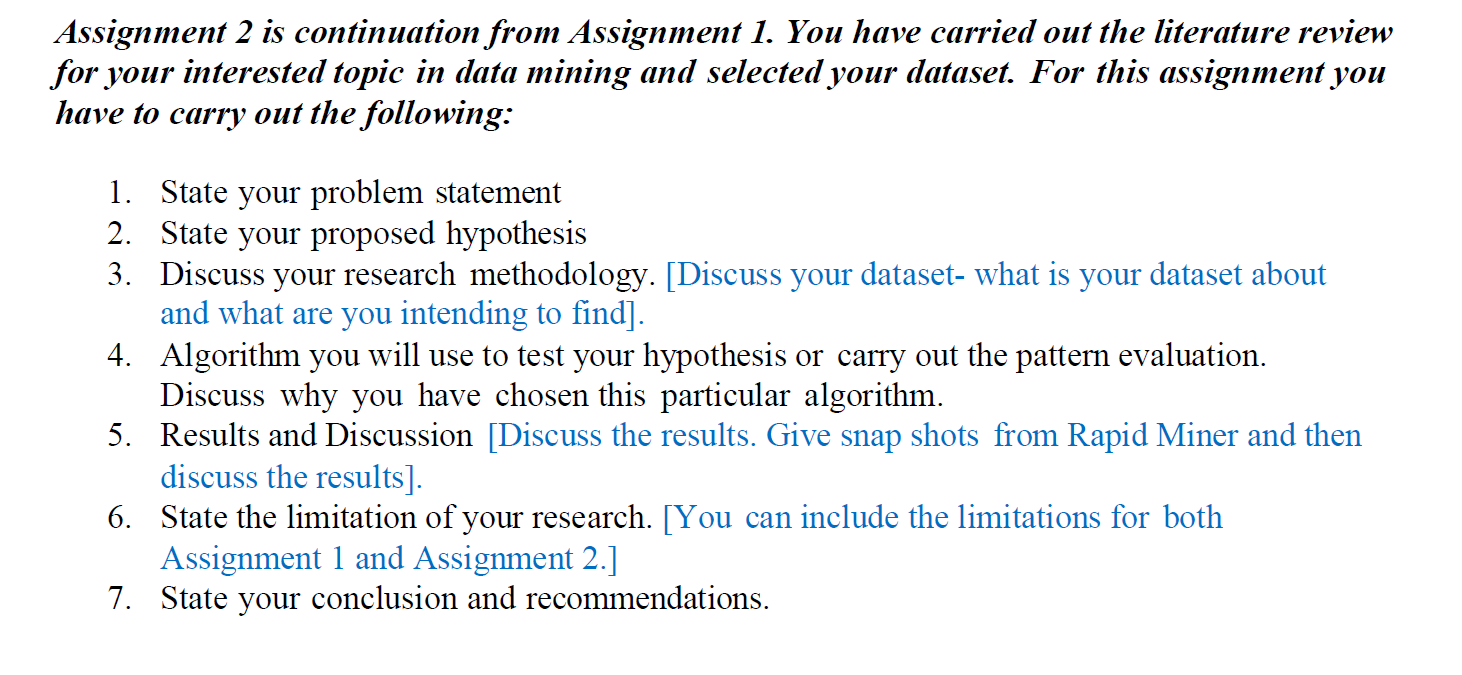
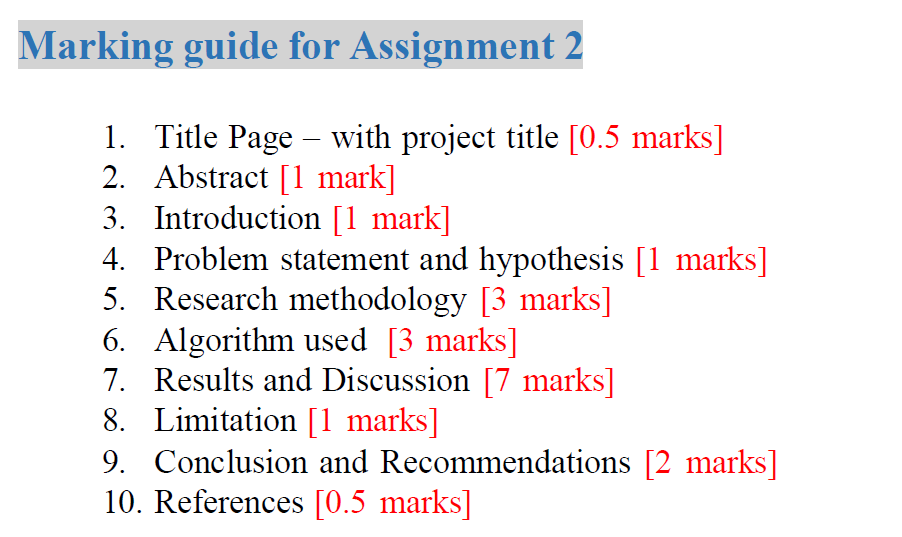
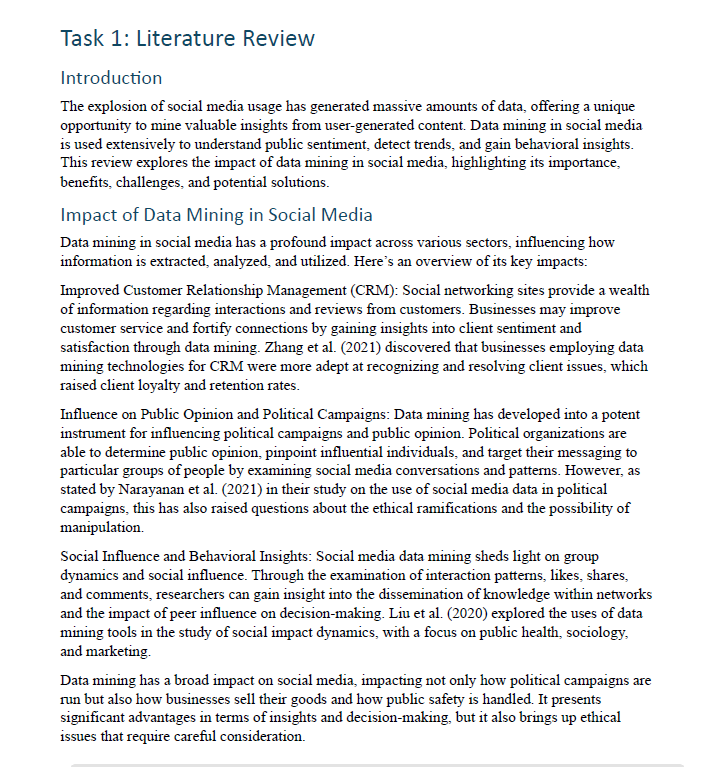
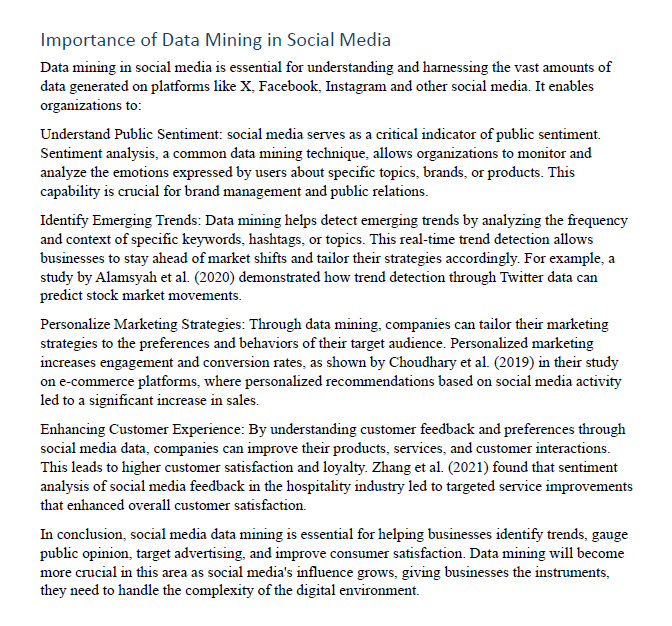
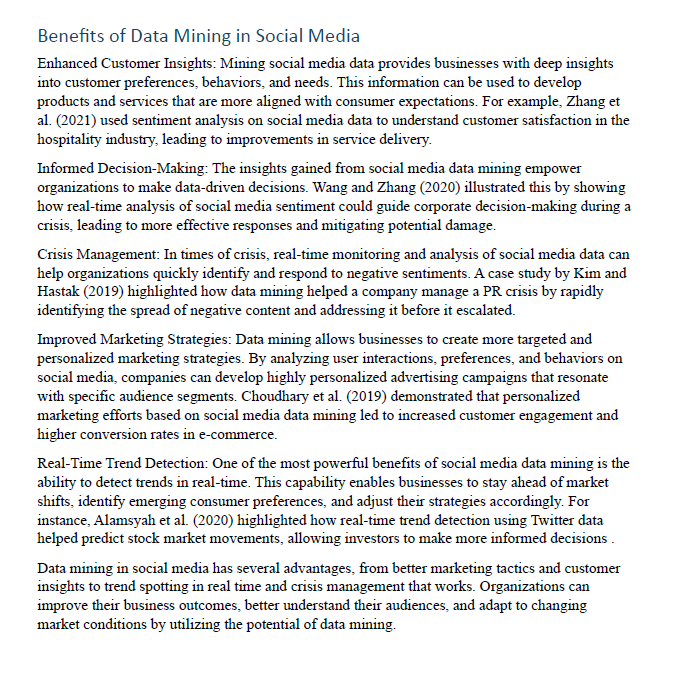
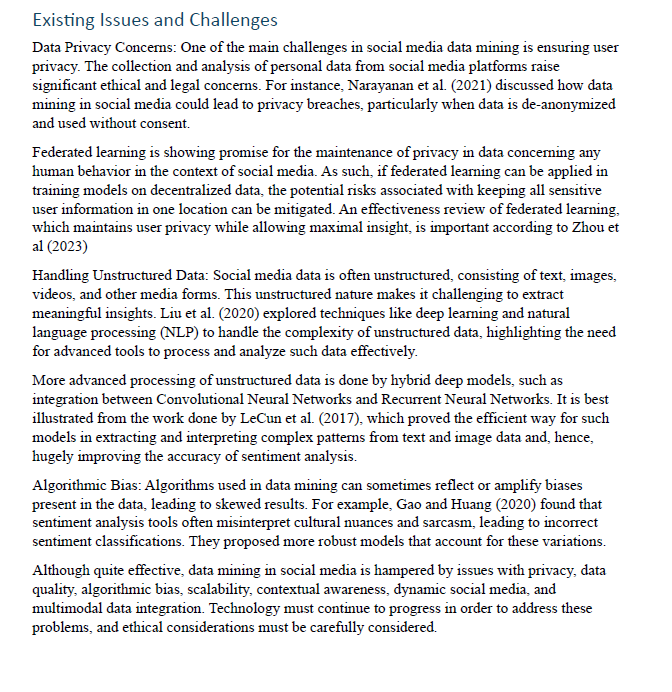
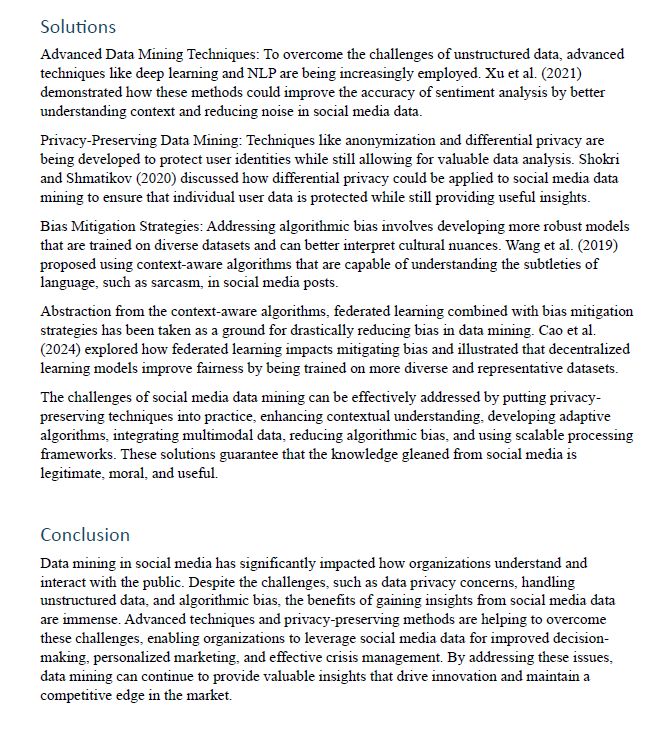
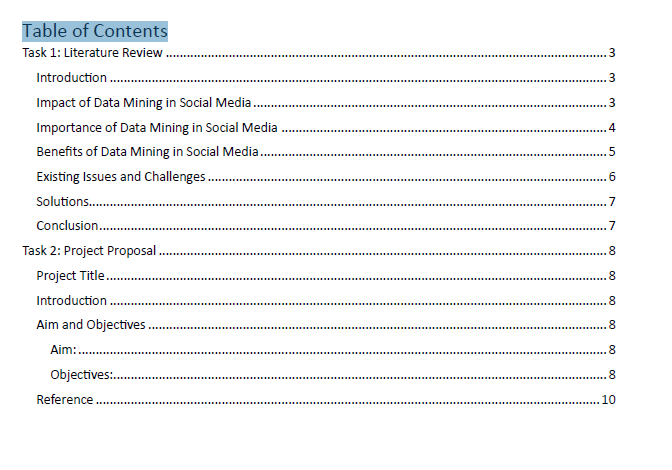
Assignment 2 is contfinuation from Assignment 1. You have carried out the literature review for your interested topic in data mining and selected your dataset. For this assignment you have to carry out the following: 1. State your problem statement 2. State your proposed hypothesis 3. Discuss your research methodology. [Discuss your dataset- what is your dataset about and what are you intending to find]. 4. Algorithm you will use to test your hypothesis or carry out the pattern evaluation. Discuss why you have chosen this particular algorithm. 5. Results and Discussion [Discuss the results. Give snap shots from Rapid Miner and then discuss the results]. 6. State the limitation of your research. [You can include the limitations for both Assignment 1 and Assignment 2.] 7. State your conclusion and recommendations. Marking guide for Assignment 2 1. Title Page with project title [0.5 marks] 2. Abstract [1 mark] 3. Introduction [1 mark] 4. Problem statement and hypothesis [1 marks] 5. Research methodology [3 marks] 6. Algorithm used [3 marks] 7. Results and Discussion [7 marks] 8. Limitation [1 marks] 9. Conclusion and Recommendations [2 marks] 10. References [0.5 marks] Task 1: Literature Review Introduction The explosion of social media usage has generated massive amounts of data, offering a unique opportunity to mine valuable insights from user-generated content. Data mining in social media is used extensively to understand public sentiment, detect trends, and gain behavioral insights. This review explores the impact of data mining in social media, highlighting its importance, benefits, challenges, and potential solutions. Impact of Data Mining in Social Media Data mining in social media has a profound impact across various sectors, influencing how information is extracted, analyzed, and utilized. Here's an overview of its key impacts: Improved Customer Relationship Management (CRM): Social networking sites provide a wealth of information regarding interactions and reviews from customers. Businesses may improve customer service and fortify connections by gaining insights into client sentiment and satisfaction through data mining. Zhang et al. (2021) discovered that businesses employing data mining technologies for CRM were more adept at recognizing and resolving client issues, which raised client loyalty and retention rates. Influence on Public Opinion and Political Campaigns: Data mining has developed into a potent instrument for influencing political campaigns and public opinion. Political organizations are able to determine public opinion, pinpoint influential individuals, and target their messaging to particular groups of people by examining social media conversations and patterns. However, as stated by Narayanan et al. (2021) in their study on the use of social media data in political campaigns, this has also raised questions about the ethical ramifications and the possibility of manipulation. Social Influence and Behavioral Insights: Social media data mining sheds light on group dynamics and social influence. Through the examination of interaction patterns, likes, shares, and comments, researchers can gain insight into the dissemination of knowledge within networks and the impact of peer influence on decision-making. Liu et al. (2020) explored the uses of data mining tools in the study of social impact dynamics, with a focus on public health, sociology, and marketing. Data mining has a broad impact on social media, impacting not only how political campaigns are run but also how businesses sell their goods and how public safety is handled. It presents significant advantages in terms of insights and decision-making, but it also brings up ethical issues that require careful consideration.Importance of Data Mining in Social Media Data mining 1n social media 1s essential for understanding and harnessing the vast amounts of data generated on platforms like X. Facebook, Instagram and other social media. It enables organizations to: Understand Public Sentiment: social media serves as a critical indicator of public sentiment. Sentiment analysis, a common data mming technique, allows organizations to momtor and analyze the emotions expressed by users about specific topics, brands, or products. This capability 1s crucial for brand management and public relations. Identify Emerging Trends: Data muning helps detect emerging trends by analyzing the frequency and context of specific keywords. hashtags. or topics. This real-time trend detection allows businesses to stay ahead of market shifts and tailor their strategies accordingly. For example, a study by Alamsyah et al (2020) demonstrated how trend detection through Twitter data can predict stock market movements. Personalize Marketing Strategies: Through data mining, companies can tailor their marketing strategies to the preferences and behaviors of their target audience. Personalized marketing increases engagement and conversion rates, as shown by Choudhary et al. (2019) in their study on e-commerce platforms, where personalized recommendations based on social media activity led to a significant increase in sales. Enhancing Customer Experience: By understanding customer feedback and preferences through social media data, companies can improve their products. services, and customer interactions. This leads to higher customer satisfaction and loyalty. Zhang et al. (2021) found that sentiment analysis of social media feedback in the hospitality industry led to targeted service improvements that enhanced overall customer satisfaction. In conclusion, social media data mining 1s essential for helping businesses identify trends. gauge public opinion, target advertising, and improve consumer satisfaction. Data mining will become more crucial in this area as social media's influence grows, giving businesses the instruments, they need to handle the complexity of the digital environment. Benefits of Data Mining in Social Media Enhanced Customer Insights: Mining social media data provides busimesses with deep mnsights into customer preferences, behaviors. and needs. This information can be used to develop products and services that are more aligned with consumer expectations. For example, Zhang et al. (2021) used sentiment analysis on social media data to understand customer satisfaction in the hospatality industry, leading to improvements 1n service delivery. Informed Decision-Making: The insights gained from social media data mining empower orgamzations to make data-driven decisions. Wang and Zhang (2020) illustrated this by showing how real-time analysis of social media sentiment could guide corporate decision-making during a crists, leading to more effective responses and mitigating potential damage. Crisis Management: In times of crisis. real-time monitoring and analysis of social media data can help orgamzations quickly identify and respond to negative sentiments. A case study by Kim and Hastak (2019) highlighted how data mining helped a company manage a PR crisis by rapadly identifying the spread of negative content and addressing it before it escalated. Improved Marketing Strategies: Data mming allows businesses to create more targeted and personalized marketing strategies. By analyzing user interactions, preferences. and behaviors on social media. companies can develop highly personalized advertising campaigns that resonate with specific audience segments. Choudhary et al. (2019) demonstrated that personalized marketing efforts based on social media data mining led to increased customer engagement and higher conversion rates in e-commerce. Real-Time Trend Detection: One of the most powerful benefits of social media data mining 1s the ability to detect trends in real-time. This capability enables businesses to stay ahead of market shafts, 1dentify emerging consumer preferences, and adjust their strategies accordingly. For instance, Alamsyah et al. (2020) ghlighted how real-time trend detection using Twitter data helped predict stock market movements, allowing investors to make more informed decisions . Data mining in social media has several advantages, from better marketing tactics and customer insights to trend spotting in real time and crisis management that works. Organizations can improve their business outcomes, better understand their audiences. and adapt to changing market conditions by utilizing the potential of data mining. Existing Issues and Challenges Data Privacy Concerns: One of the main challenges in social media data mining is ensuring user privacy. The collection and analysis of personal data from social media platforms rase significant ethical and legal concerns. For instance, Narayanan et al. (2021) discussed how data mining in social media could lead to privacy breaches, particularly when data 1s de-anonynuzed and used without consent. Federated learning 1s showing promise for the maintenance of privacy mn data concerning any human behavior in the context of social media. As such., if federated learning can be applied in tramning models on decentralized data, the potential risks associated with keeping all sensitive user information in one location can be mitigated. An effectiveness review of federated learning, which maintains user privacy while allowing maximal insight, 1s important according to Zhou et al (2023) Handling Unstructured Data: Social media data 1s often unstructured. consisting of text. images, videos, and other media forms. This unstructured nature makes 1t challenging to extract meaningful insights. Liu et al. (2020) explored techniques like deep learning and natural language processing (NLP) to handle the complexity of unstructured data, highlighting the need for advanced tools to process and analyze such data effectively. More advanced processing of unstructured data 1s done by hybrid deep models, such as integration between Convolutional Neural Networks and Recurrent Neural Networks. It is best illustrated from the work done by LeCun et al. (2017). which proved the efficient way for such models in extracting and interpreting complex patterns from text and image data and, hence, hugely improving the accuracy of sentiment analysis. Algonithmic Bias: Algorithms used in data mining can sometimes reflect or amplify biases present 1n the data, leading to skewed results. For example, Gao and Huang (2020) found that sentiment analysis tools often mismterpret cultural nuances and sarcasm, leading to mcorrect sentiment classifications. They proposed more robust models that account for these variations. Although quite effective, data mining i social media 1s hampered by 1ssues with privacy, data quality, algorithmic bias, scalability, contextual awareness, dynamic social media, and multimodal data integration. Technology must contmue to progress in order to address these problems, and ethical considerations must be carefully considered. Solutions Advanced Data Mining Techniques: To overcome the challenges of unstructured data, advanced techniques like deep learning and NLP are being mereasingly employed. Xu et al. (2021) demonstrated how these methods could improve the accuracy of sentiment analysis by better understanding context and reducing noise m social medha data. Privacy-Preserving Data Mining: Techniques like anonymization and differential privacy are being developed to protect user identities while still allowing for valuable data analysis. Shokn and Shmatikov (2020) discussed how differential privacy could be applied to social media data mining to ensure that individual user data 1s protected while still providing useful msights. Bias Mitigation Strategies: Addressing algorithmic bias involves developing more robust models that are trained on diverse datasets and can better interpret cultural nuances. Wang et al. (2019) proposed using context-aware algorithms that are capable of understanding the subtleties of language, such as sarcasm. in social media posts. Abstraction from the context-aware algorithms, federated leaming combined with bias mitigation strategies has been taken as a ground for drastically reducing bias in data mining. Cao et al. (2024) explored how federated learning impacts mitigatmg bias and illustrated that decentralized learning models improve fairness by being trained on more diverse and representative datasets. The challenges of social media data mining can be effectively addressed by putting privacy- preserving techniques into practice, enhancing contextual understanding. developing adaptive algonithms, integrating multimodal data, reducing algorithmic bias, and using scalable processing frameworks. These solutions guarantee that the knowledge gleaned from social media is legitimate, moral. and useful Conclusion Data mining 1n social media has sigmficantly impacted how organizations understand and interact with the public. Despite the challenges. such as data privacy concerns. handling unstructured data. and algorithmic bias, the benefits of gaining insights from social media data are immense. Advanced techniques and privacy-preserving methods are helping to overcome these challenges. enabling organizations to leverage social media data for improved decision- making. personalized marketing, and effective crisis management. By addressing these 1ssues, data miming can continue to provide valuable insights that drive innovation and maintain a competitive edge i the market. Table of Contents Task 1: Literature Review .... 3 Introduction . 3 Impact of Data Mining in Social Media .. . 3 Importance of Data Mining in Social Media Benefits of Data Mining in Social Media .. Existing Issues and Challenges. 6 Solutions.... 7 Conclusion. .7 Task 2: Project Proposal .. Reference ....15121MILE
Step by Step Solution
There are 3 Steps involved in it
1 Expert Approved Answer
Step: 1 Unlock
Question Has Been Solved by an Expert!
Get step-by-step solutions from verified subject matter experts
Step: 2 Unlock
Step: 3 Unlock
Students Have Also Explored These Related Business Writing Questions!









 Study Help