







Question: LNEE JLF 3 READ THE CASE STUDY AND ANSWER THE QUESTIONS THAT FOLLOW: CASE STUDY: CITY, UNIVERSITY OF LONDON FUTURE LEADERS INTRODUCTION City, University of
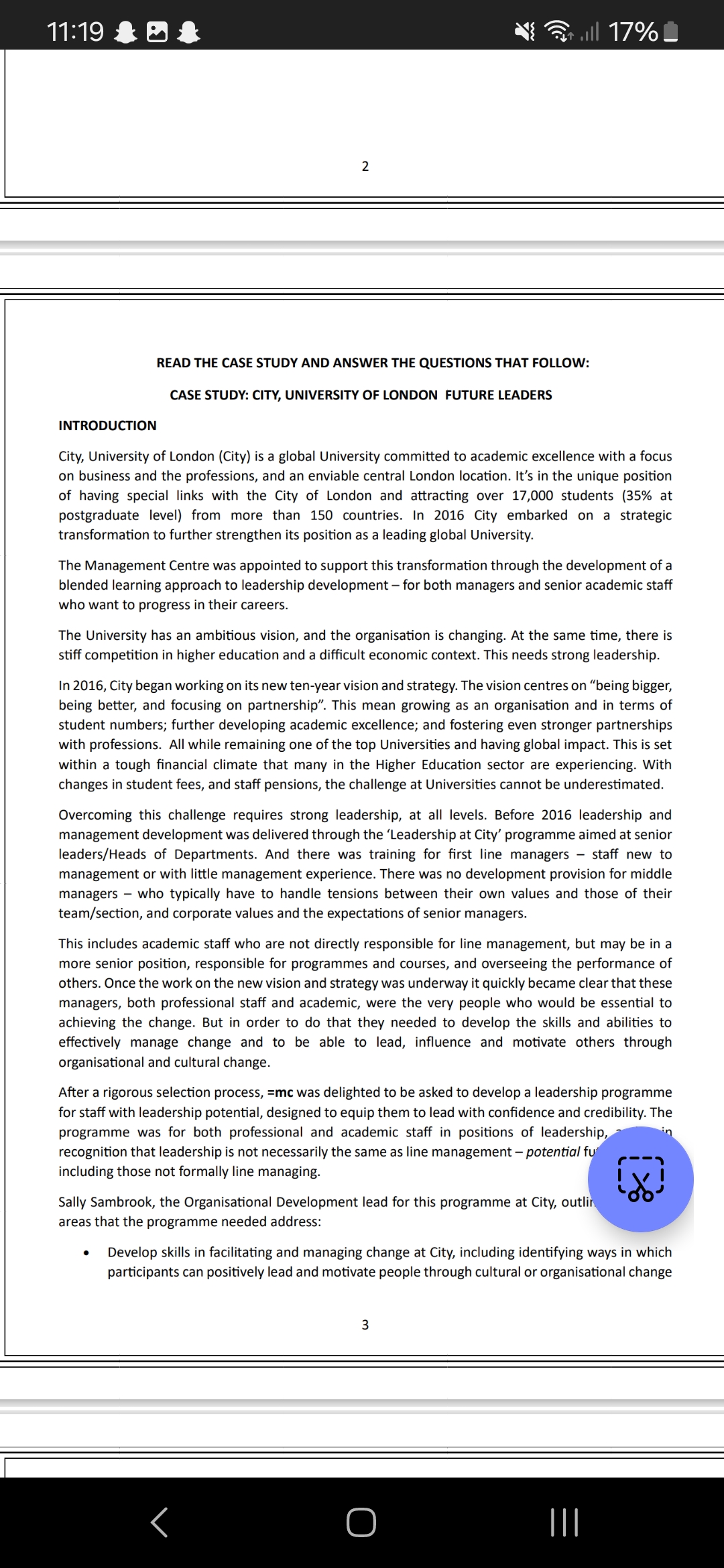
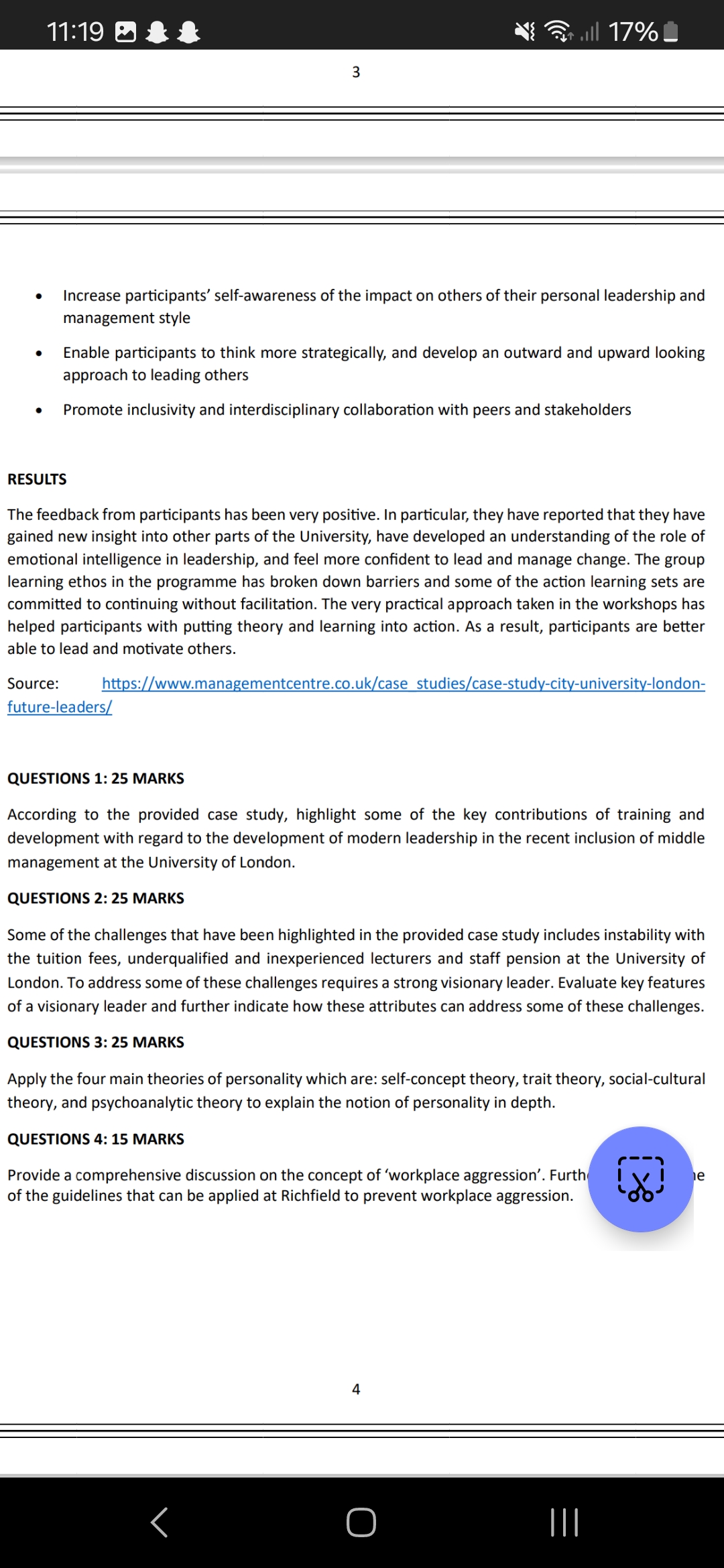
LNEE JLF 3 READ THE CASE STUDY AND ANSWER THE QUESTIONS THAT FOLLOW: CASE STUDY: CITY, UNIVERSITY OF LONDON FUTURE LEADERS INTRODUCTION City, University of London (City) is a global University committed to academic excellence with a focus on business and the professions, and an enviable central London location. It's in the unique position of having special links with the City of London and attracting over 17,000 students (35% at postgraduate level) from more than 150 countries. In 2016 City embarked on a strategic transformation to further strengthen its position as a leading global University. The Management Centre was appointed to support this transformation through the development of a blended learning approach to leadership development for both managers and senior academic staff who want to progress in their careers. The University has an ambitious vision, and the organisation is changing. At the same time, there is stiff competition in higher education and a difficult economic context. This needs strong leadership. In 2016, City began working on its new ten-year vision and strategy. The vision centres on \"being bigger, being better, and focusing on partnership\". This mean growing as an organisation and in terms of student numbers; further developing academic excellence; and fostering even stronger partnerships with professions. All while remaining one of the top Universities and having global impact. This is set within a tough financial climate that many in the Higher Education sector are experiencing. With changes in student fees, and staff pensions, the challenge at Universities cannot be underestimated. Overcoming this challenge requires strong leadership, at all levels. Before 2016 leadership and management development was delivered through the 'Leadership at City' programme aimed at senior leaders/Heads of Departments. And there was training for first line managers staff new to management or with little management experience. There was no development provision for middle managers who typically have to handle tensions between their own values and those of their team/section, and corporate values and the expectations of senior managers. This includes academic staff who are not directly responsible for line management, but may be in a more senior position, responsible for programmes and courses, and overseeing the performance of others. Once the work on the new vision and strategy was underway it quickly became clear that these managers, both professional staff and academic, were the very people who would be essential to achieving the change. But in order to do that they needed to develop the skills and abilities to effectively manage change and to be able to lead, influence and motivate others through organisational and cultural change. After a rigorous selection process, =mc was delighted to be asked to develop a leadership programme for staff with leadership potential, designed to equip them to lead with confidence and credibility. The programme was for both professional and academic staff in positions of leadership, recognition that leadership is not necessarily the same as line management potential f including those not formally line managing. Sally Sambrook, the Organisational Development lead for this programme at City, outli areas that the programme needed address: Develop skills in facilitating and managing change at City, including identifying ways in which participants can positively lead and motivate people through cultural or organisational change LBClE 3 DO Increase participants' self-awareness of the impact on others of their personal leadership and management style e Enable participants to think more strategically, and develop an outward and upward looking approach to leading others * Promote inclusivity and interdisciplinary collaboration with peers and stakeholders RESULTS The feedback from participants has been very positive. In particular, they have reported that they have gained new insight into other parts of the University, have developed an understanding of the role of emotional intelligence in leadership, and feel more confident to lead and manage change. The group learning ethos in the programme has broken down barriers and some of the action learning sets are committed to continuing without facilitation. The very practical approach taken in the workshops has helped participants with putting theory and learning into action. As a result, participants are better able to lead and motivate others. Source: https://www.managementcentre.co.uk/case studies/case-study-city-university-london- future-leaders/ QUESTIONS 1: 25 MARKS According to the provided case study, highlight some of the key contributions of training and development with regard to the development of modern leadership in the recent inclusion of middle management at the University of London. QUESTIONS 2: 25 MARKS Some of the challenges that have been highlighted in the provided case study includes instability with the tuition fees, underqualified and inexperienced lecturers and staff pension at the University of London. To address some of these challenges requires a strong visionary leader. Evaluate key features of a visionary leader and further indicate how these attributes can address some of these challenges. QUESTIONS 3: 25 MARKS Apply the four main theories of personality which are: self-concept theory, trait theory, social-cultural theory, and psychoanalytic theory to explain the notion of personality in depth. QUESTIONS 4: 15 MARKS Provide a comprehensive discussion on the concept of 'workplace aggression'. Furth e of the guidelines that can be applied at Richfield to prevent workplace aggression
Step by Step Solution
There are 3 Steps involved in it

Get step-by-step solutions from verified subject matter experts
 Study Help