







Question: Lockheed Tri Star and Capital Budgeting ( { } ^ { 1 } ) In 1 9 7 1 , the American firm
Lockheed Tri Star and Capital Budgeting
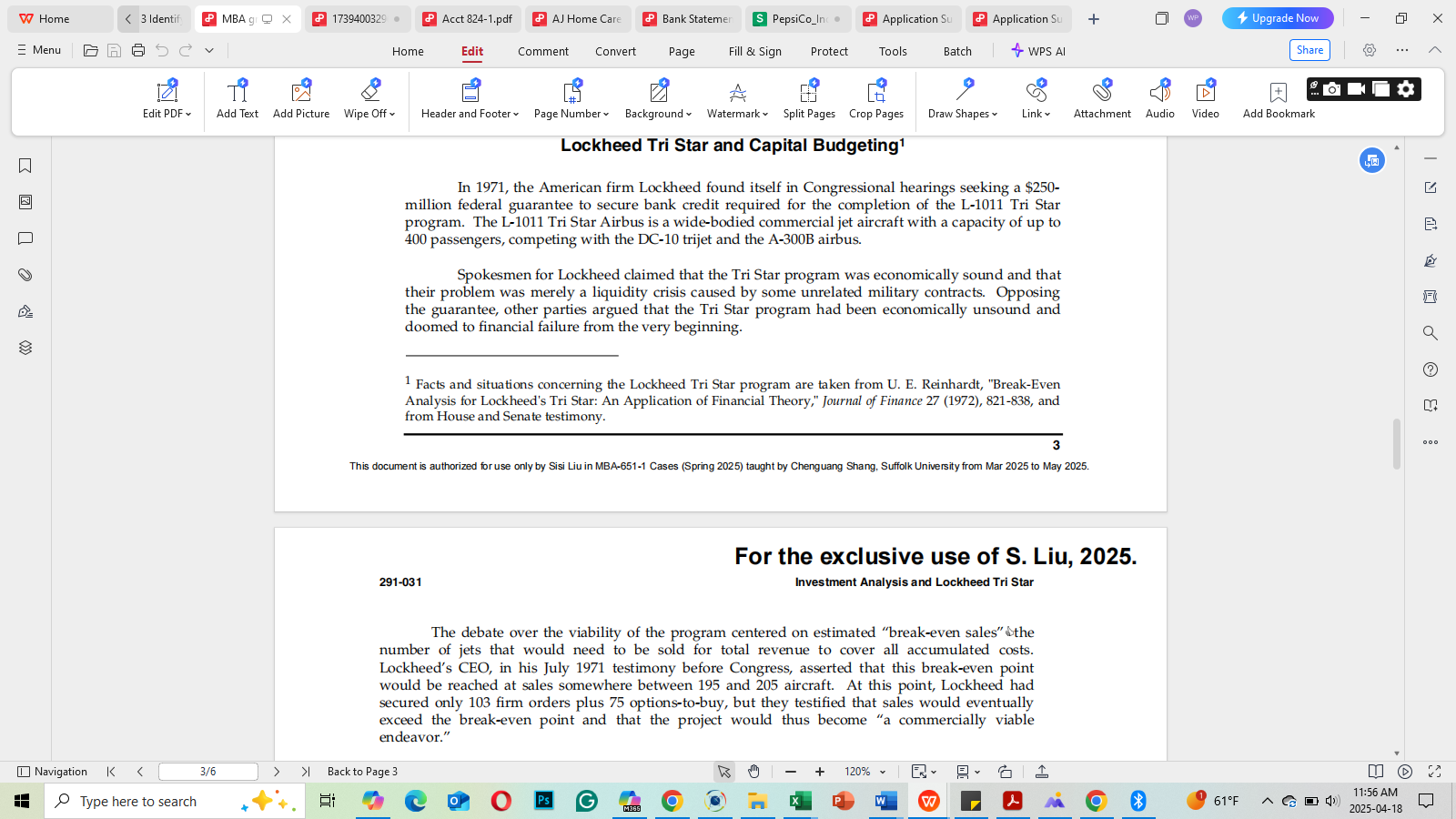
In the American firm Lockheed found itself in Congressional hearings seeking a $million federal guarantee to secure bank credit required for the completion of the L Tri Star program. The L Tri Star Airbus is a widebodied commercial jet aircraft with a capacity of up to passengers, competing with the DC trijet and the AB airbus.
Spokesmen for Lockheed claimed that the Tri Star program was economically sound and that their problem was merely a liquidity crisis caused by some unrelated military contracts. Opposing the guarantee, other parties argued that the Tri Star program had been economically unsound and doomed to financial failure from the very beginning.
Facts and situations concerning the Lockheed Tri Star program are taken from U E Reinhardt, "BreakEven Analysis for Lockheed's Tri Star: An Application of Financial Theory," Journal of Finance and from House and Senate testimony.
The debate over the viability of the program centered on estimated "breakeven sales" the number of jets that would need to be sold for total revenue to cover all accumulated costs. Lockheed's CEO, in his July testimony before Congress, asserted that this breakeven point would be reached at sales somewhere between and aircraft. At this point, Lockheed had secured only firm orders plus optionstobuy, but they testified that sales would eventually exceed the breakeven point and that the project would thus become "a commercially viable endeavor."
Step by Step Solution
There are 3 Steps involved in it
1 Expert Approved Answer
Step: 1 Unlock

Question Has Been Solved by an Expert!
Get step-by-step solutions from verified subject matter experts
Step: 2 Unlock
Step: 3 Unlock
 Study Help