







Question: looking for differnt prospective when it comes to these two questions..... whoever answers them. thank you U.S. companies spent the past decades trying to please

looking for differnt prospective when it comes to these two questions..... whoever answers them. thank you
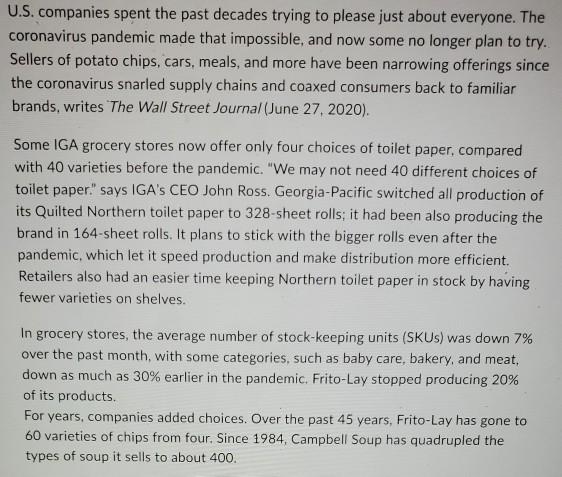
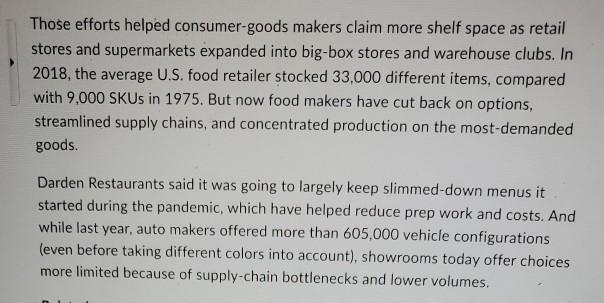
U.S. companies spent the past decades trying to please just about everyone. The coronavirus pandemic made that impossible, and now some no longer plan to try. Sellers of potato chips, cars, meals, and more have been narrowing offerings since the coronavirus snarled supply chains and coaxed consumers back to familiar brands, writes The Wall Street Journal (June 27, 2020). Some IGA grocery stores now offer only four choices of toilet paper, compared with 40 varieties before the pandemic. "We may not need 40 different choices of toilet paper." says IGA's CEO John Ross. Georgia-Pacific switched all production of its Quilted Northern toilet paper to 328-sheet rolls; it had been also producing the brand in 164-sheet rolls. It plans to stick with the bigger rolls even after the pandemic, which let it speed production and make distribution more efficient. Retailers also had an easier time keeping Northern toilet paper in stock by having fewer varieties on shelves. In grocery stores, the average number of stock-keeping units (SKUS) was down 7% over the past month, with some categories, such as baby care, bakery, and meat, down as much as 30% earlier in the pandemic. Frito-Lay stopped producing 20% of its products. For years, companies added choices. Over the past 45 years, Frito-Lay has gone to 60 varieties of chips om four. Since 1984, Campbell Soup has quadrupled the types of soup it sells to about 400. Those efforts helped consumer-goods makers claim more shelf space as retail stores and supermarkets expanded into big-box stores and warehouse clubs. In 2018, the average U.S.food retailer stocked 33,000 different items, compared with 9,000 SKUs in 1975. But now food makers have cut back on options, streamlined supply chains, and concentrated production on the most demanded goods. Darden Restaurants said it was going to largely keep slimmed-down menus it started during the pandemic, which have helped reduce prep work and costs. And while last year, auto makers offered more than 605.000 vehicle configurations (even before taking different colors into account), showrooms today offer choices more limited because of supply-chain bottlenecks and lower volumes. 1. What are the advantages of stocking fewer SKUs? 2. Why is this a supply chain issueStep by Step Solution
There are 3 Steps involved in it
1 Expert Approved Answer
Step: 1 Unlock

Question Has Been Solved by an Expert!
Get step-by-step solutions from verified subject matter experts
Step: 2 Unlock
Step: 3 Unlock
 Study Help