







Question: m I I ( ' 1 I II 1 ' 1 I II I ' I (0 r [5| I {~l Three massspring systems, each
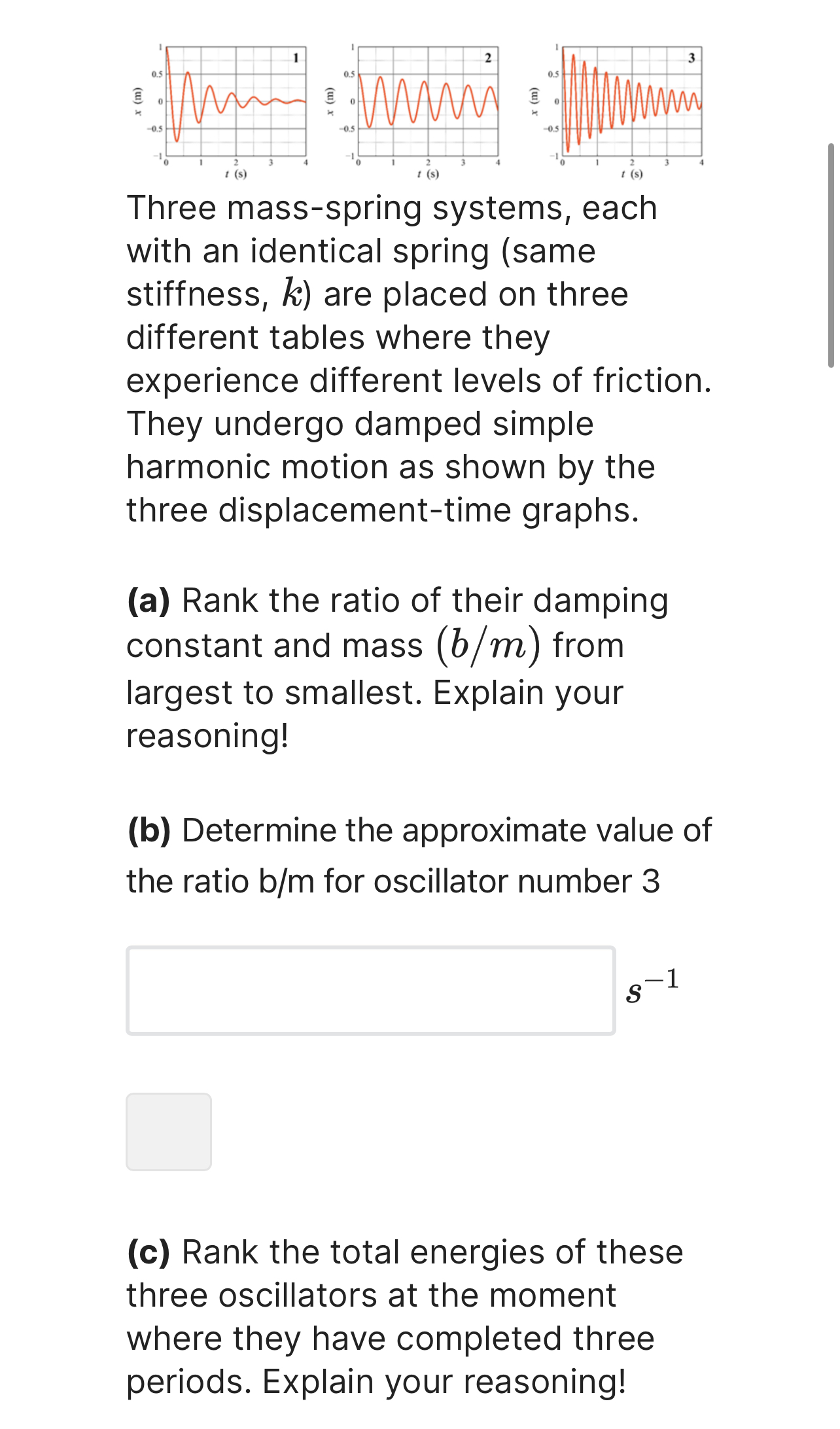
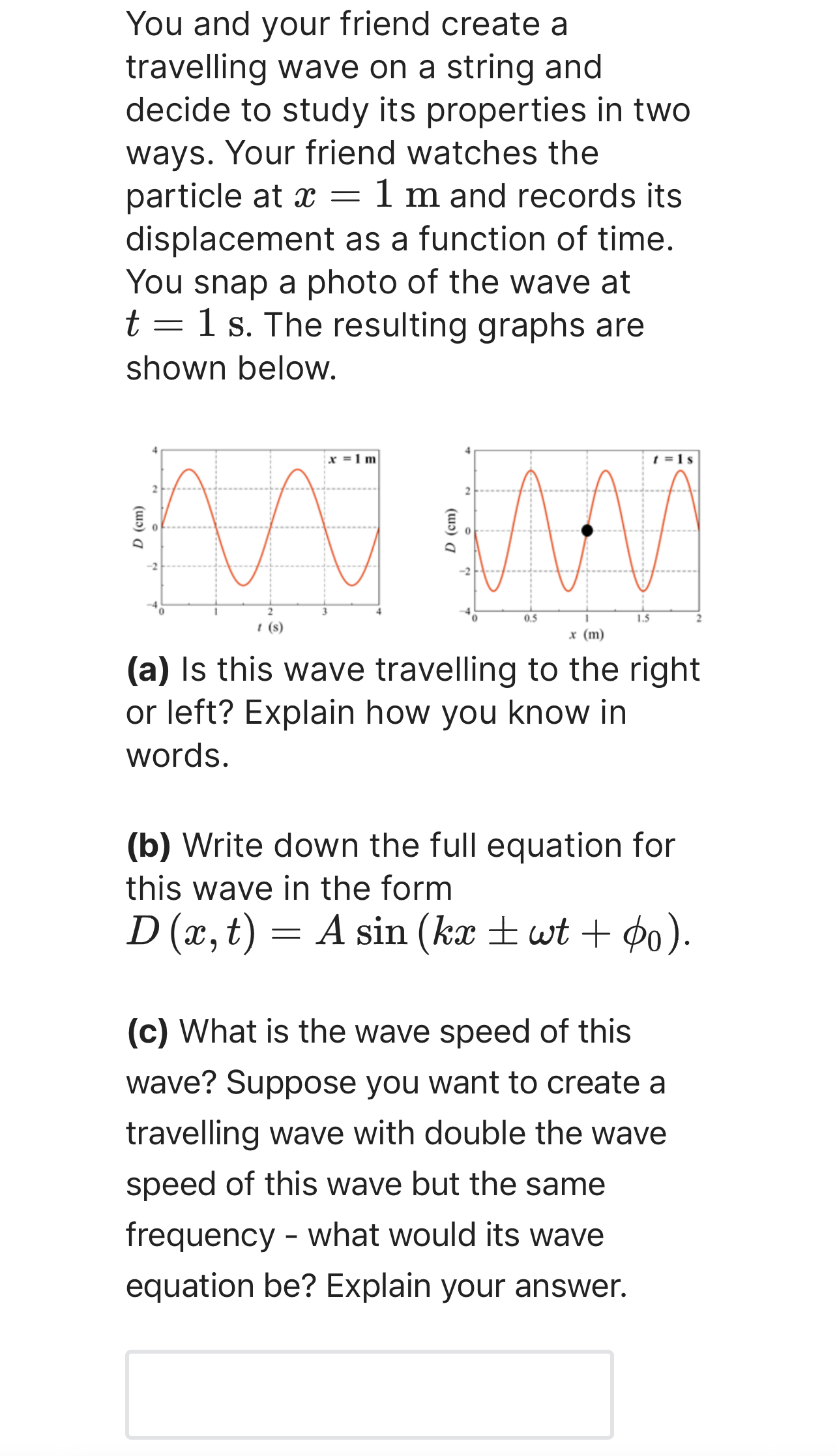
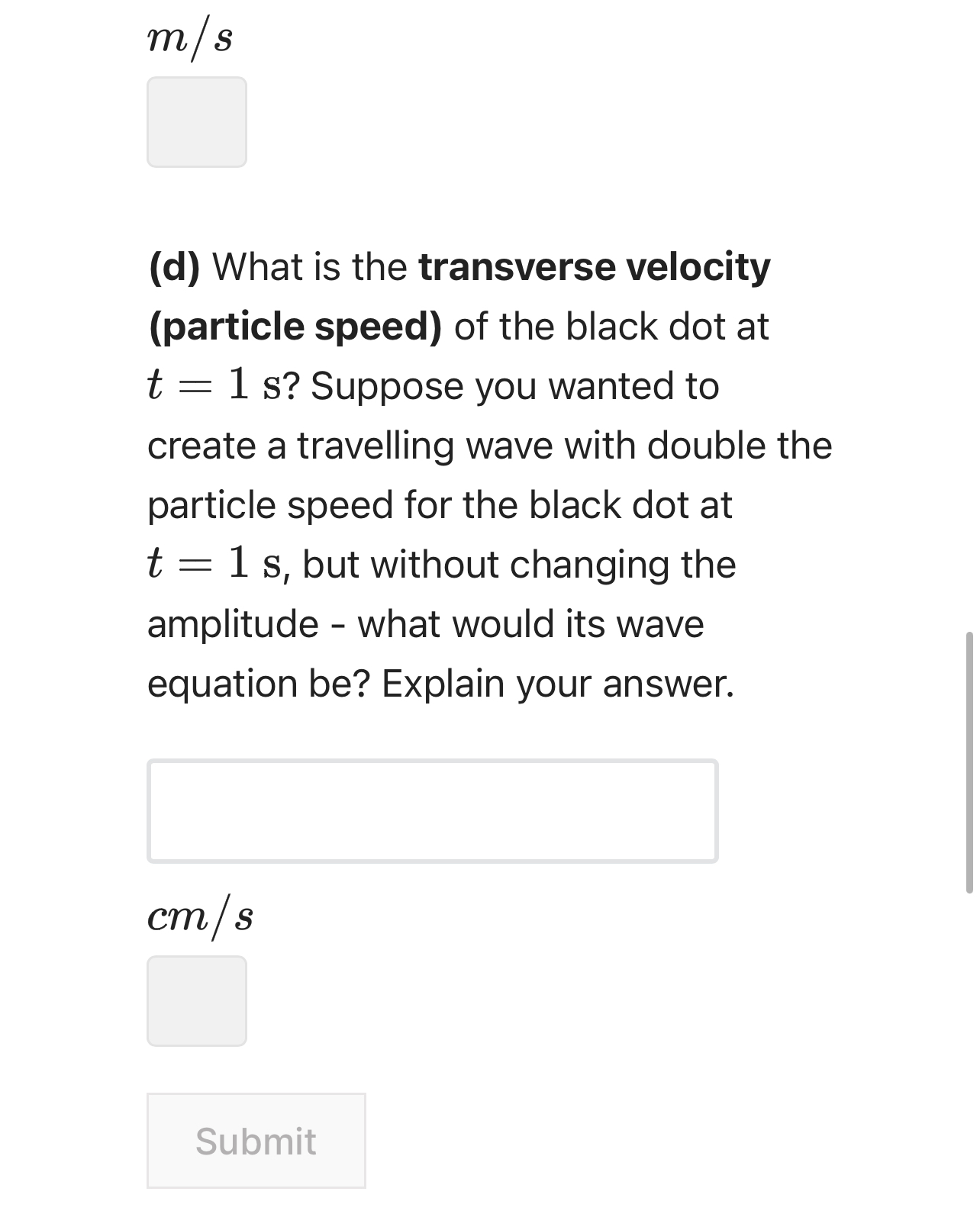
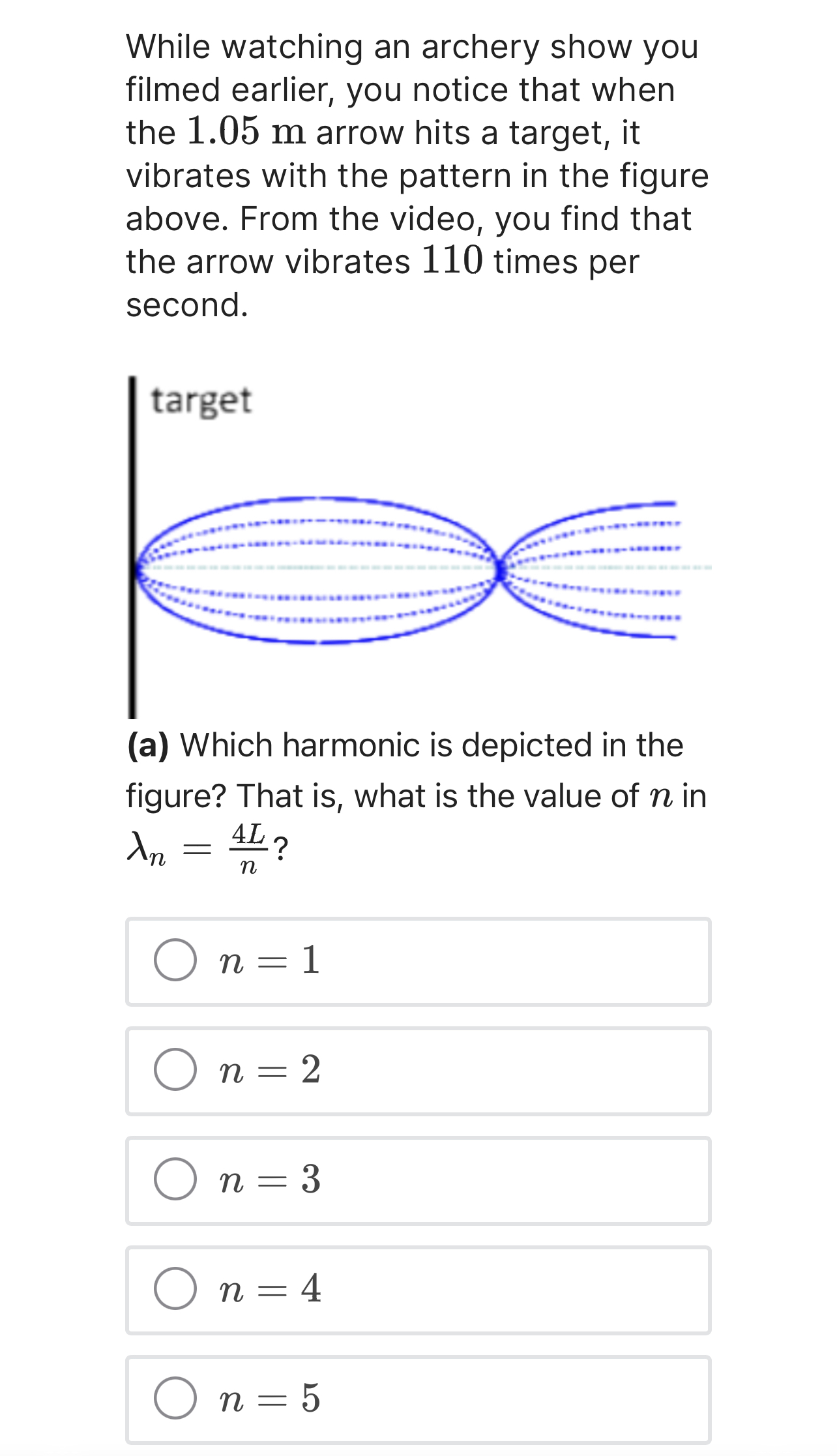
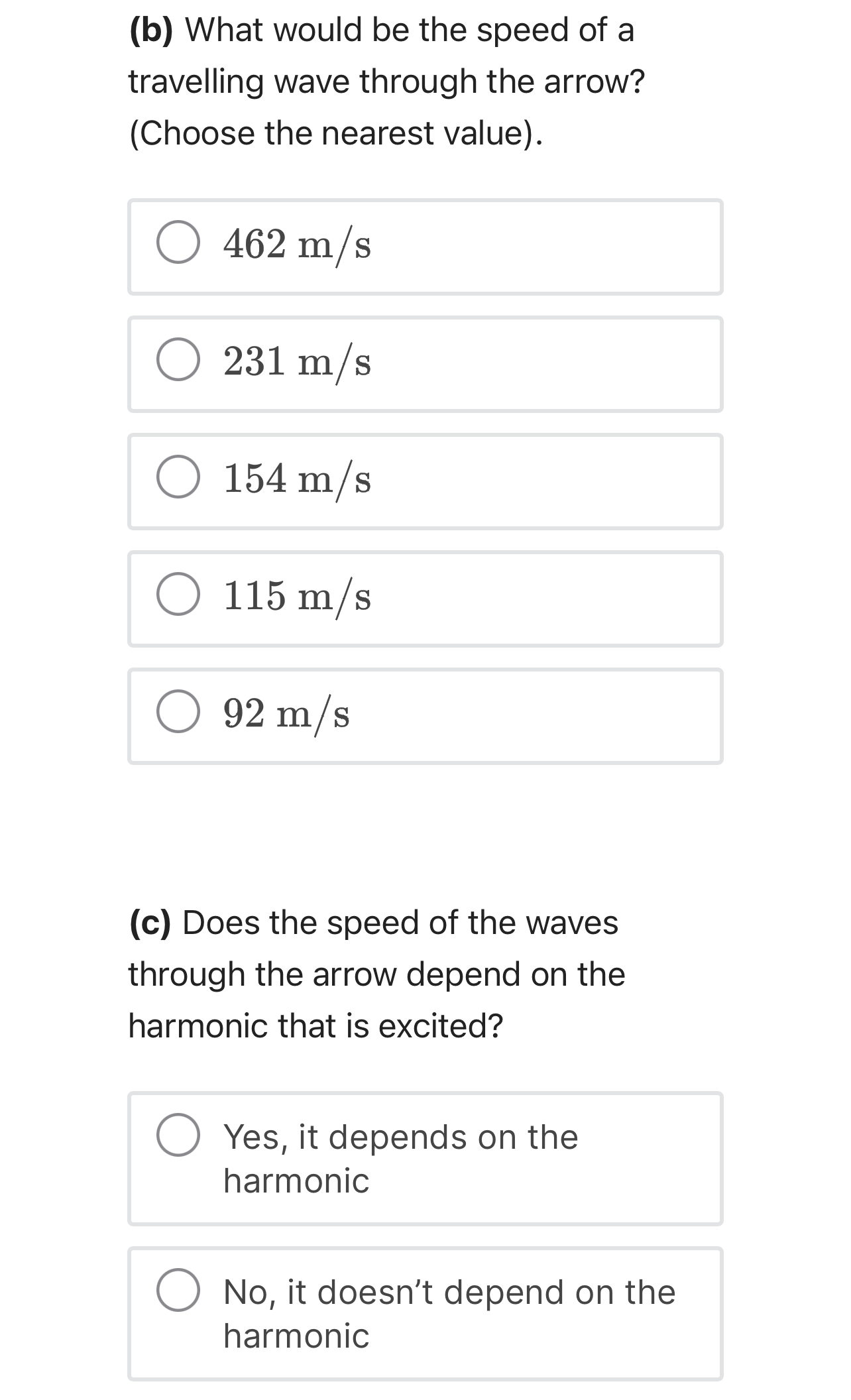
m I I ( ' 1 I II 1 ' 1 I II I ' I (0 r [5| I {~l Three massspring systems, each with an identical spring (same stiffness, k) are placed on three different tables where they experience different levels of friction. They undergo damped simple harmonic motion as shown by the three displacementtime graphs. (a) Rank the ratio of their damping constant and mass (b/m) from largest to smallest. Explain your reasoning! (b) Determine the approximate value of the ratio b/m for oscillator number 3 81 (c) Rank the total energies of these three oscillators at the moment where they have completed three periods. Explain your reasoning! You and your friend create a travelling wave on a string and decide to study its properties in two ways. Your friend watches the particle at m : 1 m and records its displacement as a function of time. You snap a photo of the wave at t = 1 s. The resulting graphs are shown below. 1) [cm] \\ (m) (a) Is this wave travelling to the right or left? Explain how you know in words. (b) Write down the full equation for this wave in the form D (m,t) : A sin (km i wt + Q50). (c) What is the wave speed of this wave? Suppose you want to create a travelling wave with double the wave speed of this wave but the same frequency - what would its wave equation be? Explain your answer. m/s (d) What is the transverse velocity (particle speed) of the black dot at t = l S? Suppose you wanted to create a travelling wave with double the particle speed for the black dot at t = l s, but without Changing the amplitude - what would its wave equation be? Explain your answer. cm/s While watching an archery show you filmed earlier, you notice that when the 1.05 m arrow hits a target, it vibrates with the pattern in the figure above. From the video, you find that the arrow vibrates 110 times per second. (a) Which harmonic is depicted in the figure? That is, what is the value of n in (b) What would be the speed of a travelling wave through the arrow? (Choose the nearest value). (c) Does the speed of the waves through the arrow depend on the harmonic that is excited? 0 Yes, it depends on the harmonic O No, it doesn't depend on the harmonic
Step by Step Solution
There are 3 Steps involved in it

Get step-by-step solutions from verified subject matter experts
 Study Help