







Question: M6 ELBG o N = 55% = { Assignment INS51... & Q QUESTION 1 (30 MARKS) Read the below case study and answer the questions
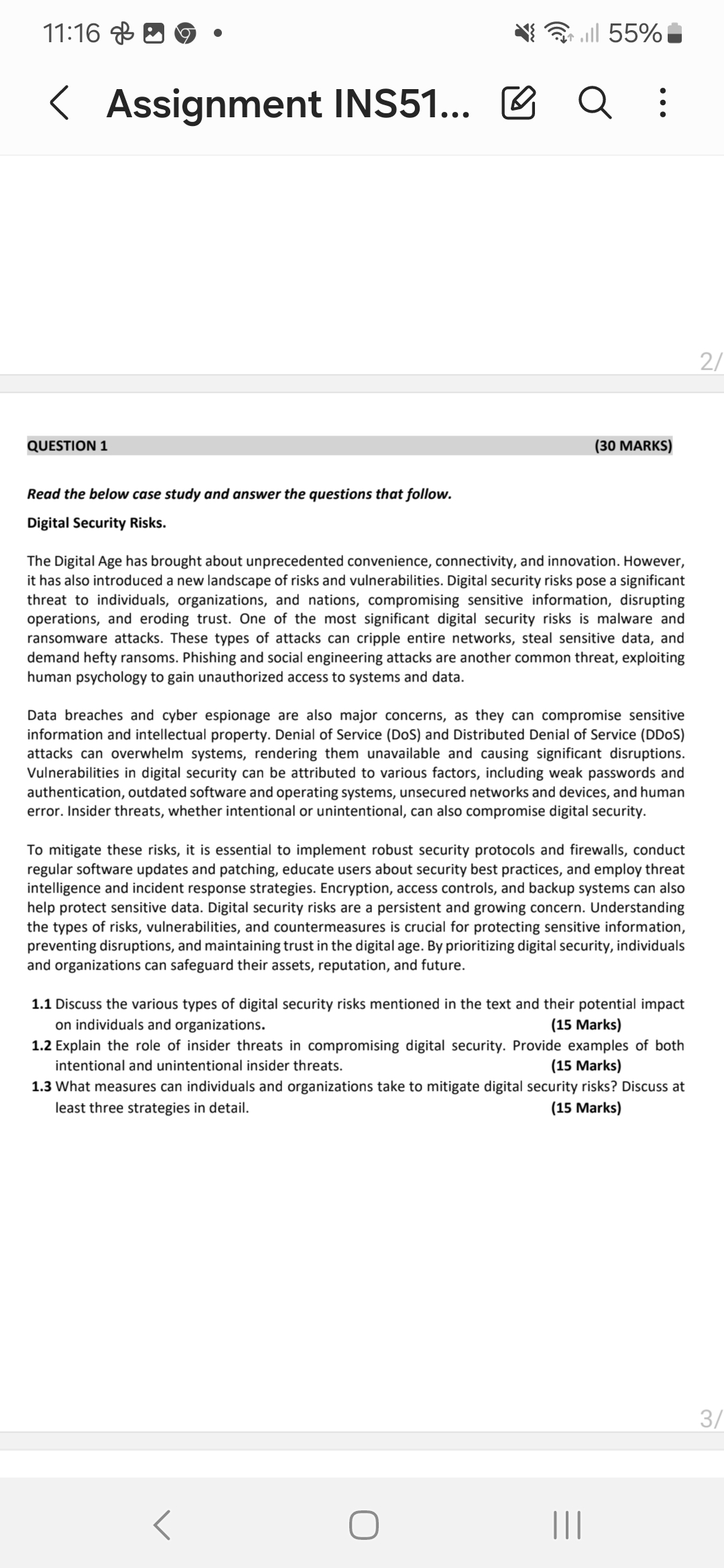
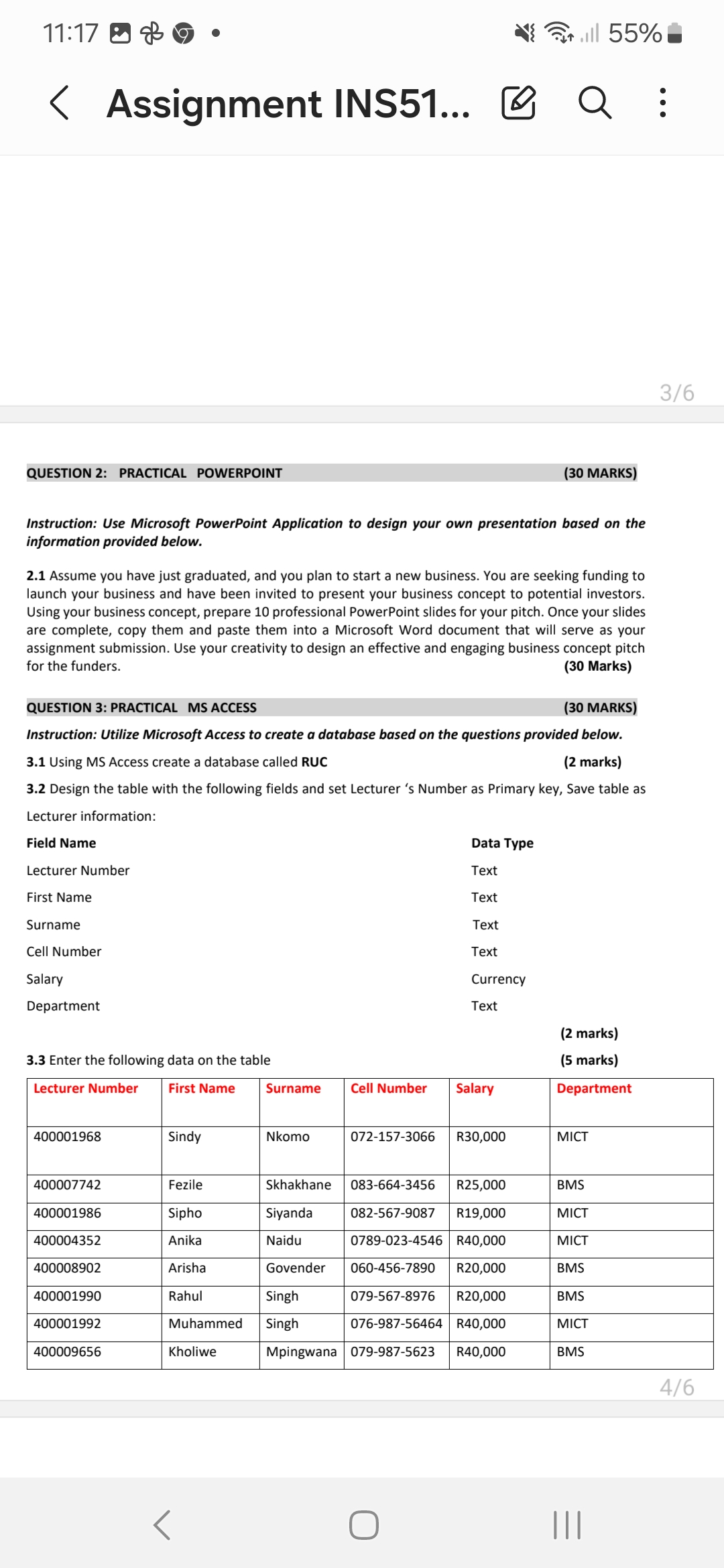
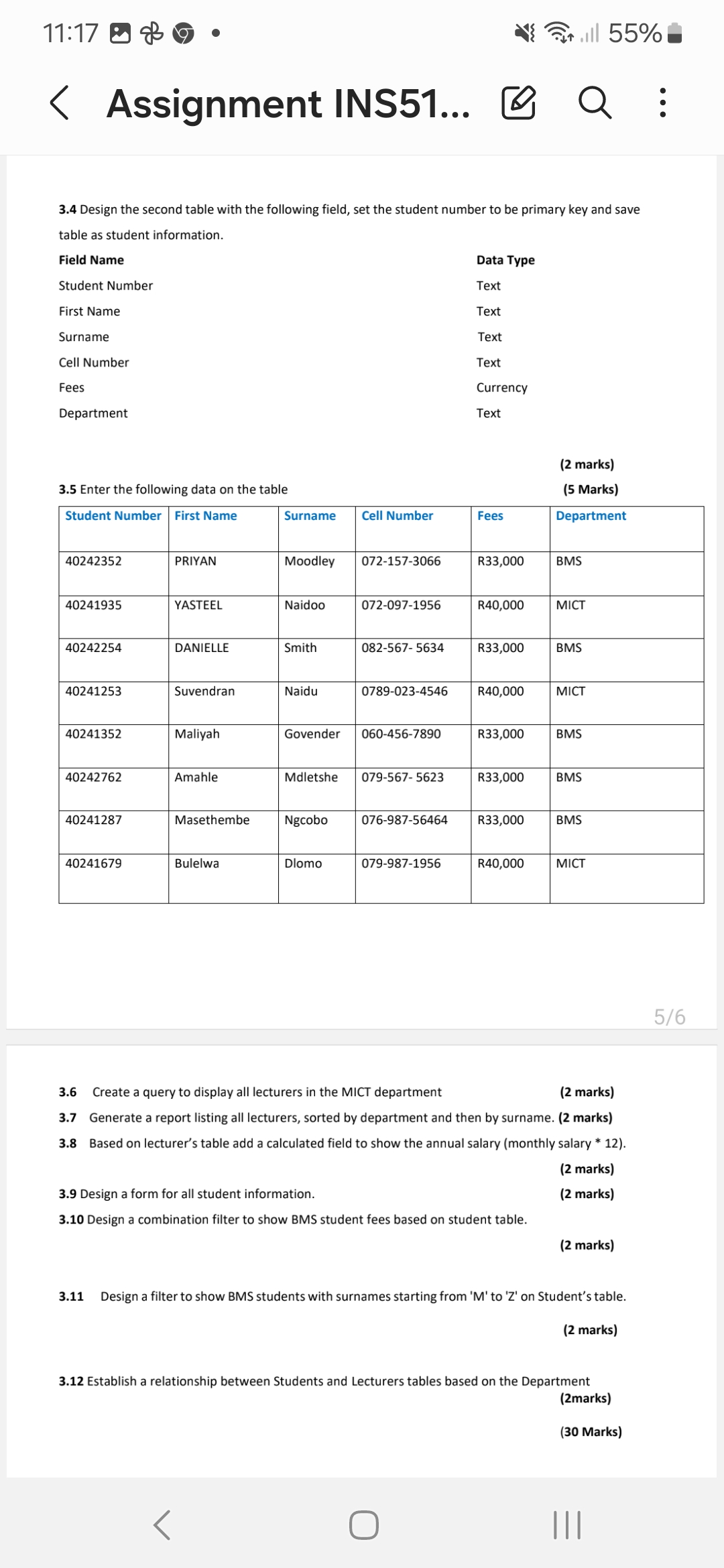
M6 ELBG o N = 55% = { Assignment INS51... & Q QUESTION 1 (30 MARKS) Read the below case study and answer the questions that follow. Digital Security Risks. The Digital Age has brought about unprecedented convenience, connectivity, and innovation. However, it has also introduced a new landscape of risks and vulnerabilities. Digital security risks pose a significant threat to individuals, organizations, and nations, compromising sensitive information, disrupting operations, and eroding trust. One of the most significant digital security risks is malware and ransomware attacks. These types of attacks can cripple entire networks, steal sensitive data, and demand hefty ransoms. Phishing and social engineering attacks are another common threat, exploiting human psychology to gain unauthorized access to systems and data. Data breaches and cyber espionage are also major concerns, as they can compromise sensitive information and intellectual property. Denial of Service (DoS) and Distributed Denial of Service (DDoS) attacks can overwhelm systems, rendering them unavailable and causing significant disruptions. Vulnerabilities in digital security can be attributed to various factors, including weak passwords and authentication, outdated software and operating systems, unsecured networks and devices, and human error. Insider threats, whether intentional or unintentional, can also compromise digital security. To mitigate these risks, it is essential to implement robust security protocols and firewalls, conduct regular software updates and patching, educate users about security best practices, and employ threat intelligence and incident response strategies. Encryption, access controls, and backup systems can also help protect sensitive data. Digital security risks are a persistent and growing concern. Understanding the types of risks, vulnerabilities, and countermeasures is crucial for protecting sensitive information, preventing disruptions, and maintaining trust in the digital age. By prioritizing digital security, individuals and organizations can safeguard their assets, reputation, and future. 1.1 Discuss the various types of digital security risks mentioned in the text and their potential impact on individuals and organizations. (15 Marks) 1.2 Explain the role of insider threats in compromising digital security. Provide examples of both intentional and unintentional insider threats. (15 Marks) 1.3 What measures can individuals and organizations take to mitigate digital security risks? Discuss at least three strategies in detail. (15 Marks)
Step by Step Solution
There are 3 Steps involved in it

Get step-by-step solutions from verified subject matter experts
 Study Help